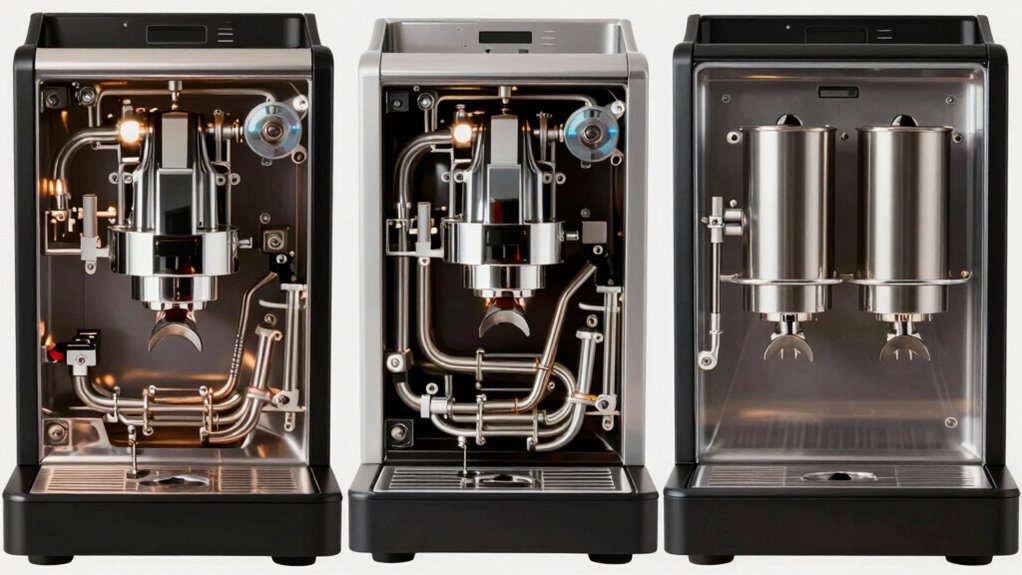
To stop confusing boilers, understand that a single boiler heats water for brewing and steaming in one tank but can’t do both at once, causing wait times. A heat exchanger uses one boiler with a coil to brew and steam simultaneously, offering a good balance of speed and quality. Dual boilers have separate tanks, allowing continuous brewing and steaming, perfect for high-volume setups. Keep going to learn more about which type suits your needs best.
Key Takeaways
- Single boilers heat water in one tank, suitable for small setups but can’t brew espresso and steam simultaneously.
- Heat exchanger boilers use one boiler with a coil to brew and steam at the same time, balancing efficiency and quality.
- Dual boilers have separate tanks for brewing and steaming, allowing simultaneous operation and precise temperature control.
- Single boilers are compact and affordable, ideal for home use; dual boilers suit high-volume cafes needing speed and consistency.
- Choosing the right boiler depends on your volume, space, and whether you prioritize simplicity, efficiency, or professional performance.

Breville Barista Express Espresso Machine BES870XL, Brushed Stainless Steel
The Breville Barista Express delivers third wave specialty coffee at home using the 4 keys formula and is…
As an affiliate, we earn on qualifying purchases.
As an affiliate, we earn on qualifying purchases.
What Are Coffee Boilers and Why Do They Matter?
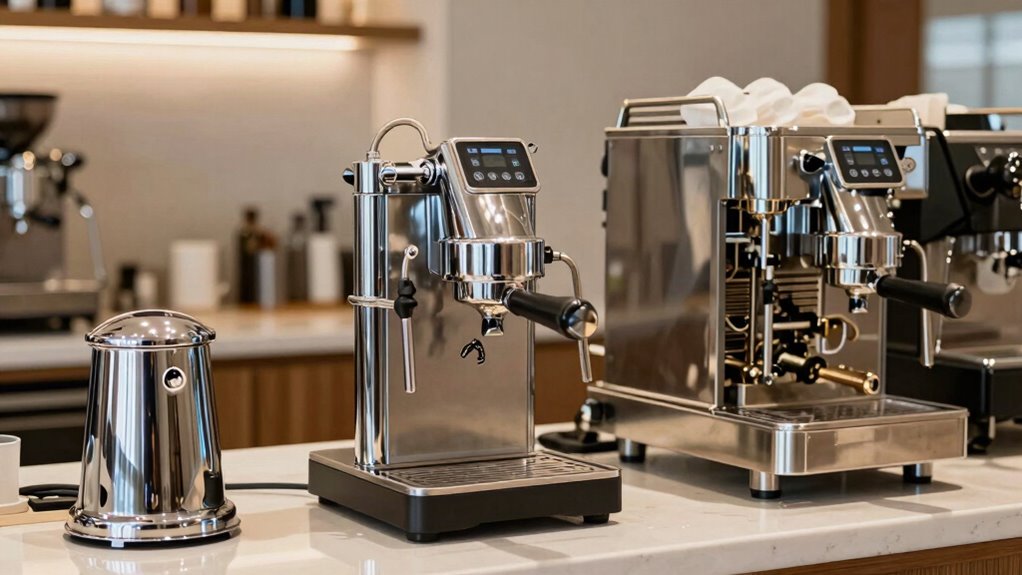
Ever wondered why coffee machine performance varies so much? It all comes down to the boiler, a essential component that heats the water for brewing. Coffee boilers are specially designed tanks that guarantee consistent temperature and pressure, which are critical for quality espresso. Proper boiler maintenance is indispensable to keep your machine running smoothly and to prevent issues like overheating or pressure buildup. Boiler safety features, such as pressure release valves, protect you and your equipment. Without regular checks, a neglected boiler can cause leaks or failures, affecting both safety and performance. Understanding what a coffee boiler does helps you appreciate its importance in delivering first-rate espresso and maintaining your machine’s longevity. Additionally, boiler technology plays a significant role in determining the overall efficiency and energy consumption of your brewing process. Innovations in smart home automation can even assist in monitoring and maintaining optimal boiler conditions remotely, ensuring consistent performance. Regular inspections and proper maintenance are crucial for preventing costly repairs and extending the lifespan of your coffee machine.

Diletta Bello Espresso Machine | Heat Exchanger | E61 | Manual Control | 3 Liter | Made In Italy | (Stainless Steel)
Italian Made – Each Diletta machine is handcrafted in Milan, Italy.
As an affiliate, we earn on qualifying purchases.
As an affiliate, we earn on qualifying purchases.
How Does a Single Boiler Coffee Machine Work?
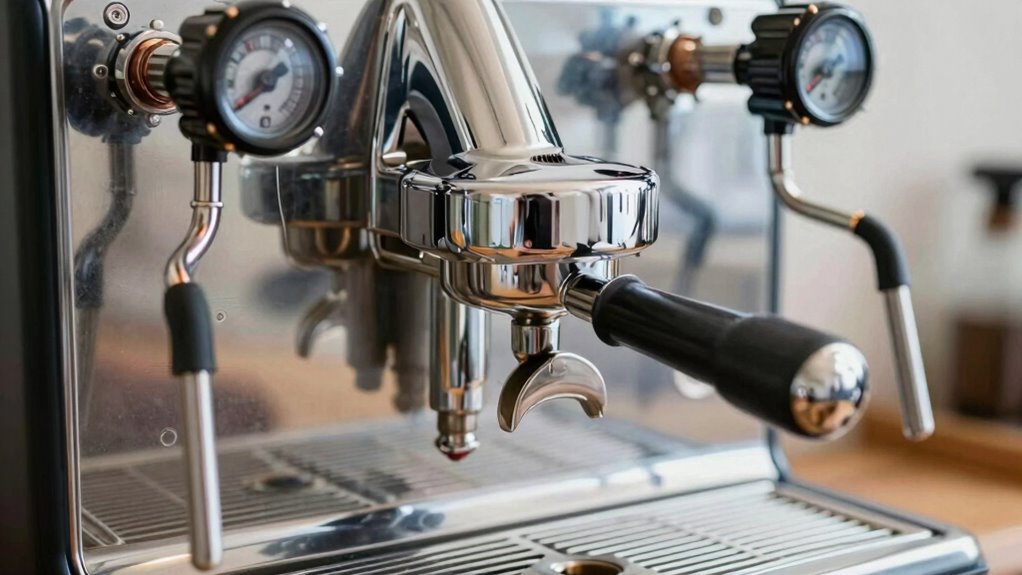
A single boiler coffee machine integrates the water heating and brewing processes into one tank, simplifying its design. Because of this, it heats water to a set temperature and maintains that heat throughout operation, which helps achieve good temperature stability. However, you can’t brew espresso and steam milk at the same time, since the boiler can’t handle both functions simultaneously. This means you’ll need to wait for the boiler to heat up or cool down when switching between brewing and steaming. Despite this limitation, a single boiler can deliver consistent results for brewing, ensuring good brewing consistency. Temperature stability is a key advantage of single boiler systems, helping to produce better espresso shots. Additionally, the design simplicity of these machines makes them more affordable and easier to maintain, making them a popular choice for home baristas. Because of their compact size, they are well-suited for smaller kitchens or limited counter space. Moreover, understanding the boiler capacity can help determine how quickly you can switch between tasks without waiting. For many users, the overall efficiency of single boiler machines makes them a practical choice for everyday use.

Breville Dynamic Duo Dual Boiler Espresso Machine and Smart Grinder Pro Package, Stainless Steel – BEP920BSS
Experience third wave specialty coffee at home, made possible by the 4 keys formula Our espresso machines are…
As an affiliate, we earn on qualifying purchases.
As an affiliate, we earn on qualifying purchases.
What Is a Heat Exchanger Boiler, and How Is It Different?

A heat exchanger boiler heats water efficiently by passing it through a separate chamber that’s heated by a boiler. This design allows you to brew espresso and steam milk simultaneously, saving time. It’s commonly used in professional setups and high-end machines for its quick, consistent performance. This setup also helps maintain stable temperature control, which is essential for quality coffee making.
How It Works
A heat exchanger boiler works by transferring heat between two separate water circuits, allowing you to produce hot water efficiently without mixing the supply and delivery lines. This setup means you can heat water for your espresso without risking contamination or affecting the water used for brewing. Because the water never mixes, boiler maintenance becomes easier, and you can better control water quality. The heat exchanger uses a metal coil or plate that heats the brewing water directly from the heated boiler water, which stays separate. This design helps maintain consistent temperature stability during brewing and simplifies cleaning since you don’t have to drain the entire boiler system frequently. Proper water quality is essential to prevent mineral buildup, which can impact performance over time. Water quality management is crucial to ensure the longevity and optimal function of your heat exchanger boiler. Additionally, understanding free floating systems can help you optimize your setup for enhanced efficiency and durability.
Key Benefits
Ever wondered why heat exchanger boilers are popular among espresso enthusiasts? Their key benefit is speed—you can brew espresso and steam milk simultaneously, saving you time. They also tend to be more energy-efficient than single boilers because they use a single heating element to manage water temperature for brewing and steaming, reducing energy waste. Maintenance tends to be simpler compared to dual boilers, since there are fewer components to service. Plus, heat exchanger boilers usually cost less upfront, making them a practical choice for home baristas. This design balances performance with affordability, allowing you to enjoy consistent results without the high cost or complex maintenance of dual boilers. Additionally, their design often incorporates a more compact footprint, which is ideal for smaller kitchens or limited space environments. Understanding boiler efficiency can help you choose the right model for your needs. Moreover, advancements in technology have contributed to the increased popularity of heat exchanger systems, making them an attractive option for many users. For example, innovations in control systems have improved temperature stability and user experience. Overall, they’re a smart choice for those seeking efficiency, convenience, and reliable performance.
Common Applications
Heat exchanger boilers are popular in cafes and home setups where efficient, rapid brewing is essential. They excel in environments that demand quick turnaround and consistent temperature control, making them ideal for busy cafes or serious home baristas. These boilers are designed to optimize energy efficiency by using heat from the boiler to preheat water for brewing, reducing overall energy consumption. Maintenance costs tend to be moderate since their simpler design requires less upkeep than dual boilers. You’ll appreciate the quick heat-up times and reliable performance, especially if you need multiple shots in a short period. Additionally, water temperature stability is maintained effectively, ensuring consistent espresso quality. The energy efficiency benefits of heat exchanger boilers are particularly advantageous in high-demand settings. Moreover, their cost-effectiveness often results in lower initial investment compared to dual boiler systems. Because they operate with a single boiler, they require less space and are easier to install and maintain. They also tend to have a longer lifespan due to fewer mechanical parts that can wear out over time. Overall, heat exchanger boilers strike a good balance between energy efficiency and ongoing maintenance, making them a practical choice for those who prioritize speed, efficiency, and cost-effectiveness.
Breville Barista Express Espresso Machine BES870XL, Brushed Stainless Steel
The Breville Barista Express delivers third wave specialty coffee at home using the 4 keys formula and is…
As an affiliate, we earn on qualifying purchases.
As an affiliate, we earn on qualifying purchases.
What Is a Dual Boiler System and Why Is It Popular?
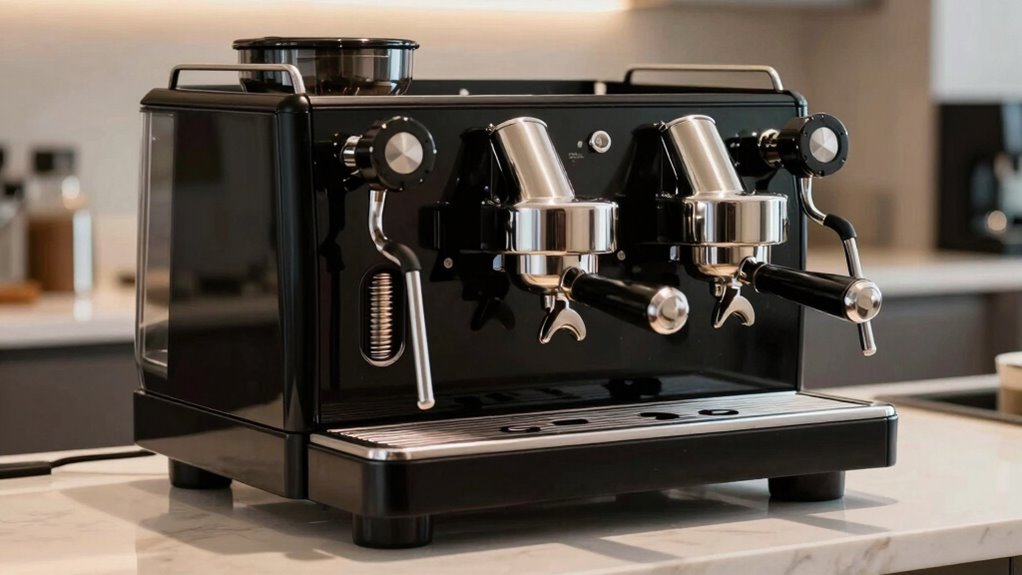
A dual boiler system allows you to heat water and steam separately, giving you faster temperature recovery and more consistent brew temperatures. This means you can make multiple drinks back-to-back without waiting for the machine to warm up again. If you value precision and efficiency, a dual boiler could be a great choice. This setup is especially beneficial for those seeking consistent beverage quality and a streamlined brewing process.]
Fast Temperature Recovery
Because a dual boiler system heats water in two separate chambers, it can quickly recover the temperature after use, guaranteeing your espresso is always at the perfect temperature. This design offers excellent temperature stability, which is essential for consistent brewing. The recovery speed is impressive, meaning you won’t have to wait long between shots or steaming milk. When you extract espresso, the brewing boiler maintains its temperature, and the steam boiler quickly heats up again after steaming. This separation allows each process to operate independently, reducing temperature fluctuations and ensuring optimal brewing conditions. As a result, you can maintain ideal brewing conditions without interruptions, making your workflow smoother and your coffee better. The fast recovery ensures your machine is always ready for the next shot, enhancing efficiency and consistency.
Consistent Brew Temperature
A dual boiler system delivers exceptional consistency in brew temperature, which is crucial for making high-quality espresso. With dedicated boilers for brewing and steaming, you benefit from superior temperature stability throughout your extraction process. This setup minimizes temperature fluctuations, ensuring each shot maintains the same ideal temperature, leading to consistent brewing results. Unlike single boilers or heat exchangers that may struggle to keep temperature steady during multiple tasks, dual boilers keep the brewing temperature precise and stable. This consistency enhances your ability to control extraction variables, producing more uniform espresso shots. As a result, a dual boiler system is popular among serious baristas and enthusiasts who prioritize brewing consistency and reliable temperature control for every cup.
Which Coffee Boiler Is Best for Home Use?
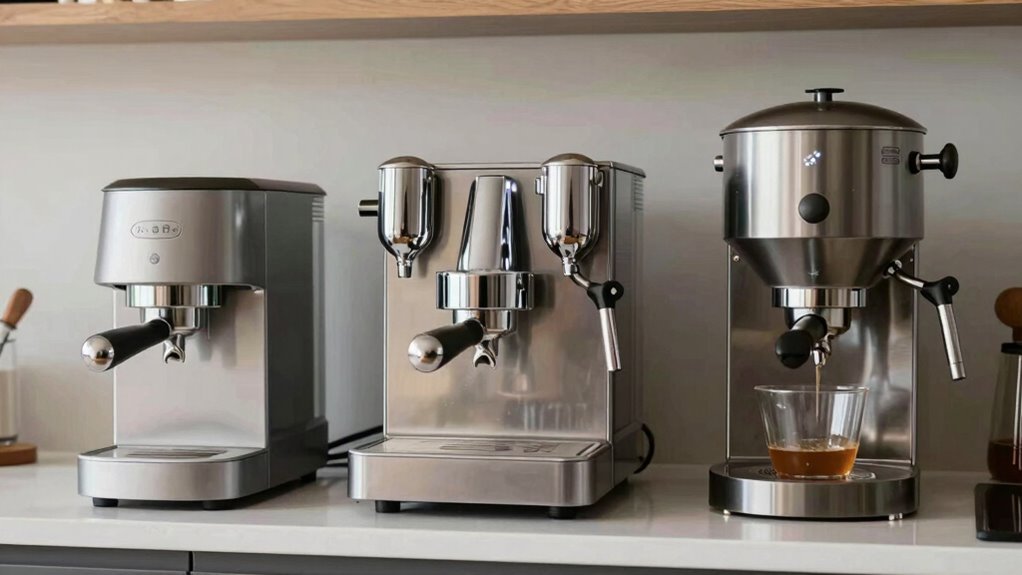
Choosing the right coffee boiler for home use depends on your brewing needs and space constraints. If you want quick, consistent shots, a dual boiler offers excellent boiler efficiency and minimal maintenance routines. For simpler setups, a single boiler or heat exchanger might suffice, saving space and cost. Consider the table below to understand how each type suits your home setup:
| Boiler Type | Boiler Efficiency | Maintenance Routines | Space Needed |
|---|---|---|---|
| Single Boiler | Moderate | Low | Compact |
| Heat Exchanger | Good | Moderate | Slightly larger |
| Dual Boiler | High | Slightly more | Larger footprint |
Balance your needs for performance, ease of maintenance, and available space to choose the best boiler for your home.
Are Single Boilers Good for Coffee Enthusiasts?
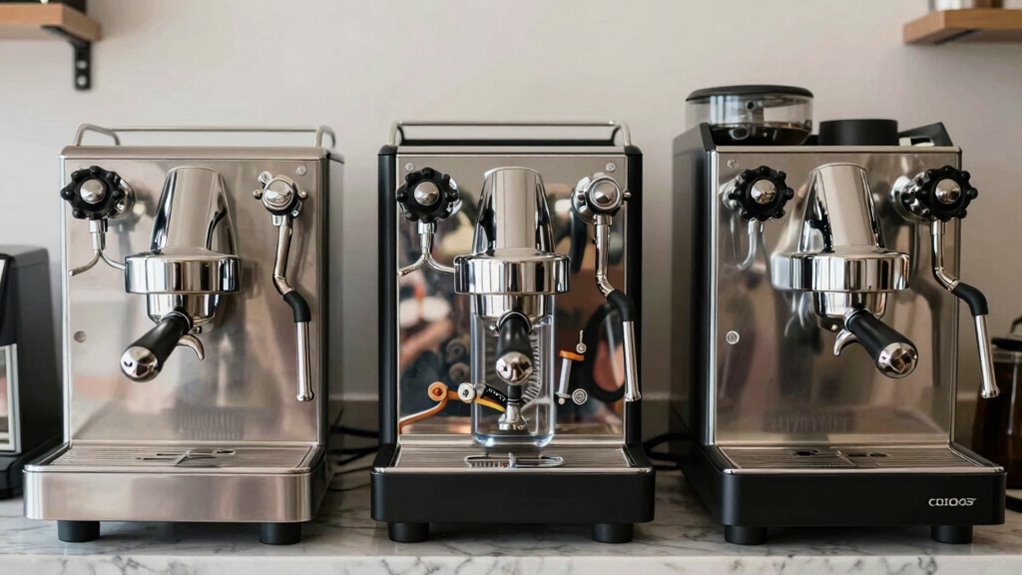
Single boilers offer consistent brew temperatures, making it easier to get a good shot every time. They heat up quickly, so you won’t wait long before brewing. Plus, their simpler setup means less hassle and easier maintenance for you.
Consistent Brew Temperature
While single boilers can be convenient, they often struggle to maintain a consistent brew temperature, which is essential for extracting the best flavors from your coffee. Because a single boiler heats water for both steaming and brewing, it may fluctuate in temperature, affecting your brew temperature and leading to uneven extraction. This lack of temperature stability can result in under-extracted or over-extracted coffee, diminishing flavor quality. If you’re passionate about precision, a single boiler might not meet your needs for consistent brew temperature. To get the most out of your beans, you need stable heat that stays within the ideal range throughout the brewing process. Without that stability, even the best coffee beans can’t deliver their full flavor potential.
Faster Heat-Up Time
Faster heat-up time is a significant advantage for coffee enthusiasts who value efficiency and convenience. Single boilers typically heat up quickly, allowing you to start brewing sooner. This quick response can improve your workflow, especially if you often make multiple espresso shots in a row. Plus, a rapid heat-up helps maintain temperature stability during brewing, reducing fluctuations that might affect flavor. Additionally, single boilers tend to be more energy-efficient because they heat only one boiler instead of multiple components.
Here are some key benefits:
- Rapid readiness for brewing
- Improved temperature stability
- Reduced energy consumption
- Less wait time between shots
- Easier maintenance and troubleshooting
If speed matters to you, single boilers offer a practical, efficient option.
Simplified Equipment Setup
Because they require fewer components and simpler design, single boilers make setup straightforward and hassle-free for coffee enthusiasts. You’ll find it easier to manage water flow, as there are fewer valves and pumps to configure. Pressure control is also more intuitive, helping you maintain consistent extraction without complex adjustments. With fewer parts, you spend less time troubleshooting or calibrating, making the initial setup quicker. This simplicity not only saves time but also reduces the chance of errors. If you’re new to espresso machines or prefer a straightforward, reliable setup, a single boiler offers an accessible solution. You won’t need to worry about balancing multiple systems or intricate plumbing—just focus on dialing in your shot and enjoying your coffee.
Why Baristas Prefer Heat Exchanger Boilers
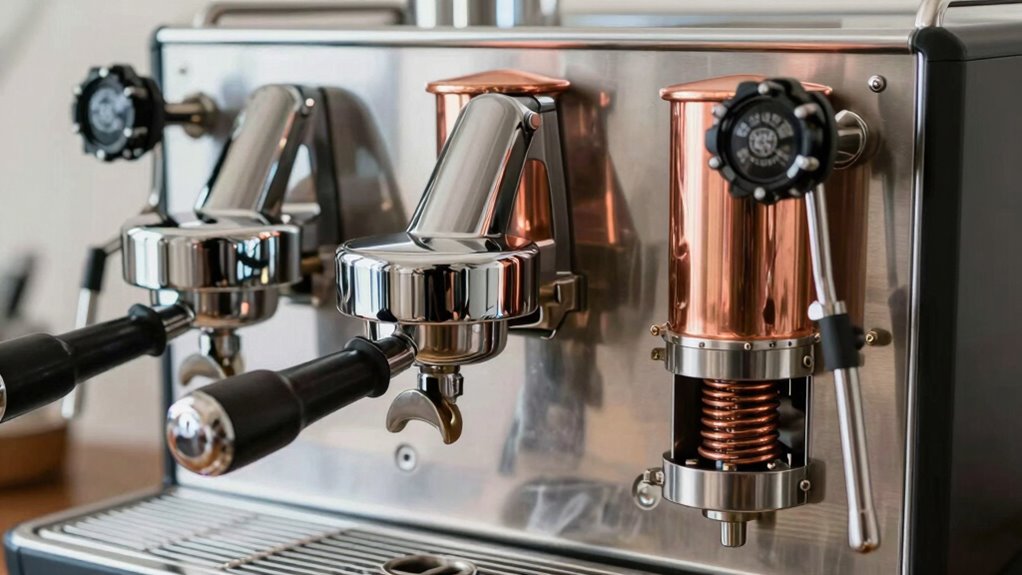
Baristas favor heat exchanger boilers because they offer a reliable balance between continuous steam production and consistent espresso extraction. This setup maintains good temperature stability, ensuring your espresso shots come out perfectly every time. Plus, heat exchangers are known for their energy efficiency, saving you power without sacrificing performance.
Why do baristas love them?
- Quick heat-up times for busy mornings
- Precise temperature control for quality shots
- Continuous steam without waiting to heat up again
- Lower energy consumption compared to dual boilers
- Easier maintenance and durability
When Are Dual Boilers the Best Choice for Coffee Shops?
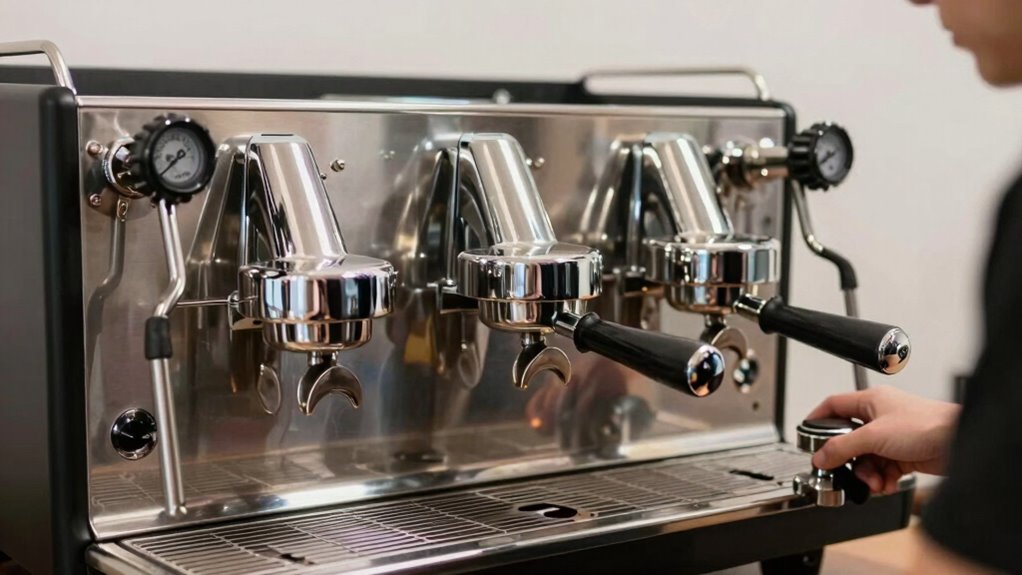
Dual boilers are the ideal choice for coffee shops that need to serve high volumes of espresso and steamed milk simultaneously, guaranteeing consistent quality without delays. With separate boilers, you can maintain a precise brew temperature for espresso extraction while providing ample steam capacity for milk frothing. This setup prevents temperature fluctuations that can affect flavor and ensures quick turnaround during busy hours. If your shop frequently pulls multiple shots and steams milk at the same time, dual boilers keep everything running smoothly. They’re especially beneficial when consistency is key, and you want to avoid sacrificing quality during peak times. Overall, dual boilers are perfect for shops aiming for efficiency, high throughput, and reliable, consistent results.
How to Choose the Right Coffee Boiler for Your Needs
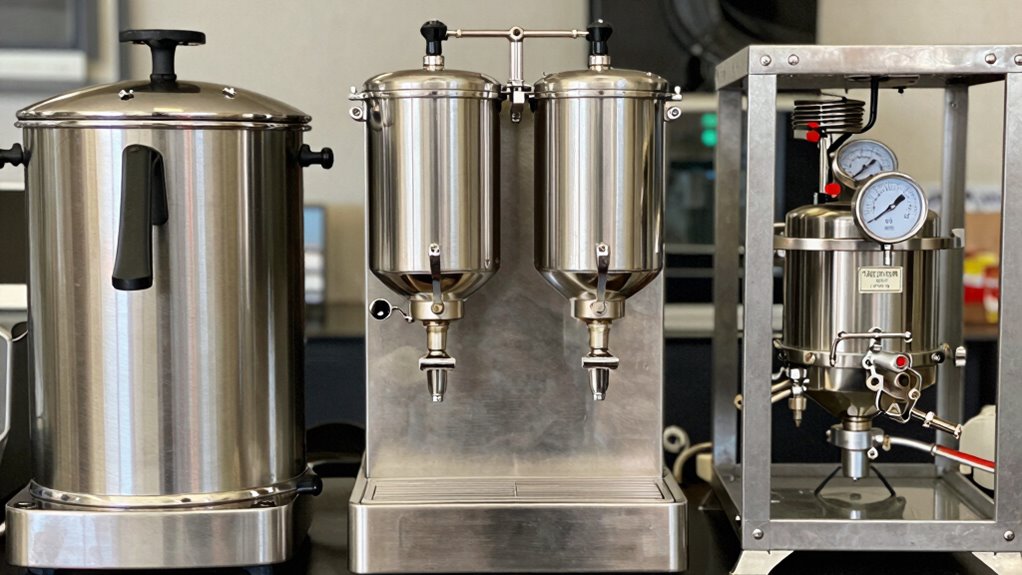
Choosing the right coffee boiler depends on your shop’s specific needs, volume, and workflow. Consider how much coffee you’ll prepare daily and your desired consistency. For ease of use and maintenance, look for boilers with simple boiler maintenance features. Energy efficiency is vital to reduce operational costs, so choose models with good insulation and low standby energy use. Think about your space—compact boilers suit small shops, while larger ones handle higher volume. Evaluate the boiler’s speed to heat water quickly and keep up with demand. Also, consider if you need a single, heat exchanger, or dual boiler, based on your menu complexity. Remember, a well-chosen boiler saves you time and money while ensuring quality.
Tips to Maintain and Troubleshoot Your Coffee Boiler
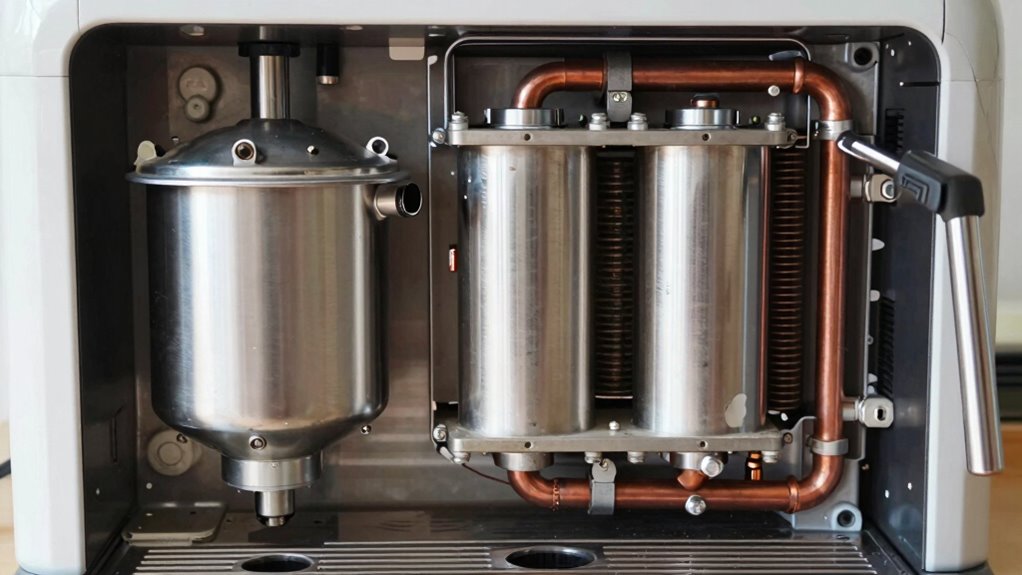
Regular maintenance is vital to keep your coffee boiler operating smoothly and to prevent costly breakdowns. Start by regularly checking calibration techniques to guarantee temperature controls are accurate, which affects espresso quality. Clean your boiler and steam wand thoroughly to avoid mineral buildup, especially if you use hard water. Water quality plays an important role; using filtered or softened water reduces mineral deposits and prolongs your boiler’s lifespan. Periodically descale your machine following manufacturer instructions to remove scale buildup. If you notice inconsistent temperature or pressure issues, troubleshoot by inspecting sensors and valves. Keep an eye on water levels and verify all seals are intact. Proper maintenance and troubleshooting will keep your boiler running efficiently, delivering high-quality coffee every time.
Frequently Asked Questions
Can I Upgrade My Single Boiler to a Dual or Heat Exchanger System?
Upgrading your single boiler to a dual or heat exchanger system is usually possible, like renovating a house to add extra rooms. Retrofit possibilities depend on your machine’s design, but it can be costly. A dual boiler offers faster heat-up times, though it’s pricier than a heat exchanger. Consider your needs and budget, and compare costs to see if the upgrade improves your espresso experience.
How Does Boiler Size Affect Coffee Extraction Quality?
Your boiler size directly impacts coffee extraction quality by influencing boiler capacity and extraction consistency. A larger boiler provides stable temperature and ample steam, ensuring consistent results even during back-to-back shots. Conversely, a smaller boiler might struggle to maintain ideal temperature, leading to uneven extraction. So, choosing a boiler size suited to your brewing volume helps you achieve better, more reliable coffee flavor every time.
Are Dual Boilers More Energy-Efficient Than Single Boilers?
Dual boilers are like twin engines, offering better control and efficiency. They tend to be more energy-efficient than single boilers because each boiler heats only what’s needed—saving energy and reducing environmental impact. This design allows you to save energy during downtime, making dual boilers a smarter choice for energy savings and a greener footprint. You’ll get faster, consistent results while doing your part for the environment.
What Maintenance Is Required for Heat Exchanger Boilers?
You need to regularly perform descaling procedures to maintain your heat exchanger boiler, as mineral buildup from water can hinder performance. Check for signs of scale and clean the heat exchanger as recommended by the manufacturer. This helps prevent clogs, guarantees efficient heat transfer, and prolongs the boiler’s lifespan. Additionally, inspect seals and gaskets periodically and keep the system free of debris to maintain ideal operation.
Do Different Boiler Types Impact Espresso Flavor Profiles?
Different boiler types do impact your espresso flavor profile through boiler material and temperature stability. A dual boiler, with separate units, offers precise temperature control, enhancing flavor clarity and consistency. Heat exchanger boilers provide stable temperatures for both brewing and steaming, improving flavor extraction. Single boilers may struggle with temperature stability, risking flavor inconsistencies. Your choice affects how well you can control temperature, directly influencing the espresso’s taste and aroma.
Conclusion
Choosing the right coffee boiler is like finding the perfect dance partner—each type has its own rhythm. Whether you want simplicity, quick multitasking, or professional-grade performance, understanding these options helps you make the best move. By matching your needs with the right boiler, you’ll keep your coffee game smooth and satisfying. So, pick wisely and let your brewing journey flow as effortlessly as a well-poured espresso.