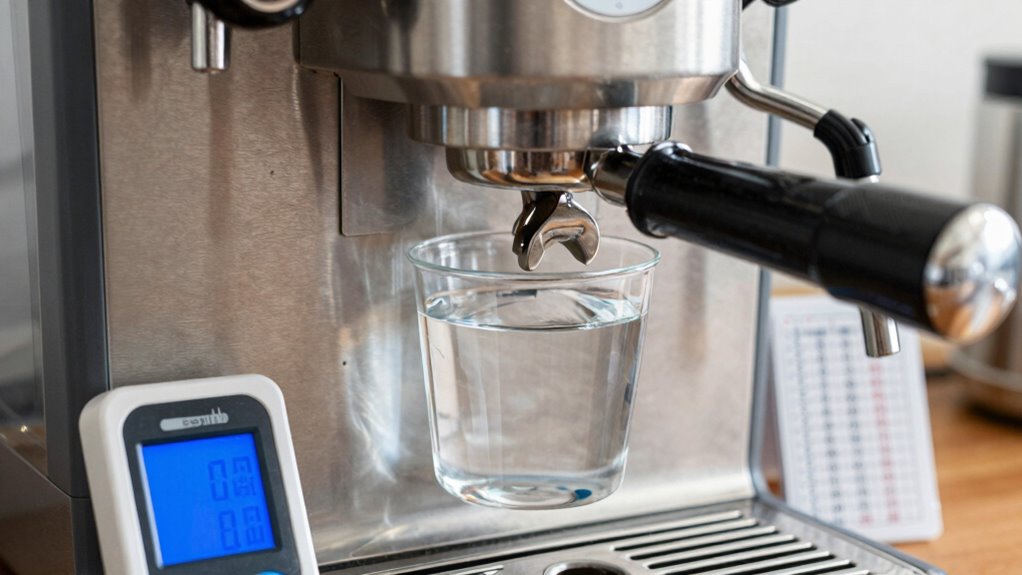

To protect your espresso machine from hard water damage, start by testing your water’s mineral levels regularly, and consider installing a water softener or using low-mineral water options. Keep track of descaling needs—hard water may require more frequent cleaning—and always follow your manufacturer’s guidelines. Use filtered or bottled water to reduce buildup and prevent costly repairs. Proper maintenance will guarantee your machine lasts longer and makes better coffee—continue on to discover more valuable tips.

Get kitchen gear delivered free with Prime
- Fast, free delivery on millions of items
- Prime Video, Amazon Music and more included
- Member-only deals all year
Key Takeaways
- Test water hardness regularly to determine mineral levels and choose appropriate treatment options.
- Use filtered or softened water to minimize mineral buildup and extend machine lifespan.
- Follow manufacturer’s descaling schedule based on water mineralization and usage frequency.
- Consider installing water softeners or filtration systems for consistent low-mineral water supply.
- Monitor internal components for scale buildup and perform routine maintenance to ensure optimal performance.

If you want your espresso machine to perform at its best and last longer, paying attention to the water you use is essential. One of the most critical factors is water mineralization. Hard water contains high levels of minerals like calcium and magnesium, which can build up inside your machine over time. This buildup not only affects the taste of your espresso but also causes damage to internal components. To avoid these issues, you need to understand your water’s mineral content and consider using water with low mineralization or installing a water softener. Regularly testing your water can help you keep track of mineral levels and prevent scale formation.
Monitoring water mineral content is key to protecting your espresso machine and ensuring great-tasting coffee.
Equally important is knowing the right descaling frequency for your espresso machine. Descaling is the process of removing mineral deposits that accumulate in the boiler and pipes. If you ignore this maintenance, mineral buildup can restrict water flow, reduce heating efficiency, and eventually cause costly repairs. The frequency of descaling depends on your water mineralization levels and how often you use the machine. For hard water, you might need to descale every one to three months, while softer water might require less frequent descaling. Always follow your manufacturer’s recommendations—many machines have specific instructions or indicators to signal when descaling is due. Being aware of your water mineralization levels can help you choose the best water source for your espresso machine.
Another aspect to consider is the quality of water you fill your machine with. If you rely on tap water, be aware that it varies in mineral content depending on your location. Using filtered or bottled water with low mineralization can significantly reduce scale buildup. You might also want to invest in a water filtration system designed for espresso machines to ensure the water entering your device is consistently low in minerals. This step can prolong your machine’s lifespan and improve the flavor profile of your coffee. Additionally, knowing the water hardness in your area can help you make informed decisions about water treatment options. Understanding your local water quality can further assist in selecting appropriate filtration or softening systems.
In addition, you should be aware of your machine’s cleaning and maintenance routine. Regularly flushing your machine with a descaling solution helps prevent mineral deposits from hardening inside. Keep track of each descaling session, and don’t wait until you notice performance issues—prevention is key. Being proactive with water mineralization and descaling frequency means fewer repairs, better tasting espresso, and a longer-lasting machine. Paying close attention to these factors is a small effort that pays off in the quality and durability of your espresso experience.
water softener for espresso machine
As an affiliate, we earn on qualifying purchases.
As an affiliate, we earn on qualifying purchases.
Frequently Asked Questions
How Often Should I Test My Water Hardness Levels?
You should test your water hardness levels at least once a month to catch any changes early. Regular water testing helps you monitor for hard water buildup, which can damage your espresso machine over time. If your water is particularly hard, consider testing more frequently. Staying on top of these levels prevents mineral buildup and guarantees your machine runs smoothly, giving you consistently great espresso shots.
Can Hard Water Damage My Espresso Machine’s Internal Parts?
Yes, hard water can damage your espresso machine’s internal parts. Studies show that mineral buildup from hard water accounts for 85% of espresso machine repairs. This buildup causes scale, which can clog components and impair performance. To prevent damage, focus on scale prevention by regularly descaling your machine and using filtered water. This not only extends your machine’s lifespan but also maintains the quality of your espresso.
Are Water Softeners Safe for All Espresso Machines?
Water softener safety varies depending on your espresso machine. Some models are compatible, but others may not handle the minerals or salt used in softeners. Always check your machine’s manual or consult the manufacturer to confirm machine compatibility. If you use a softener, it can prevent mineral buildup and damage, but you need to verify its safety for your specific espresso machine to avoid potential issues.
What Are the Signs My Machine Is Affected by Hard Water?
Imagine your espresso machine as a tiny, overworked miner, digging for gold but instead finding mineral buildup and water scaling. You’ll notice sluggish steam, leaks, or a decrease in coffee quality—clear signs your machine’s battling hard water. The once-sleek surfaces might develop white crusts, and descaling becomes a regular chore. These symptoms scream that mineral deposits are sabotaging your brewing bliss, warning you to act before the damage ruins your espresso experience.
Does Filtered Water Eliminate All Hard Water Minerals?
Filtered water considerably reduces mineral deposits caused by hard water but doesn’t eliminate all minerals. Water filtration systems can remove most calcium and magnesium, the main culprits, helping prevent scale buildup and prolong your espresso machine’s life. However, some minerals might still pass through, so consider using specialized filters or descaling regularly. Proper water filtration is essential for maintaining ideal performance and taste in your espresso brewing.
descaling solution for espresso machines
As an affiliate, we earn on qualifying purchases.
As an affiliate, we earn on qualifying purchases.
Conclusion
By now, you see how essential it is to keep hard water in check for your espresso machine’s longevity. Regular descaling, using quality water softeners, and staying vigilant can save you time and money in the long run. Remember, an ounce of prevention is worth a pound of cure—so don’t wait until hard water causes costly repairs. Stay proactive, and your espresso machine will reward you with perfect brews for years to come.
water filtration system for coffee maker
As an affiliate, we earn on qualifying purchases.
As an affiliate, we earn on qualifying purchases.
low mineral water for espresso machine
As an affiliate, we earn on qualifying purchases.
As an affiliate, we earn on qualifying purchases.
Fall Picks
fall essentials
As an affiliate, we earn on qualifying purchases.