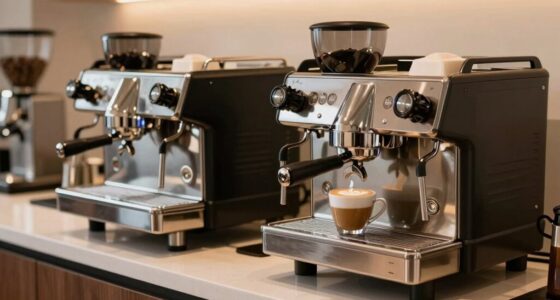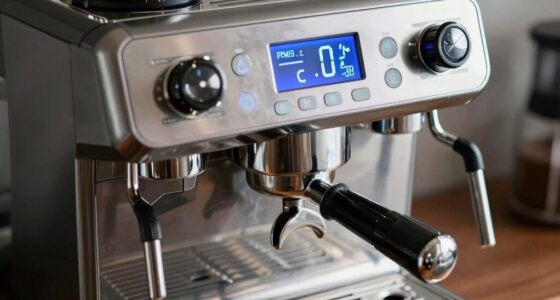
Many believe louder espresso machines are more powerful, but noise actually comes from engineering choices, not performance. Internal mechanics, grinders, and vibrations create sounds, but these don’t mean the machine is weaker. High-quality models use insulation and vibration-dampening tech to stay quiet without sacrificing brew strength. If you’re curious about what really affects noise levels, keep exploring—there’s more to discover about how design impacts both sound and quality.

Get kitchen gear delivered free with Prime
- Fast, free delivery on millions of items
- Prime Video, Amazon Music and more included
- Member-only deals all year
Key Takeaways
- Noise from espresso machines mainly results from grinders and vibrations, not overall power or brewing strength.
- Proper engineering and sound-dampening materials can reduce noise without affecting performance.
- Grinding sounds indicate proper bean crushing; they are normal and not a sign of poor quality.
- Vibrations are essential for consistent extraction and are controlled in high-end quiet models.
- Noise levels do not correlate with the machine’s ability to produce rich, flavorful espresso.
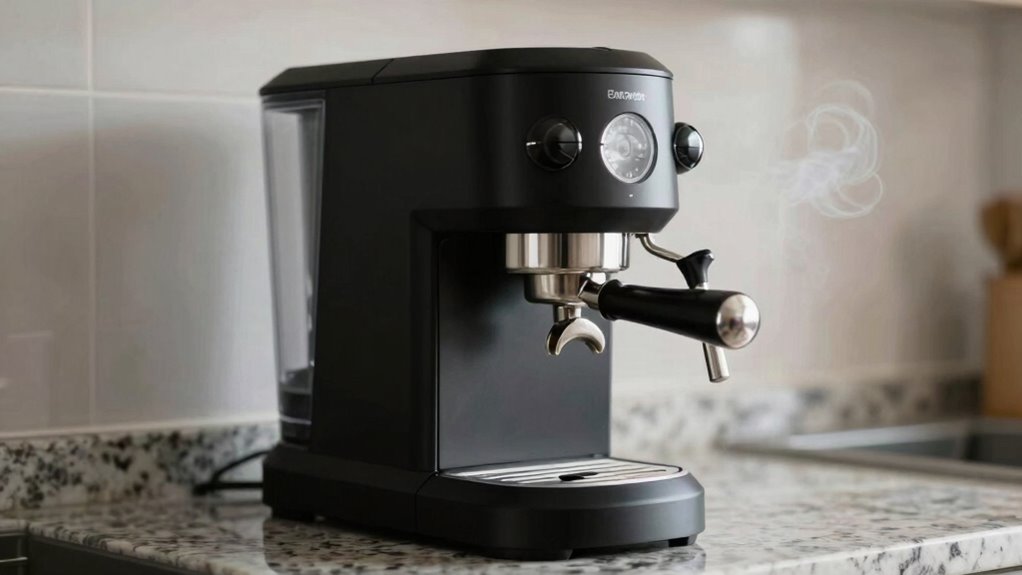
Many people believe that a quiet espresso machine can’t deliver the same powerful performance as louder models. They assume that noise levels directly correlate with the machine’s ability to produce rich, flavorful espresso. But that’s a myth. The noise you hear during brewing isn’t just about how loud the machine is; it’s about what causes that noise in the first place. When you hear a grinding noise or feel vibrations from your espresso machine, those sounds are often misunderstood indicators of performance. In reality, they are signs of the machine’s internal mechanics working to extract your perfect shot. A quiet machine can still have powerful performance, because engineering and sound-dampening features don’t compromise the core brewing process.
Grinding noise, for example, is typically associated with the burr grinder, which is responsible for crushing the beans to the right consistency. This sound is a normal part of the process, especially in machines with integrated grinders. It’s not a sign that the machine is underperforming; rather, it’s a sign that the grinding mechanism is functioning properly. Some quieter models use advanced grinding technology that minimizes noise, but they still produce some degree of sound when breaking down beans. The key is that a quieter grinder doesn’t mean it’s less efficient; it simply operates with less sound, often through better insulation and engineering. Additionally, manufacturers are increasingly incorporating sound-dampening technology to further reduce noise without sacrificing performance. Properly designed internal components also help in controlling vibrations and noise levels. This careful engineering allows for a balance between noise reduction and optimal brewing conditions.
A quieter grinder signals proper function, not weaker performance—advanced technology minimizes noise while maintaining efficiency.
Vibrations are another common source of noise and are often mistaken for loud operation. Vibrations happen when the internal components, like the pump and boiler, are working together to generate the pressure needed for extraction. While it’s true that more powerful machines tend to vibrate more, these vibrations don’t necessarily translate to louder noise. In fact, many high-end quiet machines are designed with vibration-dampening technology that reduces the transfer of vibrations into the housing, keeping noise levels low. These vibrations are essential for consistent pressure and flavor extraction, but they don’t have to be loud or disruptive. Properly engineered vibration control components are crucial for maintaining both quietness and performance.
Understanding the engineering design behind these machines reveals that noise is more about how the components are built rather than how much power they hold. Ultimately, the noise from an espresso machine is more about engineering choices than performance capability. Quiet models can produce the same quality espresso as louder ones because the core brewing process—pressure, temperature, and grind—remains the same. If you’re considering a quieter machine, focus on the quality of components and design features that dampen sound and vibrations. Don’t let the myth fool you into thinking that noise level is a measure of power. Instead, recognize that thoughtful engineering allows for both efficiency and quiet operation without sacrificing the richness of your espresso.
quiet espresso machine with integrated grinder
As an affiliate, we earn on qualifying purchases.
As an affiliate, we earn on qualifying purchases.
Frequently Asked Questions
Do All Quiet Espresso Machines Use the Same Noise Reduction Technology?
No, all quiet espresso machines don’t use the same noise reduction technology. Some utilize sound-insulating materials to minimize noise, while others focus on quieter pumps or optimized brewing processes. You might notice that quieter machines often prioritize machine durability, preventing vibrations that cause noise. While the coffee aroma remains consistent, choosing a machine with effective noise reduction technology can enhance your brewing experience without sacrificing durability or aroma quality.
How Does Machine Size Impact Noise Levels During Operation?
You’ll find that larger espresso machines often produce more noise because they generate more vibration, which can amplify sound if not properly managed. However, machine insulation and vibration dampening features help reduce noise regardless of size. When choosing a machine, look for models with effective insulation and vibration dampening technology to guarantee quieter operation, even in bigger units. These features make a significant difference in minimizing noise during brewing.
Are There Specific Brands Known for the Quietest Espresso Machines?
Some brands stand out for their quiet espresso machines, thanks to advanced sound insulation and vibration dampening. You’ll want to explore models from Miele and Jura, both renowned for their whisper-quiet operation. Their engineering minimizes noise during brewing, creating a serene coffee experience. As you search, focus on features like soundproofing materials and vibration absorption—these are the secrets behind the quietest machines, waiting to transform your mornings.
Can Regular Maintenance Reduce the Noise of an Espresso Machine?
Yes, regular maintenance can considerably reduce the noise of your espresso machine. Maintenance tips like descaling, cleaning the brew group, and lubricating moving parts help keep everything running smoothly and quietly. By staying on top of these tasks, you minimize the chances of noisy clanking or humming. Consistent noise reduction through proper upkeep not only extends your machine’s lifespan but also ensures a quieter, more enjoyable brewing experience.
Is Noise Level a Reliable Indicator of Espresso Quality?
You might think a quieter machine means better espresso, but noise level isn’t a reliable indicator of quality. Instead, focus on flavor consistency and brewing speed, which truly reflect how well your espresso is crafted. Don’t let noise distract you from enjoying the rich taste and perfect shot. Remember, a machine can be loud and still produce incredible flavor, or be quiet but lack the same craftsmanship.
As an affiliate, we earn on qualifying purchases.
Conclusion
So, next time you hear a noisy espresso machine, remember it’s not just about the machine itself. Like a lively chatterbox, some models are naturally louder due to their design and mechanics. Instead of expecting silence, focus on choosing a machine that balances noise with quality brewing. After all, a good espresso is worth a little background hum—like a cozy café in your own kitchen, lively yet comforting.
vibration dampening espresso machine
As an affiliate, we earn on qualifying purchases.
As an affiliate, we earn on qualifying purchases.
high performance quiet coffee maker
As an affiliate, we earn on qualifying purchases.
As an affiliate, we earn on qualifying purchases.
Halloween Picks
halloween
As an affiliate, we earn on qualifying purchases.