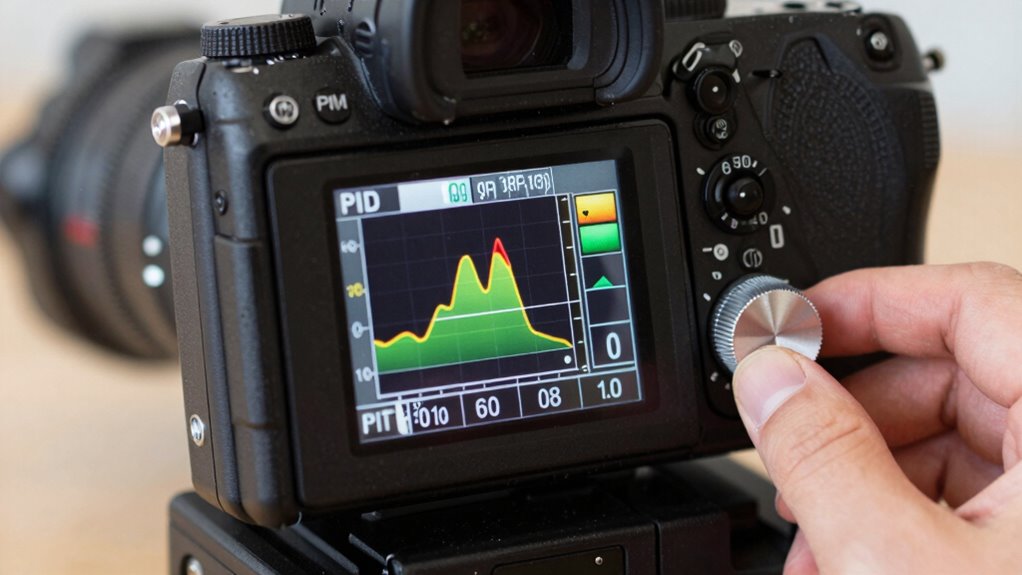

Auto-tuning is the PID feature designed to help beginners more than pros. It quickly finds ideal controller settings by analyzing system responses, saving you from hours of trial-and-error. This makes setup much easier and reduces the risk of instability. User-friendly interfaces guide you through the process, offering clear feedback and visuals. If you keep exploring, you’ll see how auto-tuning can boost your confidence and simplify your control system development even further.

Get kitchen gear delivered free — and shop member deals
- Fast, free delivery on millions of items
- Access to Prime Big Deal Days deals on October 6–7
- Prime Video, Amazon Music and more included
Key Takeaways
- Auto-tuning simplifies PID setup by automatically determining optimal parameters, reducing the need for expert knowledge.
- It provides a user-friendly interface with clear instructions, aiding beginners in system configuration.
- Auto-tuning minimizes trial-and-error, lowering the risk of instability for new users.
- It offers quick, reliable initial settings, enabling faster system startup and learning.
- Auto-tuning acts as a safety net, ensuring stable control while users learn system behavior.
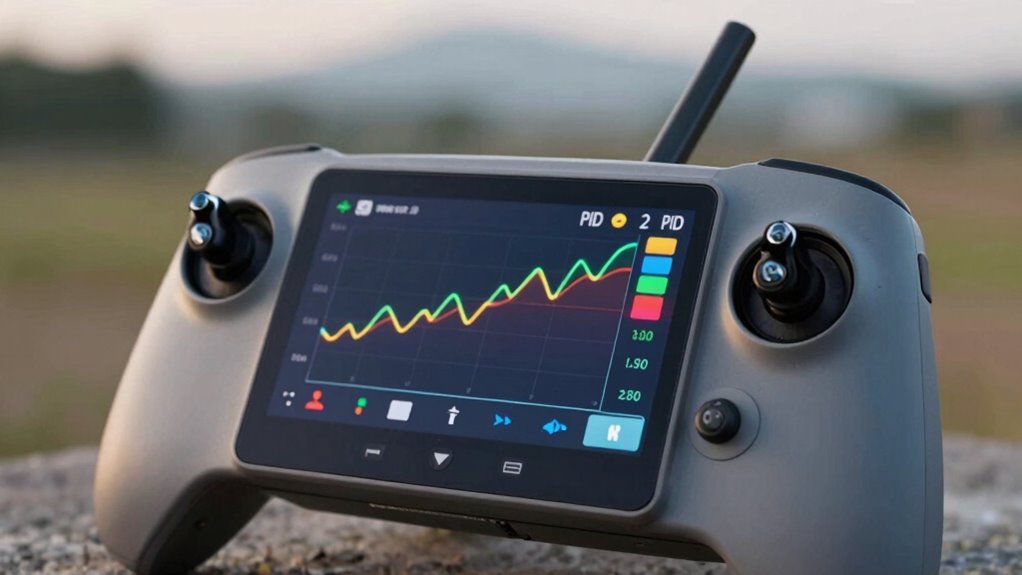
Have you ever wondered why some PID controllers seem more beginner-friendly than others? The key often lies in a feature that simplifies the process: auto-tuning. This built-in function helps you set the optimal PID parameters quickly and accurately, making it easier to get your system stable without requiring extensive experience. For beginners, this feature is a game-changer because it removes the steep learning curve associated with advanced tuning and professional calibration. Instead of spending hours manually adjusting proportional, integral, and derivative gains, you can rely on auto-tuning to do the heavy lifting. It analyzes the system’s response and calculates the best settings, giving you a ready-to-use controller in minutes.
While seasoned professionals might prefer manual tuning for precise control, beginners benefit from auto-tuning because it reduces trial-and-error, minimizes the risk of instability, and accelerates the setup process. This feature makes the initial learning phase less intimidating, so you can focus on understanding the system rather than wrestling with complex calculations. As you gain confidence, you can explore advanced tuning techniques to fine-tune the process further, but auto-tuning remains an accessible entry point for newcomers. It essentially acts as a safety net, guiding you toward a stable and efficient control loop without requiring deep knowledge upfront.
Auto-tuning reduces trial-and-error, helps beginners avoid instability, and speeds up system setup for confident control.
Another advantage of this feature is that it often comes with user-friendly interfaces, clear instructions, and visual feedback, which further demystify the tuning process. Many controllers allow you to initiate auto-tuning with just a press of a button, then observe the system’s response in real time. This transparency helps you learn how your system reacts and how the PID parameters influence performance. Over time, you’ll develop an intuitive understanding of system behavior, making manual adjustments less daunting. The auto-tuning process is also supported by industry-standard algorithms that ensure reliable and consistent results, even for those new to PID control. Incorporating control algorithms can further enhance your confidence in utilizing this feature effectively.
Understanding the role of system response analysis in auto-tuning can significantly improve your setup experience, as it allows the controller to adapt to various conditions automatically. In essence, this PID feature is designed to help you succeed early in your control system journey. It bridges the gap between beginner and expert by providing reliable initial settings, reducing the need for complex calculations, and enabling quick, confident setup. While professional calibration and advanced tuning remain essential for high-precision applications, auto-tuning acts as a practical, beginner-friendly tool that empowers you to learn and operate your control system effectively without extensive prior knowledge. It’s the feature that lowers barriers and makes PID control approachable for newcomers, ensuring you’re more likely to succeed from the start.
As an affiliate, we earn on qualifying purchases.
Frequently Asked Questions
How Does PID Tuning Differ for Beginners Versus Experts?
You’ll find that PID tuning for beginners often relies on basic methods, like using simple rules or trial-and-error, because they lack experience with advanced algorithms. Experts, on the other hand, use a deeper historical context of PID theory and advanced algorithms to fine-tune parameters precisely. Beginners benefit from simplified setups, while pros leverage detailed insights and sophisticated tools to optimize system performance efficiently.
Can PID Parameters Be Adjusted Automatically for Beginners?
Yes, PID parameters can be adjusted automatically for beginners. Imagine a gentle stream of feedback loops guiding your system like a steady hand, fine-tuning as sensor calibration improves. Automated tuning tools act as a compass, steering through complex parameter adjustments seamlessly. They analyze real-time data, adjusting gains to keep your system stable. This hands-free approach makes PID tuning more accessible, helping beginners achieve smooth control without needing deep expertise.
What Common Mistakes Do Beginners Make With PID Controllers?
You often make control complexity worse by over-adjusting PID parameters or ignoring the tuning challenges. Beginners tend to tweak parameters too drastically, causing instability or oscillations. They might also overlook the importance of understanding how each parameter affects system response, leading to poor control. To avoid these mistakes, focus on gradual tuning, observe system behavior carefully, and use automatic tuning tools if available to simplify the process and improve stability.
Is There a Simplified Way to Understand PID Control?
Think of PID control as a helpful guide steering a ship. For a beginner-friendly overview, imagine the proportional part as your steering wheel, adjusting based on how far off course you are; the integral as your compass, correcting past errors; and the derivative as your lookout, predicting future issues. A simplified explanation makes this concept approachable, helping you grasp how each part works together to keep systems steady and accurate.
How Long Does It Typically Take Beginners to Master PID Tuning?
It usually takes beginners a few weeks to months to master PID tuning, depending on their hands-on experience. During this time, you’ll focus on sensor calibration and adjusting parameters to improve system stability. Practice patience as you experiment with different settings, and you’ll gradually develop an intuitive understanding of how each component affects overall control. Consistent testing and learning from system responses are key to becoming proficient in PID tuning.
beginner PID temperature controller
As an affiliate, we earn on qualifying purchases.
As an affiliate, we earn on qualifying purchases.
Conclusion
While the PID feature might seem like a small detail, it gently guides you through the complexities of mastering your craft. For beginners, it offers a comforting hand, easing the journey into precision and control. As you grow more confident, you’ll find yourself naturally stepping beyond its gentle guidance. Embrace it as a quiet mentor, subtly shaping your skills without overshadowing your unique touch. Sometimes, a gentle nudge is all you need to flourish.
As an affiliate, we earn on qualifying purchases.
As an affiliate, we earn on qualifying purchases.
Fall Picks
fall essentials
As an affiliate, we earn on qualifying purchases.