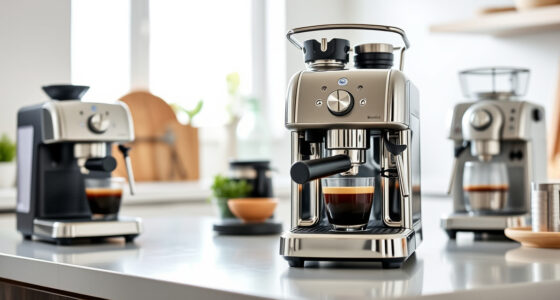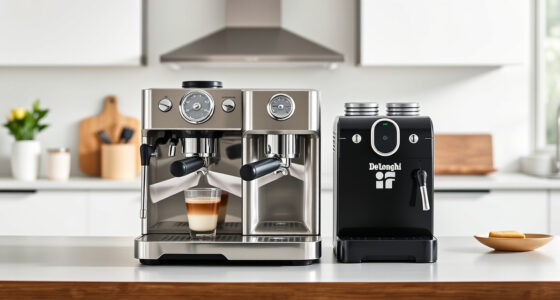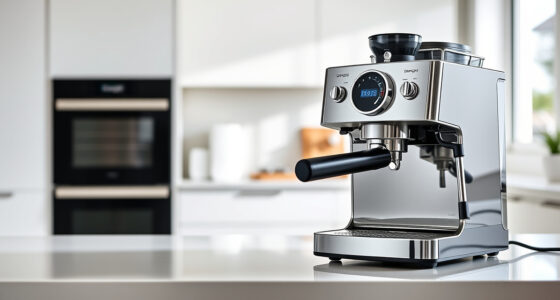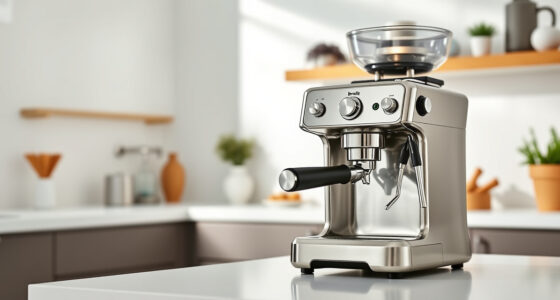

Brew pressure numbers can be misleading because they only reflect one part of the espresso process, ignoring critical factors like coffee freshness and grind consistency. Relying solely on pressure can give you false confidence in your shot’s quality, but many other variables impact flavor and extraction. If you focus only on pressure, you might overlook these key elements. Keep exploring, and you’ll discover how to master the whole process for better espresso every time.
Key Takeaways
- Brew pressure alone doesn’t guarantee better espresso; other factors like bean freshness and grind consistency are crucial.
- Focusing solely on pressure numbers can create false confidence, ignoring the importance of overall brewing variables.
- Inconsistent grind size and stale beans can undermine pressure adjustments, leading to misleading perceptions of quality.
- Pressure fluctuations may indicate machine or technique issues, not necessarily better extraction or flavor.
- Mastery requires understanding pressure as part of a broader system, not as the sole indicator of coffee quality.

Understanding brew pressure numbers is essential if you want to perfect your coffee or espresso. Many buyers focus heavily on these numbers, believing that higher or lower pressures automatically guarantee a better shot. But what they often overlook is that brew pressure alone doesn’t tell the whole story. Instead, it’s a piece of a larger puzzle involving factors like coffee bean freshness and grinder consistency. Without considering these elements, you might be chasing the wrong numbers and ending up disappointed.
When you see a specific brew pressure number, it’s tempting to assume that dialing in that exact figure will produce perfect espresso. However, the actual flavor and quality depend heavily on the freshness of your coffee beans. Fresh beans contain the right amount of oils and solubles that extract optimally at certain pressures. If your beans are stale, no matter how much you adjust the pressure, you might not extract the flavors properly. The same applies if your grinder isn’t consistent. An inconsistent grinder produces uneven particle sizes, leading to uneven extraction regardless of the pressure setting. You might think you’re fine-tuning the machine, but in reality, your grinder’s inconsistency is sabotaging your efforts.
Many buyers get caught up in chasing specific brew pressure numbers because they believe these figures are the ultimate key to great espresso. But in truth, the pressure is just part of a complex process that starts before you even turn on the machine. It begins with selecting fresh coffee beans and ensuring your grinder delivers uniform grind size. When your grinder produces consistent grounds, it allows the pressure to work more effectively, extracting flavors evenly. If your grind size varies, then adjusting the pressure won’t compensate for that inconsistency. Instead, it will create a false sense of control, leading you to think you’ve dialed in the perfect shot when, in reality, the problem lies elsewhere. Additionally, understanding brew pressure dynamics can help you better interpret how pressure interacts with other variables in the brewing process. Recognizing the importance of proper pressure stability can further improve your espresso results. Moreover, awareness of pressure fluctuations can help you identify issues with your machine or technique that might be affecting your brewing process. Incorporating knowledge of pressure behavior can also guide you in making more precise adjustments for optimal extraction.
Ultimately, focusing solely on brew pressure numbers can mislead you into thinking that the machine alone determines your coffee’s quality. But without fresh beans and a consistent grind, all the pressure in the world won’t deliver the results you want. True mastery comes from understanding that pressure is just one part of a broader process. When you pay attention to coffee bean freshness and grinder consistency, you set a stronger foundation for brewing great espresso—one that no number alone can guarantee.
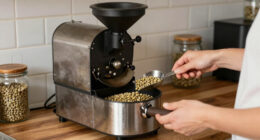
espresso grinder with consistent grind size
As an affiliate, we earn on qualifying purchases.
As an affiliate, we earn on qualifying purchases.
Frequently Asked Questions
How Do Brew Pressure Numbers Affect Overall Coffee Flavor?
Brew pressure numbers directly impact your coffee’s flavor extraction and overall brew consistency. Higher pressure can enhance flavor extraction, making your coffee richer and more intense. Conversely, too high or too low pressure can lead to uneven extraction, resulting in bitter or weak flavors. By understanding and controlling brew pressure, you guarantee each shot is balanced, offering consistent taste and aroma every time, improving your overall coffee experience.
Are Higher Pressure Numbers Always Better for Brewing?
Think of brewing like balancing on a tightrope; higher pressure isn’t always better. While some machines claim that increased pressure equals better flavor, pressure variability and proper machine calibration matter more. Too high pressure can over-extract your coffee, making it bitter. Instead, focus on consistent, well-calibrated pressure tailored to your beans. Remember, the right pressure depends on your machine and your taste preferences, not just the number on the gauge.
What Is the Ideal Brew Pressure for Different Coffee Styles?
You should aim for about 9 bars of brew pressure for espresso, which guarantees ideal coffee extraction and flavor. For drip or pour-over coffee, lower pressures around 1-2 bars work better, allowing gentle extraction. Always calibrate your machine properly to maintain consistent pressure. Keep in mind that higher pressure isn’t always better—it’s about matching the right pressure to your coffee style for balanced, delicious results.
How Can I Measure the Actual Pressure During Brewing?
Measuring actual pressure during brewing is as simple as wielding the right measurement tools. To get accurate readings, you need a pressure gauge designed for espresso machines or a compatible pressure calibration device. Attach these tools to your machine’s portafilter or water line, then monitor the gauge during extraction. This hands-on approach guarantees you’re not just guessing, but truly understanding your machine’s pressure, leading to better espresso quality.
Do Pressure Numbers Vary Between Different Espresso Machines?
Yes, pressure numbers vary between different espresso machines because of differences in pressure consistency and machine calibration. Each machine is designed differently, affecting how it maintains and regulates pressure during brewing. Even if two machines show the same pressure reading, their actual brewing conditions might differ. That’s why relying solely on pressure numbers can be misleading; proper calibration and understanding of each machine’s specific pressure behavior matter more for a good espresso.

Lavazza Espresso Barista Gran Crema Whole Bean Coffee Blend, Medium Espresso Roast, Oz Bag (Packaging May Vary) – 2.2 LB, 35.2 Ounce
- Product Weight: 2.2 lb (35.2 oz)
- Coffee Type: Whole Bean Espresso Blend
- Roast Level: Medium Espresso Roast
As an affiliate, we earn on qualifying purchases.
As an affiliate, we earn on qualifying purchases.
Conclusion
So, next time you see a fancy brew pressure number, don’t be fooled into thinking it’s the whole story. Just like a knight’s armor doesn’t make a hero, pressure alone doesn’t guarantee great coffee. Trust your taste buds and do a little digging—don’t rely solely on numbers. Remember, even in the age of chivalry, a good brew’s all about balance and skill, not just the digits on a gauge. Cheers to smarter sips!
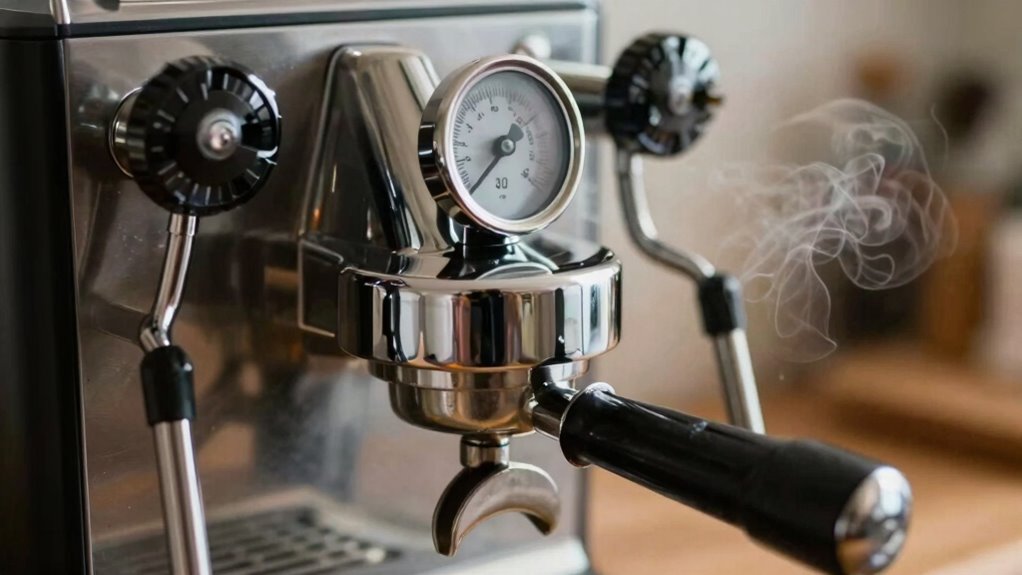
home espresso machine with pressure gauge
As an affiliate, we earn on qualifying purchases.
As an affiliate, we earn on qualifying purchases.
As an affiliate, we earn on qualifying purchases.