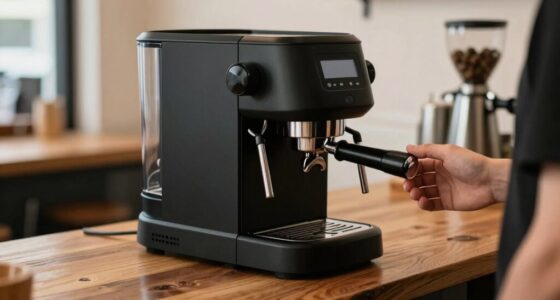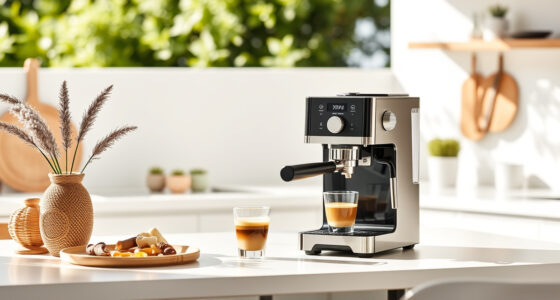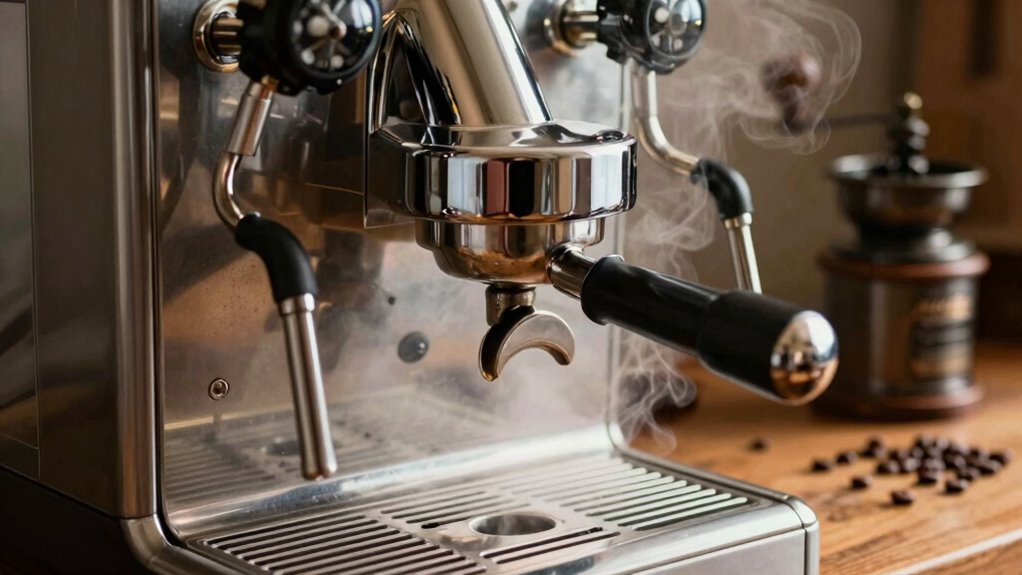

Many new home baristas think a bigger boiler means better espresso, but size isn’t everything. While larger boilers hold more water and heat longer, they don’t automatically improve quality. What really matters is how well your machine manages temperature and pressure—key factors for consistent shots and perfect microfoam. Focus on features like precise control rather than size alone, and you’ll find better results. Keep going, and you’ll discover more tips to upgrade your espresso game.

Get kitchen gear delivered free with Prime
- Fast, free delivery on millions of items
- Prime Video, Amazon Music and more included
- Member-only deals all year
Key Takeaways
- Larger boilers do not automatically ensure better espresso quality; control and regulation are more important.
- Small boilers can outperform larger ones with precise temperature and pressure management.
- Boiler size affects heating speed but not necessarily consistency or shot quality.
- Stable pressure and temperature regulation are critical for excellent milk texture and espresso flavor.
- Focusing on machine control features is more beneficial than choosing based solely on boiler size.
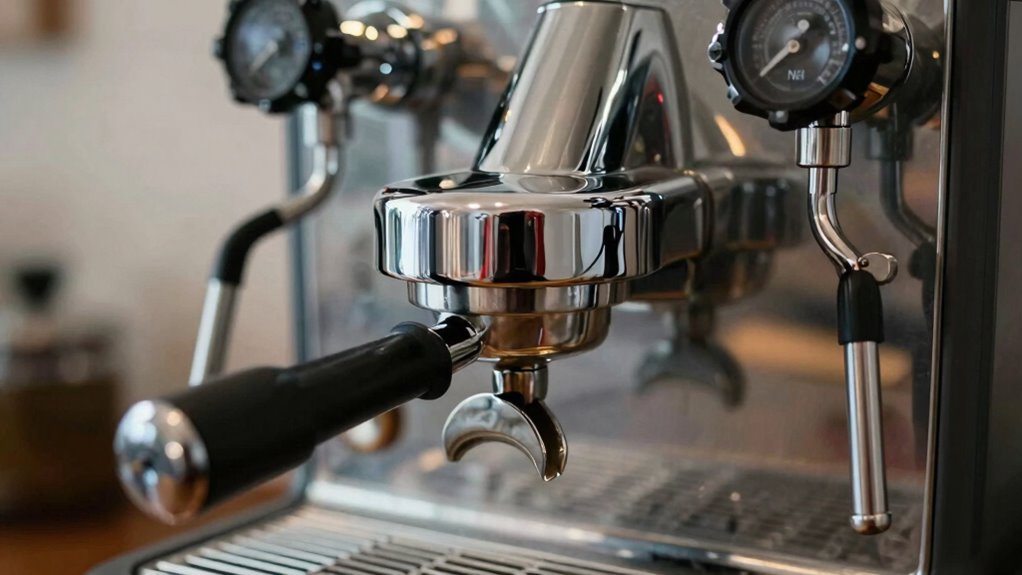
Many new home baristas believe that a larger boiler always means better espresso, but that is a common misconception. While a bigger boiler can hold more water and potentially provide more consistent steam, it doesn’t automatically translate to improved espresso quality. That’s why steam pressure management is so important—how precisely your machine can maintain the ideal steam pressure during use. If pressure fluctuates, your milk may not texture evenly, resulting in a less desirable microfoam. So, focus on how well your machine maintains consistent steam pressure, rather than just its size.
Temperature control is equally important. Espresso extraction is highly sensitive to temperature, and a machine that offers precise temperature regulation allows you to fine-tune your shots. Many new baristas assume that a larger boiler automatically means more stable temperature, but that’s not always true. Without accurate temperature regulation, your espresso can taste burnt or sour. A machine with good temperature control features, such as PID controllers, ensures that your brew water stays at the ideal temperature, regardless of boiler size. This consistency helps you pull shots with balanced flavors and excellent crema. Additionally, boiler size alone does not determine your machine’s overall efficiency; other design factors also influence performance.
Conversely, a small boiler with excellent temperature regulation and stable steam pressure can outperform a larger boiler that lacks these features. It’s all about how well your machine manages these critical parameters. Smaller boilers heat up faster and are easier to maintain at a steady temperature, giving you more control over your espresso and milk steaming. Good thermal mass control contributes significantly to achieving consistent results at home. Moreover, understanding the quality of components in your machine can greatly impact its ability to maintain these critical parameters over time. Furthermore, paying attention to build quality and how well the machine is assembled can influence its long-term performance and reliability.
In essence, don’t fall for the myth that bigger is always better. Instead, prioritize machines that offer precise temperature control and consistent steam pressure. These features have a more significant impact on your espresso quality than boiler size alone. Focus on how your machine performs in these areas, and you’ll be well on your way to making excellent espresso at home, regardless of boiler size.
Products Worth Considering

De'Longhi Stilosa Compact Manual Espresso Machine with Milk Frother

De'Longhi Magnifica Duo Fully Automatic Espresso Machine with Milk Frother, Silver

Instant Pot Duo Crisp Ultimate 6.5-Quart 13-in-1 Pressure Cooker and Air Fryer
As an affiliate, we earn on qualifying purchases.
Frequently Asked Questions
Can a Boiler Be Used for Brewing Coffee?
A boiler isn’t designed for brewing coffee directly, but it can be part of your espresso machine. The boiler material, like stainless steel or brass, influences heat stability, while boiler size determines how much hot water you have on hand. Small boilers heat quickly but may need refilling often, whereas larger ones maintain temperature longer, helping you brew consistently. Always check your machine’s specs before attempting to use the boiler for brewing.
How Often Should I Descale My Home Espresso Boiler?
Think of your espresso boiler as a garden that needs tending. You should descale your home espresso boiler every 1-3 months, depending on your water hardness. Regular descaling prevents mineral buildup, which can clog the system and affect flavor. If you notice your machine taking longer to heat or brewing less efficiently, it’s time to act. Maintaining descaling ensures your coffee remains vibrant and your boiler runs smoothly.
Is a Higher Boiler Temperature Always Better for Espresso?
A higher boiler temperature isn’t always better for espresso. You need temperature consistency to guarantee ideal extraction, which varies based on your beans and machine. Also, boiler material influences heat stability; for example, copper offers better thermal conductivity than stainless steel. Too high a temperature can cause bitterness, while too low might result in weak flavor. Adjust within the recommended range to balance extraction, flavor, and temperature stability.
Do All Home Espresso Machines Have Boilers?
Not all home espresso machines have boilers; some use thermoblocks or heat exchangers instead. Those with boilers typically include features like a steam wand, which relies on boiler capacity to generate steam for frothing milk. Your choice depends on your brewing needs—machines with larger boilers offer better temperature stability and more steam power, making them ideal for those who want to master both espresso and milk-based drinks.
What’s the Ideal Boiler Pressure for Home Espresso Machines?
You should aim for a boiler pressure of around 9 bars for home espresso machines. This pressure guarantees ideal extraction and flavor. Maintaining pressure stability is essential, so regularly checking your boiler and ensuring proper boiler maintenance prevents pressure fluctuations that can ruin your shot. Did you know that inconsistent pressure is a common reason for espresso disappointment? Keeping your boiler at the right pressure level guarantees better, more consistent results.
Conclusion
Don’t let the boiler myth trip you up; understanding how your espresso machine’s boiler works is key to brewing great coffee. Remember, most home machines heat water efficiently without the need for a fancy boiler setup. Did you know that about 70% of home baristas report improved espresso quality once they grasp their machine’s mechanics? So, stay curious, experiment, and enjoy the journey—great coffee is just a few adjustments away!