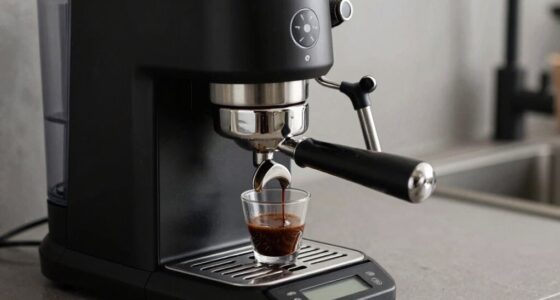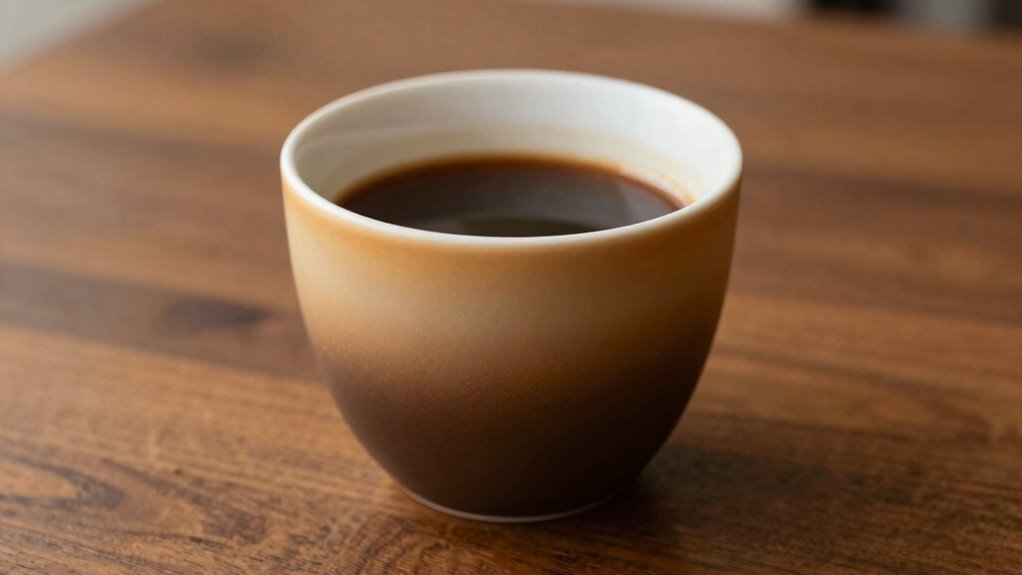

The color change in your espresso is a key sign of its freshness, roast level, and extraction quality. Deep, rich crema and a vibrant brown indicate properly roasted beans and ideal brewing. If the color fades or looks dull, it could mean the beans are stale or over-extracted, impacting flavor and aroma. Pay close attention to these visual clues, and you’ll discover more ways to improve your coffee experience as you continue exploring.
Key Takeaways
- A deep, rich crema indicates proper roast level and freshness, while a faded or dull color suggests staleness.
- Overly dark or black beans signal over-roasting or potential flavor loss.
- Color fading in the espresso shot hints at over-extraction or declining bean quality.
- Visual cues help determine if beans are fresh or have degraded over time.
- Monitoring color changes guides adjustments in brewing to optimize flavor and aroma.
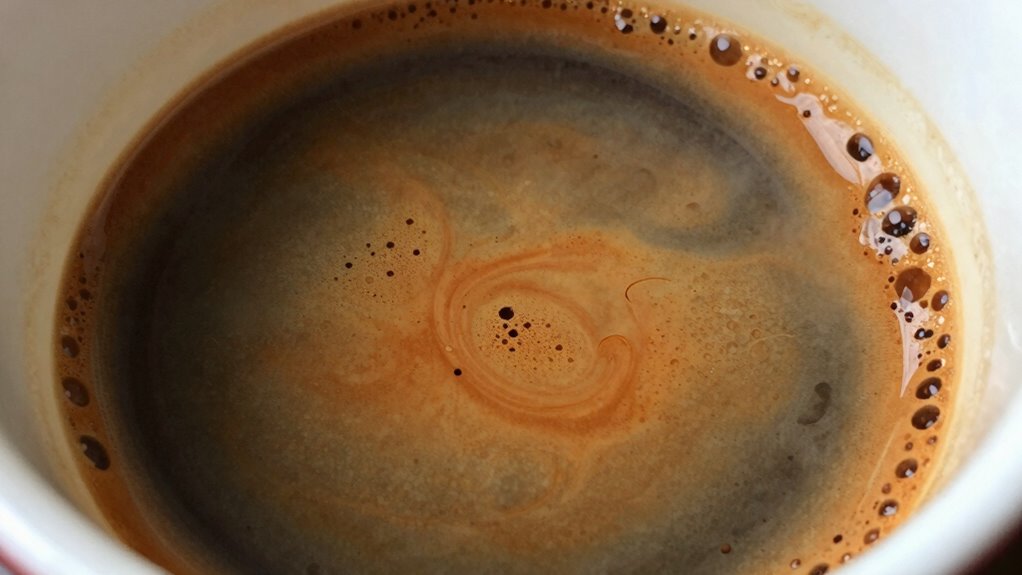
Have you ever noticed how your once-rich espresso suddenly shifts in color, transforming from deep brown to a lighter, more muted hue? That subtle change isn’t just a visual cue—it’s a sign of the ongoing coffee roasting process and the natural color transformation that occurs as the beans develop. When you brew espresso, the color of the shot reflects the roasting level and the freshness of the beans. A rich, dark crema indicates properly roasted beans, but if the espresso’s color begins to fade or shift unexpectedly, it’s time to pay attention.
During coffee roasting, beans go through a series of chemical and physical changes that influence their flavor and color. As the beans toast, they transition from a greenish hue to yellow, then to light brown, and finally to dark brown or even black in the case of dark roasts. The color transformation is a visual record of these stages. When you see your espresso’s color change from a vibrant, deep hue to a duller, lighter tone, it signals that the beans are either over-extracted or starting to lose their optimal flavor potential. Over time, the oils and compounds that create that signature crema begin to break down, impacting the espresso’s appearance and taste.
This color shift can also be a sign that the beans are not as fresh as they once were. Coffee beans naturally degrade after roasting, and their color can change as they age. If you notice your espresso turning lighter or developing a duller appearance, it might mean your beans are stale or have been exposed to air for too long. Proper storage is key to preserving the integrity of your coffee, preventing unwanted color changes and flavor deterioration. Understanding the chemical changes that occur during roasting can help you better interpret these visual cues. Recognizing these visual cues allows you to make more informed decisions about your brewing process. Being aware of bean freshness and how it influences color can assist in choosing the best beans for your preferred flavor profile. Additionally, the storage conditions you maintain can significantly impact how quickly these changes occur.
Knowing how to interpret these visual cues helps you improve your brewing process. If your espresso’s color isn’t as dark and inviting as it once was, consider adjusting your grind size, brew time, or extraction method. Sometimes, a slight tweak can restore the vibrancy and flavor profile you’re after. Remember, the color transformation is more than just aesthetics—it’s an indicator of the beans’ roast level, freshness, and overall quality. Ignoring these signs could lead to a disappointing cup, but paying close attention ensures you enjoy the best possible espresso every time. In essence, your coffee’s color tells a story—one that guides you toward better brewing and richer flavor.

1 Shot Color Chip Chart & Guide showing all 44 Solid Colors and Pearlescent Colors by One Shot
- Comprehensive Color Chart: Displays 44 solid and pearlescent colors
- Includes Pearlescent Colors: Features all 10 pearlescent shades
As an affiliate, we earn on qualifying purchases.
As an affiliate, we earn on qualifying purchases.
Frequently Asked Questions
Can Espresso Color Change Indicate Brewing Issues?
Yes, espresso color change can indicate brewing issues. If your espresso’s color shifts unexpectedly, it affects coffee aesthetics and might suggest inconsistencies in extraction. A dark, uneven color can mean over-extraction, while too light may point to under-extraction. Paying attention to these color cues helps you maintain brewing consistency, ensuring each shot tastes as intended. Recognizing these signs early lets you make adjustments for a perfect espresso every time.
How Long Does the Color Change Typically Last?
The espresso’s color shift usually lasts just a few seconds to a minute, like a fleeting sunset. To keep this vibrant progression consistent, store your coffee properly and use fresh beans. When beans are fresh and well-kept, the color change remains lively and clear, signaling quality. If the color fades too quickly or lingers too long, it might hint at stale beans or improper storage, affecting your brew’s overall flavor.
Does the Roast Level Affect the Color Change?
Yes, the roast level impacts the color change. Darker roasts tend to show a more pronounced and quicker color shift, while lighter roasts change more subtly. Your roast consistency and bean freshness also influence this process. Fresher beans often produce more vibrant color changes, and consistent roasting guarantees predictable results. Pay attention to these factors, as they help you understand and control the espresso’s color evolution better.
Is a Color Change Visible in All Espresso Types?
You’ll notice a color change in most espresso types, but it varies depending on factors like coffee storage and roast level. Proper storage keeps beans fresh, ensuring consistent extraction and color during brewing. As you extract espresso, the color deepens from a light brown to a rich, dark hue. Observing these changes helps you gauge extraction quality, but always consider the coffee’s freshness and roast to understand color variations better.
Can the Color Shift Impact Coffee Flavor?
Sure, that subtle espresso color shift can totally mess with your flavor experience, right? When grind consistency slips or water temperature fluctuates, the coffee’s hue changes, and so does its taste. You might end up with a brew that’s flatter or more bitter—hardly what your palate signed up for. So, keep those variables in check; otherwise, your coffee’s flavor could be as unpredictable as a weather forecast.

Agratronix Coffee Moisture Tester Model 08150
- Accurate Coffee Moisture Testing: Calibrated for various coffee commodities
- Multilingual Backlit Display: Provides clear readings in dark environments
- User-Friendly Operation: Easy to operate anywhere, anytime
As an affiliate, we earn on qualifying purchases.
As an affiliate, we earn on qualifying purchases.
Conclusion
Just like a chameleon changes its colors to blend in, your espresso’s shift in hue is a sign to pay attention. Ignoring this subtle change is like missing the warning light on your dashboard—it could lead to a less-than-perfect brew. Keep an eye on those color shifts, and you’ll enjoy richer, more consistent espresso every time. Remember, spotting the change early is like catching a good wave—timing makes all the difference.
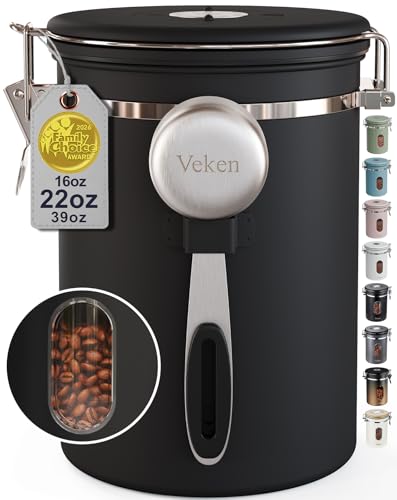
Veken Coffee Canister with Window, Airtight Stainless Steel Container, 22OZ
- Gift for Coffee Lovers: Stylish, functional coffee storage gift
- Date Tracker & Window: Track dates and view contents easily
- Includes Free Coffee Scoop: Stainless steel scoop with hook
As an affiliate, we earn on qualifying purchases.
As an affiliate, we earn on qualifying purchases.

VIA CREMA Milk Frother Jug Thermometer
- Adjustable Design: Multi-stage clip for easy temperature reading
- Accurate Measurement: Precise temperature readings for beverages
- Wide Temperature Range: Measures from 0°F to 220°F
As an affiliate, we earn on qualifying purchases.
As an affiliate, we earn on qualifying purchases.