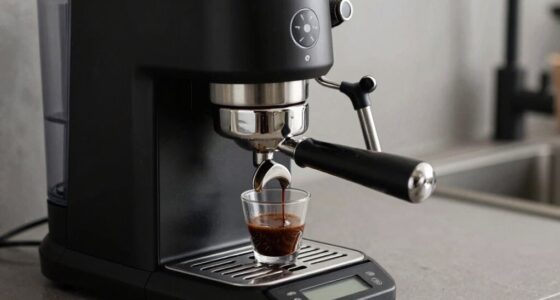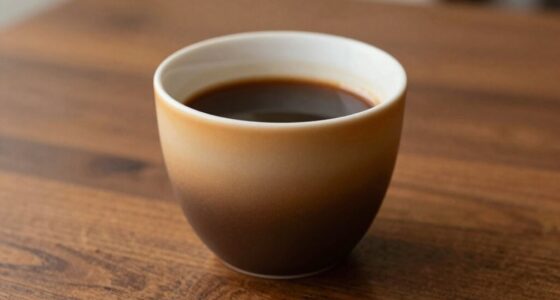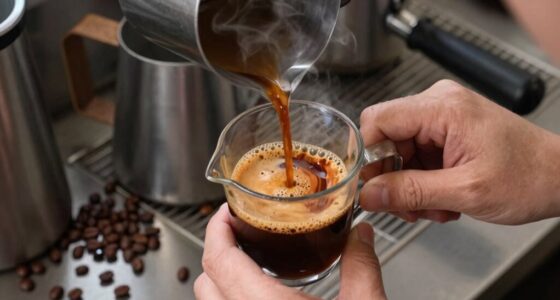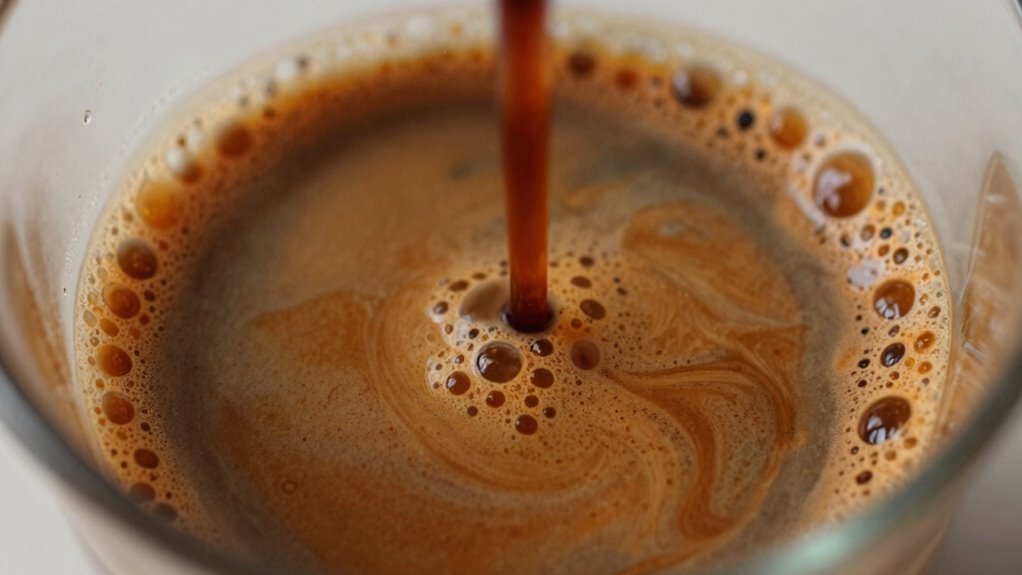

Bitter espresso isn’t always caused by over-extraction; other factors like the coffee bean’s origin, roast level, and brewing temperature also influence flavor. Regional differences and climate affect bean characteristics, while dark roasts tend to be more bitter. Temperature fluctuations can enhance or mask bitterness, and improper brew ratios may lead to imbalance. Understanding these factors helps you troubleshoot better and improve your espresso’s flavor, so exploring these aspects can discover even better results for your brew.
Key Takeaways
- Bitter flavors can originate from coffee bean origin, roast level, or natural profile, not just over-extraction.
- Brewing temperature fluctuations can enhance bitterness without indicating over-extraction.
- Darker roasts naturally develop bitter notes, independent of extraction issues.
- Regional factors like soil and altitude influence flavor, including perceived bitterness.
- Proper brewing ratios and technique can mitigate bitterness caused by factors other than over-extraction.
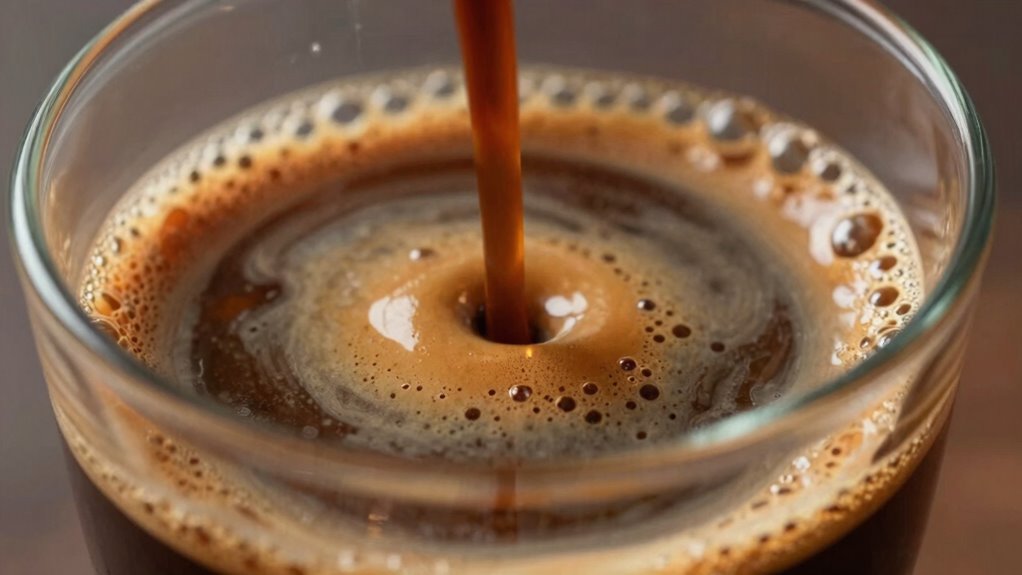
Many coffee enthusiasts assume that a bitter taste in espresso always signals over-extraction, but that’s not always the case. While over-extraction is a common cause of bitterness, other factors can influence the flavor, especially coffee bean origins and brewing temperature. Understanding these elements helps you identify the true reason behind that bitter note rather than jumping to conclusions.
Your choice of coffee bean origins plays a crucial role in flavor profiles. Beans from different regions have distinct characteristics, influenced by climate, soil, and altitude. For instance, beans from dark, volcanic soils often develop bold, complex flavors, which can sometimes come across as bitter if not balanced properly. Conversely, beans from high-altitude regions tend to have brighter, more acidic notes, which can mask or reduce bitterness. If you’re using beans from a particular origin, it’s worth considering how their inherent flavors impact your espresso’s taste. Sometimes, a bitter flavor isn’t a sign of over-extraction but a reflection of the beans’ natural profile. Additionally, understanding the flavor profiles of different beans can help you select the right beans for your preferred taste. Recognizing the impact of brewing temperature is also essential, as temperature fluctuations can alter how these beans express their flavors. Adjusting the brew ratio can help balance the extraction and influence the final taste, while also considering the roast level, which significantly affects bitterness.

Lavazza Espresso Barista Gran Crema Whole Bean Coffee Blend, Medium Espresso Roast, Oz Bag (Packaging May Vary) – 2.2 LB, 35.2 Ounce
One bag of 2.2lb Lavazza Espresso Barista Gran Crema Whole Bean Coffee Blend
As an affiliate, we earn on qualifying purchases.
As an affiliate, we earn on qualifying purchases.
Frequently Asked Questions
Can Brewing Temperature Affect Espresso Bitterness?
Yes, brewing temperature can affect espresso bitterness. If your temperature isn’t stable, it can lead to uneven extraction timing, causing bitterness or sourness. Too high a temperature may over-extract bitter compounds quickly, while too low can under-extract and result in sourness. To avoid this, guarantee temperature stability throughout brewing, maintaining a consistent temperature to control extraction timing and produce a balanced, smooth espresso.
Does Coffee Bean Roast Level Influence Bitterness?
Roast level markedly influences bitterness. Light roasts tend to showcase brighter, more acidic flavor profiles, while darker roasts often produce bolder, more bitter brews. The roast characteristics shape the flavor profiles, with darker roasts developing deeper, more intense bitterness due to longer roasting times. So, if you crave a sweeter, nuanced cup, opt for a lighter roast. But if bold, bitter notes appeal, a dark roast is your go-to.
How Does Grind Size Impact Espresso Flavor?
Your grind size profoundly impacts espresso flavor. If your grind consistency is uneven, particle size varies, causing inconsistent extraction. Finer grinds increase surface area, leading to more intense flavors, while coarser grinds produce a milder cup. Maintaining uniform particle size ensures a balanced extraction, preventing bitterness or sourness. Adjust your grind to match your machine’s pressure and brew time, and you’ll notice a smoother, more flavorful espresso every time.
Can Water Quality Alter Espresso Bitterness?
Yes, water quality can definitely alter espresso bitterness. If your water has high mineral content or an imbalanced pH level, it can extract more bitter compounds from the coffee grounds. Even if your grind size is perfect, poor water quality might make your espresso taste overly bitter. Using water with balanced mineral content and a neutral pH helps highlight the coffee’s natural sweetness, reducing unwanted bitterness and improving flavor.
What Role Does Tamping Pressure Play in Extraction?
Tamping pressure plays a vital role in extraction by ensuring tamping consistency, which helps water flow evenly through the coffee. If you apply pressure variably, it causes pressure variability, leading to uneven extraction. Consistent tamping creates uniform resistance, resulting in balanced flavors. Too much or too little pressure disrupts this balance, making your espresso either bitter or weak. Focus on applying steady, even pressure to improve your shot quality.

De'Longhi Classic Signature Espresso Machine
OPTIMAL EXTRACTION: Achieve expertly extracted espresso with a 15-bar Italian professional pump delivering the perfect pressure for lattes,…
As an affiliate, we earn on qualifying purchases.
As an affiliate, we earn on qualifying purchases.
Conclusion
Next time your espresso hits your palate with a bitter punch, remember—sometimes it’s like a stormy sky with dark clouds hiding a gentle dawn. Not every bitterness signals over-extraction; it might be the complexity of flavors waiting to be uncovered. Trust your senses and embrace the journey, knowing that beneath the rough exterior, there’s often a surprising depth. Your perfect shot is out there, just waiting for you to see beyond the surface.

Peet's Coffee, Dark Roast Whole Bean Coffee, 100% Arabica Coffee – Espresso Forte 32 Ounce Bag
Contains one (1) 32 Ounce Bag of Peet's Espresso Forte Dark Espresso Roast Whole Bean 100% Arabica Coffee
As an affiliate, we earn on qualifying purchases.
As an affiliate, we earn on qualifying purchases.

SHARDOR Electric Coffee Grinder, 70g Large Capacity Spice Grinder with Visual Timing Knob for Precise Grind, Quiet Coffee Bean Grinder for Espresso, French Press, Herbs and Grains, Black
【PRECISION GRINDING CONTROL】 Stop guessing how long to grind. Our electric coffee grinder features a clear timing knob…
As an affiliate, we earn on qualifying purchases.
As an affiliate, we earn on qualifying purchases.