
TL;DR
The Home Depot, Lowe’s and Tractor Supply all reported year-over-year sales growth in the third quarter of 2026, while comparable sales rose more modestly. The results point to intensifying competition for repair and maintenance spending and local contractors, with big-box retailers investing in inventory, loyalty programs and faster delivery.
The Home Depot, Lowe’s and Tractor Supply reported higher sales in the third quarter of 2026, as major retailers focused on repair and maintenance purchases and professional customers amid sluggish housing turnover and delayed remodeling. Their results show a competitive push into customer segments served by independent hardware stores, even as comparable transaction counts fell at Home Depot and Lowe’s.

Get kitchen gear delivered free with Prime
- Fast, free delivery on millions of items
- Prime Video, Amazon Music and more included
- Member-only deals all year
Home Depot reported $43.4 billion in sales, up 4.9% year over year, with comparable sales growth of 2.2%. Its comparable average ticket rose 3%, while comparable transactions declined 0.5%. Lowe’s posted $22.8 billion in sales, up 9.3%, and comparable sales growth of 1.8%; its comparable average transaction size increased 3.5%, while comparable transactions fell 1.7%. Tractor Supply reported $3.91 billion in sales, up 5.1%, and comparable-store sales growth of 0.4%. Its overall sales growth also reflected new store openings and the acquisition of VIP Petcare.
The companies are pursuing local contractors with different combinations of inventory, discounts, loyalty incentives and fulfillment. Home Depot recorded its ninth consecutive quarter of positive comparable pro sales, with strength in fasteners, hand tools, portable power tools, insulation, and pipe and fittings. Lowe’s said it gained share among small and midsize contractors, citing inventory investments, volume discounts and loyalty incentives. Its survey of core professional customers indicated steady project backlogs, with maintenance and repair work a main source of business.
Fast delivery is another competitive focus. Home Depot said tens of thousands of products qualify for express delivery within two hours, with most express orders arriving in less than an hour. Lowe’s is also promoting rapid fulfillment. Online sales rose about 13% at Home Depot and 17.4% at Lowe’s during the quarter, according to the report. The source material identifies customer education as a factor in online purchasing but cuts off before providing the related executive statement, so no further claim about that point can be confirmed.
Repair Work Becomes a Battleground
The results suggest the competitive contest is not limited to large remodeling jobs. With housing turnover sluggish and consumers putting off some discretionary projects, retailers are pursuing existing-home maintenance, everyday repairs and contractor demand—spending that may be less easy to delay. That focus puts pressure on independent stores to compete on the basics customers value: having needed products in stock, helping shoppers complete a project in one visit and getting materials to a jobsite promptly.
Sales growth also needs to be read alongside transaction trends. At Home Depot and Lowe’s, average purchase values rose while comparable transaction counts declined. That means revenue gains do not, by themselves, establish that more customers are shopping or buying more frequently. For independent retailers comparing their own results, the distinction can help reveal whether growth is coming from higher-dollar purchases, product mix or increased customer visits.
For contractors, wider access to discounts, loyalty offers and rapid delivery at national chains could give them more options for routine purchases. Local retailers may retain advantages in customer relationships and flexible service, but the report’s figures do not measure how customers divide their spending between local stores and big-box chains. The competitive impact will depend on execution in each market.
Products Worth Considering

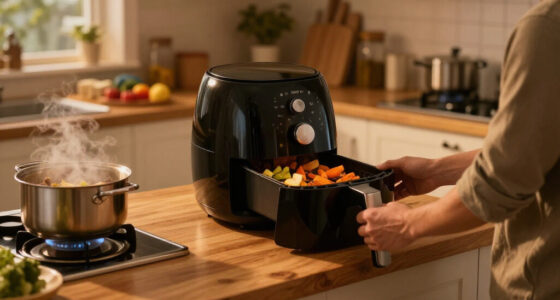
Ninja Prestige Smart XL 10-in-1 Air Fryer and Countertop Oven with Pro Cook System, Stainless Steel, DT551

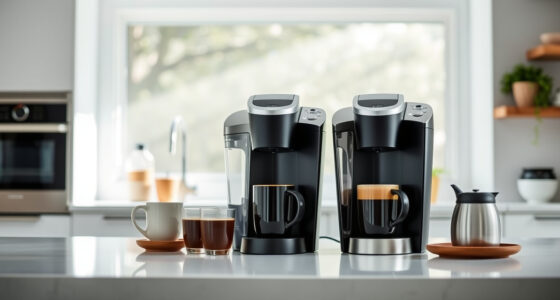
De'Longhi Magnifica Evo Fully Automatic Espresso Machine with Milk Frother, Silver

Vitamix VX1 Professional-Grade Blender, 64 oz, Black
As an affiliate, we earn on qualifying purchases.
A Shift Toward Everyday Projects
The report frames the third-quarter results against sluggish housing turnover and postponed larger remodeling projects. In that setting, Home Depot, Lowe’s and Tractor Supply are seeking a greater share of existing repair and maintenance spending through deeper inventories, promotions, loyalty programs and faster delivery. These are strategic responses described in the source report; the quarterly sales figures alone do not prove that any one initiative caused the growth.
Department results also point to differences between repair-oriented and discretionary demand. Home Depot reported comparable sales gains in 13 of its 16 merchandising departments, with particular strength in power tools, plumbing, electrical and storage. Lowe’s reported strength in rough plumbing, fasteners and outdoor power equipment, while kitchens and flooring remained challenged. Tractor Supply continues to emphasize value, pet products and convenience, which extend its offer beyond traditional home improvement.
Competition extends beyond the three companies’ overall sales. The report says Harbor Freight is expanding its premium ICON hand-tool assortment while maintaining aggressive pricing, adding another source of pressure in a category relevant to professionals and independent hardware stores. It also describes Home Depot technology linking outside sales representatives with in-store pro desks, giving employees more information about contractors’ projects and purchasing histories.
“The battle for the home improvement dollar is increasingly being fought over smaller projects, everyday repairs and the purchasing habits of local contractors.”
— Hardware Retailing report
Sales Growth Has Limits
The reported figures do not establish how much of each retailer’s growth came from prices, product mix, new stores, acquisitions or increased customer demand. The distinction is especially relevant at Home Depot and Lowe’s, where average purchase measures rose as comparable transactions declined. The source provides no equivalent transaction-count detail for Tractor Supply.
The report does not quantify how much market share the chains gained from independent stores, nor does it provide a direct comparison of delivery performance, prices or customer satisfaction across retailers. Lowe’s reported gains among small and midsize contractors, but the source does not specify the size of those gains. The material also ends midway through a sentence about Lowe’s CEO Marvin Ellison and online customer education; the missing statement and its details cannot be verified from the supplied text.
Watch Contractor Service Measures
The next useful indicators will be whether the retailers sustain comparable-sales growth and contractor gains in subsequent reporting periods, and whether transaction counts improve alongside average purchase values. The source does not provide dates for the companies’ next earnings releases or identify a specific upcoming milestone.
Independent hardware operators can use the reported trends to review contractor-account purchasing patterns, identify inventory gaps and ask customers about upcoming material needs. The report also points to practical areas to examine: delivery scheduling and communication, order convenience, repair-category inventory and associate support. Those are suggested responses, not evidence that any particular approach will offset chain competition.
Key Questions
Which companies are covered in the third-quarter roundup?
The roundup covers The Home Depot, Lowe’s and Tractor Supply Company, with Walmart and Target included briefly as broader retail comparisons.
Did all three home and farm retailers report sales growth?
Yes. The report says third-quarter sales rose 4.9% at Home Depot, 9.3% at Lowe’s and 5.1% at Tractor Supply. Their comparable-sales growth rates were 2.2%, 1.8% and 0.4%, respectively.
Why are contractors a focus for the big-box chains?
The report describes professional customers, especially small and midsize contractors, as an important market. Home Depot and Lowe’s are emphasizing products, inventory, discounts, loyalty offers and faster delivery to compete for their purchases.
Did Home Depot and Lowe’s have more comparable transactions?
No. Comparable transactions declined 0.5% at Home Depot and 1.7% at Lowe’s, while their average purchase measures increased. The figures show sales growth alongside fewer comparable transactions, not a rise in transaction frequency.
What remains unknown about the results?
The report does not quantify gains or losses in market share against independent retailers, or separate the effects of pricing, product mix and customer demand on sales. It also does not provide the full Lowe’s executive statement referenced in its discussion of customer education and online sales.
Source: hardwareretailing.com