
🔍 Read the full analysis: Pizza Dough, Neapolitan Style: 24-Hour Fermentation Made Simple on Mad Tasting

Get kitchen gear delivered free with Prime
- Fast, free delivery on millions of items
- Prime Video, Amazon Music and more included
- Member-only deals all year
TL;DR
Mad Tasting’s guide gives a formula for four roughly 250-gram pizza dough balls: 500 grams of flour, 315 grams of water, 14 grams of salt and 1 gram of instant yeast. The dough rests briefly at room temperature, ferments overnight in the refrigerator and returns to room temperature for about three hours before baking. The schedule is a guide; expansion and texture help indicate readiness.
Mad Tasting’s pizza dough guide sets out a roughly 24-hour home fermentation for four Neapolitan-style pizzas, using flour, water, salt and a small amount of instant yeast. The method combines a short room-temperature rest, an overnight refrigerator stay and about three hours out of the refrigerator before baking, giving home cooks a schedule while advising them to judge readiness by the dough’s expansion and feel.
The formula calls for 500 grams of flour, 315 grams of water, 14 grams of salt and 1 gram of instant yeast. It yields four dough balls of about 250 grams each. The water equals 63% of the flour weight, a hydration level Mad Tasting describes as a middle ground intended to keep the dough supple and workable. A gram scale is recommended, particularly for measuring the small quantity of yeast.
The example schedule starts at 6 p.m. with mixing and kneading, followed by a covered room-temperature rest of about 30 to 60 minutes. The dough is divided into four balls and refrigerated overnight. At about 3 p.m. the next day, the covered balls come out to warm for around three hours; the guide’s example has shaping and baking at about 6 p.m. Exact elapsed time depends on the chosen start and finish.
The guide suggests “00” or bread flour, while noting that “00” describes how finely flour is milled rather than its protein strength. Bread flour may absorb water differently, so it advises holding back some water during mixing and adding it if needed. All-purpose flour is also presented as an option, though the crust may stretch and brown differently. The recipe omits oil and sugar, which some home recipes add to encourage browning in cooler ovens.
Pizza Dough, Neapolitan Style: 24-Hour Fermentation Made Simple
A lean dough of flour, water, salt and a pinch of instant yeast rests briefly at room temperature, ferments overnight in the refrigerator, and warms up for about three hours before baking — a manageable schedule built around the dough’s feel, not the clock.
Four Ingredients, Weighed by Gram
A gram scale is strongly recommended — especially for the small yeast quantity. The water equals 63% of the flour weight, a hydration level described as a middle ground that keeps the dough supple and workable. No oil or sugar is added.
From Mixing at 6 p.m. to Baking at 6 p.m.
The example schedule begins in the evening and finishes the next day. Exact elapsed time depends on your chosen start and finish — the clock is a planning tool, the dough’s condition is the final check.
~6:00 p.m. · Day 1
Mix & Knead
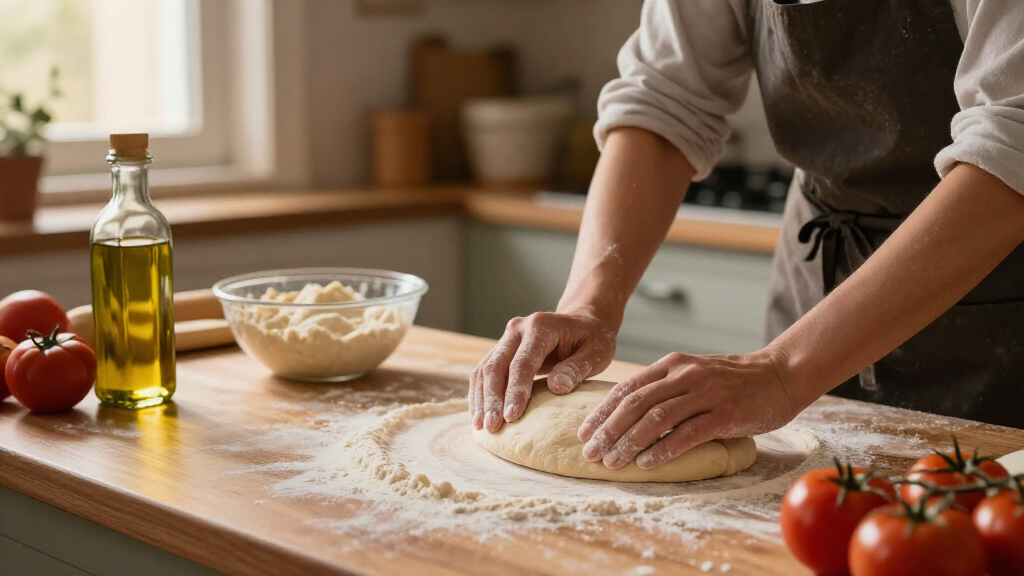
Combine flour, water, salt and instant yeast. Knead into a smooth, homogeneous dough.
6:00–7:00 p.m.
Room-Temperature Rest
Cover the dough and let it rest 30–60 minutes. Shorten this in a warm kitchen (e.g. 80°F / 27°C).
Evening → Overnight
Divide & Refrigerate
Divide into four balls, cover, and rest in the refrigerator overnight. Slow fermentation builds aroma and stretch.
~3:00 p.m. · Day 2
Warm Up ~3 Hours
Covered balls come out to return to room temperature. Look for modest expansion and a puffy, relaxed feel.
~6:00 p.m. · Day 2
Shape & Bake
Shape gently to preserve gas in the rim (the cornicione). Bake on a thoroughly heated steel or stone.
Three Flours, Different Behaviour
“00” describes how finely flour is milled — not its protein strength. Bread flour may absorb water differently, so hold some back during mixing and add it if needed.
| Flour | Recommended | Notes on Handling | Notes on the Crust |
|---|---|---|---|
| “00” flour | ✓ Preferred | Fine milling; classic Neapolitan-style workability | Traditional texture and browning character |
| Bread flour | ✓ Recommended | May absorb water differently — hold back some water, add if needed | Reliable structure; results vary by brand |
| All-purpose flour | ~ Possible | Can work, with adjustments | Crust may stretch and brown differently |
Home Kitchen, Honest Results
The guide is explicit about its limits: this is a Neapolitan-style home adaptation, not certified tradition — and a domestic oven cannot reproduce a wood-fired bake.
“The schedule gives you a starting point; the dough’s feel tells you when to move on.”— Mad Tasting
Check the Dough, Not Just the Clock
Refrigeration slows fermentation but does not stop it; room temperature changes the pace. Before shaping, verify the signs — and know the warning flags.
✓ Ready to Shape
Balls have expanded modestly, look fuller, and feel airy and relaxed while still holding their shape. The surface is kept covered so it doesn’t dry out.
✓ Gentle Shaping
Shape softly to preserve gas around the outside of the dough — that trapped air builds the airy rim known in Naples as the cornicione.
✗ Over-Fermented
If a ball spreads into a puddle, it may have fermented too far — particularly if the room was warm or the yeast measurement ran heavy.
✗ Oven Assumptions
No single baking temperature and duration suits every domestic oven. Heat a baking steel or stone thoroughly; flour choice and oven performance change browning.
Quick Answers
How much dough does the recipe make?
Four dough balls of about 250 grams each, from 500 g flour, 315 g water, 14 g salt and 1 g instant yeast.
Does the dough need exactly 24 hours?
No exact duration is guaranteed. The schedule runs roughly 23 to 24 hours — adjust for room temperature, and look for dough that looks fuller and feels airy.
Can I use all-purpose flour?
Yes. It can work, though the crust may stretch and brown differently from one made with “00” or bread flour.
Does this recipe make certified Neapolitan pizza?
No. It’s described as Neapolitan-style for a home kitchen and does not claim to meet traditional certification standards — a domestic oven can’t reproduce a wood-fired oven’s intense heat and quick bake.
A Manageable Overnight Dough Schedule
The approach puts most of the fermentation time into a covered container in the refrigerator, making the process easier to fit around an evening and the following day. Mad Tasting says the slow rest develops aroma and helps the dough stretch, while the restrained yeast quantity is intended to suit the extended schedule. For a home cook, the practical point is that the dough needs little active attention during its long rest.
The guide also sets limits on what the method can reproduce. It describes the recipe as Neapolitan-style for a home kitchen, not as meeting traditional certification standards. A domestic oven cannot match the intense heat and quick bake of a wood-fired oven, so results will depend in part on the home oven and its equipment. The recipe recommends heating a baking steel or stone thoroughly before baking.
Products Worth Considering

KitchenAid Classic Series 4.5-Quart Tilt-Head Stand Mixer, Onyx Black
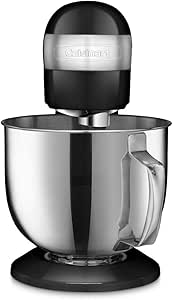
Cuisinart SM-50BK Stand Mixer, 5.5 Quart, 12 Speed, Onyx

Cuisinart 8-in-1 Air Fryer Toaster Oven with Grill, 1800W, Stainless Steel
As an affiliate, we earn on qualifying purchases.
From Naples to a Home Oven
Neapolitan-style dough is described in the source as a lean mixture of flour, water, salt and yeast, fermented and shaped by hand. Its raised rim is known in Naples as the cornicione. The guide connects an airy rim with fermentation and gentle shaping that preserves some gas around the outside of the dough.
The 24-hour timeline is an example rather than a fixed rule. Refrigeration slows fermentation but does not stop it, and room temperature affects how quickly the dough develops. Mad Tasting advises shortening the initial rest in a warm kitchen and allowing more time in a chilly room. It recommends looking for modest expansion and a puffy, relaxed feel rather than requiring the dough to double precisely.
““The schedule gives you a starting point; the dough’s feel tells you when to move on.””
— Mad Tasting
Room Temperature Changes the Timing
The source does not provide a single fermentation time that will suit every kitchen. It says a warm room can speed the initial rise, while a chilly room may slow it; it gives 80°F (27°C) as an example of a temperature at which the first rest may need to be shorter. The precise effect will depend on conditions and how the dough develops.
The guide also does not establish a guaranteed crust result or a baking temperature and duration that work for every domestic oven. Flour choice and oven performance can change how the dough handles and browns. Its characterization of the result is a home-style adaptation, rather than a claim of certification or equivalence to a wood-fired bake.
Check the Dough Before Baking
Before shaping, the guide advises checking that the dough balls have expanded modestly, look fuller and feel airy and relaxed while still holding their shape. Keep them covered during the rests to prevent the surface from drying. If a ball spreads into a puddle, the source says it may have fermented too far, particularly if the room was warm or the yeast measurement was heavy.
When the dough is ready, shape it gently to preserve gas in the outer rim, then bake on a thoroughly heated steel or stone. The recipe offers the clock as a planning tool; the dough’s condition remains the final check.
Key Questions
How much dough does the recipe make?
It makes four dough balls of about 250 grams each, using 500 grams of flour, 315 grams of water, 14 grams of salt and 1 gram of instant yeast.
Does the dough need exactly 24 hours?
No exact duration is guaranteed. The source gives a schedule of roughly 23 to 24 hours and says to adjust based on room temperature and whether the dough looks fuller and feels airy.
Can I use all-purpose flour?
Yes. Mad Tasting says it can work, though the finished crust may stretch and brown differently from one made with “00” or bread flour.
Does this recipe make certified Neapolitan pizza?
The guide describes it as Neapolitan-style for a home kitchen and does not claim that it meets traditional certification standards. It also notes that a domestic oven cannot reproduce the intense heat and quick bake of a wood-fired oven.
Source: Mad Tasting