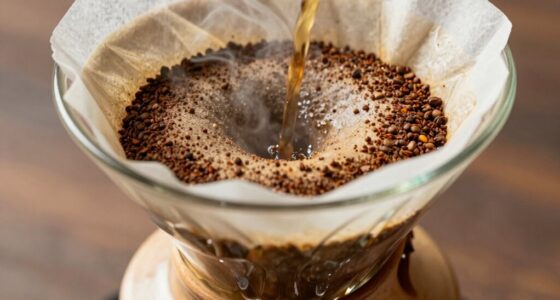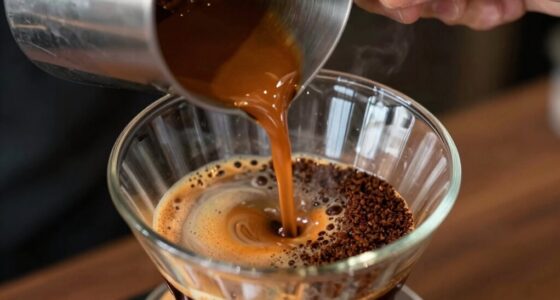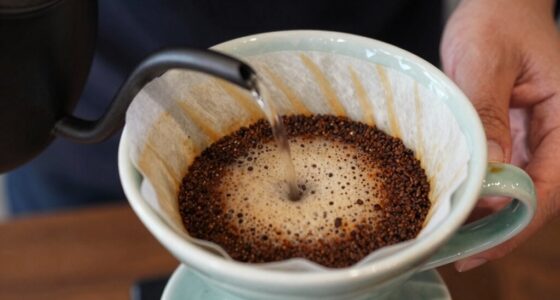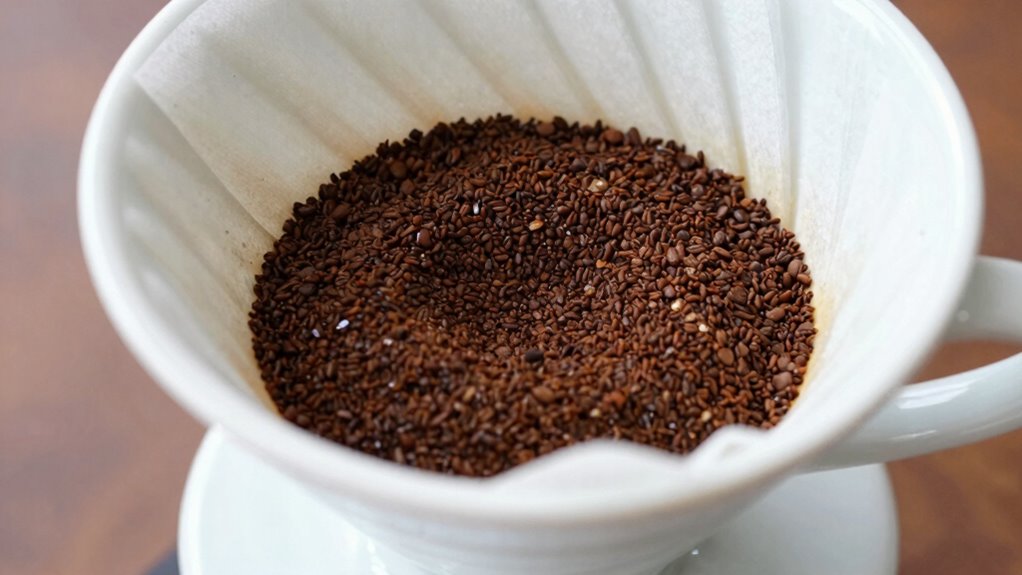

If your pour-over tastes flat, the problem often lies in your grind size. A grind that’s too coarse causes under-extraction, leading to dull, bland flavors. Conversely, a too-fine grind can cause over-extraction, making the coffee bitter or unbalanced. Finding the right grind size helps you extract the full flavor and brightness from your beans. Keep experimenting with small adjustments, and you’ll soon enjoy a more vibrant, flavorful brew–stay tuned for tips on getting it just right.
Key Takeaways
- Using a grind that’s too coarse can cause under-extraction, resulting in a flat, dull flavor in your pour-over coffee.
- Improper grind size disrupts water flow, preventing full flavor extraction and leading to a bland taste.
- Adjusting your grind to a medium consistency helps balance extraction and enhances coffee brightness.
- Inconsistent or overly coarse grind reduces contact time, leaving behind subtle flavors and causing flatness.
- Regularly calibrate and use a consistent grind size to ensure proper extraction and vibrant, flavorful pour-over coffee.
As an affiliate, we earn on qualifying purchases.
Why Does My Pour-Over Coffee Taste Flat or Bland?
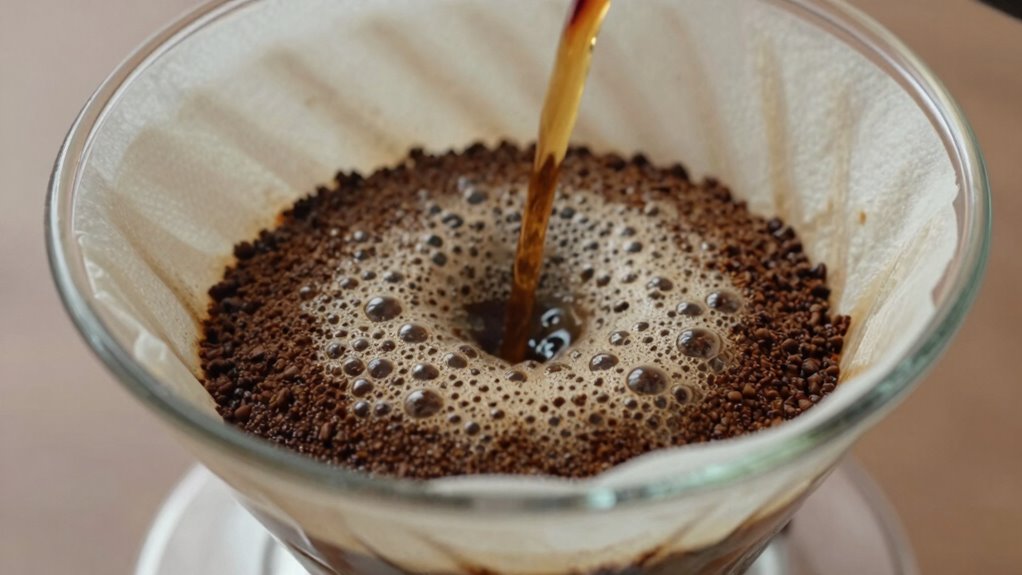
If your pour-over coffee tastes flat or bland, the problem often stems from issues with the brewing process or ingredient quality. Poor brewing techniques can lead to under-extraction, which results in weak, flavorless coffee. Ensuring proper pouring method, water temperature, and bloom time helps maximize flavor extraction. Additionally, coffee freshness plays a critical role; stale beans lose their vibrant aromas and complex flavors, leaving you with a dull taste. Always use freshly roasted coffee and grind it just before brewing. Consistently applying good brewing techniques will help you extract the full potential of your beans, making your pour-over more flavorful and lively. Remember, both brewing method and coffee freshness are key to avoiding a flat, bland cup. Proper grind size also significantly influences extraction and overall flavor clarity.
As an affiliate, we earn on qualifying purchases.
How Grind Size Impacts Extraction and Flavor in Pour-Over
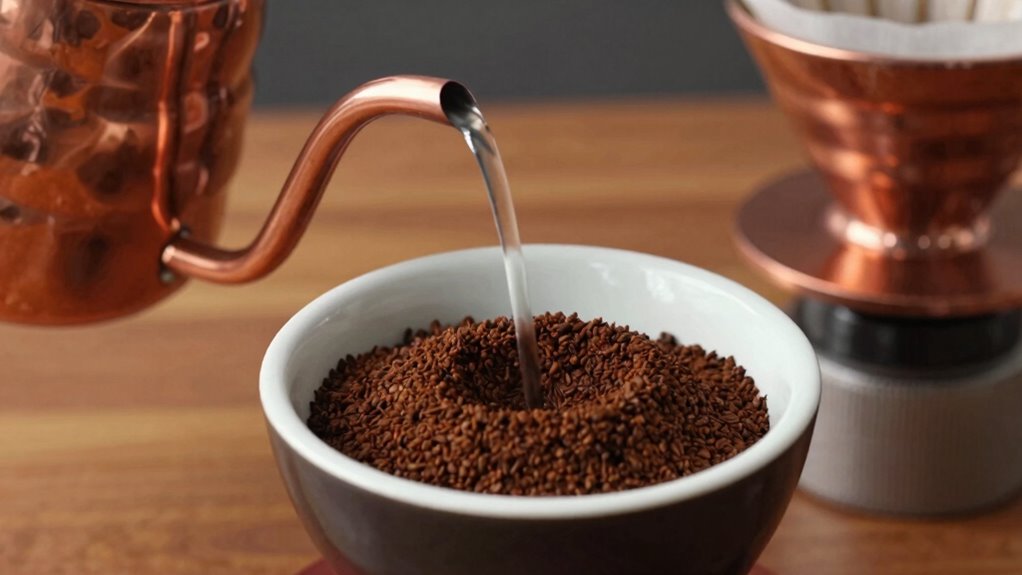
The grind size you choose directly influences how water extracts flavors from your coffee. If the grind is too fine or too coarse, it can lead to under- or over-extraction, making your brew taste flat or bitter. Adjusting your grind size helps you find the sweet spot for a balanced, flavorful pour-over. Incorporating energy-efficient technologies can further optimize your brewing process and enhance sustainability.
Grind Size and Extraction
Grind size plays a essential role in how your coffee extracts during a pour-over, directly affecting flavor and strength. If your grind is too fine, water struggles to flow evenly, leading to over-extraction and a bitter, flat taste. Conversely, a coarse grind results in under-extraction, making your coffee weak and dull. To optimize extraction, consider your brewing temperature and water quality, as these factors also influence how efficiently flavors are drawn out. Adjusting grind size helps balance these elements, ensuring proper extraction without overpowering or underwhelming flavors. Remember, a consistent grind size allows water to interact uniformly with the coffee grounds, highlighting the nuances of your beans and preventing that flat, muted taste. Additionally, understanding brew methods can help you fine-tune your grind size for optimal flavor.
Adjusting for Optimal Flavor
Adjusting your grind size is essential for achieving the best flavor in pour-over coffee because it directly influences how evenly water extracts the beans. When the grind is just right, you’ll notice a richer coffee aroma, signaling ideal extraction. If the grind is too fine, water struggles to flow, resulting in over-extraction and a dull taste. Conversely, a coarse grind can cause under-extraction, leaving your coffee flat. To enhance flavor, also pay attention to brewing temperature; hotter water can help extract more nuanced flavors, but avoid overheating to prevent bitterness. Finding the perfect grind size helps water interact evenly with the coffee grounds, ensuring a balanced, vibrant cup with complex aroma and flavor. Adjustments like these are key to avoiding flat, lackluster pour-over brews. Additionally, understanding coffee extraction can help you fine-tune your brewing process for optimal results.
As an affiliate, we earn on qualifying purchases.
Why Too Fine Grind Makes Your Coffee Bitter and Over-Extracted
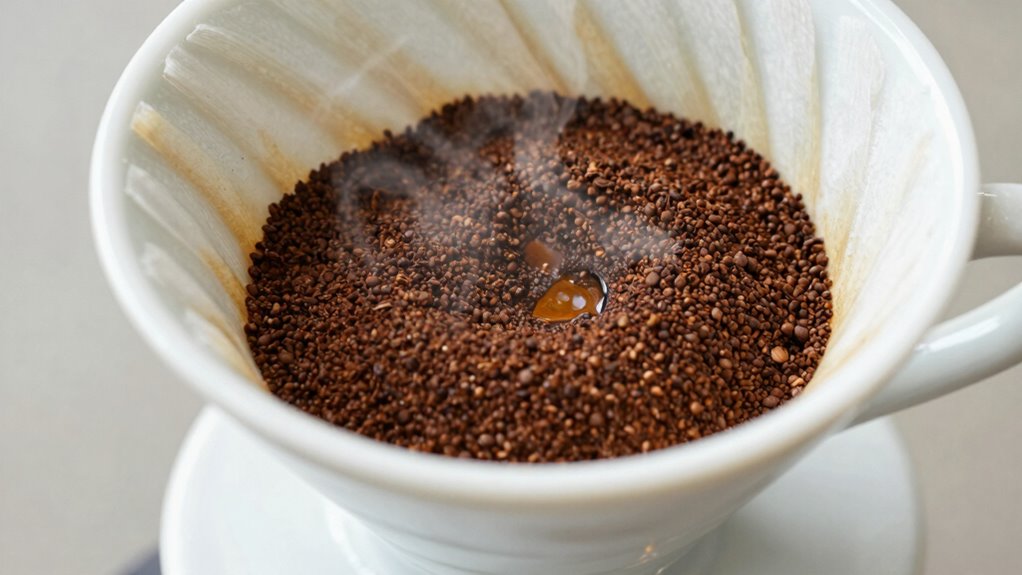
When your coffee grind is too fine, it becomes difficult for water to flow smoothly through the grounds, leading to over-extraction. This extra resistance causes water to extract more bitter compounds from the coffee, resulting in a harsh, astringent flavor. Even if your brewing temperature is ideal, a fine grind can amplify bitterness because the water stays in contact with the grounds longer. Water quality also plays a role—hard or impurities can intensify the extraction of undesirable flavors. To avoid bitterness, opt for a slightly coarser grind and ensure your water isn’t overly hot. Proper grind size allows for maximum extraction, balancing flavors and preventing over-extraction that leads to that unpleasant, bitter taste. Additionally, understanding brew ratio and maintaining consistent grind size can help optimize flavor extraction and prevent flat or bitter results.
As an affiliate, we earn on qualifying purchases.
How Coarse Grind Leads to Under-Extraction and Dull Flavors

If your coffee is ground too coarsely, water flows through the grounds too quickly, preventing proper extraction of flavors. During the bloom phase, releasing carbon dioxide, the water needs enough contact time to absorb the coffee’s nuanced oils and solubles. With a coarse grind, water bypasses much of the coffee, resulting in under-extraction. Even if your water temperature is ideal, the quick passage doesn’t allow enough soluble compounds to dissolve fully. This leads to dull, flat flavors because the coffee’s vibrant notes haven’t fully developed. To fix this, try a finer grind, which slows water flow, increasing contact time during the bloom and throughout the brew. Proper grind size guarantees your pour-over captures the full spectrum of flavors, preventing dullness caused by under-extraction.
How to Find the Right Grind Size for Bright, Vibrant Pour-Over Coffee
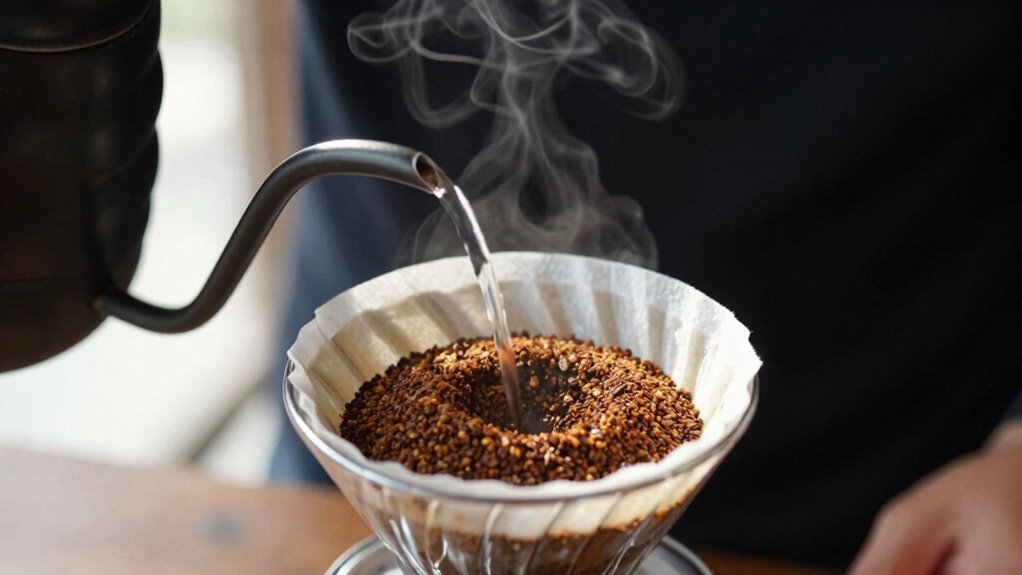
Finding the right grind size is key to revealing bright, vibrant flavors in your pour-over coffee. If your brew lacks brightness, try adjusting the grind to see how it affects extraction. Small tweaks can make a big difference in achieving that lively, well-balanced cup you’re after. Incorporating the proper free floating technique can also help optimize water flow and extraction consistency.
Optimal Grind Size
The key to achieving bright, vibrant pour-over coffee lies in selecting the right grind size. If your grind is too fine, water struggles to flow, leading to over-extraction and dullness. Too coarse, and water passes too quickly, under-extracting and muting flavors. For a lively cup, aim for a medium grind that balances extraction. Pay attention to water temperature—hotter water extracts more brightness, but it works best with the right grind. Also, consider your filter quality; a finer filter requires a slightly coarser grind to prevent clogging and ensure proper flow. Adjust your grind size gradually, tasting as you go, until you find that sweet spot where the water flows smoothly, and the coffee bursts with clarity and vibrancy. Using the right grind size can significantly impact extraction and flavor clarity.
Adjusting for Brightness
Adjusting your grind size is essential for revealing the coffee’s brightness and vibrancy. If your brew feels flat, try a slightly finer grind to enhance extraction and emphasize lively notes. Keep in mind, brew temperature and water quality also influence brightness—hotter water (195-205°F) boosts extraction, while clean, mineral-balanced water preserves clarity. Use this guide to balance grind size with these factors:
| Grind Size | Brightness Effect | Best Use Case |
|---|---|---|
| Finer | Increases brightness | Light roasts, delicate beans |
| Medium | Balanced brightness | Most pour-overs |
| Coarser | Reduces brightness | Over-extracted, dull coffees |
Adjust accordingly to find your ideal shine in every cup. Additionally, proper grind consistency plays a crucial role in achieving optimal extraction and brightness.
Troubleshooting Flat or Bitter Tastes in Your Pour-Over
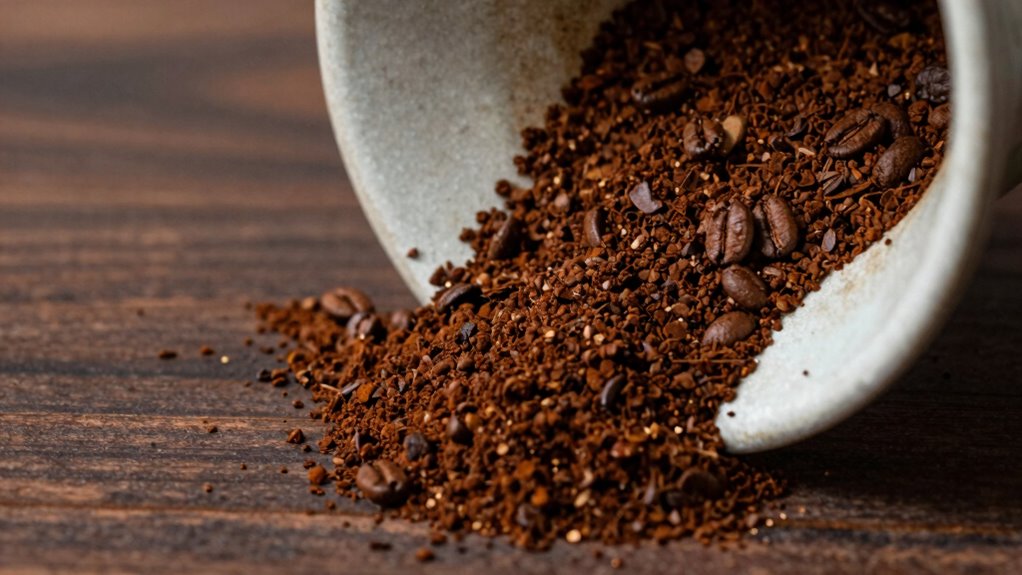
If your pour-over coffee tastes flat or bitter, it’s often due to how you’re handling certain variables during brewing. Brewing temperature plays a vital role; too high a temperature can extract bitter compounds, while too low can result in flat flavors. Aim for a temperature between 195°F and 205°F to optimize extraction. Water quality also matters — hard or chlorinated water can introduce off-flavors or cause uneven extraction, contributing to bitterness or dullness. Use filtered water with balanced mineral content for a cleaner, more vibrant cup. Additionally, make sure your water isn’t too hot or too cold, and avoid over-extraction or under-extraction caused by inconsistent temperature or poor water quality. Proper water temperature and quality are essential for achieving the best flavor profile, as Water quality significantly influences extraction and taste. Fine-tuning these factors will help you achieve a balanced, flavorful pour-over.
Step-by-Step: Dialing in Your Grind for Perfect Pour-Over Flavor
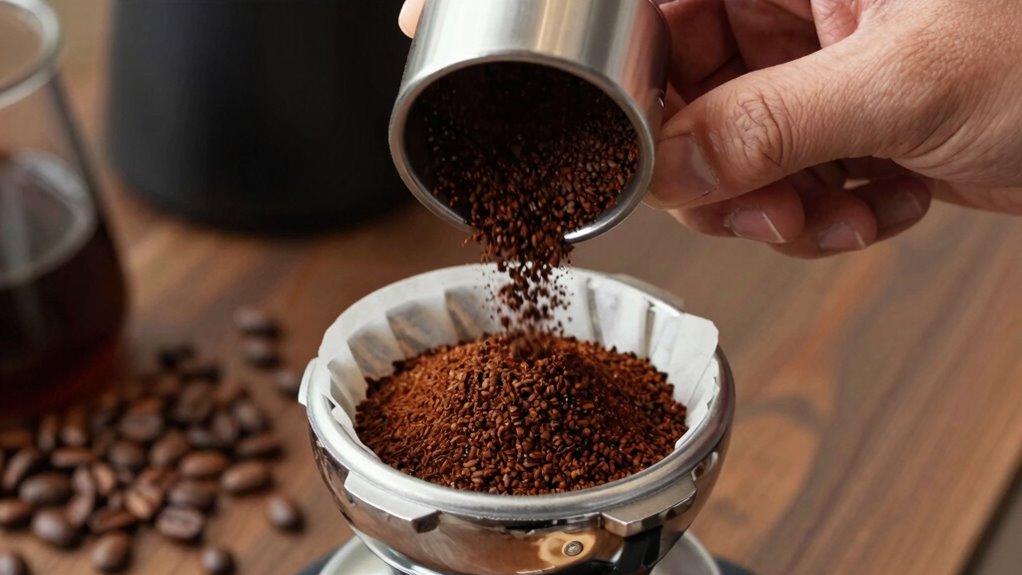
Getting your grind right is essential for revealing the full potential of your pour-over coffee. A proper grind size influences brewing ratios and showcases coffee freshness. To dial it in:
Getting your grind right unlocks vibrant, fresh flavors in every pour-over brew.
- Start with a medium grind, similar to sand, for balanced extraction.
- Adjust if your coffee tastes flat or sour—try slightly coarser or finer.
- Keep brewing ratios consistent—typically 1:15 to 1:17—so flavors aren’t diluted.
- Use freshly ground coffee to maximize aroma and flavor, adjusting grind size as beans age.
- Remember that consistent brewing variables are key to reliably dialing in your perfect cup.
Experiment slowly, making small adjustments each time. Remember, the goal is to find that perfect balance where the grind size complements your brewing ratios, resulting in a vibrant, flavorful pour-over that highlights your coffee’s freshness.
Frequently Asked Questions
Can Water Temperature Affect the Flat Taste in Pour-Over Coffee?
Yes, water temperature affects the flat taste in your pour-over coffee. If your water’s too cold, it won’t extract the full range of flavors, leading to dullness and lack of flavor clarity. Ideally, keep your water between 195-205°F to guarantee proper extraction. This balance helps bring out vibrant flavors and keeps your coffee tasting fresh and lively, preventing that flat, muted taste you want to avoid.
How Does Coffee Freshness Influence Flavor Extraction?
Fresh coffee matters because fresh beans offer ideal flavor extraction. When you use freshly roasted and recently ground coffee, the grind size helps release more vibrant flavors, while minimizing oxidation that dulls taste. Conversely, stale coffee leads to over-oxidation, resulting in flat, dull flavors. Keep your beans fresh, grind just before brewing, and choose the right grind size to guarantee your pour-over captures the full, rich flavor profile you want.
Is Equipment Cleanliness Important for Flavor Clarity?
Yes, equipment cleanliness is vital for flavor clarity. When you keep your brewing vessel and equipment sanitation high, you prevent old coffee oils, residue, and bacteria from contaminating your fresh brew. Regularly cleaning your pour-over setup ensures no lingering flavors interfere with the delicate notes of your coffee. This attention to brewing vessel cleanliness allows you to enjoy a pure, vibrant, and well-defined flavor profile in every cup.
What Role Does Brewing Time Play in Flavor Profile?
Brewing time directly impacts your pour-over’s flavor profile by controlling extraction. If your grind size is too fine, extraction takes longer and can cause over-extraction, making your coffee taste bitter or flat. Conversely, a coarse grind shortens extraction time, leading to under-extraction and a weak flavor. Adjust your grind size to optimize extraction time, ensuring balanced, vibrant flavors that truly shine in your cup.
Can Bean Origin Impact the Perception of Flatness?
Yes, bean origin can impact how flat your pour-over tastes. Different bean varietals and their unique flavor profiles influence perception, making some coffees seem dull or flat. Additionally, the roast level plays a role; lighter roasts often highlight origin characteristics, but if over-extracted or brewed poorly, they can taste flat. Experiment with different beans and roast levels to find a balance that enhances your coffee’s natural complexity.
Conclusion
Now that you know how grind size influences flavor, it’s time to experiment. Adjust your grind, taste the difference, and unleash that vibrant, lively cup you’re craving. Will the next brew be flat or perfect? Only your next tweak will tell. Stay patient, stay curious—your ideal pour-over is just a grind away. Keep refining, and soon you’ll savor that flawless, flavorful sip every time. The secret’s in your hands—are you ready to discover it?