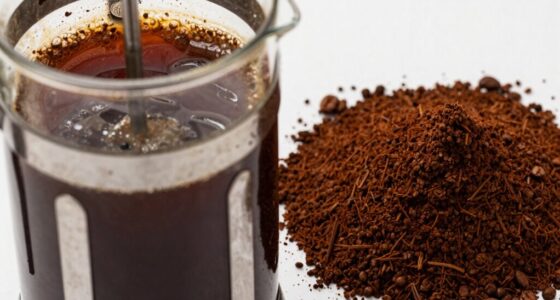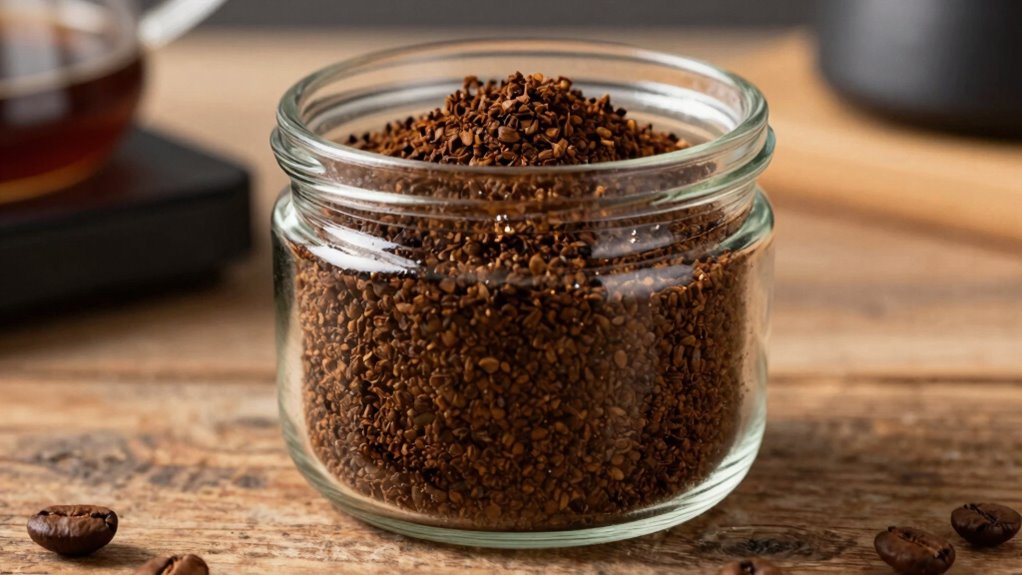

To avoid over-extraction and sludge in your cold brew, start with a coarser grind, especially if you notice gritty texture or sediment. A coarser grind allows water to flow through evenly, preventing bitter flavors and sludge buildup. Adjust your grind based on brew time and bean type, and make sure your filter is clean. If you keep experiencing issues, there are simple tweaks you can try to improve clarity and flavor–more details ahead.

Get kitchen gear delivered free with Prime
- Fast, free delivery on millions of items
- Prime Video, Amazon Music and more included
- Member-only deals all year
Key Takeaways
- Use a coarser grind to slow extraction and reduce over-extraction and sediment.
- Adjust brew time; longer brews require a coarser grind to prevent sludge.
- Ensure fresh, high-quality beans to minimize gritty texture and uneven extraction.
- Filter coffee thoroughly with appropriate equipment to remove fine particles and sediment.
- Avoid overly fine grind sizes that increase extraction speed and lead to bitterness and sludge.
How to Pick the Perfect Grind Size for Cold Brew

Choosing the right grind size is essential for making smooth, flavorful cold brew. Your choice depends on coffee bean varieties and brewing equipment choices. Different beans, like Ethiopian or Colombian, respond uniquely to grind sizes, affecting flavor and extraction. For equipment, if you’re using a large, immersion-style vessel, a coarser grind helps prevent over-extraction and sludge. Conversely, a finer grind suits smaller or more precise brewing methods. Keep in mind that certain beans with oily or dense profiles may require a slightly different grind to optimize extraction. Experimenting with different grind sizes based on your beans and equipment ensures you guarantee you achieve a balanced, rich cold brew without bitterness or sediment. Additionally, understanding brew method compatibility can help you select the optimal grind size for your specific setup. Tailoring these aspects helps craft your perfect cold brew experience.
How Grind Size Affects Cold Brew Extraction and Flavor
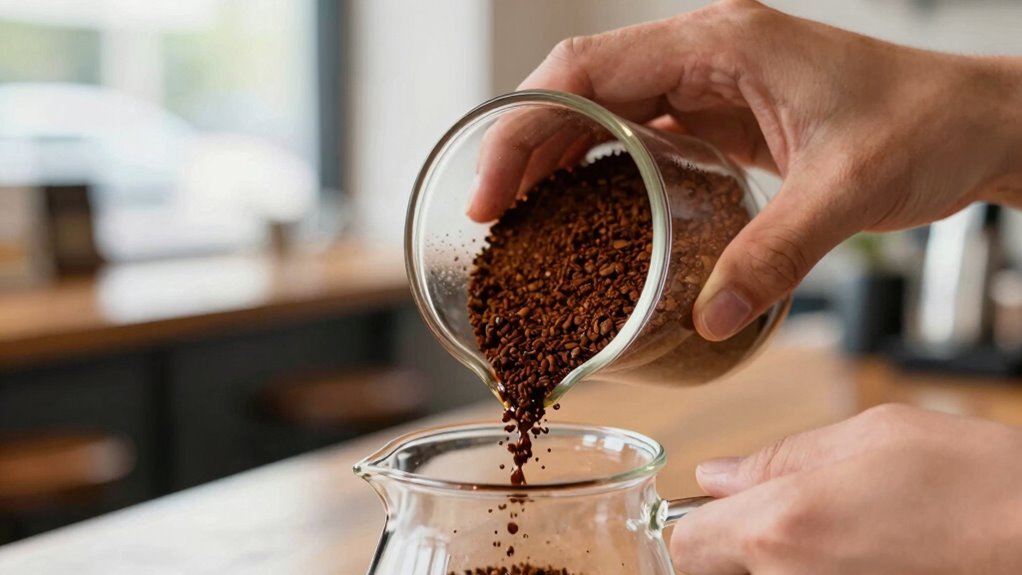
The grind size you select directly influences how efficiently your cold brew extracts flavors from the coffee grounds. A finer grind increases surface area, leading to quicker extraction, but risks over-extraction and bitterness if too fine. Conversely, a coarser grind slows extraction, resulting in a smoother, less intense flavor. Consistent grind size—grind consistency—is essential for even extraction and balanced flavor. When you choose the right grind size, you can visualize:
- A uniform texture, ensuring even flavor extraction
- Proper brew time, avoiding over or under-extraction
- A flavor profile with good balance, neither too bitter nor too weak
Getting this right helps you achieve a well-rounded cold brew with ideal flavor and clarity.
Common Mistakes: Grittiness and Over-Extraction in Cold Brew
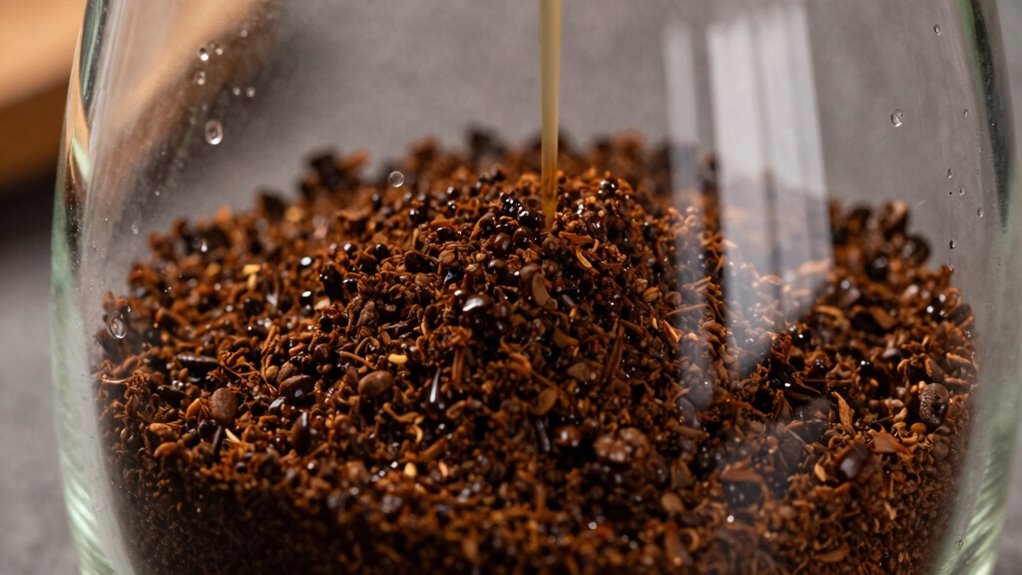
Grittiness and over-extraction are common pitfalls that can ruin your cold brew. Grittiness often results from too coarse a grind or poor filtering, causing unwanted sediment. Over-extraction happens when you leave your brew too long or use too fine a grind, extracting bitter compounds. The coffee bean origin influences grind size needs—some beans are naturally more porous, affecting how they extract. Your brewing equipment also plays a role; a poor-quality filter or inconsistent temperature can worsen these issues. Proper grind size and sustainable brewing practices are essential for a clean, flavorful cold brew. Here’s a quick overview:
| Issue | Cause | Solution |
|---|---|---|
| Grittiness | Coarse grind, poor filter | Use finer grind, quality filter |
| Over-extraction | Fine grind, long brewing time | Adjust grind, shorten brew time |
| Bean origin | Porous beans, roast level | Experiment with different beans |
| Equipment | Low-quality filters, poor design | Upgrade your brewing setup |
| Result | Sediment, bitter flavors | Proper grind and equipment use |
When and How to Adjust Your Grind Based on Brew Time and Coffee Type
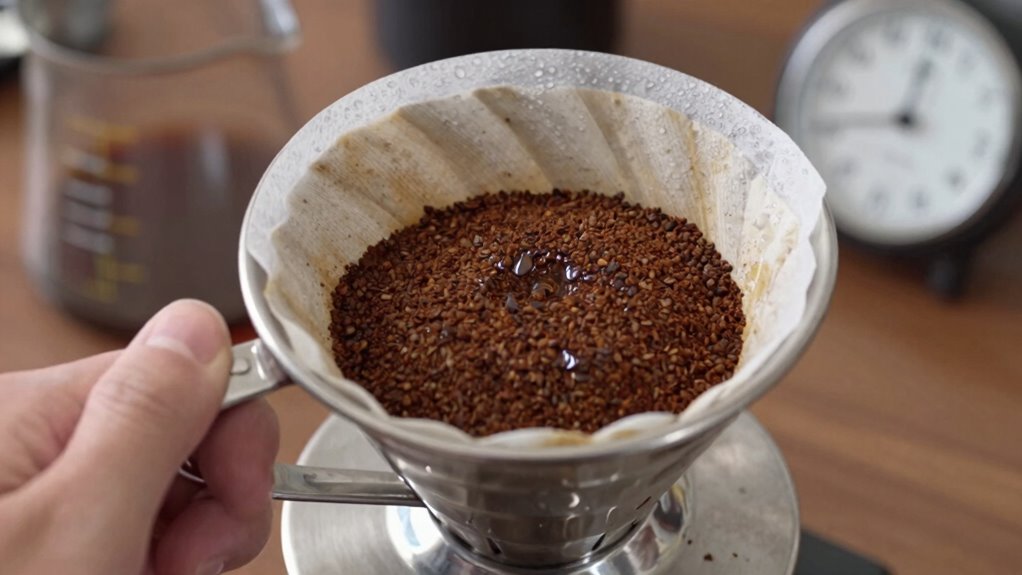
Adjusting your grind size is essential for optimizing cold brew, especially when considering brew time and the type of coffee you use. If your brew takes too long or results in a sludgy texture, you may need to tweak your grind size for better consistency. For quicker brews, go for a slightly coarser grind to prevent over-extraction. Conversely, if your brew is too weak or under-extracted, a finer grind can help increase extraction without extending brew time excessively. Your choice depends on factors like roast level, bean origin, and desired flavor profile. To fine-tune, monitor your brew time and modify grind size accordingly. Remember, maintaining grind size consistency ensures predictable results and helps you avoid over- or under-extraction.
Diagnosing and Fixing Gritty or Bitter Cold Brew

If your cold brew turns out gritty or bitter, it’s a sign that something’s off with your process. Gritty texture often indicates over-aggressive grinding or old coffee beans, while bitterness points to too high a brewing temperature or over-extraction. To diagnose, consider these factors:
| Issue | Cause | Solution |
|---|---|---|
| Gritty texture | Old coffee beans, too fine grind | Use fresh beans, coarser grind |
| Bitter taste | High brewing temperature | Lower your brewing temperature |
| Excess sludge | Overly fine grind, over-extraction | Adjust grind size, reduce brew time |
Focus on coffee bean freshness and brewing temperature to balance extraction, avoiding bitterness and sludge. Additionally, understanding the mechanics of French press brewing can help optimize your method and prevent over-extraction.
Frequently Asked Questions
Can Different Coffee Beans Require Different Grind Sizes for Cold Brew?
Yes, different coffee beans often need different grind sizes for cold brew. Lighter roasts and beans from regions like Ethiopia typically require a slightly coarser grind to prevent over-extraction, while darker roasts or beans from South America can handle a medium grind. Adjust based on bean origin and roast level to achieve a smooth, balanced cold brew without over-extraction or sludge, ensuring the best flavor.
How Does Ambient Temperature Influence Cold Brew Grind Size Choices?
Think of ambient temperature as the weather forecast for your cold brew. When it’s warmer, your coffee becomes more temperature sensitive, so you need a coarser grind to prevent over-extraction and sludge. Cooler temps allow a slightly finer grind, as the extraction process slows down. Always adjust your grind size based on ambient conditions, ensuring your cold brew remains smooth and balanced without becoming overly bitter or too weak.
Is It Better to Start With a Medium Grind or Experiment From Scratch?
It’s best to start with a medium grind based on typical grind size guidelines in cold brew starter recipes. This gives you a solid baseline to evaluate flavor and extraction without risking over-extraction or sludge. Once you’ve brewed a few batches, experiment by adjusting the grind size slightly finer or coarser. This hands-on approach helps you find the perfect grind size tailored to your taste and equipment.
What Tools Can Help You Achieve a Consistent Grind Size for Cold Brew?
You can achieve consistent grind size for cold brew by using a burr grinder, which offers precise control over grind size. To guarantee grind size consistency, regularly calibrate your burr grinder according to the manufacturer’s instructions. This calibration helps maintain uniformity, preventing over-extraction and sludge. Investing in a good burr grinder and performing routine calibrations make it easier to produce smooth, flavorful cold brew every time.
How Does Altitude Impact Grind Size and Extraction in Cold Brew?
Altitude effects can influence your cold brew extraction by altering boiling points and humidity, which impact grind size choices. Higher altitudes often require coarser grinds because water boils at lower temperatures, slowing extraction. You should modify your grind size accordingly, making it slightly coarser at higher elevations to prevent over-extraction and sludge. Experimenting with grind size adjustments ensures you achieve a smooth, well-balanced cold brew regardless of altitude.
Conclusion
Getting your grind size just right is like tuning a delicate instrument—small adjustments make a big difference. When your cold brew avoids sludge and bitterness, it’s smooth sailing, like a calm lake on a clear day. Pay attention to your brew time and coffee type, and don’t be afraid to tweak your grind. With a little patience, you’ll craft cold brew that’s perfectly balanced—refreshing, rich, and satisfying every time.
Halloween Picks
halloween
As an affiliate, we earn on qualifying purchases.