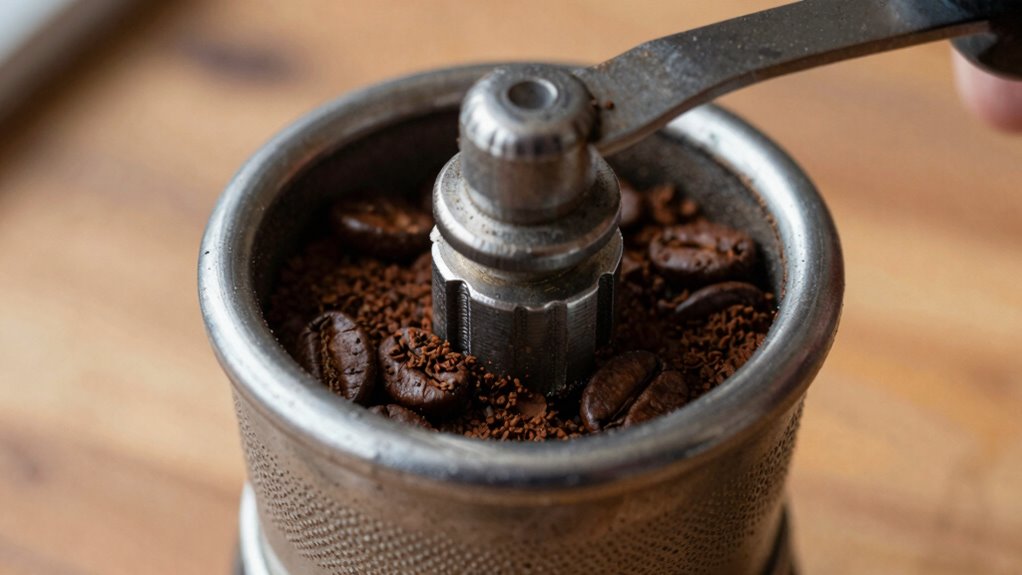

The key detail in your hand grinder that determines whether light roasts feel brutal is the consistency of the grind size you produce. If your grind is uneven, you risk over- or under-extraction, which can make the coffee taste harsh or dull. Achieving a uniform grind guarantees ideal extraction and highlights the delicate flavors of light roasts. Paying attention to your grinder’s settings and checkups can make a significant difference—stay tuned to discover more about perfecting your grind.

Get kitchen gear delivered free with Prime
- Fast, free delivery on millions of items
- Prime Video, Amazon Music and more included
- Member-only deals all year
Key Takeaways
- The consistency of the grind size directly affects extraction, influencing whether light roasts taste balanced or harsh.
- Burr design, shape, and material determine how evenly beans are ground, impacting flavor clarity and smoothness.
- Heat generated during grinding can alter delicate flavors, making proper burr material and sharpness crucial.
- Proper alignment and maintenance of burrs prevent uneven grounds that cause brutal, over-extracted flavors.
- Uniform grind size reduces over-extraction, helping light roasts retain brightness without feeling brutal.
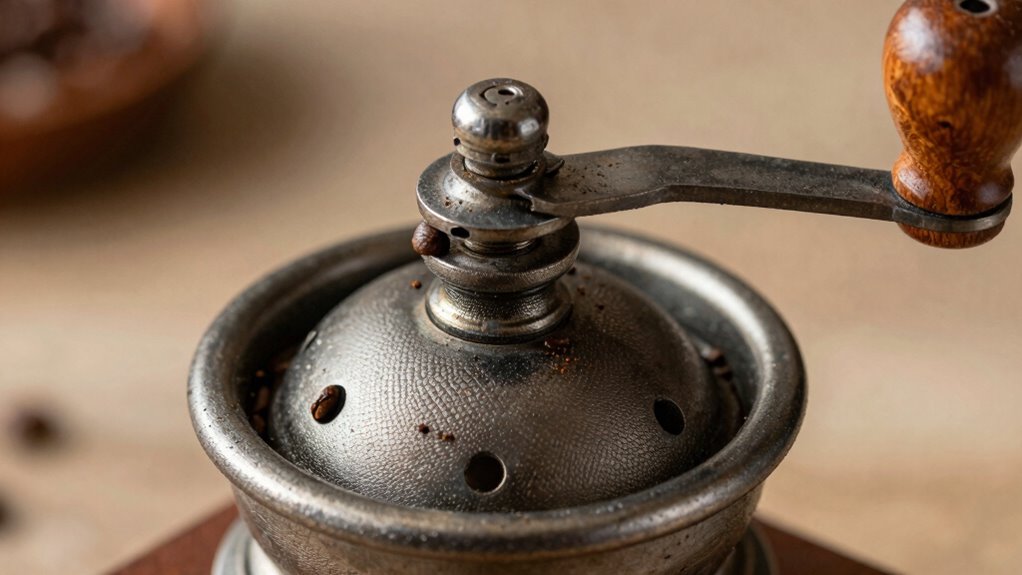
Have you ever wondered what makes a hand grinder so essential for coffee enthusiasts and craftsmen alike? The answer lies in the details—particularly grinding consistency and burr design. When you’re working with light roasts, these factors become even more critical because the delicate flavors and nuanced aromas demand precision. A hand grinder with excellent grinding consistency ensures that each grind is uniform, which directly impacts how the coffee extracts during brewing. Uneven grounds can lead to over-extraction or under-extraction, making your light roasts taste harsher or more brutal than intended. That’s why a steady, even grind matters; it’s the foundation for a balanced, vibrant cup.
A steady, even grind is essential for balanced, vibrant light roast coffee.
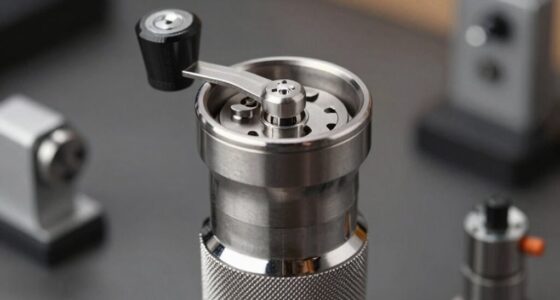
Burr design plays a pivotal role in achieving that consistency. Unlike blade grinders, which chop beans randomly, burr grinders crush beans between two abrasive surfaces, giving you more control over particle size. The shape, material, and alignment of these burrs influence how uniformly they mill the beans. For light roasts, which are more delicate due to their higher acidity and subtle flavor profiles, a well-designed burr ensures minimal variation in grind size. This uniformity allows hot water to extract flavors evenly, preventing the harsh, bitter notes that can make light roasts feel brutal. When burrs are precisely engineered, they deliver consistent particle sizes, resulting in a cleaner, more refined brew.
You also need to pay attention to how your burr design interacts with your grinding technique. Some burrs are conical, offering faster grinding and better retention, while flat burrs might produce more consistent results at the cost of speed. The material of the burrs—ceramic or steel—impacts durability and heat transfer. Excess heat generated during grinding can alter the coffee’s flavor, especially with light roasts. A well-designed burr minimizes heat buildup, preserving the coffee’s nuanced character. Additionally, burr design influences how effectively the grinder maintains consistency over time, ensuring reliable results even after extended use. Proper maintenance and cleaning are also essential to prevent buildup that can affect grind uniformity and grinding performance.
When all these elements come together—precise burr design, excellent grinding consistency, and proper technique—you get a hand grinder that can tame even the most delicate, light-colored beans.
In the end, it’s not just about having a good grinder but understanding how its internal mechanics influence your brew. The grind size, consistency, and burr design are the subtle but powerful factors that determine whether your light roasts taste bright and lively or feel brutal and overpowering. Investing in a hand grinder with carefully crafted burrs and a focus on consistent grinding isn’t just about convenience; it’s about unlocking the full potential of your beans and enjoying a truly exceptional coffee experience.
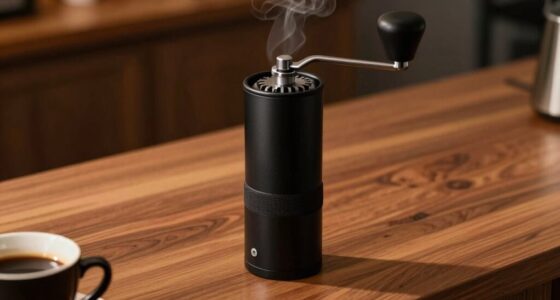
hand coffee grinder with consistent grind size
As an affiliate, we earn on qualifying purchases.
As an affiliate, we earn on qualifying purchases.
Frequently Asked Questions
How Does Grind Size Influence Perceived Bitterness in Light Roasts?
You’ll notice that a finer grind size increases bitterness perception in light roasts because it extracts more compounds quickly, overpowering flavor clarity. Conversely, a coarser grind reduces over-extraction, allowing the delicate flavors to shine through and decreasing bitterness. Adjusting your grind size helps you control flavor clarity and bitterness perception, making your light roast experience smoother and more balanced, without feeling brutal or overly sharp.
Can Hand Grinder Maintenance Affect Coffee Flavor Consistency?
Yes, hand grinder maintenance directly affects coffee flavor consistency. Regular cleaning clears coffee residue, preventing stale flavors and ensuring peak grind retention. When you keep your grinder pristine, you preserve coffee freshness and achieve uniform grounds, which result in a smoother, more balanced brew. Neglecting maintenance leads to inconsistent grind sizes, causing unpredictable flavors and bitterness. So, stay diligent—your taste buds will thank you for the consistent, clean coffee experience.
What Role Does Tamping Pressure Play in Light Roast Extraction?
Tamping pressure directly influences light roast extraction by affecting tamping consistency, which controls how evenly water flows through the coffee. When you apply consistent tamping pressure, you minimize variability in extraction variables, leading to a more balanced and less brutal flavor. Inconsistent tamping can cause channeling or under-extraction, making the light roast feel harsh. Focus on steady, even tamping to improve your brew’s smoothness and overall flavor profile.
Are There Specific Hand Grinder Brands Preferred for Light Roasts?
You’re better off choosing hand grinders with excellent ergonomics and a solid brand reputation for light roasts. Brands like Baratza, Hario, and Porlex are often recommended because their grinders offer consistent grind sizes, which is essential for delicate light roasts. Keep in mind, a good grinder is the backbone of a smooth brew, so don’t cut corners. It’s worth investing in a model that feels comfortable and reliable in your hand.
How Does Ambient Temperature Impact Grinding Performance?
Ambient temperature impacts your grinding performance by affecting temperature stability, which influences grind consistency. When temperatures fluctuate, the metal parts in your hand grinder expand or contract slightly, causing uneven burrs and inconsistent grind sizes. To maintain ideal performance, keep your environment stable and avoid extreme temperatures. This helps guarantee a steady grind, delivering uniform extraction and better flavor, especially with delicate light roasts.
As an affiliate, we earn on qualifying purchases.
Conclusion
So, next time you’re grinding light roasts, pay attention to that hand grinder’s detail. It’s not just about effort; it’s about control and precision. When you master these small adjustments, you’ll find your brew’s brightness shines without feeling brutal. Isn’t it worth fine-tuning those tiny details for a perfect cup? Remember, sometimes the difference between a good coffee and a great one lies in the hands of your grinder.
As an affiliate, we earn on qualifying purchases.
As an affiliate, we earn on qualifying purchases.
Fall Picks
fall essentials
As an affiliate, we earn on qualifying purchases.