
To make your single-dose grinder shine, start by weighing an exact amount of fresh, uniform beans. Adjust your grinder for consistent, fine particles by listening to the sound and feeling the grind. Brew immediately to preserve aroma and flavor, keeping brewing parameters steady. Taste and observe, then make incremental adjustments based on the results. Follow this systematic, iterative routine, and you’ll reveal the full potential of your grinder—discover how to refine your technique even further.
Key Takeaways
- Use precise weighing and uniform beans to ensure consistent testing conditions for single-dose grinders.
- Calibrate and adjust grind size incrementally based on sound, feel, and flavor feedback.
- Brew immediately after grinding to preserve freshness and accurately assess grind quality.
- Maintain consistent brewing parameters to compare results accurately across tests.
- Record tasting notes and adjust grinder settings iteratively for optimal extraction and flavor.
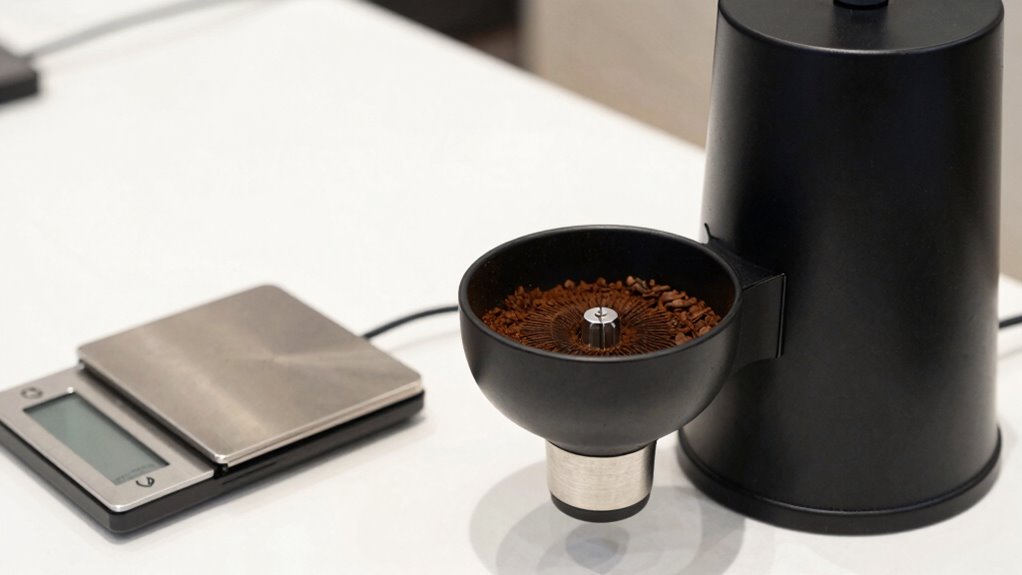
If you’re using a single-dose grinder, establishing a consistent bean testing workflow is essential to achieve ideal brewing results. Your goal is to dial in the grinder for optimal grind consistency, which directly impacts flavor profiling. When you test beans systematically, you can detect subtle differences in grind size that influence extraction and flavor. This consistency allows you to compare beans accurately, making it easier to identify their true taste profiles and select the best options for your preferences.
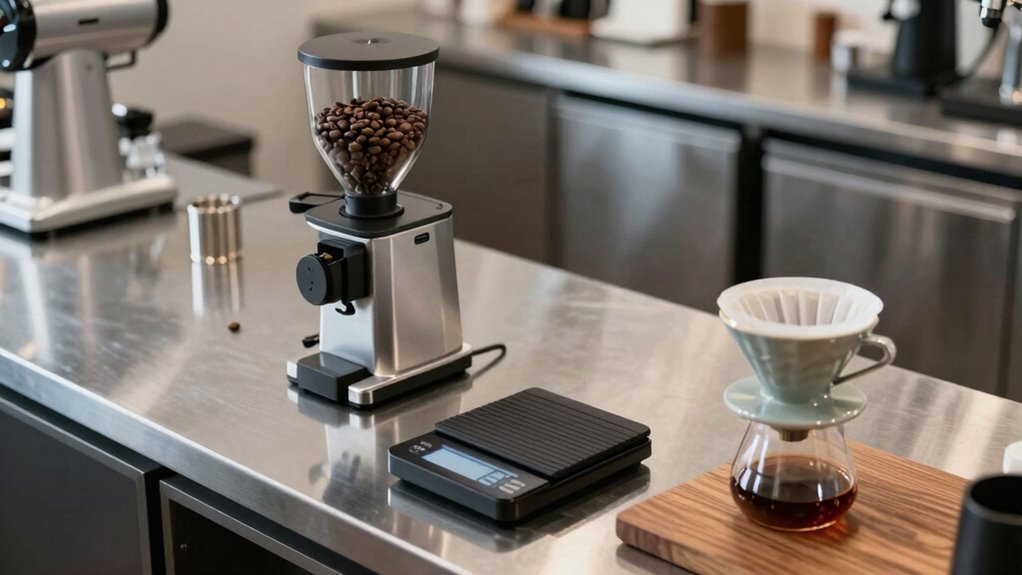
Start by preparing your grinder and scale to ensure precise measurements. Weigh an exact dose of beans each time, keeping it consistent across tests. This helps eliminate variables that could skew your results. Before grinding, examine the beans for uniformity in size and color; inconsistent beans can lead to uneven grinding, affecting both grind consistency and flavor extraction. Once you’ve weighed the beans, adjust your grinder to a starting setting based on previous experience or recommended profiles for the beans you’re testing. Proper grind calibration is crucial for developing an effective testing routine.
Weigh beans precisely and check for uniformity to ensure consistent grind size and optimal flavor extraction.
As you grind, pay close attention to the sound and feel of the process. A stable, consistent grind sound indicates uniform particle size, which is crucial for repeatability. After grinding, take note of the grind size and compare it to your target. If the grind feels coarse or fine compared to your ideal, make incremental adjustments to the grinder setting. This step-by-step approach ensures you refine your grind size precisely, leading to better control over extraction and flavor profiling. Recognizing the importance of grind consistency can help you develop a more reliable testing routine. Additionally, understanding the significance of bean freshness can influence your testing accuracy and flavor outcomes. Fresh beans retain their aroma and flavor, making your testing more representative of the beans’ true potential. Next, brew the coffee immediately after grinding to preserve the freshness and aroma of the beans. Use the same brewing parameters—water temperature, brew time, and pressure—to keep your tests consistent. Taste the resulting coffee and evaluate the flavor profile. Are there any off-flavors or uneven extraction? If so, revisit the grind size, making small adjustments to improve grind consistency. This iterative process helps you fine-tune your grinder to bring out the best in every bean.
As an affiliate, we earn on qualifying purchases.
Frequently Asked Questions
How Often Should Bean Testing Be Performed?
You should perform bean testing regularly, ideally every few batches, to maintain excellent flavor profiling and freshness assessment. Consistent testing helps you catch any decline in flavor or freshness early, ensuring your grind quality stays first-rate. Pay attention to seasonal changes or new bean sources, and adjust your testing frequency accordingly. This proactive approach guarantees your single-dose grinder consistently delivers the best-tasting coffee every time.
What Tools Are Essential for Bean Testing?
Think of your tools as a chef’s knife and tasting spoon—vital for flavor profiling and freshness evaluation. You’ll need a precise digital scale to measure beans, a grinder for consistency, and a tasting cup to compare aromas. A color card helps assess roast level, while a notebook records your observations. These essentials guarantee you capture the true essence of each bean, refining your craft with every test.
Can Bean Testing Improve Grind Consistency?
Yes, bean testing can improve grind consistency by helping you identify the ideal grind size for different beans, preserving flavor and ensuring roast compatibility. When you test beans thoroughly, you learn how each variety responds to your grinder, preventing over- or under-extraction. This process helps you fine-tune your grind settings, leading to better flavor preservation and a more balanced extraction, regardless of the roast level.
How Do Ambient Conditions Affect Testing Results?
A stitch in time saves nine, and maintaining ambient stability is vital for testing accuracy. Fluctuations in temperature, humidity, or air circulation can skew your results, making your grind consistency appear less reliable. To guarantee accurate testing, control your environment as much as possible. Stable ambient conditions help you compare beans objectively, leading to better insights and ultimately, a more consistent grind for your single-dose grinder.
Is Bean Testing Suitable for All Coffee Types?
Bean testing is suitable for most coffee types, but your focus should be on flavor preservation and roast level. Lighter roasts often reveal more nuanced flavors, making testing crucial to assess freshness and quality. Dark roasts may mask some defects, but testing still helps ensure consistency. Adjust your approach based on the roast level, and always consider how ambient conditions influence the results to get the most accurate assessment.
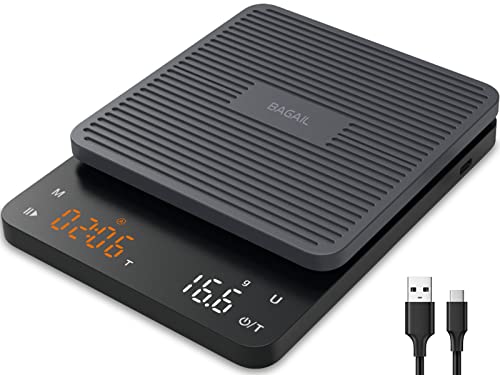
BAGAIL Coffee Scale with Timer, 0.1g/3kg Precision
- Preparation Required: Remove plugs before use
- High Precision: Measures from 0.3g to 3000g
- Fast Stabilization: Responsive to weight changes
As an affiliate, we earn on qualifying purchases.
As an affiliate, we earn on qualifying purchases.
Conclusion
By following this bean testing workflow, you’ll guarantee your single-dose grinder consistently produces ideal results. Testing and adjusting your beans becomes second nature, helping you craft the perfect brew every time. Remember, isn’t the pursuit of great coffee worth the effort? Keep refining your process, stay curious, and enjoy the delicious rewards of your dedication. After all, every cup is a chance to elevate your brewing game—are you ready to take it to the next level?
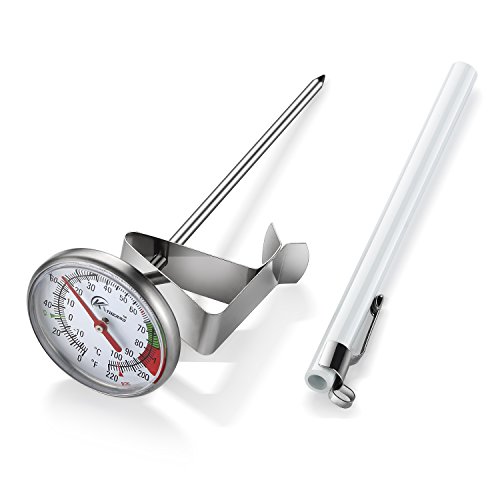
KT THERMO Instand Read 2-Inch Dial Thermometer,Best for The Coffee Drinks,Chocolate Milk Foam
- Multi-stage clip design: Adjusts for easy temperature reading
- Safe, simple measurement: Accurately measures coffee and milk foam
- Wide temperature range: 0°F to 220°F for boiling or freezing
As an affiliate, we earn on qualifying purchases.
As an affiliate, we earn on qualifying purchases.
As an affiliate, we earn on qualifying purchases.