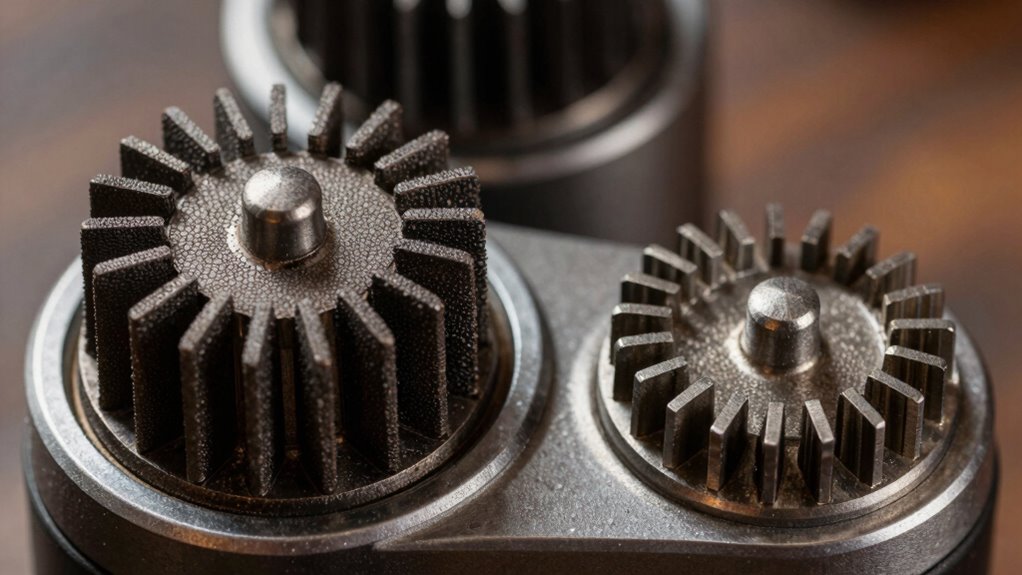

Bigger burrs alone don’t guarantee better espresso because factors like design, material, and maintenance matter just as much. While larger burrs can improve grind consistency and heat management, if they’re poorly designed or aren’t well maintained, your puck can suffer. Proper alignment and regular upkeep ensure consistent results regardless of size. If you want to learn how shape, material, and care influence your grind quality, keep exploring these essential aspects.
Key Takeaways
- Larger burrs alone don’t ensure uniform grind; proper design and maintenance are equally important.
- Heat management and burr material influence grind consistency and flavor, not just size.
- Matching burr size with grinder speed and shape is crucial for optimal espresso quality.
- Oversized burrs may cause uneven wear or clogging if not properly calibrated.
- Focus on burr quality, design, and upkeep to achieve better espresso than size alone can provide.
What Burr Size Means for Espresso Grinding
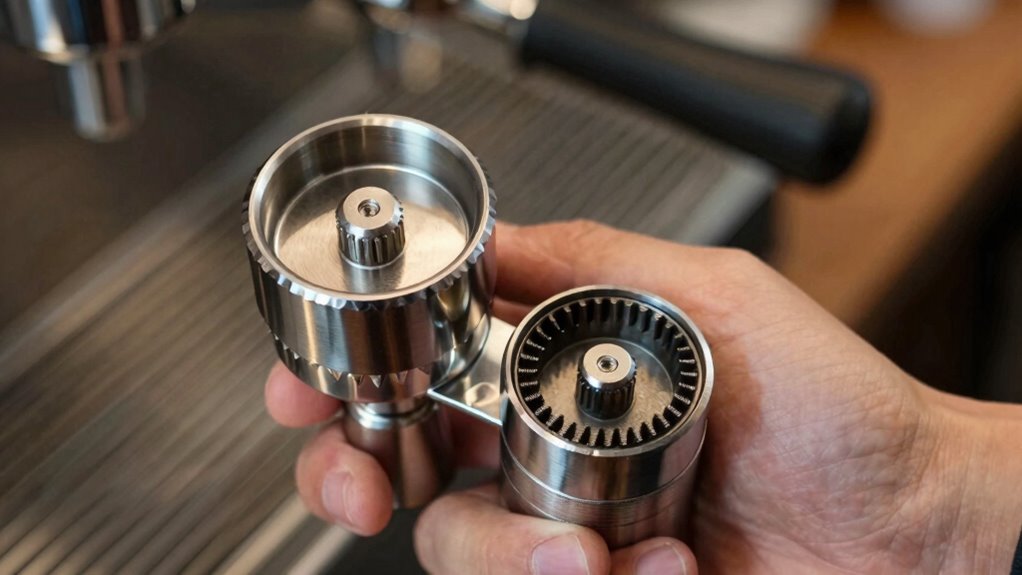
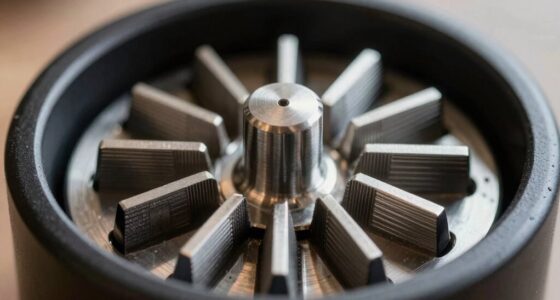
The size of your coffee burrs directly impacts the quality of your espresso grind. Larger burrs typically produce a more consistent grind because they have a bigger surface area, which allows for smoother, more uniform cuts. Burr shape also plays a role; conical burrs tend to handle heat better and can grind faster, increasing grind speed without sacrificing quality. Faster grind speeds mean you can prepare espresso shots more efficiently, but only if the burrs are properly designed to maintain uniformity. Proper burr design is essential for balancing size, shape, and speed to achieve optimal results. Additionally, selecting the appropriate burr material can influence heat management and durability, further affecting grind consistency. Choosing the right burr configuration is crucial for optimizing performance and ensuring consistent extraction. It’s also important to consider burr size in relation to your specific grinder and brewing needs, as mismatched sizes can lead to uneven grinding. Keep in mind, bigger isn’t always better—if the burrs are too large for your machine or if the shape isn’t optimized, you could face inconsistent results. Overall, larger burrs can improve grind quality, but only when matched with the right shape and speed. Proper grind size is crucial for achieving optimal espresso extraction.
How Burr Material and Design Affect Grind Consistency and Flavor
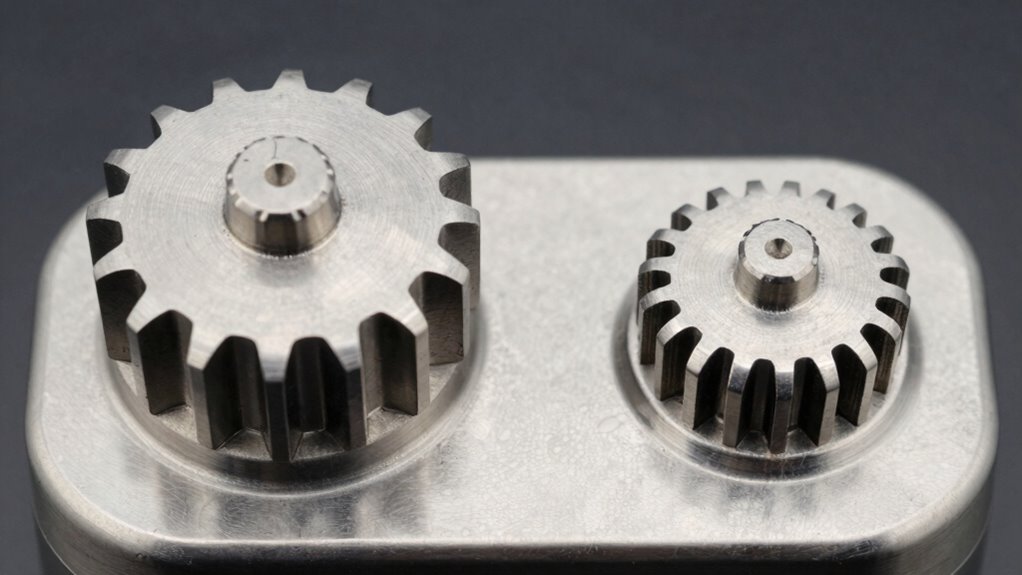
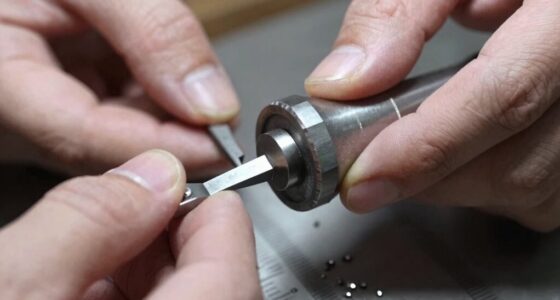
Burr material and design play a significant role in guaranteeing grind consistency and preserving coffee’s flavor profile. High-quality burr material, like hardened steel or ceramic, resists wear and maintains sharpness longer, promoting better grind uniformity over time. Consistent grind size ensures even extraction, which enhances flavor clarity and prevents over-extraction or under-extraction. The design of the burrs—such as flat versus conical—also influences how uniformly the beans are ground. Flat burrs tend to produce more consistent particle size, while conical burrs can reduce heat and static buildup. Proper maintenance of your burrs is essential to sustain their performance and ensure ongoing grind quality. Additionally, understanding how burr material and design interact can help you select the best equipment for your brewing needs. Choosing the right burr material can also impact the longevity and durability of your grinder, making your investment more worthwhile. Furthermore, selecting a well-designed burr can improve efficiency and reduce grind time, enhancing your overall brewing experience. Together, the right material and thoughtful design help you achieve a stable, uniform grind, directly impacting the flavor quality of your espresso and making your brewing process more reliable.
How Grind Precision and Uniformity Impact Your Espresso
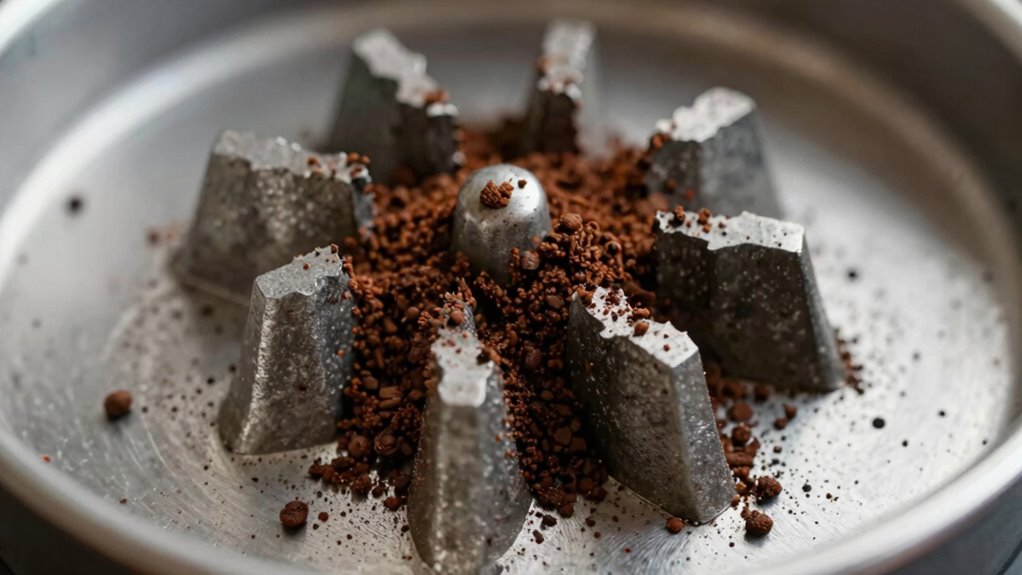
Achieving precise and uniform grind size is vital because it directly influences the extraction process during brewing. Many people harbor burr size misconceptions, believing larger burrs automatically deliver better consistency. In reality, grind uniformity depends more on your grinder’s design and maintenance than just burr size. When your grinder isn’t properly maintained, uneven wear and clogged burrs can cause inconsistent particle sizes, leading to over- or under-extraction. Regular grinder maintenance, such as cleaning and calibrating, keeps burrs aligned and functioning at their best. Additionally, incorporating smart automation features into your grinder can help monitor and maintain optimal performance over time. Proper grinder calibration ensures that your settings produce the most consistent grind possible, regardless of burr size. Remember, precision in grind size isn’t about size alone—it’s about maintaining sharp, clean burrs and proper adjustment to get the most uniform grind possible for excellent espresso. Burr wear can significantly impact the consistency of your grind, making routine checks essential for high-quality results. Moreover, selecting high-quality esthetically pleasing burrs can also contribute to maintaining uniformity over long periods, especially when combined with proper grinder maintenance practices.
Do Larger Burrs Reduce Heat and Improve Flavor?

Larger burrs can help reduce heat buildup during grinding because they remove material more quickly, minimizing the time friction generates heat. However, burr size myths often suggest bigger is always better, but heat generation factors are more complex. Additionally, Free Floating systems in burr design can influence how heat is dissipated during the process. To understand this better, consider: – Heat is influenced by grind speed and motor power, not just burr size. – Faster grinding can generate more heat, regardless of burr size. – Uniformity of grind impacts heat distribution and flavor extraction. – Material and design of burrs also play vital roles in heat management. Proper grinding technique, machine quality, and burr material are equally important to preserve flavor and reduce unwanted heat. Moreover, burr alignment can significantly affect heat transfer and consistency during grinding.
How to Choose the Best Burrs for Your Espresso Needs

Choosing the right burrs for your espresso setup depends on your specific brewing preferences and machine capabilities. Consider burr material, size, and grind consistency to match your style. Proper burr sharpening keeps your grinder performing at its best, ensuring even grounds and ideal flavor. Regular maintenance routines prevent uneven wear and extend your burrs’ lifespan. To help decide, reflect on these qualities: grind consistency
Frequently Asked Questions
Do Larger Burrs Require More Maintenance or Cleaning?
Larger burrs generally require more maintenance and cleaning because they experience more wear over time. You’ll need to clean them more frequently to prevent buildup and guarantee consistent grind size. Burr wear can accelerate with larger burrs, so regular cleaning helps maintain peak performance. Keep an eye on your grinder’s performance and set a cleaning schedule based on usage to avoid issues caused by dirt and residue.
Are Bigger Burrs Suitable for All Types of Espresso Machines?
Bigger burrs aren’t suitable for all espresso machines because of burr size myths and grinder compatibility issues. If your machine has a compact design or limited space, larger burrs might not fit properly, leading to potential clogging or inconsistent grinding. Always check your espresso machine’s specifications and verify your grinder’s burr size matches its requirements. Don’t assume bigger is better without considering compatibility for ideal performance.
How Does Grind Fineness Adjustment Differ With Larger Burrs?
Imagine you’re wielding a sword from the Middle Ages—big isn’t always better. Larger burrs influence grind fineness adjustment by offering increased burr size dynamics, making the process smoother and more consistent. They typically allow for finer, more precise grind adjustments, but you might find it trickier to dial in just right. Remember, bigger burrs enhance grind adjustment precision, but mastering their use is key to brewing perfect espresso.
Can Larger Burrs Improve Extraction Time Significantly?
Larger burrs can improve extraction time, but the impact varies depending on your grind consistency. They often produce more uniform grounds, which helps water flow evenly through the coffee, leading to a more balanced flavor profile. However, if your grind consistency isn’t maintained, the benefits diminish. So, while bigger burrs can speed up extraction, your focus should be on maintaining consistent grinds to truly enhance flavor.
What Are the Cost Differences Between Small and Large Burr Grinders?
You’ll find that small burr grinders generally cost less, often ranging from $50 to $200, thanks to lower manufacturing costs and simpler design. Large burr grinders tend to be pricier, usually between $200 and over $1000, due to more complex manufacturing processes and higher-quality materials. The pricing comparison reflects these differences, so if you’re on a budget, a smaller grinder might suit you. But if you want better durability and performance, investing in a larger burr grinder makes sense.
Conclusion
Remember, bigger burrs aren’t a guaranteed ticket to better espresso. The real secret lies in how they’re made, their design, and how precisely they grind your beans. As you explore different options, imagine the perfect shot—rich, balanced, and bursting with flavor. Will the next upgrade finally reveal that elusive espresso experience? Keep digging, stay curious, and the perfect brew might just be one grind away. The journey to exceptional espresso is only beginning.