Even flat burr grinders that look similar can produce different flavors because small variations in burr geometry, such as shape, surface finish, alignment, and material, greatly affect grind consistency and extraction. Slight differences in burr height, spacing, and wear can lead to uneven grounds, impacting flavor clarity and balance. By understanding these subtle variations, you’ll see how these factors influence taste—if you keep exploring, you’ll discover how to choose the best grinder for your preferences.
Key Takeaways
- Variations in flat burr shape, including edges and surface pattern, influence grind size consistency and flavor extraction.
- Slight misalignment or calibration issues cause uneven grounds, leading to taste differences despite similar burrs.
- Differences in burr material and surface finish affect wear and heat transfer, impacting flavor preservation over time.
- Burr height and spacing adjustments control grind size, directly affecting extraction and the resulting flavor profile.
- Manufacturing tolerances and maintenance practices can cause subtle differences in burr geometry, altering flavor outcomes.
What Is Burr Geometry and Why Does It Affect Coffee Flavor?

Burr geometry refers to the shape, size, and alignment of the grinding surfaces in a coffee grinder, and it plays a crucial role in how coffee beans are ground. Proper burr maintenance ensures your grinder stays in excellent condition, producing consistent grounds that influence flavor extraction. An ergonomic design allows for easier adjustments and consistent grinding, reducing user error. The geometry determines the size and shape of the grounds, directly impacting extraction time and flavor clarity. When burrs are well-maintained and precisely aligned, you get uniform particles, leading to a more balanced and vibrant cup. Understanding burr design can help optimize your brewing process and flavor profile. Additionally, the material composition of the burrs influences wear resistance and longevity, further affecting consistency and performance over time. Recognizing the importance of burr alignment ensures that your grinder functions optimally and produces the best possible flavor. Regularly inspecting and cleaning your burrs can prevent uneven grinding caused by burr deterioration, maintaining consistent flavor extraction. Proper alignment and precision engineering are essential for achieving the ideal grind size and consistency.
The Types of Flat Burrs: Shapes and Designs Explained
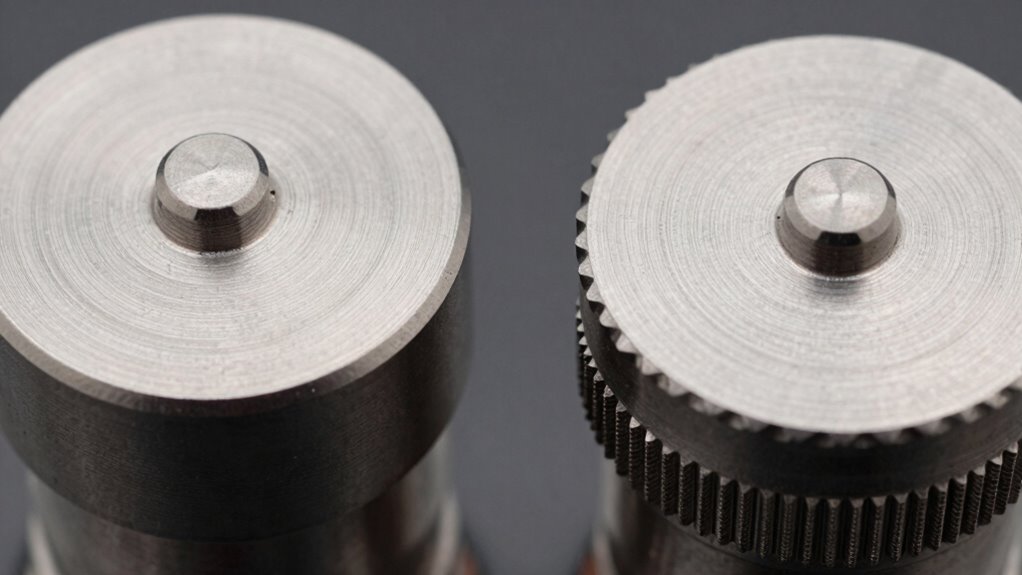
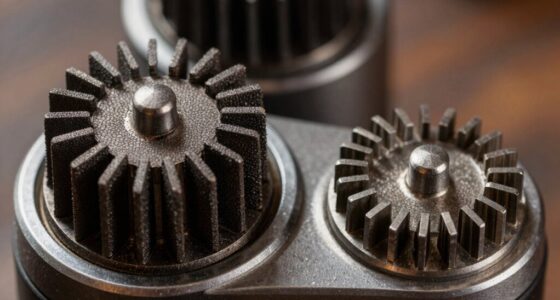
Flat burrs come in various shapes and designs, each affecting how evenly coffee grounds are produced. The burr shape influences the grinding process, impacting not only the uniformity but also the consistency of the grind. Common designs include straight-edged, scalloped, and ridged flat surface patterns. Straight-edged burrs are simple and efficient, while scalloped and ridged designs increase surface area, potentially improving heat dissipation and reducing clumping. The flat surface itself can vary in width and texture, affecting how coffee beans are crushed. These differences in shape and design can lead to subtle flavor variations in your brew. By understanding the types of flat burrs, you gain insight into how their specific shapes and surfaces influence grind quality and, ultimately, taste. Understanding burr geometry helps explain how different designs can impact the extraction process and flavor profile of your coffee. For example, burr surface area plays a key role in how quickly and evenly beans are ground, which can influence the final flavor, especially when considering the importance of grind consistency in brewing.
How Burr Shape Influences Grind Size and Uniformity
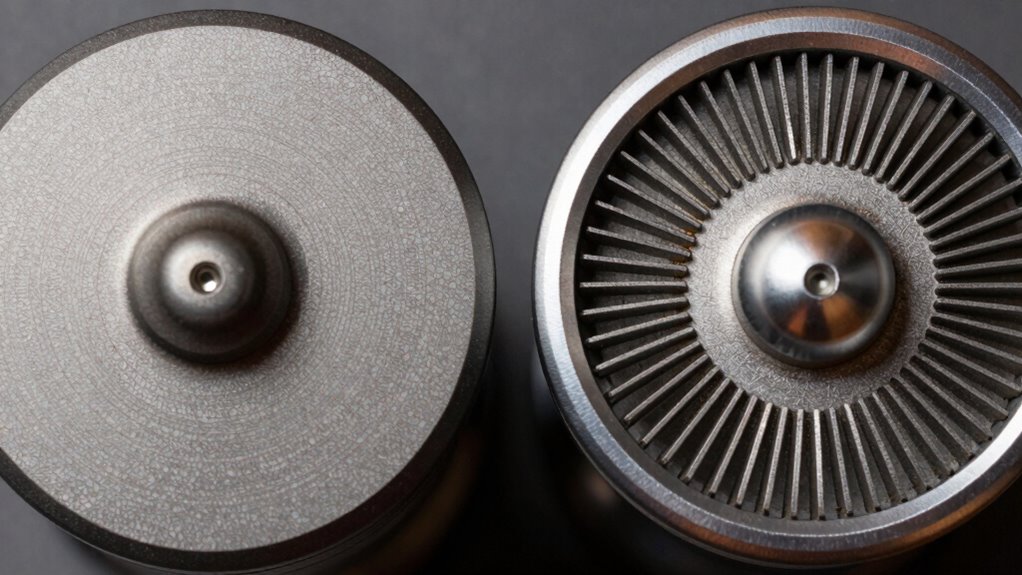
Your burr shape directly affects how consistent your grind is, influencing the size of each particle. A well-designed burr leads to more uniform particles, which improves extraction quality. Understanding this relationship helps you choose burrs that optimize your brewing results. Proper burr design ensures that your grinder produces consistent particle sizes, directly impacting flavor extraction. Additionally, grind uniformity plays a crucial role in achieving balanced and flavorful coffee. Moreover, burr geometry can also influence the efficiency and longevity of your grinder, contributing to overall performance. Recognizing how burr shape impacts grind performance can guide you in selecting the right grinder for your brewing needs. Proper maintenance, such as regular cleaning and oiling, further maintains optimal grind consistency over time.
Burr Shape and Grind Consistency
The shape of the burr plays a crucial role in determining the consistency of your grind size. A well-designed burr shape ensures uniform particle sizes, directly impacting flavor extraction. Different burr shapes, such as flat or conical, influence how the coffee moves through the grinder. To understand this better:
- Burr shape affects the flow—a smoother flow leads to more consistent grind sizes. Proper flow dynamics help prevent uneven brewing results. Additionally, understanding the traits of effective burrs can guide your choice in grinder design.
- Edge design impacts shear force—sharper edges produce finer, more uniform grounds. Burr material properties also contribute to maintaining sharpness over time.
- Surface area influences heat and wear—larger or more complex shapes help maintain grind consistency over time.
- Consistent storytelling in design fosters reliability and quality in your grind performance.
Impact on Uniform Particle Size
Because the shape of the burr directly influences how coffee particles are broken down, it plays a vital role in achieving uniform grind sizes. A well-designed burr shape ensures consistent cutting action, reducing variations in grind size. Flat burrs with precise edges can produce more uniform particles, which is essential for even extraction. Conversely, a burr shape that’s less refined may create irregularities, resulting in a mix of fine and coarse particles. Your choice of burr shape affects the consistency of your grind size, impacting the overall flavor and brewing quality. When burrs are optimized for uniform particle size, you get a balanced extraction, better flavor clarity, and improved brewing results. Ultimately, burr shape is a key factor in controlling grind size uniformity.
Burr Design and Extraction Quality
Burr design plays a crucial role in determining grind size consistency, which directly affects extraction quality. The shape and material of your burrs influence how uniformly coffee grounds are produced. For example:
- Burr material affects durability and heat transfer, impacting grind precision and flavor preservation.
- Burr shape determines how evenly beans are sliced, influencing grind uniformity.
- Burr design impacts grinder noise; well-designed burrs operate more smoothly, reducing noise and minimizing heat that can alter coffee taste.
Choosing the right burr material, like ceramic or stainless steel, can improve extraction consistency. A thoughtful burr shape minimizes uneven particle sizes, enhancing flavor extraction. Additionally, a well-designed burr set reduces grinder noise, making your brewing process more pleasant and precise.
Why Burr Height and Spacing Matter for Flavor Extraction
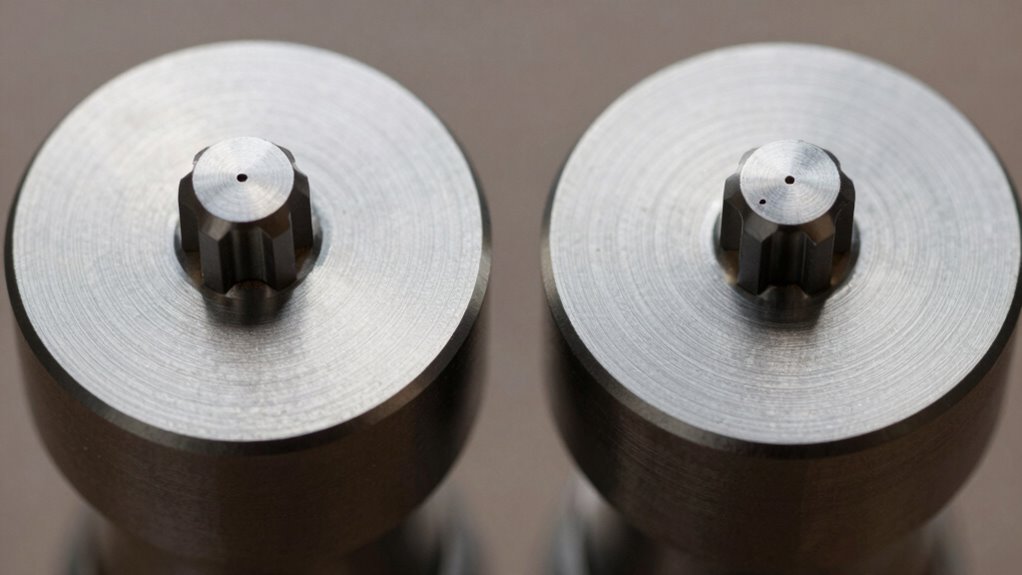
Burr height and spacing play a crucial role in how effectively coffee flavors are extracted during grinding. The burr height determines the distance between the grinding surfaces, influencing the size of the coffee grounds. Smaller burr heights produce finer grounds, ideal for espresso, while larger heights yield coarser grounds for French press. Burr spacing, or the gap between the burrs, directly affects grind size consistency. Narrower spacing creates a uniform grind, leading to balanced extraction and clearer flavors. Wider spacing results in more uneven grounds, which can cause over- or under-extraction, dulling taste. Adjusting burr settings helps optimize flavor extraction and improve overall coffee quality. By adjusting burr height and spacing, you control the surface area of the grounds exposed to water, ultimately shaping the flavor profile and extraction efficiency of your brew.
How Material and Surface Finish of Flat Burrs Impact Coffee Taste
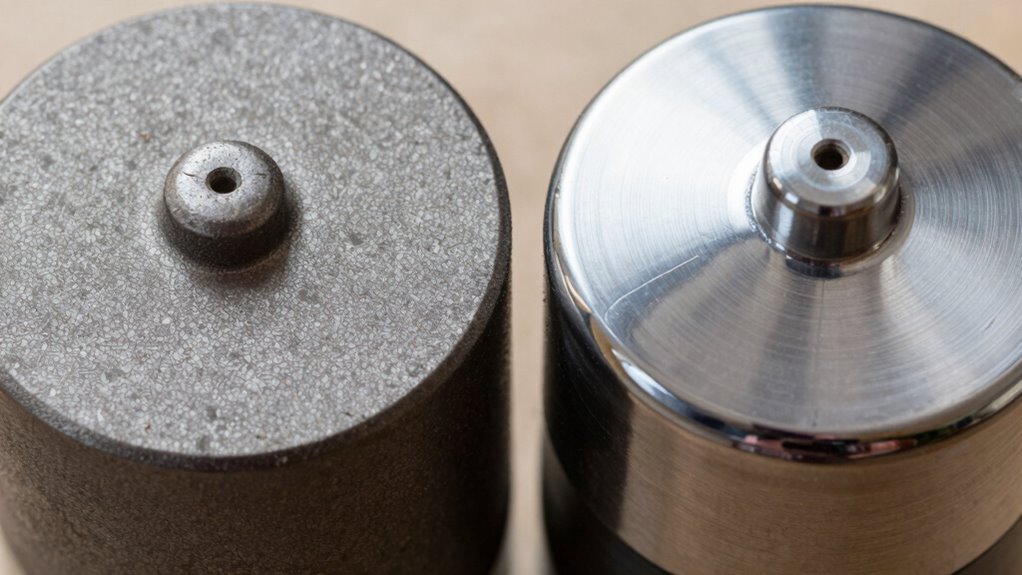
The material and surface finish of flat burrs directly influence how coffee grounds are shaped and how flavors develop during brewing. Burr material affects durability and heat transfer, which can impact extraction quality. A harder, high-quality burr material like ceramic or stainless steel maintains sharpness longer, ensuring consistent grind size. Surface finish also plays a vital role; a smoother finish reduces friction and prevents heat buildup, preserving delicate flavor notes. Additionally, understanding the surface finish quality considerations surrounding equipment safety and maintenance can help ensure optimal performance and longevity. Proper maintenance practices can help minimize wear and tear, extending the lifespan of your burrs and maintaining consistent taste.
Why Two Flat Burr Grinders With Similar Burrs Can Still Taste Different

Even if two grinders have similar flat burrs, subtle differences can change your coffee’s flavor. Factors like burr alignment, grind consistency, and material wear influence the final taste. Understanding these details helps you get the most out of your equipment. For example, burr alignment plays a crucial role in ensuring uniform grind size and optimal extraction.
Burr Alignment Precision
Despite having similar flat burrs, two grinders can produce noticeably different flavors because of subtle differences in burr alignment. Burr alignment refers to how precisely the burrs are positioned relative to each other, directly impacting grind consistency and extraction. Even slight misalignments can cause uneven grinding, altering taste. Calibration precision is key; a grinder with meticulous calibration ensures the burrs are perfectly aligned and maintain stability over time. To understand this better:
- Small deviations in burr alignment can lead to uneven particle sizes, affecting flavor clarity.
- Precise calibration ensures consistent contact between burrs, optimizing extraction.
- Regular checks of burr alignment help maintain flavor integrity and prevent flavor variation.
Ultimately, high calibration precision minimizes the impact of burr alignment issues, delivering a more consistent, flavorful brew.
Grind Uniformity Consistency
Although two flat burr grinders may use identical burrs, small differences in alignment, calibration, or build quality can impact grind uniformity. The burr material plays a role, as softer or less durable materials may wear unevenly, affecting particle size consistency. Proper grinder maintenance is essential; neglecting cleaning and calibration leads to clumps, uneven grounds, or inconsistent extraction. Even slight misalignments or debris buildup can create variations in how uniformly the beans are ground. These subtle discrepancies influence flavor, as inconsistent grind size causes uneven extraction. So, ensuring your grinder is well-maintained and understanding how burr material quality affects performance are key to achieving consistent, uniform grinds every time, regardless of the burrs’ initial similarities.
Material and Wear Effects
Two flat burr grinders may look identical and use the same type of burrs, but differences in the materials and how they wear over time can lead to noticeable taste variations. Material quality affects how burrs interact with coffee beans, influencing flavor extraction. As burrs wear, their sharpness diminishes, altering grind size and consistency. Proper grinder maintenance helps slow this process, maintaining flavor integrity longer. Additionally, your user preferences for grind fineness or consistency can be impacted by these wear patterns. Consider these factors:
- Burr material quality impacts durability and flavor extraction.
- Wear over time changes grind size and uniformity.
- Regular maintenance preserves burr sharpness and taste quality.
Understanding these effects helps you choose and care for your grinder to match your taste preferences.
How to Choose a Flat Burr Grinder Based on Burr Geometry

When choosing a flat burr grinder, understanding the burr geometry is essential because it directly impacts grinding consistency and flavor extraction. The burr shape influence determines how evenly coffee grounds are produced, affecting the uniformity of your brew. Look for burrs with a well-designed, symmetrical flat shape, as this helps minimize grind size variability. Less variability means you get consistent extraction and better flavor clarity. Consider the burr’s design, including the surface flatness and edge sharpness, which can influence how smoothly the beans are ground. A carefully engineered burr shape reduces irregularities and ensures uniform particle size. Ultimately, selecting a grinder with optimized burr geometry will give you more control over your grind and, consequently, a superior coffee experience.
Frequently Asked Questions
Can Burr Geometry Affect Grinder Noise Levels?
Yes, burr geometry can affect grinder noise levels. When the burrs are designed with specific geometry, it influences how smoothly they rotate, impacting noise production. Using high-quality burr material and focusing on noise reduction features can also lower the sound levels. You’ll notice that well-designed burrs with optimized geometry create less vibration and noise, making your grinding experience quieter without sacrificing performance or grind consistency.
Do Different Burr Shapes Impact Cleaning and Maintenance?
Different burr shapes do impact cleaning and maintenance. You’ll find that certain burr designs, like conical ones, can build up more coffee oils and particles, requiring more frequent burr cleaning. Flat burr grinders often need regular maintenance to prevent clogging and uneven grinding. Switching burr shapes influences how easy or difficult it is to maintain your grinder, so you should adjust your maintenance frequency accordingly to keep your machine performing at its best.
How Does Burr Alignment Influence Flavor Consistency?
Burr alignment plays a vital role in flavor consistency because it guarantees uniform grinding. When your burrs are properly aligned, you’ll get a consistent particle size, which leads to even extraction and a balanced taste. Misaligned burrs can cause uneven grounds, resulting in unpredictable flavors and inconsistent brewing results. Regularly check and adjust your burr alignment to maintain peak flavor consistency and enjoy a smoother, more reliable coffee experience.
Are There Specific Burr Geometries Better for Espresso?
Yes, certain burr shapes are better for espresso. Conical burrs often provide better grind uniformity, which helps extract more flavor from your beans. Flat burrs with precise, sharp edges also work well, but their shape impacts consistency. Look for a burr shape that promotes even particle size, like conical or specialized flat designs, to achieve the best espresso shot. The right burr geometry enhances flavor clarity and overall espresso quality.
Does Burr Material Affect the Longevity of the Grinder?
Think of burr material like the armor of a knight—stronger armor lasts longer. Yes, burr material affects the longevity of your grinder, especially considering burr material durability. A tougher burr maintains grind consistency over time, ensuring your coffee stays flavorful. If you choose a grinder with high-quality burrs, you’ll enjoy consistent grinds longer, saving you money and hassle. Don’t compromise on burr material—it’s the key to a durable, reliable grinder.
Conclusion
So, next time you choose a grinder, remember that burr geometry is the key to unlocking your perfect cup. It’s not just about brand or price — it’s about understanding how these tiny differences shape your flavor experience. Don’t settle for ordinary when extraordinary awaits in the details. Your coffee’s story depends on it. Embrace the science behind each grind, and let every sip remind you that greatness is in the geometry.