
You can tell grinding quality drops when you notice signs like rough, uneven surfaces, or dull, rounded edges on your tools. Discoloration such as bluish or dark patches indicates overheating or wear, while softer or less defined edges suggest burr deterioration. Increased surface roughness or inconsistent textures can also point to reduced efficiency. If these signs appear, your grinding process might need adjustment. Keep exploring to learn more about identifying and preventing burr wear before it impacts your work.
Key Takeaways
- Look for small, rough patches or jagged edges on the burr surface indicating wear.
- Observe surface discoloration such as bluish, dark, or uneven patches signaling overheating or oxidation.
- Check for softened, dull, or rounded edges that reduce cutting or grinding effectiveness.
- Notice increased surface roughness or uneven textures on workpieces, reflecting diminished finish quality.
- Monitor for decreased precision, dimensional inaccuracies, or irregularities in finished products.
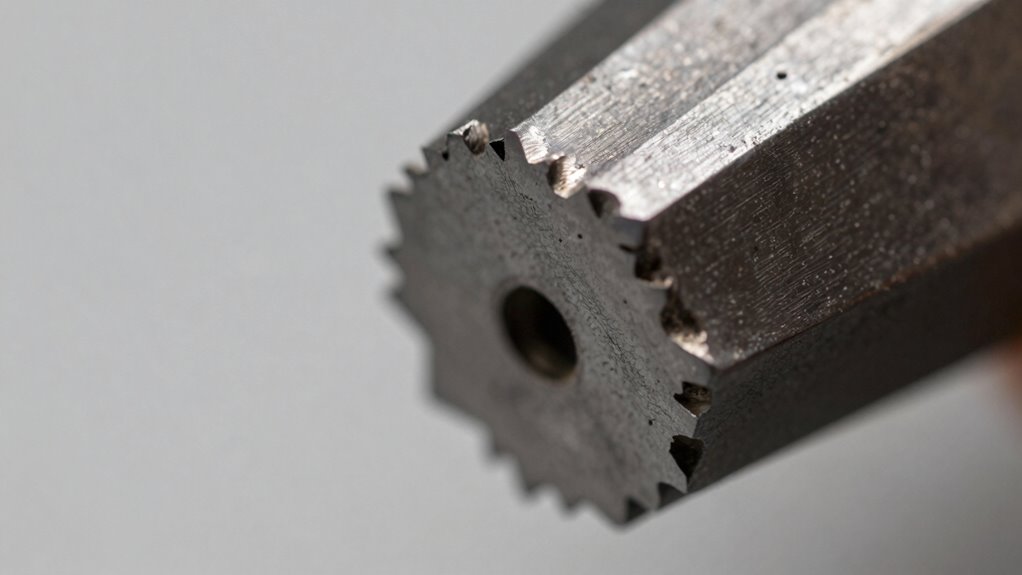
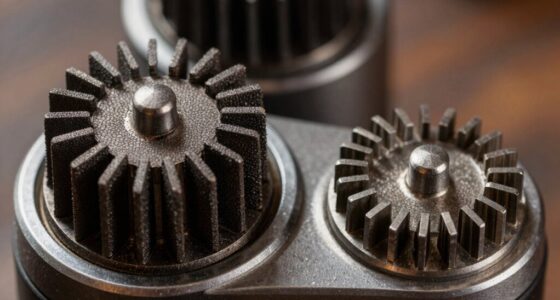
Have you ever noticed small, rough patches or jagged edges on your tools or machinery? If so, it’s a clear sign that burr wear might be affecting your grinding quality. Over time, burrs—tiny, unwanted metal projections—can develop and compromise the surface finish of your workpieces. Recognizing early signs like edge rounding and surface discoloration can save you time and prevent costly rework. When burrs begin to wear down, the sharp, defined edges start to soften, leading to edge rounding. Instead of crisp, clean cuts, you’ll see edges that look dull, smoothed out, or slightly curved. This change indicates that the burrs are losing their original shape, which can diminish their effectiveness in cutting or grinding. As a result, your tools may not perform as precisely, and the surface quality of your workpieces can suffer.
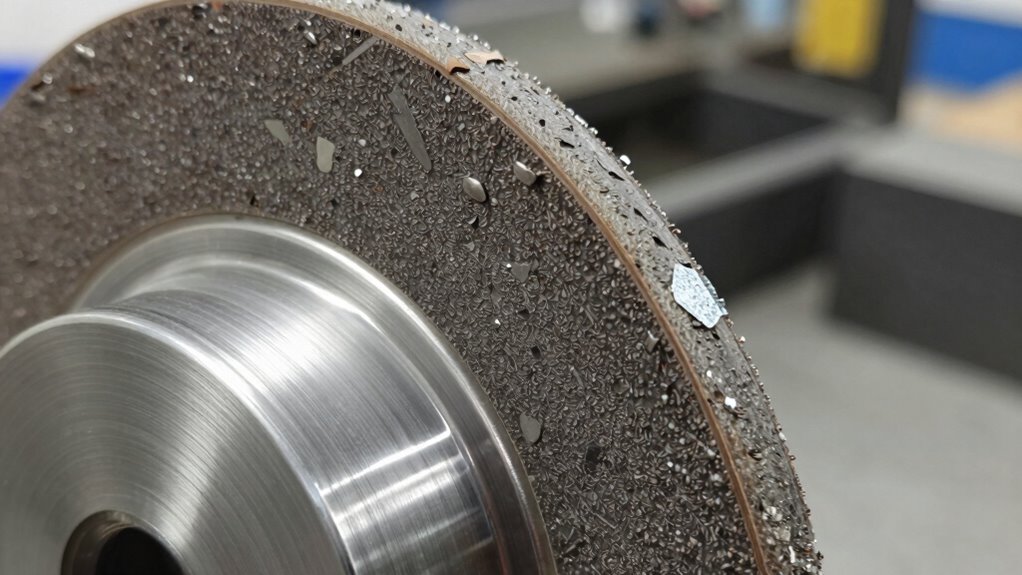
Surface discoloration is another telltale sign of burr wear. When burrs deteriorate, oxidation or heat buildup can cause discoloration on the tool’s surface—often appearing as bluish, dark, or uneven patches. This discoloration isn’t just cosmetic; it signals that the burrs are experiencing excessive friction or overheating, which can accelerate wear and reduce grinding efficiency. If you notice these color changes, it’s a sign that your grinding process isn’t as effective as it used to be, and the burrs may need attention or replacement. Ignoring these signs can lead to more severe issues later, such as increased tool wear, poor surface finishes, and even damage to your machinery.
Another aspect to watch for is a decline in grinding consistency. When burr wear becomes significant, you might notice irregularities in your finished products—such as uneven surface textures, rough patches, or dimensional inaccuracies. These issues often stem from the burrs’ inability to perform uniformly due to edge rounding or surface degradation. As the burrs become duller and less sharp, they can’t cut or grind as smoothly, which leads to inconsistent results. Regular inspection and maintenance are essential to catch these signs early. Using magnification tools or visual checks can help identify subtle changes before they escalate into major problems.
Frequently Asked Questions
How Does Burr Wear Affect Overall Grinding Efficiency?
Burr wear affects your grinding efficiency by disrupting burr wear patterns, leading to inconsistent particle size and uneven grind. As the burrs wear down, they struggle to produce the same grinding consistency, causing longer grind times and uneven extraction. You’ll notice a decline in quality because worn burrs can generate more heat and static, reducing the precision and efficiency of your grinder. Regularly checking burrs helps maintain ideal grinding performance.
Are There Preventive Maintenance Tips to Minimize Burr Wear?
To minimize burr wear, you should regularly check your lubrication practices and guarantee proper tool calibration. Proper lubrication reduces friction and heat, slowing down burr degradation. Consistently calibrate your grinding tools to maintain precision, preventing uneven wear. Additionally, clean tools and replace worn parts promptly. By following these maintenance tips, you’ll extend your grinding tool’s lifespan and keep your grinding quality high.
Can Burr Wear Signs Vary Across Different Grinding Machines?
Yes, burr wear signs can vary across different grinding machines. You should regularly check machine calibration and tool alignment, as these factors influence wear patterns. For example, misaligned tools might cause uneven burrs or faster wear in specific areas. By monitoring these indicators and adjusting calibration accordingly, you can catch early signs of wear, ensuring consistent grinding quality and extending your machine’s lifespan.
What Are the Long-Term Costs Associated With Ignoring Burr Wear?
Ignoring burr wear is like driving a car with a worn-out tire; it’ll cost you more in the long run. Over time, neglected burrs increase machine downtime, reduce product quality, and lead to costly repairs. You’ll face higher maintenance costs and more frequent burr replacements. A thorough cost analysis shows that maintaining your burrs early can save you money, preventing expensive repairs and ensuring consistent grinding quality.
How Can I Differentiate Burr Wear From Other Grinding Issues?
To differentiate burr wear from other grinding issues, look for consistent but uneven grind sizes and increased particle size, indicating burr wear detection. Check your grinder calibration regularly, as misalignment can mimic burr wear symptoms. If adjustments don’t improve grind quality, it’s likely burr wear. Keep an eye on the burrs’ condition visually, and perform routine calibration to prevent confusion with other problems like motor or settings issues.
Conclusion
By paying close attention to subtle changes in burr wear signs, you can gently steer your grinding process back on course before small imperfections become more noticeable. Recognizing these quiet signals allows you to fine-tune your technique, ensuring a smoother, more consistent finish. Remember, a keen eye and thoughtful adjustments help maintain the delicate balance of quality, guiding your work with a gentle touch that preserves precision and excellence in every detail.