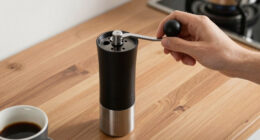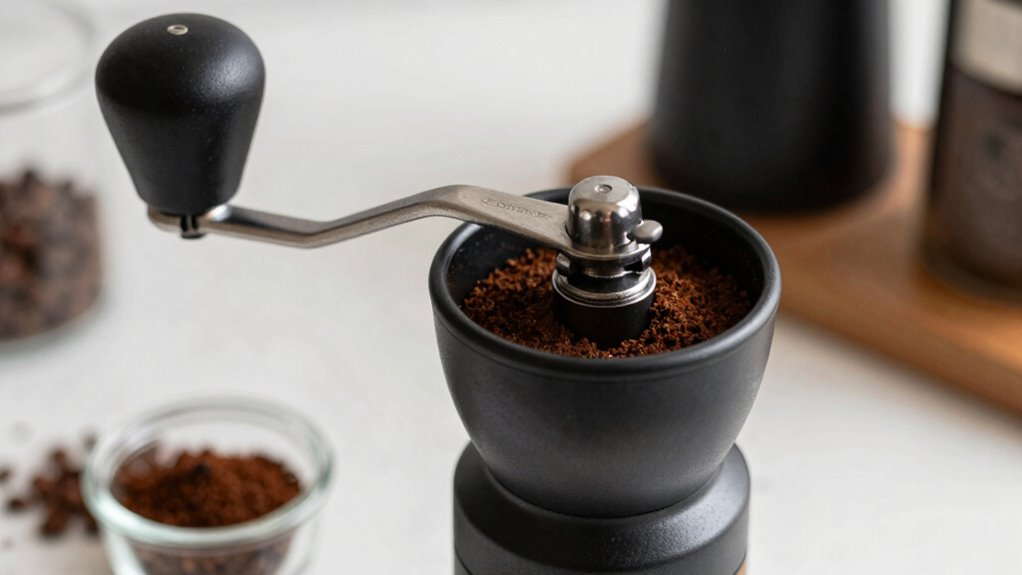

A manual espresso grinder is considered ‘espresso-capable’ when it offers precise, consistent grind size with fine adjustment control, allowing you to extract rich, balanced shots. High-quality burrs—preferably large, durable, and made from steel or ceramic—ensure uniform particle sizes, reducing brew issues. Easy adjustments, minimal grind retention, and durable, user-friendly build are also key. If you want to master your espresso game, understanding these features will help you choose the right grinder and get better results every time.
Key Takeaways
- Precise, adjustable grind settings tailored for fine espresso grounds.
- Consistent particle size to ensure even extraction and optimal flavor.
- Quality burrs (steel or ceramic) that maintain sharpness and uniformity.
- Easy calibration and lock-in adjustments for repeatable results.
- Durable, high-quality build with smooth operation and easy maintenance.

CEVING Mini Manual Coffee Grinder With 40 Adjustable Settings, Black
- Adjustable Grind Settings: 40 external precise settings
- Portable & Lightweight: 325g, compact design
- Versatile Use: Suitable for espresso, French press, pour-over
As an affiliate, we earn on qualifying purchases.
As an affiliate, we earn on qualifying purchases.
What Makes a Manual Grinder Good for Espresso?
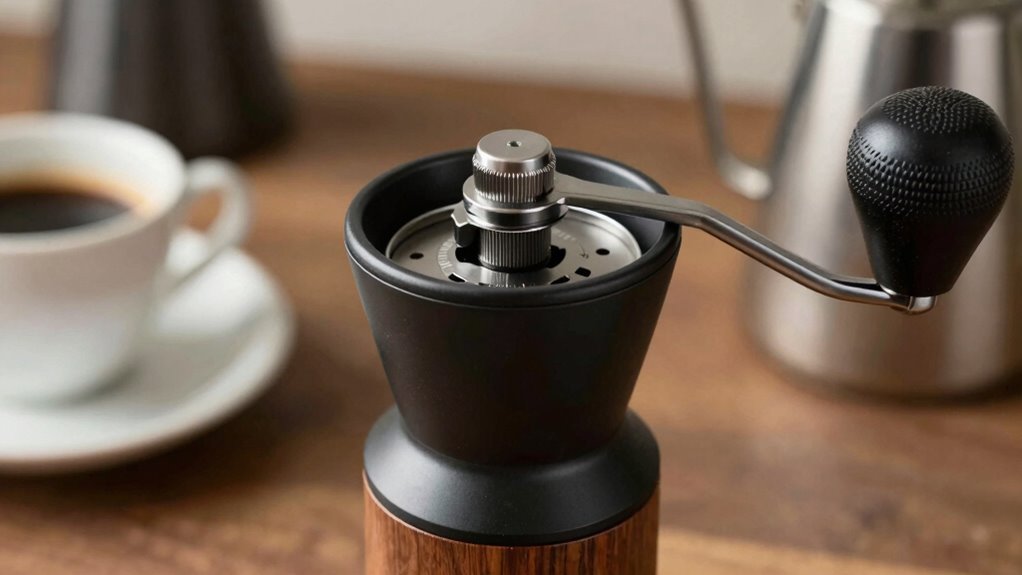
A manual grinder is ideal for espresso if it offers precise grind size control and consistent particle size. Manual calibration plays a pivotal role, allowing you to fine-tune the grind settings to match your espresso machine’s requirements. When you adjust the grind, you want it to stay locked in place, ensuring repeatability with each shot. Grind uniformity matters because it affects extraction; uniform particles promote even extraction, resulting in better flavor. Look for grinders with adjustable grind settings that provide smooth, easy calibration. Ease of adjustment is essential for maintaining accurate settings over time. A well-designed grinder also incorporates features that support grind consistency, minimizing the need for frequent adjustments. Consistency is key—if your grinder delivers uniform grounds every time, you’ll enjoy a more predictable and high-quality espresso shot. Additionally, features like adjustable burrs can help you achieve more precise control over grind size, which is crucial for optimal espresso extraction. Achieving precise calibration ensures your grinder maintains accuracy during use, reducing waste and improving results. Ultimately, a good manual grinder for espresso combines precise manual calibration with excellent grind uniformity. Energy-efficient design features can also enhance your brewing experience by reducing energy consumption and supporting sustainable practices.

Ceramic Burr Manual Coffee Grinder with 8 Adjustable Coarseness Settings
- 8 Adjustable Coarseness Settings: Easily adjust grind size for various brews
- Durable Material Construction: Rust-proof stainless steel and easy-clean glass
- Built-in Ceramic Burr: Grinds coffee quickly and evenly
As an affiliate, we earn on qualifying purchases.
As an affiliate, we earn on qualifying purchases.
How Do Burr Type and Size Impact Espresso Grinding?
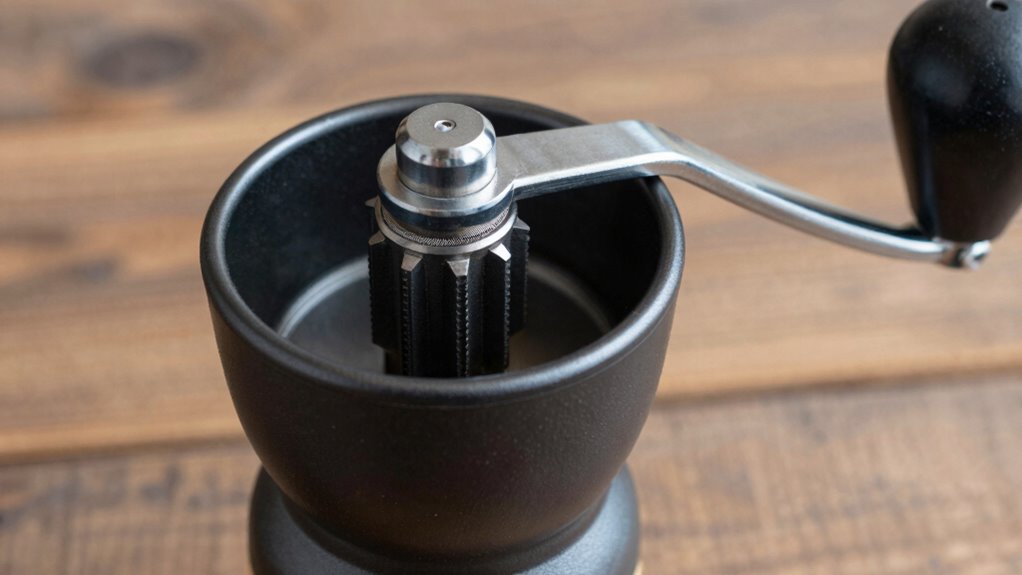
The type and size of your burrs directly influence your espresso’s flavor and consistency. Durable materials like stainless steel or ceramic guarantee longevity and steady performance, while burr diameter affects grind uniformity. Choosing the right burrs helps you achieve the perfect grind size and quality for your espresso. Additionally, attention to detail during selection ensures a well-balanced and harmonious brewing process. Selecting the appropriate burr design can further enhance the extraction process, leading to richer and more complex espresso profiles. Being aware of grind consistency is crucial for optimizing flavor extraction and achieving a superior shot. Furthermore, understanding burr material can help you select a grinder that maintains performance over time and resists wear.
Burr Material and Durability
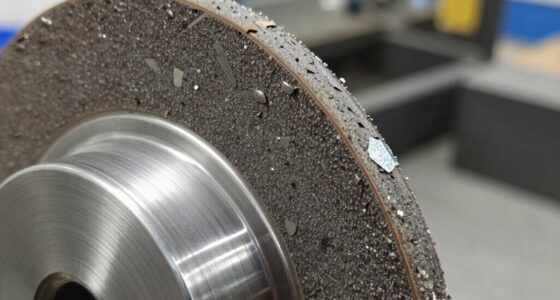
Ever wondered how the material and size of burrs influence your espresso grind? The burr material affects durability and grind consistency. Steel burrs are durable and resistant to wear, making them ideal for frequent use. Ceramic burrs, while more brittle, stay sharp longer and produce cleaner grounds. The size of the burrs impacts heat transfer and grinding speed, where larger burrs generally handle more beans with less heat buildup.
| Burr Material | Durability | Best For |
|---|---|---|
| Steel | High | Regular, heavy use |
| Ceramic | Moderate | Precise, consistent grind |
| Aluminum | Low | Light use |
Choosing the right burr material and size guarantees your grinder remains reliable and produces top-quality espresso.
Grind Size Consistency
Burr type and size directly influence how consistently your espresso grind turns out, affecting extraction quality and flavor. A consistent grind size ensures even extraction, preventing under- or over-extraction that can ruin your shot. Larger burrs typically produce a more uniform grind because they reduce the chance of uneven particle sizes, helping maintain consistency. The shape and design of the burrs also matter; conical burrs often provide better control over grind size and consistency than flat burrs. When your grind size is consistent, you get predictable extraction and richer flavor profiles. Variations in grind size can lead to inconsistent shots, so investing in a grinder with well-designed burrs helps you achieve the precision necessary for quality espresso. Burr quality also plays a crucial role in ensuring long-term performance and reliability of your grinder.
Burr Diameter and Grind Quality
Burr diameter plays a significant role in determining the overall grind quality you get from your espresso grinder. Larger burrs typically produce more consistent grind fineness, resulting in a richer, more balanced shot. When you choose a burr size, you’re affecting how well your grinder can handle fine espresso grounds without clogging or unevenness.
Consider these points:
- Bigger burrs provide a more uniform grind, enhancing flavor clarity.
- Smaller burrs may struggle with grind fineness, risking uneven extraction.
- The right burr size ensures you get the perfect consistency for espresso, making every shot taste exceptional.
Understanding how burr diameter influences grind quality helps you select a manual grinder that delivers the precise espresso you crave.

Agilive Manual Coffee Grinder, Adjustable Grinding Settings, Stainless Steel Burrs, Portable Hand-Cranked Coffee Grinder, For Espresso, Drip Filter, French Press Filter, Compact And Durable
- Adjustable Grinding Settings: Customize grind size easily
- Stainless Steel Burrs: Durable and consistent grinding
- Portable Hand-Crank Design: Easy to use anywhere
As an affiliate, we earn on qualifying purchases.
As an affiliate, we earn on qualifying purchases.
Can You Get Consistent Grind Size With a Manual Grinder?
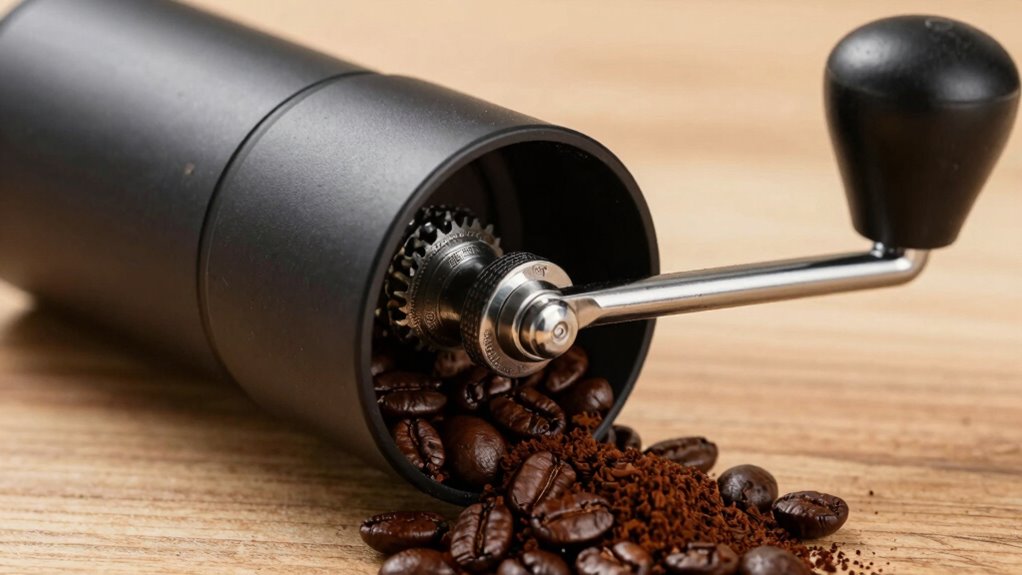
Getting a consistent grind size with a manual grinder is possible, but it requires patience and technique. Achieving good grind uniformity depends on proper burr calibration, ensuring the burrs are aligned correctly for even particle size. Regularly checking and adjusting the burrs helps maintain consistency, especially as you use the grinder over time. Consistent grind size is essential for espresso because uneven grounds can lead to over- or under-extraction. While manual grinders can produce uniform results, it takes practice to develop a steady hand and a disciplined approach to grinding. Keep your burrs clean and calibrated, and take your time with each grind to improve your chances of getting consistent espresso shots. Proper maintenance and careful technique are key factors in achieving the best results.
CEVING Mini Manual Coffee Grinder With 40 Adjustable Settings, Black
- Adjustable Grind Settings: 40 external precise settings
- Portable & Lightweight: 325g, compact design
- Versatile Use: Suitable for espresso, French press, pour-over
As an affiliate, we earn on qualifying purchases.
As an affiliate, we earn on qualifying purchases.
How to Adjust Your Manual Grinder for Perfect Espresso?
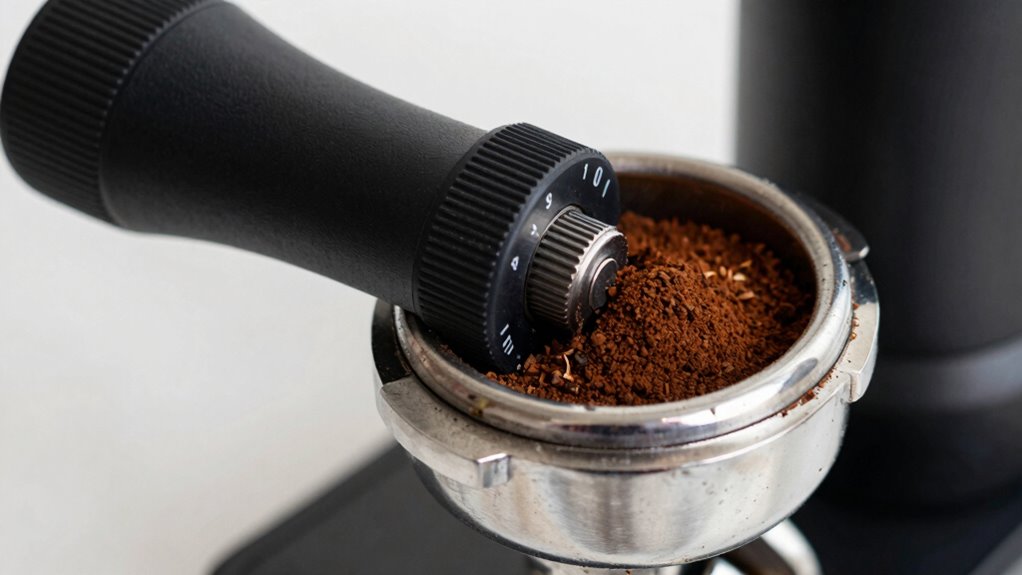
To adjust your manual grinder for perfect espresso, start by identifying the ideal grind setting for your beans and machine. First, test different settings by dialing the grinder tighter or looser, aiming for a fine, consistent grind. Second, keep your grinder in good condition by proper grinder storage, preventing rust and buildup that can affect grind quality. Third, consider the travel friendly design of your grinder—compact and easy to carry—so you can make precise adjustments anywhere, ensuring consistent results. Remember, small tweaks make a big difference in flavor. Once dialed in, maintain your settings to preserve that perfect espresso shot. Regular adjustments and mindful storage keep your grinder performing at its best, no matter where you brew. Proper maintenance and Filtration are key factors in achieving optimal grind performance. Additionally, understanding grind consistency helps ensure each shot is as flavorful as the last. Furthermore, paying attention to adjustment precision can significantly impact your espresso quality over time. Being aware of grind adjustment techniques can help you fine-tune your process more effectively.
Does Grind Retention Affect Your Espresso?
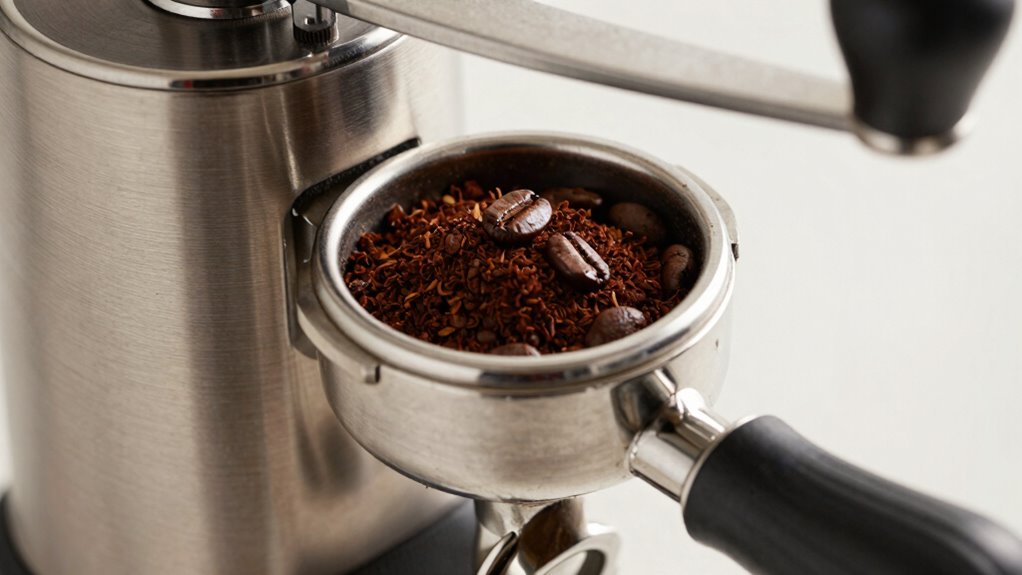
Residual coffee left in your grinder can build up over time, affecting the clarity of your espresso shots. This leftover grind may cause inconsistent extraction and muddled flavors. Regular cleaning helps manage grind retention and keeps your espresso tasting fresh. Incorporating eco-friendly cleaning methods aligns with sustainable practices in eco-conscious coffee preparation. Additionally, minimizing grind retention through proper maintenance ensures that each shot maintains its intended flavor profile and quality. Proper cleaning also helps prevent the buildup of dust and oils that can negatively impact the air quality of your workspace, contributing to a healthier environment for your brewing process. Using high-quality grinders designed for espresso-capability can further reduce residual buildup and improve overall extraction consistency. Understanding how infrastructure impacts your equipment can guide you in choosing the right tools and techniques for optimal performance.
Residual Coffee in Grinder
Even if you’ve just ground fresh coffee, small amounts of leftover coffee often stay trapped in your grinder’s burrs and chute. This residual coffee can impact your espresso’s flavor and aroma over time. Maintaining grinder cleanliness helps prevent stale flavors from lingering and ensures each shot is pure. Residual coffee can also cause inconsistent grind size and clog your grinder, making it harder to achieve the perfect espresso.
- Stale flavors seep into your brew, dulling the bright notes.
- Inconsistent grind size hampers extraction, affecting taste and crema.
- Clogged burrs slow down your grinder and reduce efficiency.
Keeping your grinder clean minimizes residual coffee, preserving freshness and delivering the best espresso experience.
Impact on Brew Clarity
Grind retention can considerably impact your espresso’s clarity, often causing a murky or muddy appearance in the cup. When your grinder holds onto leftover grounds, it can lead to inconsistent grind size and over-extraction, which muddles the brew’s clarity. This residual coffee can mix with freshly ground beans, resulting in uneven particle sizes that cloud the espresso. A grinder with high grind retention makes it harder to achieve a clean, sharp shot because residual grounds disturb the flow and extraction process. To improve brew clarity, choose a grinder that minimizes grind retention, allowing you to maintain consistent grind size and freshness. Additionally, selecting a grinder with vetted components can help reduce the amount of coffee that remains stuck in the burrs or chute, further enhancing clarity. Regular cleaning and maintenance also play a crucial role in reducing residual coffee buildup and preserving optimal performance. Implementing proper cleaning techniques can significantly reduce the impact of leftover grounds, ensuring your espresso remains clear and well-extracted.
Maintenance and Cleaning Needs
If your grinder retains coffee grounds after each use, it can considerably increase your maintenance and cleaning efforts. Grind retention leads to more frequent cleaning routines and a higher maintenance frequency, which can be frustrating. To keep your grinder performing at its best, you’ll need to:
- Regularly disassemble and clean the burrs to prevent stale coffee buildup.
- Use brushes or compressed air to remove trapped grounds from difficult spots.
- Schedule deep cleanings periodically to maintain consistent grind size and flavor.
Neglecting these steps causes grind retention to affect brew quality and can damage your grinder over time. A well-maintained grinder not only ensures better espresso but also reduces long-term repair costs. Consistent cleaning routines keep your equipment reliable and your coffee tasting sublime.
How Important Are Material and Build Quality in Manual Espresso Grinders?
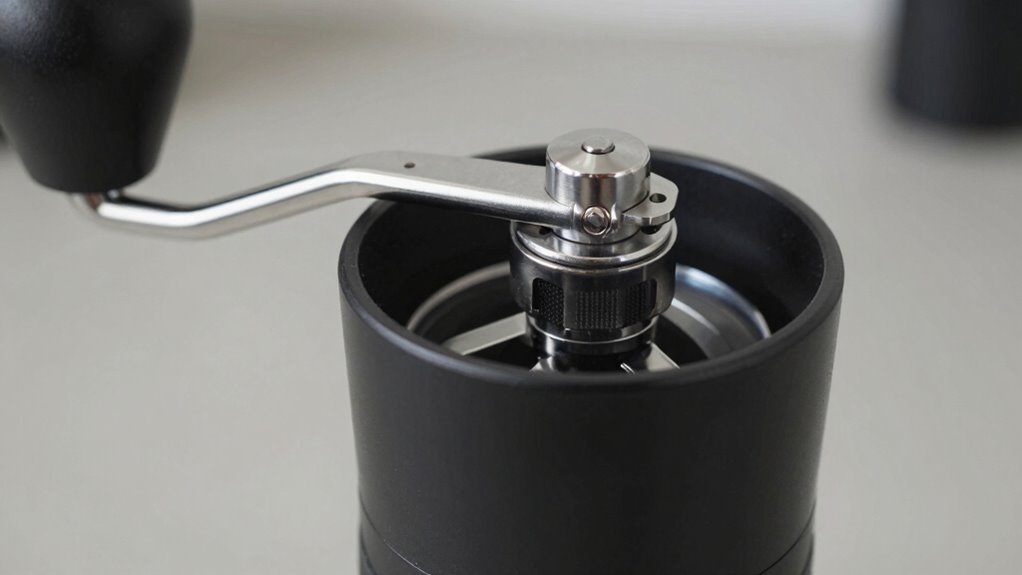
The material and build quality of a manual espresso grinder directly impact its durability and performance. High-quality material ensures your grinder withstands frequent use without wear, while solid build durability guarantees consistent grinding. When choosing, consider materials like stainless steel or aluminum for strength and corrosion resistance. A well-constructed grinder minimizes vibrations and maintains precise adjustment over time. Here’s a quick comparison:
| Material | Build Durability | Maintenance Needs |
|---|---|---|
| Stainless Steel | Very high | Easy to clean |
| Aluminum | Moderate | Moderate maintenance |
| Plastic | Low | Frequent replacement |
Opting for superior material quality and sturdy build means your grinder stays reliable, delivers consistent grounds, and lasts longer, making it essential for quality espresso brewing.
How Do Ease of Use and Maintenance Influence Your Espresso Grinding?

Since ease of use and maintenance directly affect how smoothly your espresso grinding process goes, they play a crucial role in your overall brewing experience. An ergonomic design makes grinding comfortable and effortless, reducing fatigue during extended use. When your grinder is easy to clean and maintain, you save time and avoid hassle, ensuring consistent performance. Aesthetic appeal also boosts your enjoyment, making your setup a joy to look at every day. Consider these factors:
- Effortless adjustments for consistent grind size, enhancing flavor.
- Simple cleaning routines that keep your grinder in top shape.
- A sleek, attractive design that inspires confidence and pride in your setup.
Frequently Asked Questions
What Is the Typical Price Range for Manual Espresso Grinders?
You’ll find the pricing spectrum for manual espresso grinders typically ranges from around $50 to $300. Factors like build quality, grind consistency, and brand influence affordability. If you’re just starting out, models on the lower end offer decent performance, but if you want precision and durability, investing in a mid-range or higher-end grinder makes sense. Your choice depends on your brewing needs and how much you’re willing to invest.
Can a Manual Grinder Replace an Electric Espresso Grinder for Everyday Use?
You might find that a manual grinder can replace an electric one for daily use, but it depends on your priorities. While manual consistency can produce excellent espresso, it requires time and effort, unlike electric efficiency, which offers quick, uniform grounds. If you enjoy the process and don’t mind the extra work, a manual grinder suits daily use. Otherwise, an electric grinder provides convenience and speed for busy mornings.
How Long Does It Generally Take to Grind a Shot of Espresso Manually?
It typically takes around 30 to 60 seconds to hand grind a shot of espresso, depending on your hand grinding speed and grinder quality. You might face consistency challenges, especially if you’re new to manual grinding, which can affect the shot’s flavor. To guarantee a good espresso, focus on steady, even strokes, and be patient—manual grinding rewards precision and practice.
Are Manual Grinders Suitable for High-Volume Espresso Preparation?
Manual grinders aren’t ideal for high-volume espresso prep because they lack commercial capacity, meaning you’ll need to grind multiple shots repeatedly, which can be tiring. Durability considerations also come into play; they’re generally built for occasional use, not continuous operation. If you’re brewing for a busy environment, investing in an electric grinder with higher capacity and durability will save you time and effort, ensuring consistent quality.
What Accessories or Tools Are Recommended for Manual Espresso Grinding?
Your manual espresso grinder is a precision instrument, so investing in quality accessories is essential. You should get a good tamper, a cleaning brush, and a grinder calibration tool to maintain grinding consistency. Maintenance tools like compressed air or a small brush help keep the burrs clean. These accessories guarantee your grinder performs at its best, delivering consistently perfect espresso shots every time without the fuss of unreliable results.
Conclusion
So, as you explore manual espresso grinders, you’ll find that the right burrs, build quality, and ease of use often come together unexpectedly—like stumbling upon a hidden gem. When you prioritize consistency and adjust with confidence, your perfect shot becomes less of a coincidence and more of a craft. Sometimes, the smallest tweak or material choice can transform your brewing experience, turning a simple grind into a delightful daily ritual.