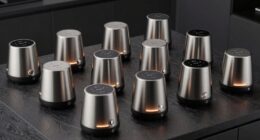
Conical and flat burrs produce different grind sizes, which affect your coffee’s flavor, aroma, and extraction. Conical burrs create a wider particle range, making them versatile for various brewing methods and helping preserve delicate flavors with less heat. Flat burrs generate more uniform grounds perfect for espresso but can generate more heat and impact aroma. If you want to understand how these differences influence your cup, keep exploring the details below.
Key Takeaways
- Flat burrs produce more uniform particle sizes, leading to more consistent extraction and flavor clarity in the cup.
- Conical burrs generate a wider particle size range, offering versatility for different brewing methods and potentially more complex flavors.
- Flat burrs tend to generate more heat, which can impact aromatic preservation and result in subtle flavor differences.
- Conical burrs typically produce less heat and preserve volatile aromatics, enhancing overall coffee aroma and freshness.
- Maintenance and cleaning ease vary, with conical burrs generally being simpler to keep clean and maintain for consistent grind quality.
How Do Conical and Flat Burrs Differ in Design and Function?
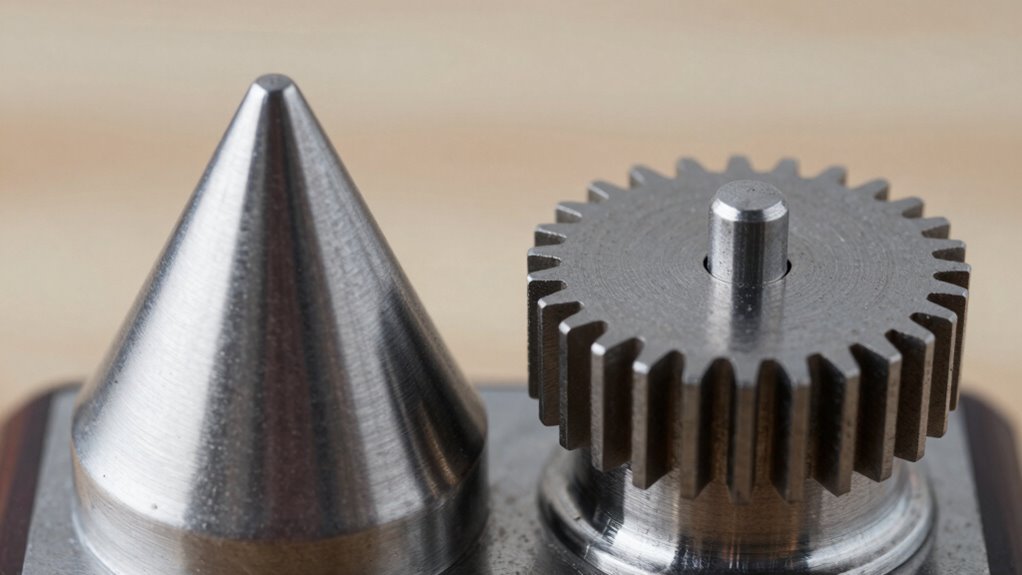
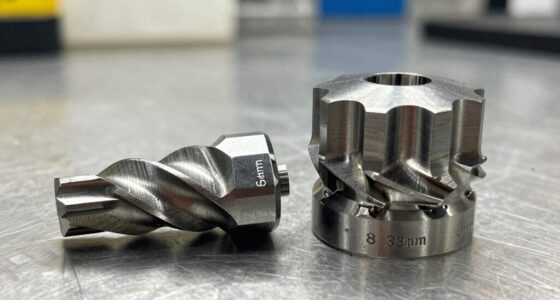
Conical and flat burrs differ primarily in their shape and how they grind coffee. The burr shape influences the way beans are crushed; conical burrs have a cone-shaped design with a central spindle, while flat burrs feature two parallel rings. This difference affects the grinding process, with conical burrs generally producing a wider range of particle sizes, which can impact grind consistency. Flat burrs tend to generate more uniform particles because of their symmetrical design, leading to a more consistent grind. Additionally, burr material can affect durability and performance, further influencing the choice between the two types. When choosing between them, consider how the shape influences the overall grind quality. Your decision depends on your brewing needs and preferences, as each type offers unique advantages rooted in their distinct design and function.
Do Conical or Flat Burrs Give More Consistent Grind Sizes?
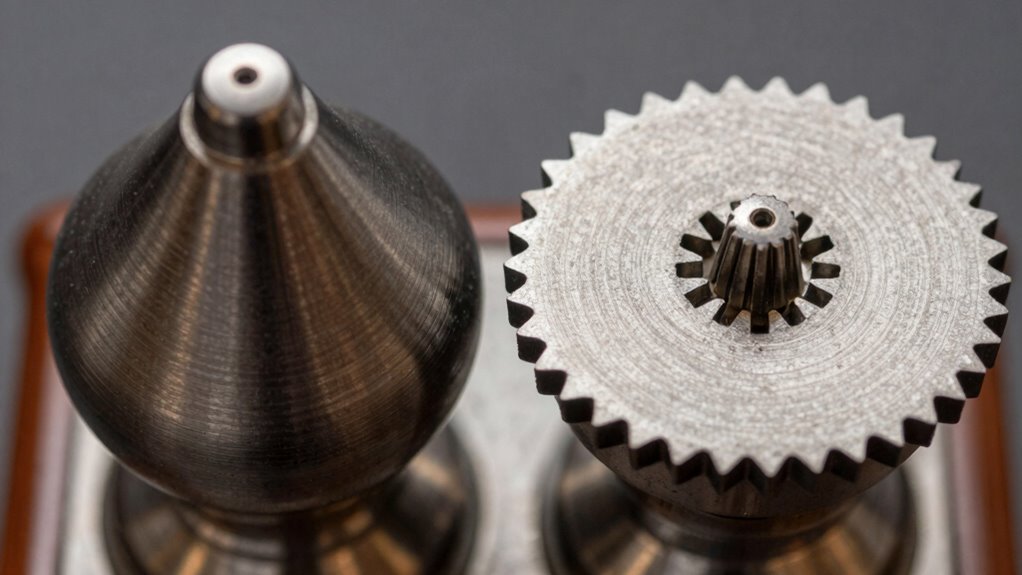
You want a grind that’s uniform and predictable, but which burr design delivers that more reliably? Conical and flat burrs influence grind size consistency differently, affecting how evenly your coffee grounds are distributed. Understanding how each design impacts burr performance can help you choose the right grinder for your brewing needs. Additionally, the technology used in the burrs plays a significant role in achieving optimal consistency and performance.
Grind Size Uniformity
When it comes to grind size uniformity, the type of burrs plays a crucial role in ensuring consistent results. Conical and flat burrs both impact grind size consistency, but they do so differently. Typically, flat burrs produce a more uniform particle distribution because their flat surfaces grind coffee evenly across the entire surface. Conical burrs, however, tend to generate slightly more variation in particle size but excel in reducing heat buildup, which can affect grind consistency. To understand the difference better:
- Flat burrs offer more consistent particle sizes.
- Conical burrs may produce a broader grind size range.
- Uniform particle distribution is easier to achieve with flat burrs.
- Heat dispersion in conical burrs can influence grind stability.
- Precision in grind size can be enhanced by selecting the appropriate burr type for your brewing method.
Choosing depends on your need for precision versus heat management.
Burr Design Influence
The design of the burrs directly influences how consistent your grind sizes will be. Conical burrs often produce a broader range of grind particle sizes, which can lead to uneven extraction. Flat burrs, on the other hand, tend to create more uniform grind particle sizes due to their precise burr manufacturing process. This consistency is essential for espresso and other brewing methods demanding precision. Additionally, burr design impacts how well the grinder can maintain uniformity over time, affecting long-term performance.
How Does Heat Build-Up Differ Between Conical and Flat Burr Grinders?
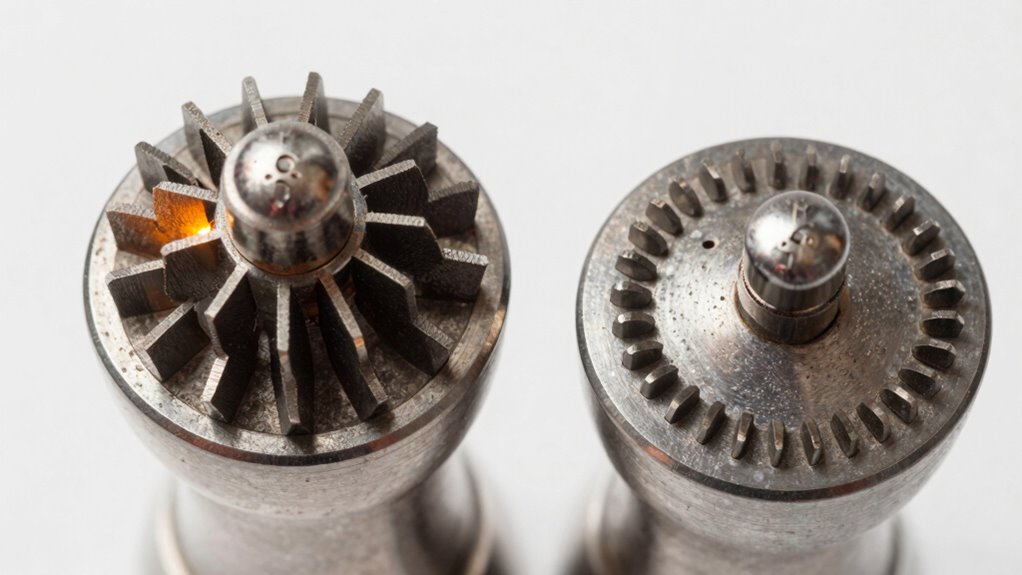
Heat build-up in grinders varies markedly between conical and flat burr designs, impacting the freshness and flavor of your coffee. Conical burrs typically generate less heat due to their design, helping preserve grind size consistency and reduce the risk of over-extraction. Flat burrs, on the other hand, tend to produce more heat because of their higher contact surface and grinding force, which can accelerate burr wear resistance issues over time.
To understand this better:
- Conical burrs produce less friction, maintaining more stable temperatures.
- Flat burrs, with higher contact area, generate more heat during grinding.
- Less heat means fewer flavor compounds are compromised.
- Consistent temperature control extends burr lifespan and maintains grind quality.
Which Burr Type Keeps Coffee Fresher and More Aromatic?

Since heat build-up affects how well a grinder preserves coffee’s freshness and aroma, choosing the right burr type is essential. Conical burrs typically generate less grinder noise, which helps maintain a cooler environment during grinding, preserving volatile aromatics. The burr material also plays a role; ceramic burrs tend to stay cooler than metal ones, further protecting your coffee’s freshness. Flat burrs, with their higher grinding speed and increased heat, can cause more aroma loss over time. If keeping your coffee fresh and aromatic matters most, conical burrs made from ceramic or high-quality stainless steel are better options. They minimize heat transfer and noise, ensuring your beans retain their nuanced flavors longer. Additionally, understanding power tool safety and proper maintenance can help prolong the effectiveness of your grinder and protect your investment.
How Do Grind Settings and Adjustments Work for Conical vs Flat Burrs?
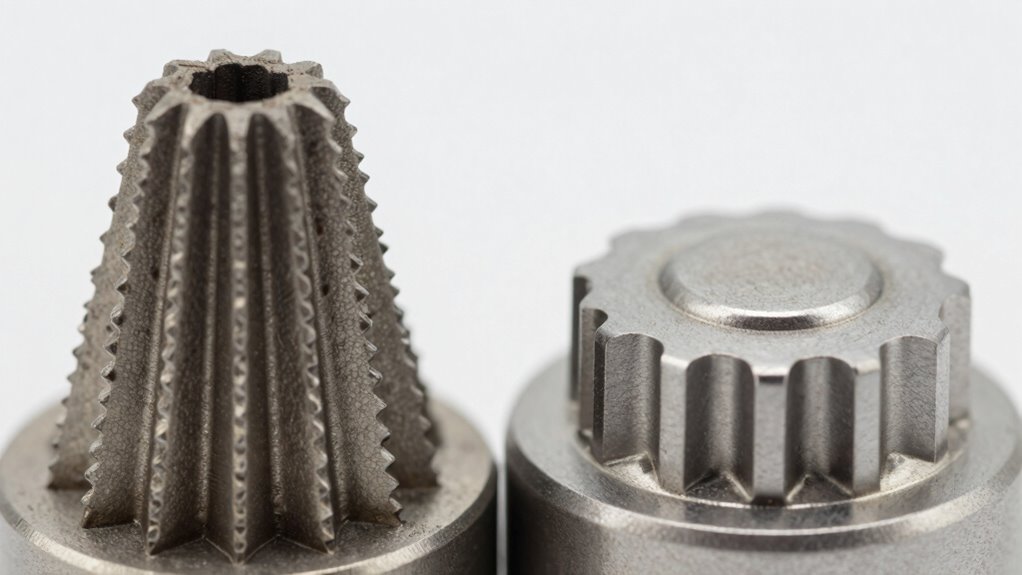
Adjusting grind settings on conical and flat burr grinders involves understanding how each design responds to tweaks. With conical burrs, small adjustments often lead to significant changes in grind size because of their tapered shape. Flat burrs, however, tend to require more precise burr calibration to achieve consistent results.
- Turn the dial or knob gradually for coarse or fine settings.
- Use the grind adjustment to fine-tune particle size.
- Check for burr calibration to ensure uniformity.
- Test grind size consistency after each adjustment.
Conical grinders typically offer easier, more forgiving adjustments, while flat grinders demand more careful calibration for precision. Mastering these adjustments helps optimize extraction and flavor.
How Do Burr Shape and Heat Affect Coffee Flavor and Extraction?
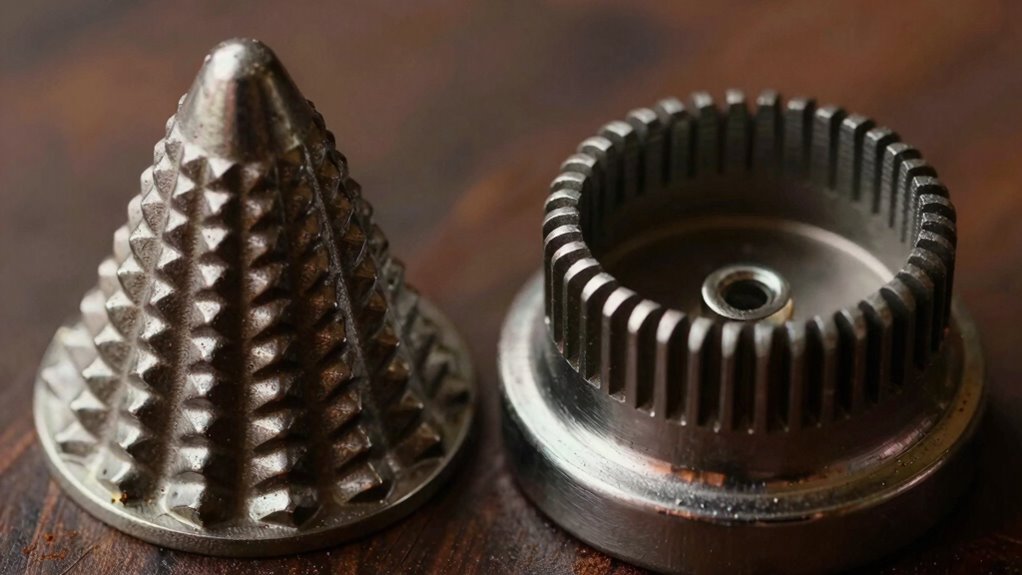
The shape of your burrs not only influences grind consistency but also affects how heat is generated during grinding, which in turn impacts the coffee’s flavor and extraction. Conical burrs tend to produce less heat due to their design, helping preserve delicate aromatics. Flat burrs, with their larger surface area, can generate more heat, risking over-extraction or flavor loss if not managed properly. Heat influence during grinding can cause oils and volatile compounds to degrade, leading to a duller cup. Proper heat management is essential to maintain the integrity of the coffee’s natural flavors. Consistent grind size minimizes uneven extraction, but controlling heat ensures those grounds retain their ideal flavor profile. Ultimately, burr shape plays a role in balancing grind consistency and heat influence, directly affecting how well your coffee’s flavors are extracted and preserved.
Which Burr Type Is More Durable and Easier to Maintain?
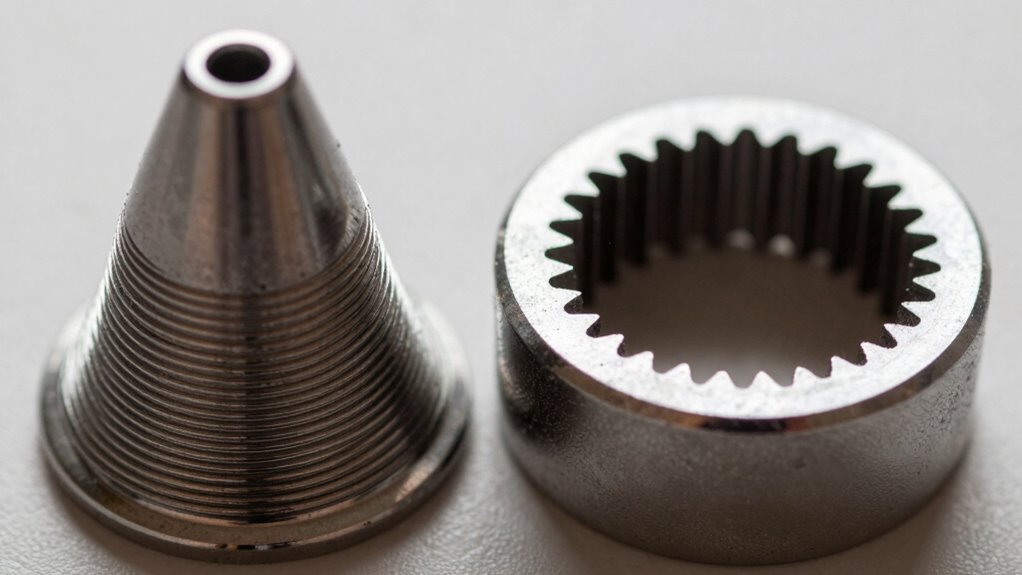
When choosing between conical and flat burrs, durability over time and ease of cleaning are key factors to contemplate. You’ll want a grinder that withstands regular use without frequent replacements and is simple to maintain. Let’s compare how each burr type performs in these areas. Additionally, essential oils for maintenance can help keep burrs clean and functioning efficiently, making maintenance easier over the long term.
Durability Over Time
Although both conical and flat burrs are built to last, conical burrs generally tend to be more durable over time and easier to maintain. Their material longevity and wear resistance often surpass flat burrs because of their design and composition. To maximize durability, consider these factors:
- Material quality: High-grade stainless steel or ceramic offers better wear resistance.
- Burr geometry: Conical shapes distribute stress more evenly, reducing wear.
- Usage frequency: Less frequent use extends the lifespan of both burr types.
- Maintenance practices: Regular calibration and proper handling prevent premature damage.
- The design advantages of conical burrs, such as their ability to handle a wider range of grind sizes, also contribute to their overall durability and ease of maintenance.
Ease of Cleaning
Both conical and flat burrs require regular cleaning to maintain ideal performance and extend their lifespan. Your cleaning routines and maintenance tips directly impact how easy it is to keep your grinder in top shape. Conical burrs tend to be easier to clean because they have fewer crevices, making maintenance simpler. Flat burrs often need more thorough cleaning due to their flat surfaces and closer contact points, which can trap grounds. Regularly removing coffee oils and residue prevents buildup that hampers grind consistency. Consider this table to compare their cleaning aspects:
| Burr Type | Cleaning Routine Ease | Maintenance Tips |
|---|---|---|
| Conical | Easier | Regular brushing and oil removal |
| Flat | Slightly more effort | Deep cleaning for residue buildup |
How Do You Choose Between Conical and Flat Burrs for Your Brewing Style?
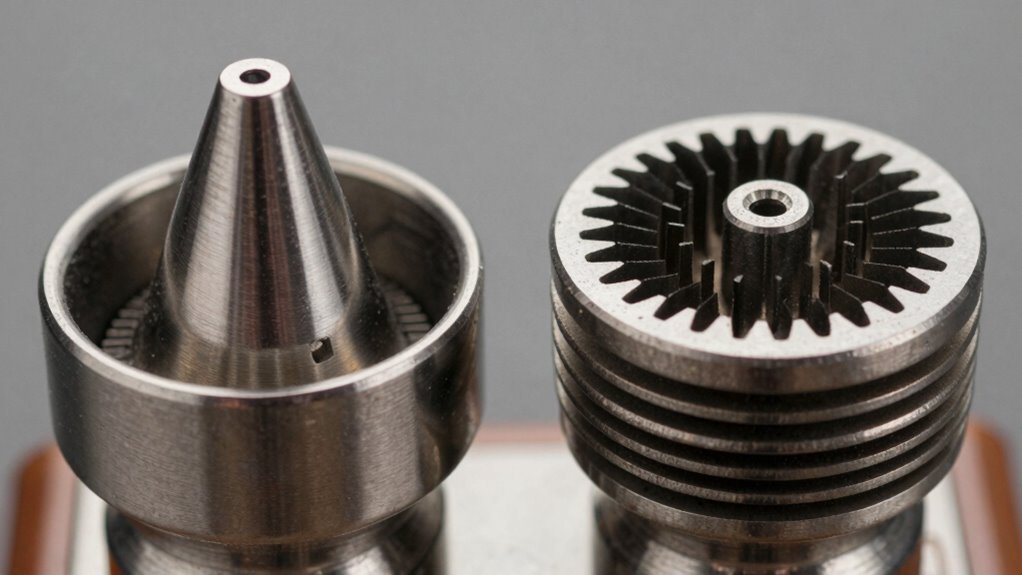
Choosing between conical and flat burrs depends on your brewing style and preferences. Consider these factors to make an informed choice:
- Grind consistency: Flat burrs generally produce more uniform grounds, ideal for espresso.
- Burr longevity: Conical burrs tend to last longer due to less heat buildup during grinding.
- Particle size distribution: Conical burrs create a wider range of grind sizes, suitable for pour-over and drip brewing.
- Maintenance needs: Flat burrs may require more frequent calibration to maintain grind quality.
- Smart home integration options can enhance your brewing experience by allowing precise control and customization.
Your choice hinges on balancing these elements with your brewing demands. If you prioritize grind consistency and precision, flat burrs are a strong option. If durability and lower heat are more important, conical burrs could be better suited.
Which Burr Style Is Better for Specific Brewing Methods Like Espresso or French Press?
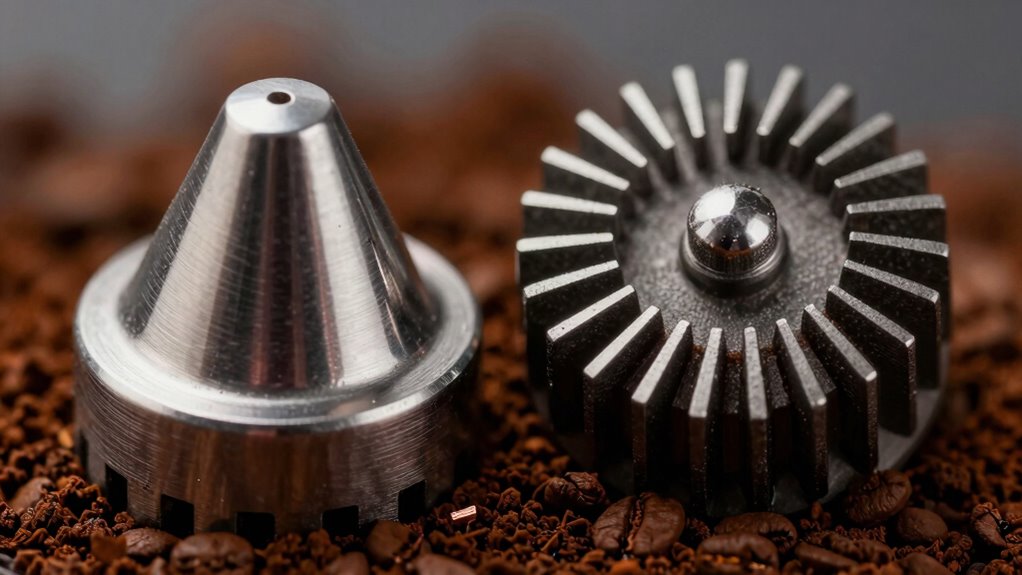
When selecting a burr style for specific brewing methods, it’s important to contemplate how each type performs with different grind requirements. For espresso, flat burrs generally excel because they produce better grind consistency, which is essential for extracting rich, balanced shots. Their uniform grind size ensures even extraction, and their burr manufacturing typically results in minimal variation. Conversely, conical burrs are versatile and tend to generate a slightly coarser grind, making them suitable for methods like French Press. They tend to clog less and handle a wider range of grind sizes, but may sacrifice some grind consistency compared to flat burrs. Ultimately, your choice depends on the brewing method’s specific needs and your preference for grind uniformity versus versatility. Additionally, the burr material can influence durability and grind quality over time.
Frequently Asked Questions
How Does Burr Shape Impact the Overall Aroma of Brewed Coffee?
Burr shape influences aroma preservation and scent extraction by affecting how uniformly coffee grounds are ground. Conical burrs tend to produce more consistent grind sizes, enhancing aroma preservation and allowing for better scent extraction during brewing. Flat burrs might create more uniform grounds but can lead to uneven extraction, potentially diminishing aroma. Your choice impacts how well the coffee’s aromatic compounds are retained and released in your cup.
Are There Cost Differences Between Conical and Flat Burr Grinders?
You’ll find that conical burr grinders generally cost less than flat burr grinders due to lower manufacturing costs. The price difference can vary depending on brand and features, but flat burrs tend to be pricier because they require more precise machining. If you’re on a budget, a conical grinder might be a better choice, while flat burrs often offer more consistency and durability for serious coffee enthusiasts.
Can Grind Size Adjustments Affect Flavor More in One Burr Type?
Ever wonder why your coffee’s flavor varies? You’ll find that grind size adjustments can influence flavor more with flat burrs due to their consistent grind size, reducing flavor variability. Conical burrs may offer slightly more forgiving adjustments, but they can introduce more grind inconsistency. So, if you seek precise control over flavor, focusing on grind size adjustments impacts your brew more with flat burrs.
Which Burr Style Is More Suitable for High-Volume Brewing?
You should choose a conical burr grinder for high-volume brewing because it offers better burr durability, handling frequent use without wearing down quickly. Conical burrs require less maintenance, reducing downtime during busy periods. They also produce consistent grind sizes, ensuring quality and efficiency. Flat burrs, while precise, may need more maintenance and might not withstand continuous use as well in high-volume settings.
Do Different Burr Types Require Distinct Cleaning Routines?
A stitch in time saves nine, and that’s true for burr maintenance. Different burr types do require distinct cleaning routines to keep your grinder in top shape. Flat burrs tend to collect more grounds, so you should clean them more frequently. Conical burrs are easier to maintain, but regular cleaning is still essential. Follow your manufacturer’s guidelines for cleaning frequency to guarantee consistent performance and fresh-tasting coffee.
Conclusion
Choosing between conical and flat burrs depends on your brewing style and preferences. Conical burrs tend to stay cooler, preserving aroma, while flat burrs offer more uniform grind sizes. Did you know that over 60% of baristas prefer flat burrs for espresso? Ultimately, understanding how each affects flavor and consistency helps you make the best choice. Whichever you pick, investing in quality and proper maintenance will guarantee your coffee always tastes its best.