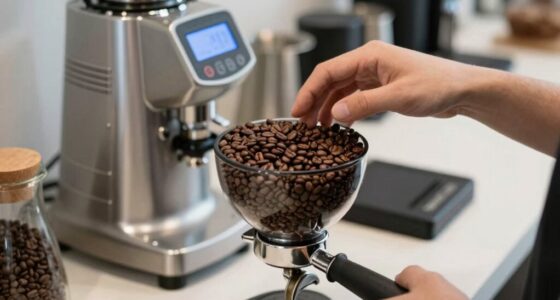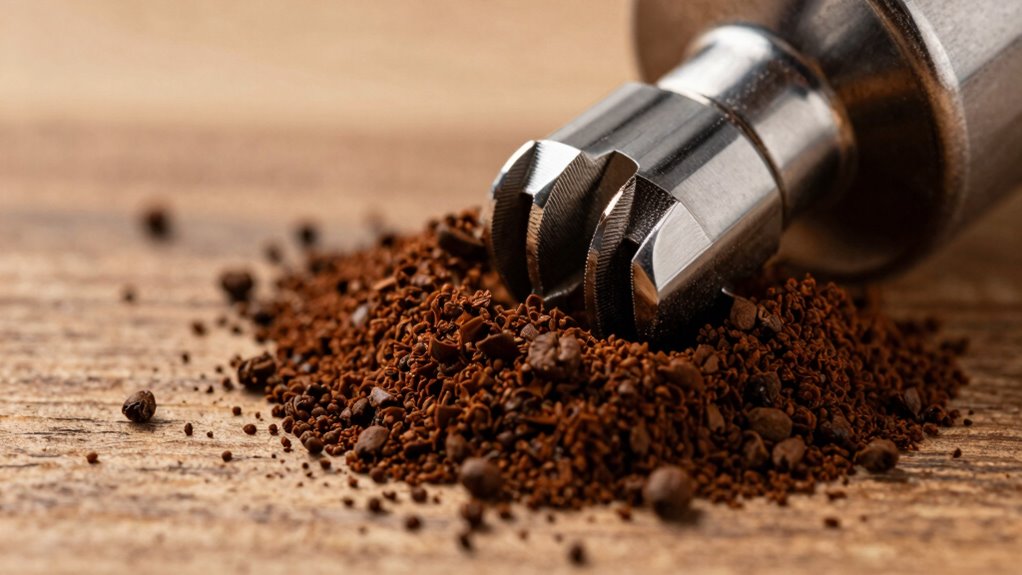

Proper grind distribution is key to making great espresso because it guarantees water flows evenly through the coffee, extracting optimal flavors and creating a rich crema. Uneven distribution causes channeling, over- or under-extraction, and flavor imbalance. Using tools, proper leveling techniques, and maintaining your grinder can make a big difference. Keep exploring how mastering this hidden variable can elevate your espresso game and open more consistent, delicious shots every time.

Get kitchen gear delivered free with Prime
- Fast, free delivery on millions of items
- Prime Video, Amazon Music and more included
- Member-only deals all year
Key Takeaways
- Uniform grind distribution ensures even water flow and extraction, leading to balanced espresso flavor and aroma.
- Poor distribution causes channeling, uneven extraction, and flavor imbalances such as bitterness or sourness.
- Proper bed leveling with tools or tapping prevents voids and promotes consistent crema quality.
- Regular grinder calibration and proper tamping techniques are essential to maintain even grind spread.
- Mastering distribution practices directly influences shot consistency, flavor richness, and overall espresso quality.
espresso grind distribution tool
As an affiliate, we earn on qualifying purchases.
As an affiliate, we earn on qualifying purchases.
What Is Grind Distribution and Why Is It Important for Espresso?

Ever wondered why your espresso shot tastes inconsistent? It all comes down to grind distribution. Particle size matters because uniform grind size ensures even extraction, which directly impacts flavor. When your grind isn’t consistent, some particles extract faster, while others lag behind, leading to uneven flavor and bitterness. Grind uniformity means all coffee particles are similar in size, allowing water to flow through smoothly and extract the right flavors. If your grind varies too much, the shot can become over-extracted or under-extracted, ruining the taste and aroma. Achieving a good grind distribution isn’t just about aesthetics; it’s essential for a balanced, rich espresso. Paying attention to particle size and ensuring uniformity helps you make the most of your beans and elevate your espresso experience. Additionally, understanding grind consistency can help you troubleshoot and improve your brewing process for consistently better results.
As an affiliate, we earn on qualifying purchases.
How Uneven Grind Distribution Affects Flavor, Crema, and Aroma
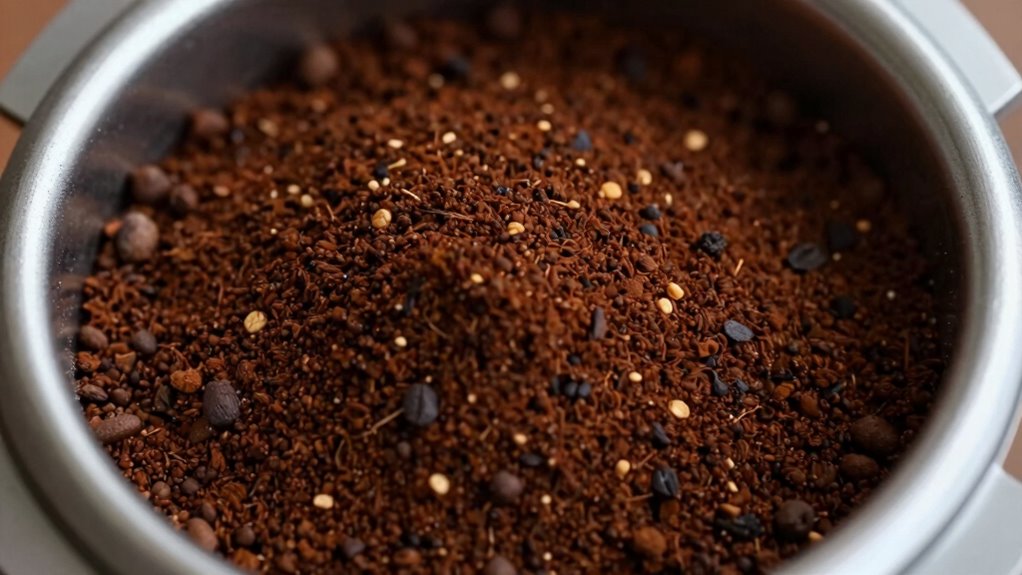
When your grind isn’t uniform, it directly impacts the way your espresso develops in flavor, crema, and aroma. Uneven grind distribution hampers distribution uniformity, leading to inconsistent flavor extraction. You’ll notice over-extraction in some areas, making the brew bitter, while other spots may be under-extracted, resulting in sourness. The crema becomes patchy and thin, lacking richness. Aromas may be muted or uneven, reducing the overall sensory experience. To visualize this, consider the following:
| Effect | Cause | Result |
|---|---|---|
| Bitter flavor | Over-extraction | Harsh, burnt notes |
| Sour flavor | Under-extraction | Sharp, acidic taste |
| Thin crema | Poor distribution | Lack of richness |
| Muted aroma | Uneven grind spread | Reduced aroma complexity |
Maintaining proper grind distribution enhances flavor extraction, ensuring a balanced and aromatic espresso. Additionally, using a consistent grind size helps prevent the development of clumping, which can further disrupt uniform extraction.
As an affiliate, we earn on qualifying purchases.
Common Causes of Poor Grind Distribution in Home and Professional Setups
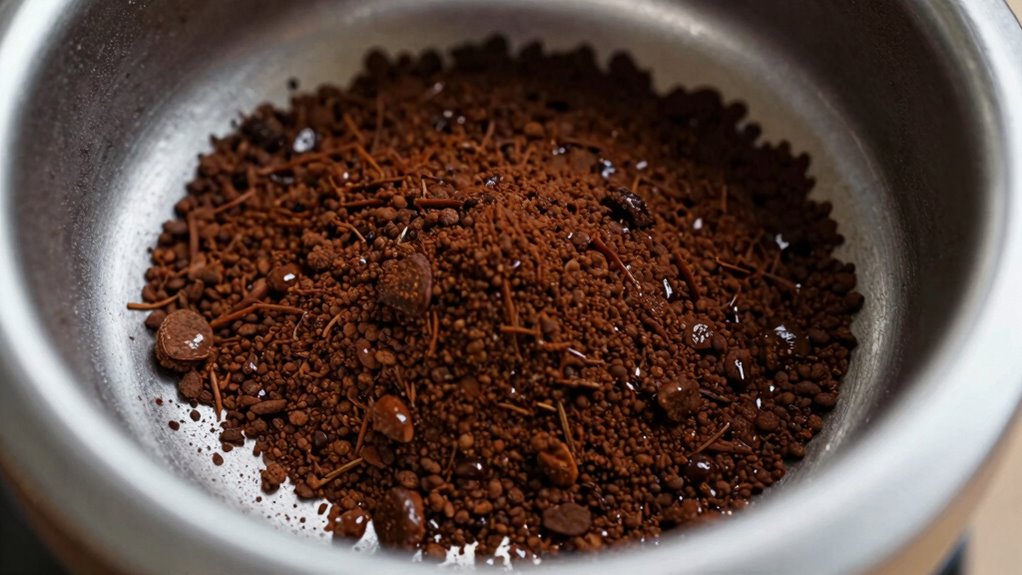
Poor grind distribution often stems from issues with grinder setup, operator technique, or equipment limitations. If your grinder isn’t calibrated properly, particle size can vary, leading to uneven distribution uniformity. Inconsistent settings or worn burrs can produce a mix of fine and coarse particles, disrupting the evenness of the grind. Operator technique also plays a role—if you don’t dose or tamp evenly, the particles won’t settle uniformly, creating uneven extraction. Additionally, some equipment simply can’t produce a consistent grind size or distribution uniformity, especially at finer settings. This variability causes inconsistent flow and extraction, which directly impacts flavor and crema. Understanding these common causes helps identify where your setup might be falling short and how to address these issues to improve your grind distribution. Proper calibration and maintenance of your grinder are essential to maintain consistent particle size and ensure optimal extraction quality.
As an affiliate, we earn on qualifying purchases.
Practical Techniques to Distribute Your Coffee Evenly
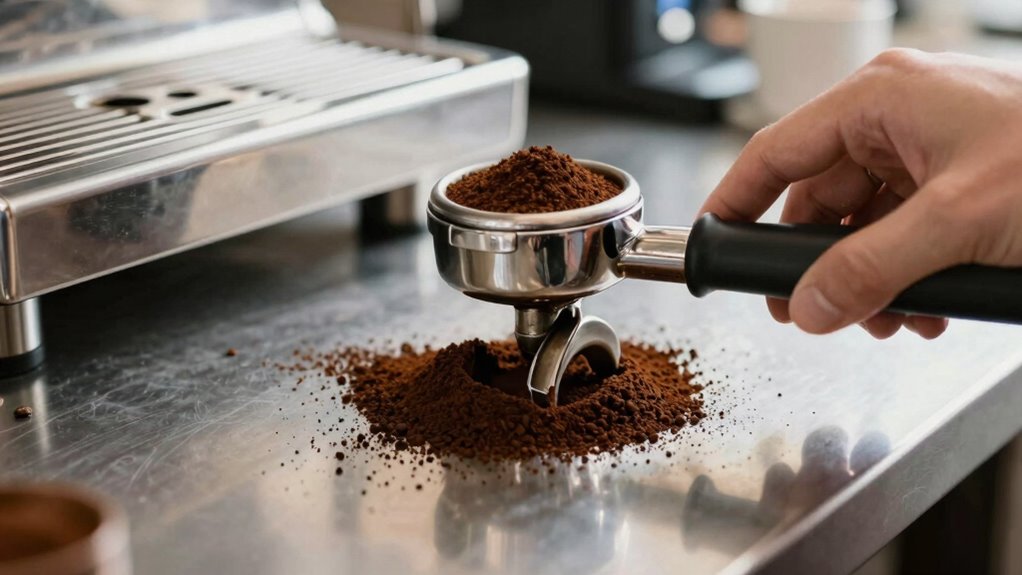
To guarantee your coffee grounds are evenly distributed, start by leveling the coffee bed after dosing. This simple step helps make certain uniform extraction. Next, pay attention to your coffee bean selection, as consistent beans produce more uniform grounds, aiding even distribution. Proper grinder calibration is essential; a well-calibrated grinder produces consistent grind size, reducing uneven particles that can cause channeling. Once you’ve dosed your coffee, use a distribution tool or a gentle tap to settle the grounds evenly. Some baristas lightly shake or rotate the portafilter to spread the grounds before tamping. These techniques, combined with selecting quality beans and maintaining your grinder calibration, help achieve a more even coffee bed, resulting in better extraction and a richer espresso. Consistent grind size is crucial for even water flow during brewing, ensuring optimal extraction.
Essential Tools for Improving Grind Consistency and Distribution
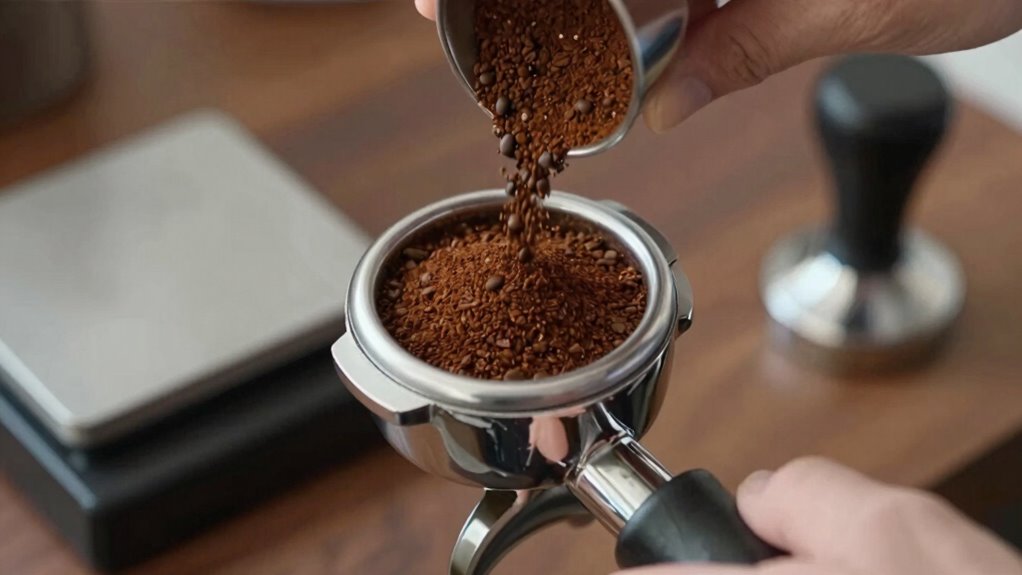
Using precision tools can help you achieve uniform grind distribution every time. These tools make it easier to adjust your grinder consistently, ensuring the right particle size. With accurate adjustments, you’ll notice a more even extraction and better-tasting coffee. Additionally, understanding grind distribution is key to achieving optimal extraction and flavor.
Precision Tools for Distribution
Achieving consistent grind distribution relies heavily on precision tools designed to enhance control and accuracy. These tools help you manage grind particle size, which directly impacts extraction and flavor. Uniform grind particle size ensures even saturation, reducing channeling and over-extraction. When coffee bean freshness is maintained, using exact distribution tools becomes even more critical, as older beans may produce inconsistent grounds. Handheld distributors, such as dividers or dosing rings, help evenly spread coffee grounds in the basket, minimizing clumping and uneven distribution. Some baristas also use patterning tools or tamping mats with guides to improve consistency. Additionally, understanding the importance of free floating in maintaining grind uniformity can further optimize your espresso quality. By integrating these precision tools into your routine, you gain better control over grind distribution, leading to more balanced, high-quality espresso shots.
Consistent Grind Adjustment
Consistent grind adjustment is essential for maintaining ideal espresso quality, and it starts with the right tools. To achieve this, you need to control particle size accurately, as it directly impacts extraction and flavor. Using a high-quality grinder with precise settings helps you maintain consistent particle size, ensuring better grind uniformity. Regularly calibrate your grinder to prevent fluctuations in particle size that can cause uneven extraction. Pay close attention to your grind setting adjustments, making small, incremental changes rather than large jumps. This approach helps you fine-tune the grind for peak extraction, resulting in more consistent shots. Proper grind calibration is crucial for optimizing your espresso quality and consistency. Ultimately, mastering grind adjustment with the right tools allows you to improve grind uniformity, leading to more balanced and flavorful espresso.
How to Distribute and Level Your Coffee Bed Step-by-Step
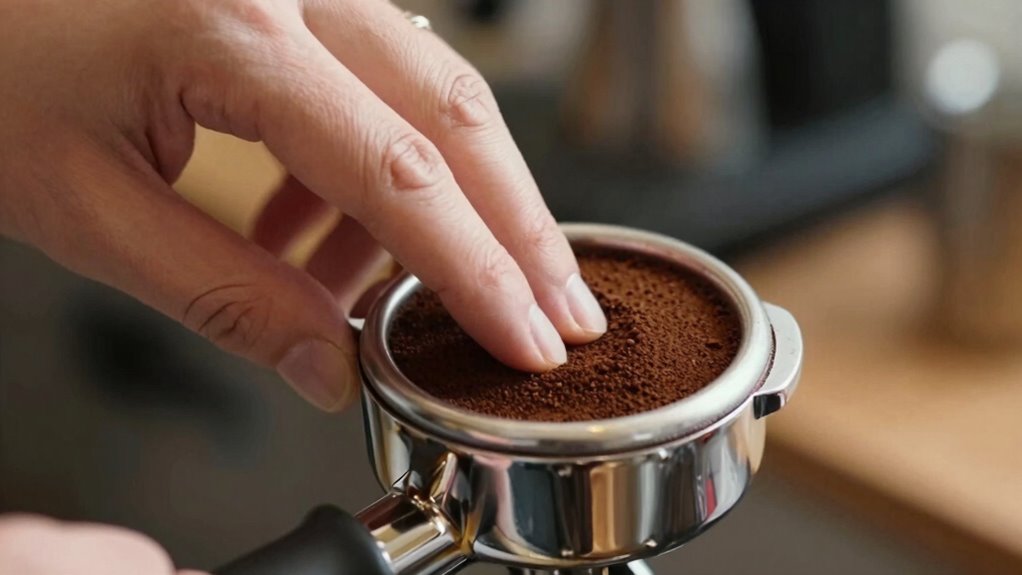
Start by preparing your coffee bed, ensuring the grounds are evenly spread. Then, use a proper leveling technique to create a flat, uniform surface. This careful step helps improve extraction and results in a better-tasting brew. A well-organized process makes it easier to maintain consistent results over time.
Prepare Your Coffee Bed
Before you begin brewing, it’s vital to evenly distribute and level your coffee bed to guarantee ideal extraction. Start by using your preferred distribution technique to spread the coffee grounds across the basket. Gently tap the portafilter or use a distribution tool to ensure the coffee bed is roughly even. Then, apply light, even pressure to level the surface without disturbing the coffee grounds’ distribution. This step prevents channeling and promotes uniform water flow. Take your time to check for any uneven spots or loose grounds, smoothing the surface if necessary. A well-prepared coffee bed sets the foundation for a consistent extraction, resulting in a balanced and flavorful espresso. Proper preparation here makes a significant difference in your brewing results. Understanding art can also help you appreciate the craftsmanship involved in making a perfect espresso.
Use Proper Leveling Technique
To properly level your coffee bed, begin by gently distributing the grounds using your chosen technique—such as tapping the portafilter or employing a distribution tool—to spread them evenly across the basket. This step guarantees a uniform puck, critical for consistent extraction. After distributing the grounds, use your preferred leveling method to create an even surface. You can tap the portafilter lightly, use a leveling tool, or apply gentle pressure with your finger. Consistent distribution techniques and leveling methods prevent channeling and promote ideal extraction. Here’s a quick comparison:
| Technique | Description |
|---|---|
| Tapping | Gently taps to settle grounds evenly |
| Distribution Tool | Uses a tool for uniform spread |
| Finger Pressure | Light, even pressure to level the surface |
Mastering these steps improves your espresso quality. Proper tamping and distribution are essential for achieving uniform extraction and a balanced flavor profile.
Recognizing and Fixing Grind Distribution Problems
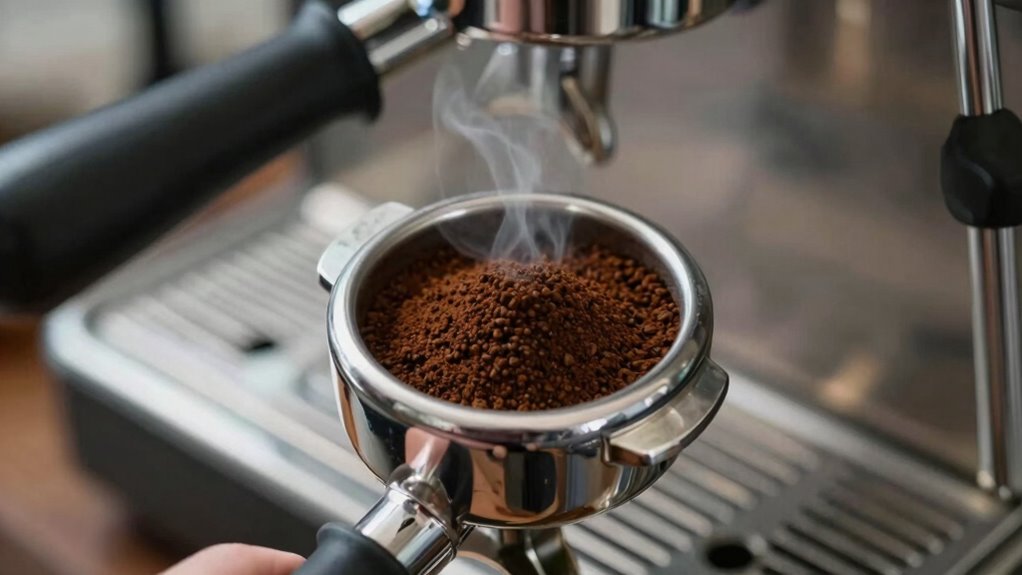
Recognizing grind distribution problems begins with paying close attention to how your coffee grounds settle and extract during brewing. Uneven distribution often results in inconsistent extraction, causing sour or bitter flavors. To fix this, consider these key signs:
Spot uneven grounds and extraction issues to improve your coffee’s flavor and consistency.
- Channeling or water bypasses grounds during extraction, indicating uneven tamping or distribution.
- Uneven crema suggests uneven grind distribution, impacting flavor and body.
- Clogged or slow-flowing shots point to clumping or uneven particles.
- Flavor imbalance hints at inconsistent extraction caused by poor grind distribution, which can be linked to inconsistent coffee bean sourcing or dirty espresso machine maintenance.
- Maintaining consistent grind distribution can also help prevent buildup filter clogging that affects shot quality and machine longevity.
Addressing these issues involves adjusting your grind size, ensuring even distribution, and maintaining your equipment to prevent problems from recurring.
How Grind Distribution Interacts With Tamping and Dose

Once you’ve identified uneven grind distribution, how you handle tamping and dosing becomes key to achieving consistent extraction. Uneven distribution can cause channeling, which worsens with factors like coffee bean genetics and water temperature. To minimize issues, evenly distribute the coffee grounds before tamping, ensuring uniform density. Dosing accuracy also matters—over or under-dosing affects water flow and extraction. Use the table below to see how distribution impacts tamping and dose:
| Grind Distribution | Tamping Technique | Dose Precision |
|---|---|---|
| Uneven | Inconsistent tamping | Variable dose |
| Even | Firm, level tamping | Accurate dose |
| Very Even | Gentle tamping | Precise dose |
Achieving ideal grind distribution helps optimize water flow, regardless of bean genetics or temperature. Additionally, understanding heat distribution in your espresso machine can further enhance consistency.
Tips to Master Grind Distribution for Better Espresso Every Time

Mastering grind distribution is essential for brewing consistently excellent espresso. Properly distributing the coffee grounds guarantees even extraction, highlighting the unique flavors of different coffee bean varieties. To improve your technique:
- Use a distribution tool or your finger to level the coffee bed—this prevents channeling and promotes uniform extraction.
- Tap or shake the portafilter gently to settle grounds evenly before tamping.
- Calibrate your grinder regularly—accurate grinder calibration guarantees consistent grind size, which influences distribution and extraction.
- Observe your espresso shots closely—adjust distribution techniques based on extraction times and flavor notes.
- Consider the impact of contrast ratio on visual clarity when evaluating the quality of your espresso’s crema and overall presentation.
Frequently Asked Questions
Does Grind Distribution Impact Espresso Extraction Time?
Yes, grind distribution impacts espresso extraction time. When your grind is uniform, it promotes consistent extraction, preventing over- or under-extraction. Uneven grind distribution causes channeling, leading to uneven flow and longer or shorter extraction times. By ensuring proper grind uniformity, you improve extraction consistency, which results in better flavor and balanced espresso shots. Paying attention to grind distribution helps you control extraction time effectively, making your espresso more refined and enjoyable.
Can Grind Distribution Influence Machine Wear and Tear?
Yes, grind distribution can influence machine wear and tear. Poor grind uniformity causes uneven extraction, which can lead to increased pressure on your espresso machine’s components. When tamp pressure isn’t consistent, it further stresses the machine, potentially causing faster wear. Maintaining proper grind distribution and tamp pressure helps guarantee even extraction, reducing strain on your machine and prolonging its lifespan.
How Does Ambient Humidity Affect Grind Distribution Quality?
Ambient humidity affects grind distribution quality by causing the coffee grounds to clump or become uneven. Humidity effects can lead to inconsistent particle size, which impacts extraction and flavor. Environmental impact, such as high moisture levels, makes it harder to achieve uniform distribution, reducing espresso quality. To counter this, keep your storage dry and monitor humidity levels regularly, ensuring your grind distribution remains consistent and ideal for brewing.
Is There a Difference in Distribution Techniques for Different Espresso Machines?
Yes, you do need different distribution techniques for various espresso machines. Your brewing consistency depends on adapting your method to each machine’s portafilter size, pressure, and basket shape. Barista skill plays a key role here, as you’ll fine-tune your distribution to guarantee even coffee bed depth. Mastering these variations helps you produce consistently great espresso, regardless of the equipment, making your skill and technique vital for ideal results.
Can Improper Grind Distribution Lead to Equipment Clogging?
Think of your espresso machine as a delicate garden, where improper grind distribution acts like weeds choking the roots. Yes, it can cause equipment clogging, disrupting flow. By ensuring uniform consistency and dosing accuracy, you prevent blockages and maintain smooth operation. Proper distribution is like tending your garden carefully, allowing your espresso to flourish without hiccups, delivering the rich flavor you crave every time.
Conclusion
Mastering grind distribution subtly elevates your espresso game, turning routine pulls into refined experiences. By paying gentle attention to this often-overlooked step, you guarantee a more harmonious extraction, richer crema, and enhanced aroma. Think of it as fine-tuning a delicate instrument—small adjustments can open extraordinary flavors. With patience and practice, your espresso will consistently delight, revealing the artistry behind every perfect shot. Ultimately, it’s the nuanced touches that distinguish good from truly exceptional coffee.
Halloween Picks
halloween
As an affiliate, we earn on qualifying purchases.