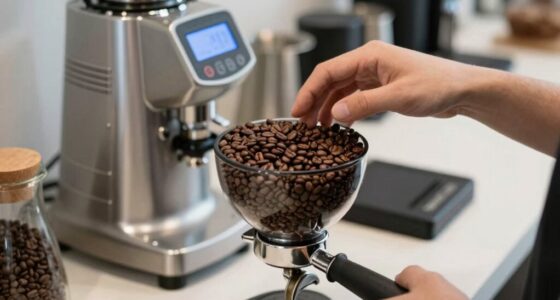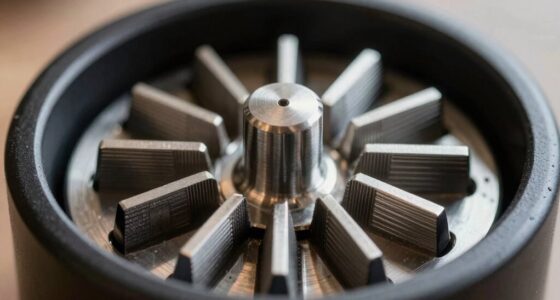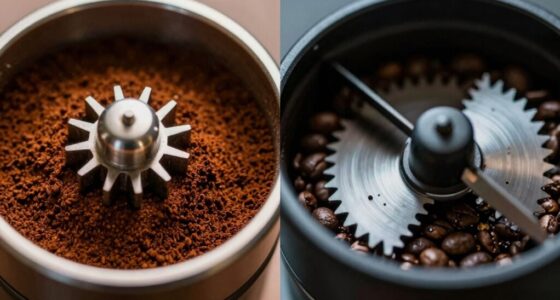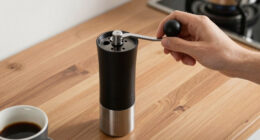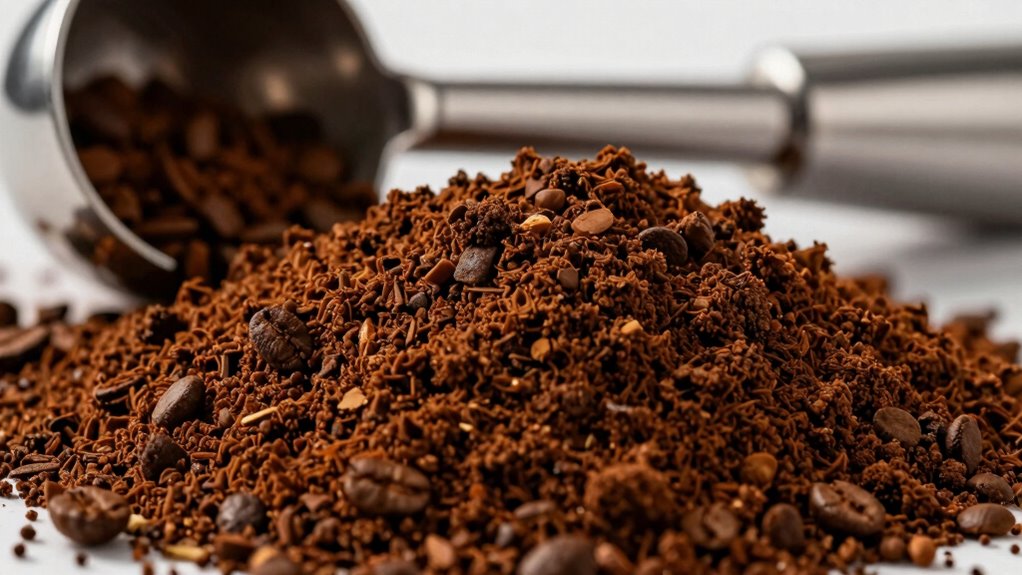

Grind density explains why two doses of the same size can look different. It’s about how tightly the coffee particles are packed, which can vary even with identical grounds. Factors like tamping pressure, grind method, and grinder type affect density. Tighter packs slow water flow, risking over-extraction, while looser grounds speed up extraction. Understanding these nuances helps you control flavor—keep exploring to learn how to spot and adjust for ideal results.
Key Takeaways
- Grind density refers to how tightly coffee particles are packed, affecting appearance even at the same dose.
- Different packing pressures and tamping influence how dense or fluffy grounds look despite identical sizes.
- Variations in grinding technique and equipment can produce grounds with differing densities from the same grind size.
- Denser grounds appear more compact, impacting water flow and extraction, leading to different visual textures.
- Recognizing density differences helps adjust grind size or technique for consistent brewing results.
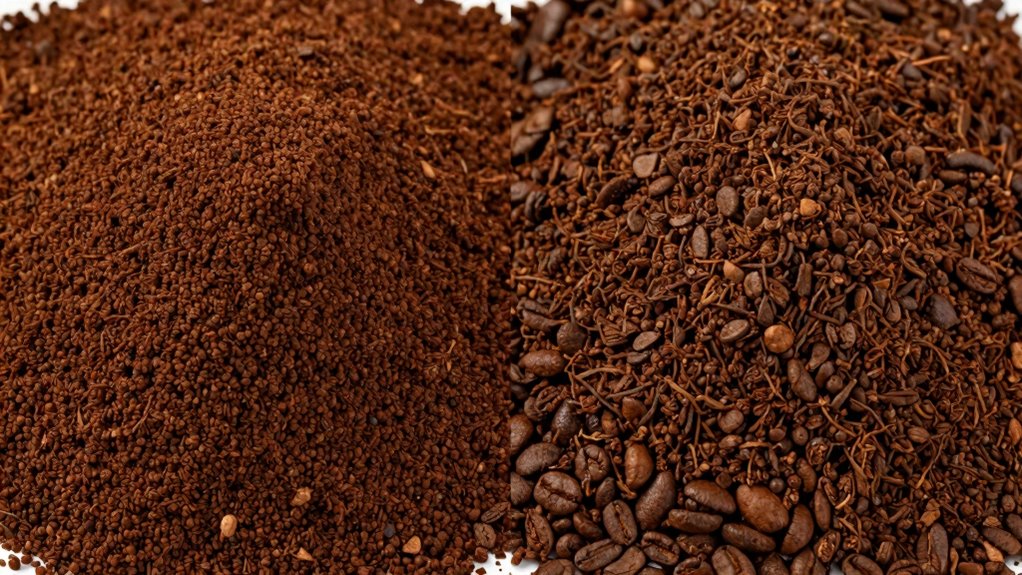
Understanding grind density is essential for achieving the perfect brew, whether you’re making coffee or espresso. It influences brewing consistency, which directly affects taste, aroma, and overall quality. When you notice that your coffee looks different from one batch to the next, even when using the same dose, it’s often due to variations in grind density. This concept can be a bit confusing, but grasping it helps you control the variables that lead to a better cup.
Grind size is the most obvious factor impacting your brew, but grind density adds an important layer of complexity. Grind density refers to how tightly packed or compressed your coffee particles are within the grind. Even if two scoops of coffee look similar in size, their density can vary considerably depending on how tightly the coffee is packed or how it’s ground. A denser grind means the particles are more tightly packed, which can slow water flow during extraction, leading to a different flavor profile than a less dense grind.
Grind density affects water flow and flavor, even with identical grind size.
When you’re aiming for brewing consistency, understanding grind density helps you predict how your coffee will behave during extraction. For example, if your coffee looks fluffy and loose, the water might flow too quickly, resulting in under-extraction and a weak or sour taste. Conversely, if the coffee appears compact and dense, water may struggle to pass through, causing over-extraction and bitterness. Recognizing these visual clues allows you to adjust your grind size accordingly to achieve a balanced brew.
In practice, this means that not all coffee grounds of the same size will produce the same extraction if their grind density differs. You might grind your beans to a medium setting, but if one batch is denser than another, the brew will taste different despite identical dose and grind size. To maintain brewing consistency, you need to pay attention not just to the grind size, but also to how the coffee feels and looks once ground. Tamping pressure, grinding technique, and even the type of grinder influence grind density, so fine-tuning these factors helps you control extraction and flavor.

DiFluid Omni 2-in-1 Coffee Roast Degree and Particle Size Analyzer, Smart NIR Coffee Bean & Ground Color Agtron Meter, Automated Laser-Imaging Coffee Grinder Micron Distribution Tester with App
- 2-in-1 Coffee Analyzer: Measures roast degree and particle size
- Smart NIR Colorimeter: Provides instant Agtron color readings
- Automated Particle Diffusion: Ensures even ground coffee distribution
As an affiliate, we earn on qualifying purchases.
As an affiliate, we earn on qualifying purchases.
Frequently Asked Questions
How Does Grind Density Affect Flavor Extraction?
Grind density directly impacts flavor extraction by influencing particle cohesion and flow consistency. When your grind is too fine, particles stick together more, making it harder for water to flow evenly and extract flavors efficiently. Conversely, a coarser grind improves flow consistency, allowing water to pass through more smoothly and extract flavors more fully. Adjusting grind density helps you achieve a balanced, rich flavor profile in every brew.
Can Grind Density Influence Brewing Time?
Yes, grind density influences brewing time by affecting water flow and extraction rate. When your grind is denser, water passes through more slowly, increasing brew time. Conversely, a lighter grind speeds up extraction. To optimize, consider your brew temperature and water pH, as these factors also impact extraction. Adjusting grind density helps you control brewing time, ensuring proper flavor and strength in your coffee.
What’s the Best Grind Density for Espresso?
You should aim for a fine grind size for espresso, as it guarantees ideal extraction and brew consistency. Interestingly, about 70% of baristas prefer a grind density that’s just slightly finer than drip coffee. This grind density allows hot water to flow through evenly, producing a rich, balanced shot. Adjust based on taste and machine, but fine grind remains the best for achieving consistent espresso results.
How Do I Measure Grind Density Accurately?
To measure grind density accurately, start by examining particle size—finer particles increase density. Use a scale or a grind size tool to guarantee consistency. Tamping pressure also impacts the perceived density; apply uniform pressure each time. You can calibrate by comparing your grind to a standard sample, feeling for uniformity, and adjusting your grind size accordingly. This helps you maintain consistent extraction and flavor.
Does Grind Density Impact Coffee Shelf Life?
Think of grind density like the armor on your coffee beans—denser grind packs more tightly, influencing storage stability. Yes, it impacts shelf life; a uniform grind with ideal density resists oxidation and moisture, keeping your coffee fresher longer. When your grind is inconsistent, it’s like having uneven armor—some parts break down faster, reducing freshness. Proper grind uniformity and appropriate density help extend your coffee’s shelf life and preserve flavor.
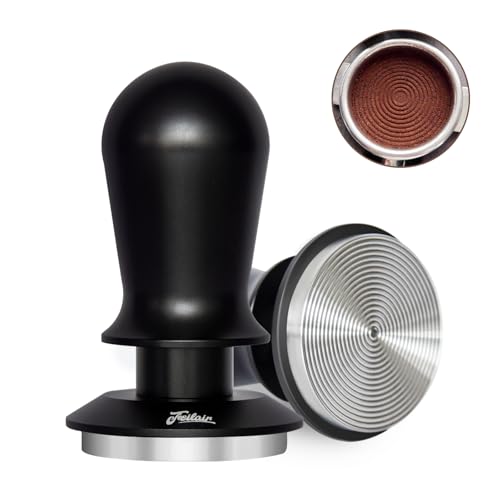
Feilair 54mm Espresso Tamper, Spring Loaded Self Leveling Coffee Tamper
- Consistent 30lb Pressure: Spring-loaded for uniform tamping force
- Self-Leveling Design: Ensures even, flat tamping surface
- Fits 54mm Portafilters: Compatible with Breville machines
As an affiliate, we earn on qualifying purchases.
As an affiliate, we earn on qualifying purchases.
Conclusion
Understanding grind density is like tuning a musical instrument—you adjust the tension to produce the perfect harmony. When you grasp how it shapes your espresso, you’re wielding a secret key to access richer flavors and consistent shots. Think of your grind as the heartbeat of your brew, pulsating with potential. By mastering its density, you’re not just making coffee—you’re crafting a symphony of aroma and taste, turning everyday brewing into an artful dance.

Hamilton Beach Custom Grind Electric Coffee Grinder For Up To 14 Cups
- Adjustable Grind Size and Cup Selection: Customize grind for 4-14 cups
- Hands-Free or Manual Grinding: One-touch operation with automatic shut-off
- Removable, Dishwasher-Safe Bowl: Easy to fill, pour, and clean
As an affiliate, we earn on qualifying purchases.
As an affiliate, we earn on qualifying purchases.
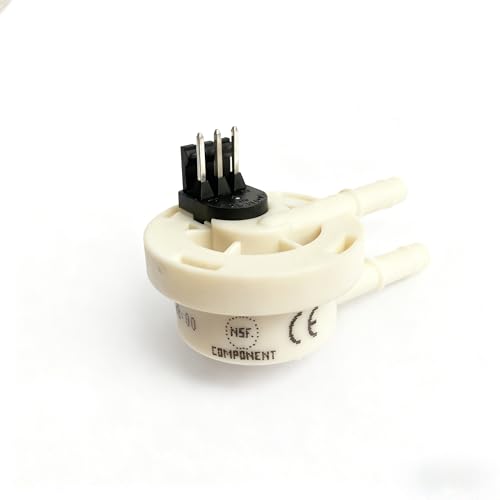
Flowmeter for Coffee Machine, Water Flow Parts for Espresso Maker Compatible With Breville Sage barista express Impress 875/870/878/876/880
- Precise Water Flow Detection: Accurately monitors water flow for coffee machines
- Advanced Sensor Technology: Utilizes modern sensors for accurate flow measurement
- Easy to Install: Simple to install and compatible with existing equipment
As an affiliate, we earn on qualifying purchases.
As an affiliate, we earn on qualifying purchases.