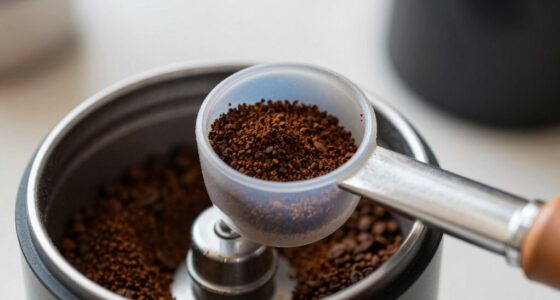
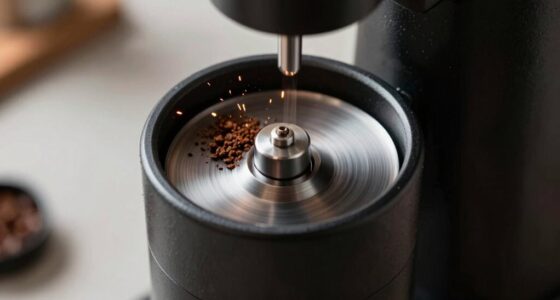
Calibration and zeroing are often mixed up, but they serve different purposes. Calibration adjusts the grinder to produce consistent particle sizes, ensuring your brew is balanced and flavorful. Zeroing sets the baseline, helping you start fresh after cleaning or moving the grinder. Knowing the difference helps you maintain peak performance. Keep going — you’ll find clear steps to master both processes and keep your coffee first-rate.
Key Takeaways
- Calibration adjusts the grinder to produce consistent particle sizes, ensuring optimal flavor and extraction, while zeroing sets the baseline or starting point.
- Calibration involves fine-tuning the grind size based on taste tests and measurements, whereas zeroing resets the grinder’s measurement reference.
- Zeroing is typically done after cleaning or movement to prevent inconsistencies, calibration is performed periodically to maintain uniform results.
- Proper calibration ensures accurate grind size for brewing, while zeroing prevents measurement drift, both crucial for consistent coffee quality.
- Confusing the two can lead to improper adjustments; calibration focuses on particle size accuracy, zeroing on baseline setting.
What Are Calibration and Zeroing in Coffee Grinders?

Have you ever wondered what makes your coffee grind consistently? It all comes down to proper grinder maintenance, which involves understanding calibration and zeroing. Calibration is adjusting your grinder to produce uniform particle sizes, ensuring you get the best coffee flavor profiles. Calibration improves brewing accuracy and helps maintain optimal extraction levels. Zeroing, on the other hand, sets the grinder to a specific starting point, so each grind is consistent. Both steps are essential for maintaining precise grind settings and achieving the desired extraction. Without calibration, your coffee may taste flat or over-extracted, while improper zeroing can lead to inconsistent results. Knowing the difference helps you fine-tune your grinder, making sure every cup delivers the flavor you crave. Regular maintenance and adjustment keep your grinder performing at its best, elevating your overall coffee experience. High precision in calibration techniques ensures optimal performance and consistent results in your brewing process. Proper grinder calibration can also extend the lifespan of your equipment, saving you money in the long run.
Why Proper Calibration and Zeroing Are Key for Consistent Coffee Grounds
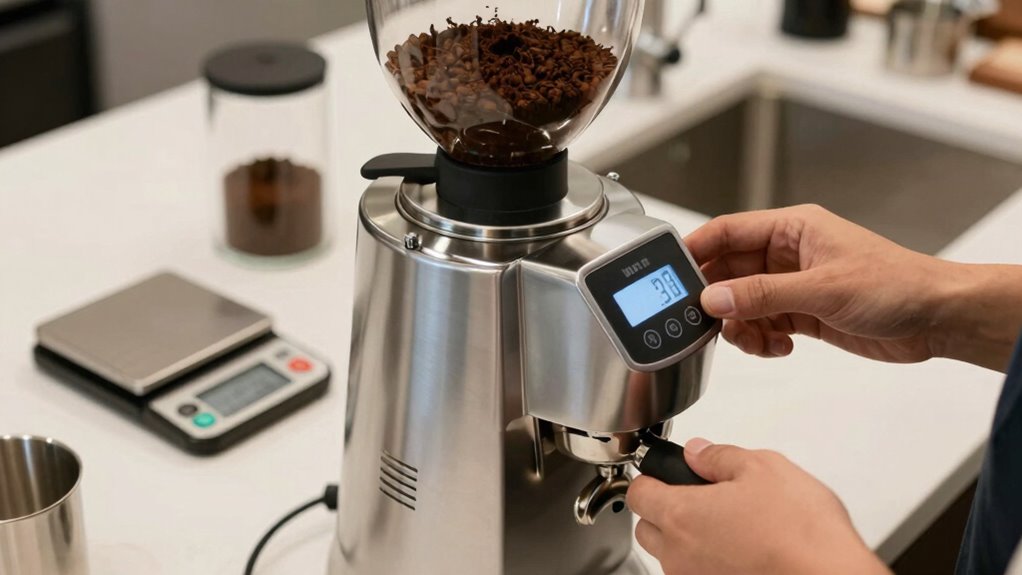
Proper calibration and zeroing make certain your coffee grounds stay consistent, which directly impacts the quality of your brew. When your grinder is properly calibrated, you ensure the grind size is accurate, giving you control over brew strength. Zeroing your grinder correctly prevents over- or under-dosing, maintaining uniform particle sizes. Regular maintenance and calibration are essential for optimal performance. A well-maintained grinder also helps preserve the accuracy of your calibration, ensuring consistent results over time. Consistent grind size leads to predictable extraction, so your coffee has balanced flavor and the right strength every time. Without proper calibration, you risk uneven grounds that can cause weak or bitter brews. Zeroing ensures you’re measuring the right amount of grounds, avoiding inconsistencies. proper calibration and zeroing help you dial in your grind for ideal flavor, making your brewing process more reliable and your coffee consistently delicious. Proper safe installation practices are essential to ensure your equipment functions correctly and lasts longer. Additionally, understanding the importance of device accuracy can help maintain the longevity and reliability of your grinder.
How to Calibrate Your Coffee Grinder: A Step-by-Step Guide

Calibrating your coffee grinder guarantees you get the right grind size every time, which is essential for consistent brewing. Proper calibration ensures ideal grinder maintenance and helps maintain flavor consistency. To calibrate effectively:
Calibrating your grinder ensures perfect, consistent coffee every time.
- Start with a baseline setting and grind a small batch.
- Brew a sample and evaluate the extraction and flavor; adjust the grind size accordingly.
- Repeat the process until you find the perfect balance between extraction and flavor.
Additionally, understanding the difference between calibration and zeroing can improve your maintenance routine, ensuring your grinder performs optimally over time. Recognizing the impact of calibration on your brewing results can help you fine-tune your process for the best flavor profile.
When and How to Zero Your Coffee Grinder for Accurate Settings

Zeroing your coffee grinder is a crucial step to guarantee your settings remain accurate over time. Regular zeroing helps maintain consistent grind size, which is vital for proper grinder maintenance and achieving desired coffee flavor profiles. You should zero your grinder whenever you notice inconsistent extraction or changes in taste, especially after cleaning or moving the machine. To zero effectively, start by running a small amount of coffee through the grinder, then adjust the grind size back to your preferred setting, ensuring the burrs are aligned properly. This process resets the grinder’s baseline, preventing gradual shifts that can affect flavor. Zeroing periodically ensures your grind remains precise, supporting optimal extraction and a balanced, flavorful cup every time.
Common Calibration and Zeroing Mistakes to Avoid
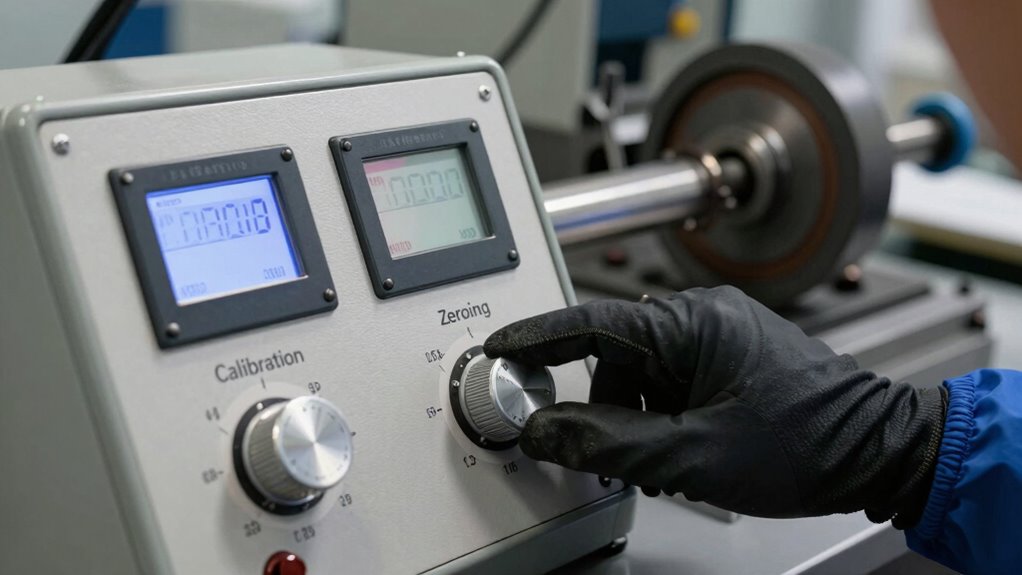
One common mistake is forgetting to calibrate your equipment regularly, which can lead to inaccurate results. Another issue is confusing zeroing with calibration, thinking they are interchangeable steps. Recognizing these pitfalls helps verify your measurements stay precise and reliable. Additionally, understanding the measurement process and proper jewelry fitting can prevent miscalculations and ensure consistent results. Being aware of the Youngster Choice can also improve the accuracy of your calibration procedures over time.
Ignoring Calibration Frequency
Failing to regularly update calibration schedules can lead to inaccuracies that compromise your measurements. If you ignore proper calibration timing, you risk using outdated data that doesn’t reflect the grinder’s current condition. This oversight can cause errors in your work, especially as grinder wear accelerates over time. To avoid this, keep these points in mind: 1. Regularly review your maintenance schedules to account for grinder wear. 2. Schedule calibrations based on usage frequency, not just time elapsed. 3. Monitor performance changes to identify when recalibration is necessary. Additionally, understanding the importance of accurate power output can help ensure your equipment functions optimally over its lifespan. Maintaining proper calibration procedures is essential to preserving consistent quality and precision in your grinding process. Incorporating performance monitoring can also help you determine when recalibration is needed before inaccuracies develop.
Confusing Zeroing With Calibration
Have you ever mistaken zeroing a device for calibrating it? In grinder maintenance, this mix-up can cause issues with coffee brewing consistency. Zeroing simply sets the scale to zero, ensuring your grinder’s weight readings are accurate at rest. Calibration, however, involves adjusting the grinder to produce specific grind sizes or doses, often using standards or test weights. Confusing these steps can lead to poor grind quality or inconsistent extraction. For example, zeroing a grinder doesn’t correct for wear or burr alignment—only calibration can do that. Always remember, zeroing is about baseline accuracy, while calibration fine-tunes performance. Knowing the difference helps maintain your grinder correctly and ensures your coffee brewing results stay precise and delicious.
Essential Tools and Tips for Effective Grinder Calibration and Zeroing
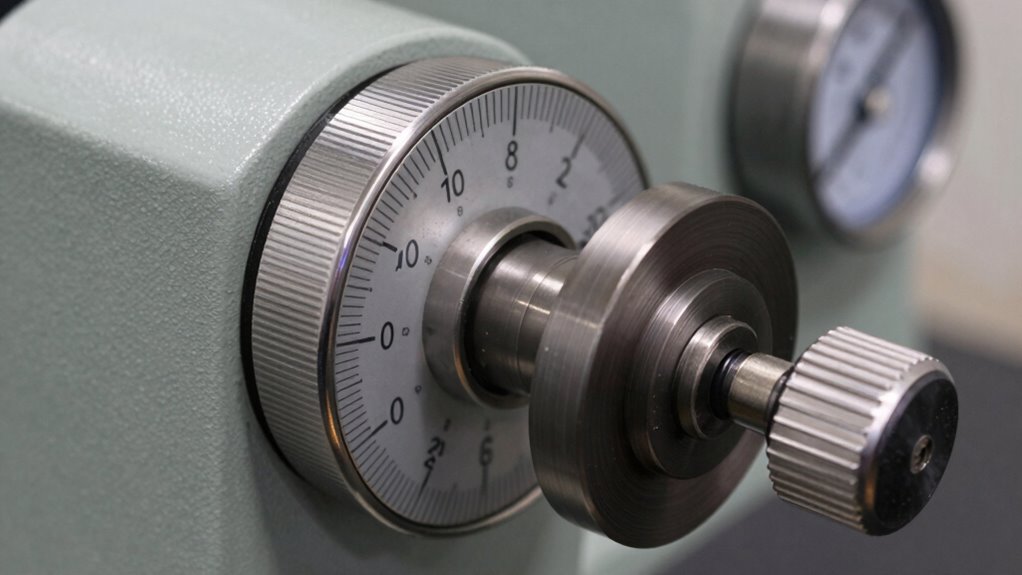
To guarantee your grinder operates accurately, having the right tools and following proper tips for calibration and zeroing are essential. Proper grinder maintenance ensures consistent brewing and ideal performance. Here are key tools and tips to help you succeed:
- A precise digital caliper or micrometer for accurate measurement of burrs and grind sizes.
- A calibration weight or test coffee to verify grind consistency.
- A clean, flat surface for zeroing and calibration checks.
- Regularly checking your grinder’s mechanical alignment helps ensure consistent results over time.
Tips include regularly cleaning your grinder to prevent buildup, always calibrating after changing burrs or grind settings, and double-checking zero points before each grind session. These steps help maintain brewing consistency and extend your equipment’s lifespan. Using the right tools and techniques ensures your grinder performs reliably, delivering the perfect brew every time.
Frequently Asked Questions
Can Calibration or Zeroing Damage My Coffee Grinder?
Calibration or zeroing won’t damage your coffee grinder if you follow proper grinder maintenance. These processes adjust your grinder’s settings to verify consistent coffee freshness and grind size, not hardware. Just make sure to use the right tools and avoid forcing parts. Regular calibration helps maintain ideal performance, preserving your coffee’s flavor. Neglecting these steps could lead to uneven grinds, but proper zeroing and calibration are safe and beneficial for your grinder.
How Often Should I Recalibrate or Zero My Grinder?
Suppose you notice inconsistent grind size after a few months of daily use; that’s a sign to recalibrate your grinder. Typically, you should recalibrate or zero your grinder every few months or after significant maintenance. Regular daily maintenance helps maintain peak performance and extends your grinder’s lifespan. By staying consistent, you prevent issues and keep your coffee fresh and flavorful. Keep an eye on performance, and adjust as needed.
Are There Different Calibration Methods for Various Grinder Models?
Yes, different grinder models often require specific calibration methods due to compatibility differences. You should always follow the manufacturer’s instructions, as calibration process differences can impact accuracy. Some grinders may need software updates or unique tools, while others rely on manual adjustments. Always verify your model’s requirements before calibrating to guarantee proper setup and consistent coffee quality. Proper calibration tailored to your grinder model ensures ideal performance.
What Signs Indicate My Grinder Needs Calibration or Zeroing?
If your grinder’s accuracy seems off or you’re noticing inconsistent coffee grounds, it’s time to check calibration or zeroing. Signs include uneven grind size, burr misalignment, or a sudden change in flavor. You might also see that the dose varies or the grind setting isn’t producing the expected results. Regular calibration helps maintain best burr alignment, ensuring your grinder consistently delivers precise, high-quality grounds.
Is Calibration Necessary for All Types of Coffee Beans?
Calibration isn’t necessary for all coffee beans, but it’s essential if your grind consistency suffers or if your brewing results aren’t what you expect. Fresh beans can impact grind size and consistency, so regular calibration helps maintain peak performance. If your grinder produces uneven grounds or your brew tastes off despite fresh beans, calibration ensures your machine is set correctly, giving you a better, more consistent coffee experience.
Conclusion
Think of calibration and zeroing like tuning a musical instrument—you need each note just right to create harmony. When you master these grinder settings, every brew becomes a symphony of flavor. Don’t let small mistakes throw off your grind; with the right tools and tips, you can keep your coffee tasting perfect. Stay vigilant, keep calibrating, zeroing, and enjoy consistently delicious coffee every time.