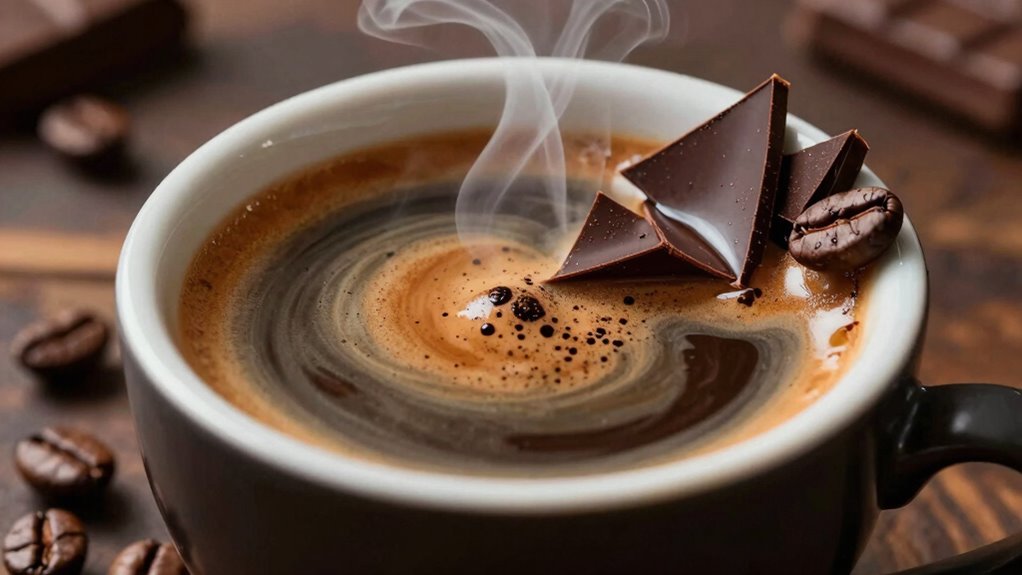

The chocolatey taste in espresso blends comes from carefully selecting beans from specific origins and applying expert roasting techniques. Origin regions like Central America or Ethiopia contribute fruity or floral notes that, when roasted darker, develop into rich, cocoa-like flavors. Skilled blending enhances these nuances, creating a smooth, chocolatey profile you enjoy. If you want to discover how each step influences flavor and craft the perfect blend, there’s more to explore behind the scenes.

Get kitchen gear delivered free — and shop member deals
- Fast, free delivery on millions of items
- Access to Prime Big Deal Days deals on October 6–7
- Prime Video, Amazon Music and more included
Key Takeaways
- The chocolatey flavor results from specific bean origins, roasting profiles, and blending techniques, not magic or additives.
- Darker roasts develop roasted, cocoa-like notes that enhance the chocolatey taste in espresso.
- Blending origin-specific beans with complementary profiles creates a rich, chocolatey flavor experience.
- Skilled roasting preserves and emphasizes the beans’ inherent chocolate and cocoa nuances.
- The overall chocolatey taste is a crafted result of deliberate craftsmanship, not a mysterious ingredient.
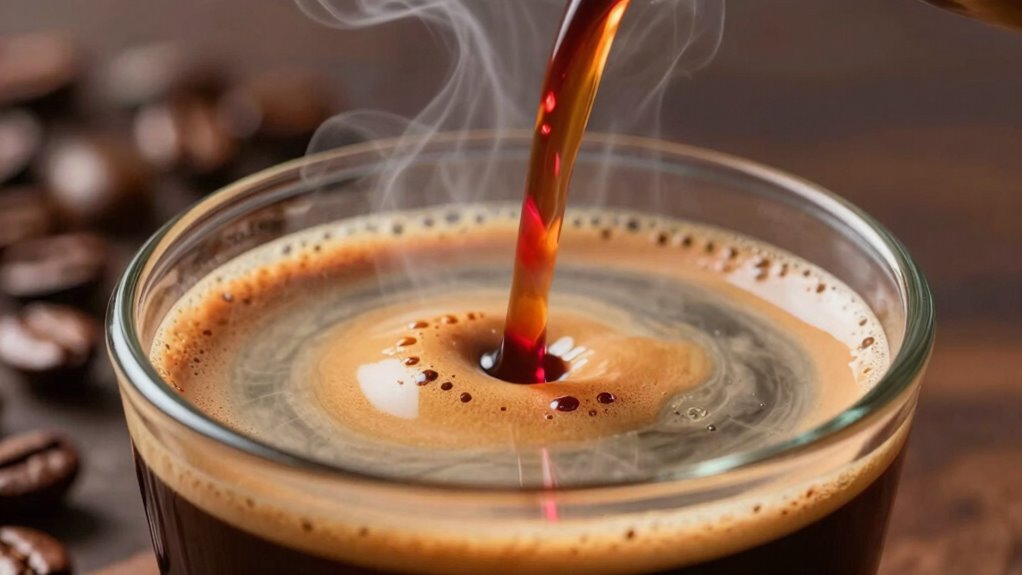
If you’re a coffee enthusiast, you’ll appreciate how certain espresso blends deliver a rich, chocolatey flavor that enhances every sip. The secret lies not in magic but in the careful balance of factors like single origin nuances and roasting profiles. When you explore the world of espresso, understanding these elements helps explain why some blends taste so irresistibly chocolatey. Single origin coffees come from specific regions, each with unique soil, climate, and altitude conditions that influence flavor profiles. Coffees from regions like Central America or Ethiopia often carry subtle fruit and floral notes, but when blended with darker roasting profiles, these inherent qualities can transform into deep, cocoa-like richness. It’s not just about mixing beans; it’s about aligning the distinct nuances of each origin to create that smooth, chocolatey flavor you love.
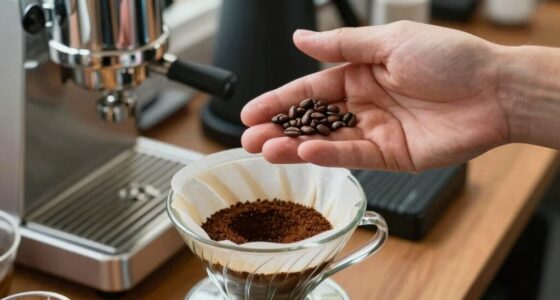
Roasting profiles play a pivotal role in shaping the flavor of your espresso. A roast’s duration and temperature determine how the beans develop, how much of their original characteristics are preserved, and how much of that deep, chocolatey note is brought forward. Darker roasts tend to bring out more bitter, roasted, and cocoa-like qualities, amplifying the chocolatey impression. Conversely, a medium roast might preserve some of the bright, fruity characteristics of the beans, but a skilled roaster adjusts the profile to balance acidity and body, resulting in that luscious, chocolate undertone. When roasters tailor their profiles, they often aim for a harmony that accentuates the chocolatey notes, making each sip smooth and satisfying.
The magic behind a chocolatey espresso blend isn’t just in the beans themselves but also in how they’re roasted and combined. A thoughtful blend will highlight the best single origin nuances while employing roasting profiles that develop those flavors into a rich, chocolatey essence. It’s a careful dance—selecting beans that complement each other and roasting them to reveal their fullest potential. When you understand this process, you gain an appreciation for how much craftsmanship goes into every cup. The next time you enjoy a chocolatey espresso, remember it’s the artful combination of origin-specific nuances and expertly crafted roasting profiles that make it so memorable, not some mysterious ingredient.
As an affiliate, we earn on qualifying purchases.
Frequently Asked Questions
Can the Chocolatey Flavor Be Artificially Added to Espresso Blends?
Yes, artificial flavoring can be added to espresso blends for a chocolatey taste. Manufacturers often use flavor enhancement techniques, including natural and artificial flavoring, to create specific flavor profiles. While some may prefer natural flavors, artificial flavoring offers consistency and cost-effectiveness. Keep in mind, these additions can alter the true coffee experience, so if you want authentic flavor, opt for blends known for their natural chocolate notes.
Do Different Brewing Methods Affect the Chocolatey Taste in Espresso?
Think of brewing methods as different musical instruments shaping a melody. When you use a French press, the longer extraction highlights chocolatey notes, similar to a rich drumbeat. Milk pairing can also enhance that flavor, especially with darker roasts. Roasting techniques influence the depth of chocolate flavors, but your brewing method determines how prominently they shine. Experimenting with these techniques helps you discover the perfect chocolatey espresso experience.
Are Certain Coffee Origins More Likely to Produce Chocolate Notes?
Yes, certain bean origins are more likely to produce chocolate notes in your espresso. Beans from regions like Ethiopia, Colombia, and Brazil often have a natural flavor profile that includes rich, chocolatey undertones. When you select beans from these origins, you’re more likely to enjoy that smooth, cocoa-like taste in your brew. The bean origin influences the flavor profile, making some coffees naturally more chocolatey than others.
How Does Roast Level Influence the Chocolate Flavor in Espresso?
A darker roast enhances chocolate flavors by mellowing bean acidity and creating a rich, smooth profile, while a lighter roast preserves more of the bean’s natural acidity and complex flavors. This contrast influences flavor balance, making the chocolate notes more prominent or subtle. So, if you want a pronounced chocolate taste, go for a dark roast; if you prefer brightness and nuance, choose a lighter one.
Can Storage Conditions Alter the Chocolatey Profile of Coffee Beans?
Yes, storage conditions can change the chocolatey profile of your coffee beans. Keep your beans fresh by avoiding exposure to air, moisture, and light, and store them at a consistent, cool temperature. If beans sit too long or are stored improperly, their fresh, chocolatey notes diminish, leading to duller flavors. Proper storage preserves bean freshness, ensuring your espresso retains that rich, chocolatey aroma and taste you enjoy.
single origin coffee beans Ethiopia
As an affiliate, we earn on qualifying purchases.
As an affiliate, we earn on qualifying purchases.
Conclusion
So, next time you notice that rich, chocolatey charm in your espresso, remember it’s not magic—it’s mastering the blend! By understanding the nuanced nuances of roasting and bean selection, you can craft a cup that’s consistently creamy, cocoa-coated, and crave-worthy. With a little knowledge and a keen palate, you’ll create mesmerizing concoctions that conjure chocolatey delights every time. Savor the science behind your sip and let your espresso experience elevate entirely!
As an affiliate, we earn on qualifying purchases.
As an affiliate, we earn on qualifying purchases.
Evergreen bestsellers Picks
bestsellers
As an affiliate, we earn on qualifying purchases.