Many coffee buyers think larger burrs automatically improve your brew, but that’s not entirely true. While bigger burrs give a more consistent grind and process more coffee at once, they don’t guarantee better flavor if your grinder isn’t properly set up or maintained. Factors like grind size, cooling, and technique matter just as much. If you want a richer, more balanced cup, understanding these nuances is key—keep going to learn how all these pieces fit together.

Get kitchen gear delivered free — and shop member deals
- Fast, free delivery on millions of items
- Access to Prime Big Deal Days deals on October 6–7
- Prime Video, Amazon Music and more included
Key Takeaways
- Larger burrs improve grind consistency, but do not automatically enhance flavor extraction without proper grinder setup.
- The focus on burr size often overlooks other critical factors like grinder design, burr quality, and maintenance.
- Heat generated by bigger burrs can degrade coffee oils and flavors if cooling and material quality are not optimized.
- Consistent grind size benefits brewing control but does not guarantee richer or more nuanced coffee.
- Effective grinding quality depends on the entire system, not just burr size, emphasizing proper technique and equipment.
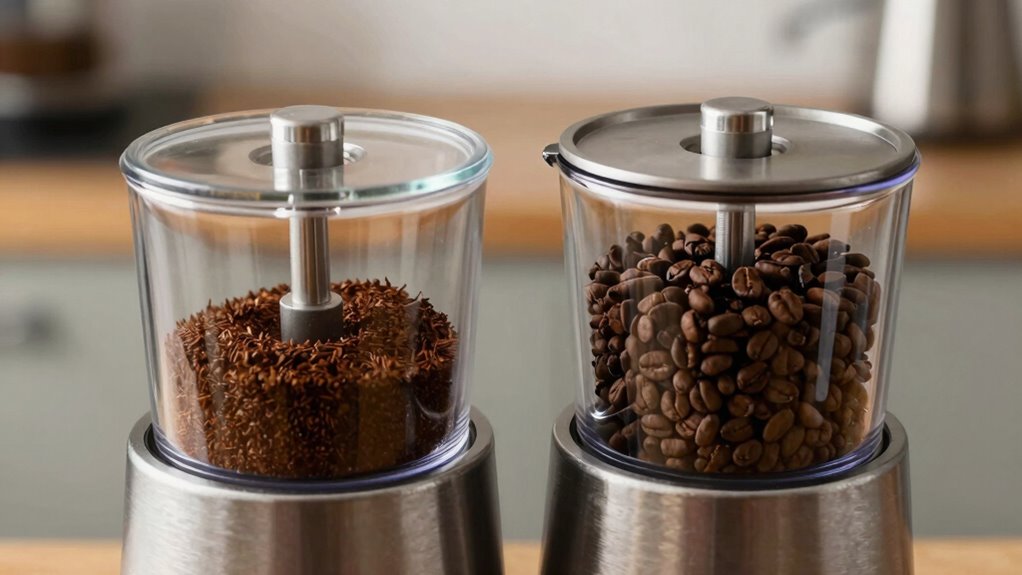
Have you ever wondered how the size of a burr impacts your grinding process? It’s a common question among coffee enthusiasts, especially when trying to achieve that perfect cup. Many assume that bigger burrs automatically lead to better results, but the truth is more nuanced. The size of the burr influences grinding consistency and flavor extraction, but not always in the way you might expect. Larger burrs can produce a more uniform grind, which is essential for consistency. If your grounds are uneven, your coffee can taste inconsistent — over-extracted in some parts and under-extracted in others. Larger burrs tend to cut the beans more evenly because they have a greater surface area and can process more coffee at once. This means your grind size remains more uniform across the batch, helping you dial in your brew with greater precision.
Larger burrs produce a more uniform grind, ensuring consistency for a better, more precise brew.
However, a bigger burr isn’t a magic fix for flavor. While improved grinding consistency generally supports better flavor extraction, other factors play vital roles. For example, the speed of the grinder, the quality of the burr material, and your brewing method all contribute to how well flavors are extracted. You might think that larger burrs will automatically produce a richer, more nuanced cup, but if your grinder isn’t optimized or if you’re not adjusting your grind size properly, the benefits of larger burrs can be diminished. It’s tempting to believe that size alone guarantees a better grind, but in reality, it’s about how well the burr size works with your specific setup and brewing preferences.
A well-designed grinder cooling system can help mitigate heat buildup and preserve the delicate oils and flavors in your beans, further emphasizing the importance of overall grinder quality.
Another aspect to weigh is heat generation. Larger burrs can generate more heat during grinding, which might affect the delicate oils and flavors in your coffee beans. Overheating can lead to a loss of aromatic compounds, ultimately impacting flavor extraction. So, simply opting for larger burrs without considering the grinder’s design and cooling mechanisms might not lead to the improved flavor profile you’re seeking. burr material quality also influences how well the grinder performs and how much heat is produced during operation. Additionally, proper grinder maintenance can help mitigate some of these heat-related issues and preserve flavor integrity. Understanding the impact of burr size within your specific grinder setup can help you make more informed choices about upgrades or adjustments.
In the end, the debate about burr size often oversimplifies the process. It’s not just about having the biggest burrs; it’s about how well the burrs work within your grinder system to produce consistent grounds that maximize flavor extraction. The most important thing is to understand your equipment and your beans, then fine-tune based on that knowledge. A well-chosen burr size, combined with proper maintenance and technique, will give you the best chance at brewing a balanced, flavorful cup—more so than just chasing bigger burrs.
coffee grinder with burr size options
As an affiliate, we earn on qualifying purchases.
As an affiliate, we earn on qualifying purchases.
Frequently Asked Questions
How Does Burr Size Affect Coffee Flavor Consistency?
Burr size directly impacts coffee flavor consistency by affecting grind uniformity and flavor preservation. Larger burrs produce more consistent, evenly sized grounds, which helps extract flavors evenly during brewing. This reduces over-extraction or under-extraction, ensuring you get a balanced, flavorful cup every time. Smaller burrs may lead to uneven grounds, causing inconsistent flavor and compromised flavor preservation. So, choosing the right burr size helps you enjoy a more reliable, delicious coffee experience.
Are Larger Burrs Better for Espresso Brewing?
Larger burrs are generally better for espresso brewing because they produce fewer fines, leading to a cleaner, more consistent extraction. Plus, they tend to operate more quietly, reducing grind noise, which enhances your brewing experience. Additionally, bigger burrs often add to the aesthetic appeal of your grinder, making it look more premium and sturdy. Overall, if you’re serious about espresso, opting for larger burrs can improve both performance and style.
What Is the Ideal Burr Size for Home Use?
For home use, a burr size between 40 to 60mm works best. This size strikes a balance, allowing you to preserve the coffee aroma and achieve a consistent grind. Larger burrs grind faster, improving grind speed, but can be more expensive and bulky. Smaller burrs might be more affordable but could slow down your process and affect aroma retention. Aim for a size that suits your brewing needs and space.
Do Burr Sizes Impact the Grinder’s Durability?
You might wonder if burr size impacts your grinder’s durability. In truth, larger burrs often face more stress, risking quicker wear if made from inferior materials or lacking manufacturing precision. High-quality materials and meticulous craftsmanship can offset size concerns, ensuring longevity. So, while bigger burrs could challenge durability, choosing a grinder with durable material and precise manufacturing keeps it running smoothly, no matter the size.
How Does Burr Shape Influence Grinding Performance?
Burr shape greatly influences grinding performance by affecting consistency and efficiency. Aesthetically, you’ll notice that well-designed burrs have smooth, precise contours, often reflecting high manufacturing quality. The sharper, more accurate the burr shape, the better it can produce uniform grounds, reducing uneven extraction. Precision in manufacturing guarantees the burrs maintain their shape over time, delivering consistent grind quality. Overall, a thoughtfully designed burr shape enhances your coffee experience through improved performance and durability.
As an affiliate, we earn on qualifying purchases.
Conclusion
You might be surprised to learn that 60% of coffee enthusiasts focus more on burr size than grind consistency, yet studies show that smaller burrs actually produce more uniform grounds. So, next time you’re shopping for a grinder, don’t just chase the biggest burrs—consider how they impact your brew. Remember, better grind quality leads to better flavor, and sometimes, less really is more. Happy brewing!
best coffee grinders for flavor extraction
As an affiliate, we earn on qualifying purchases.
As an affiliate, we earn on qualifying purchases.
As an affiliate, we earn on qualifying purchases.
Fall Picks
fall essentials
As an affiliate, we earn on qualifying purchases.