TL;DR

Get kitchen gear delivered free with Prime
- Fast, free delivery on millions of items
- Prime Video, Amazon Music and more included
- Member-only deals all year
Small kitchens need compact air fryers that maximize space and efficiency. This guide explains how to pick models that fit tight spots and deliver great results, with real-world tips and comparisons.
Living in a small kitchen doesn’t mean sacrificing crispy fries or reheated leftovers. Air fryers for small kitchens pack the punch of convection cooking into tiny footprints. But not all models are created equal—some look compact but need extra clearance or have limited usable space.
Whether you’re apartment-bound or just want to clear counter clutter, choosing the right air fryer can turn your cramped space into a culinary playground. This guide breaks down what to look for, from size to performance, so you get the most flavor with the least fuss.
Always check the actual external dimensions and clearance needs—stated capacity often overstates usable space.
For small portions, a 2–3 quart basket is usually enough; shape matters for even crisping.
Choose a basket model for space-saving efficiency or a toaster oven for multi-function needs—match to your cooking style.
Proper arrangement and batch cooking maximize performance—avoid overcrowding for crispy, even results.
Safety first: ensure proper ventilation, use heat-safe materials, and inspect for recalls or damage before use.
Why Size Matters More Than You Think in Small Kitchens
Size isn’t just about how much food fits. It’s about how much space the appliance takes up during use and storage. A model listed as “compact” might still be bulky if it requires extra clearance for vents or is deep enough to block your countertop.
Imagine pulling out a tiny-looking air fryer, only to find it’s wider than your toaster, with vents that need space around it. Check the external dimensions—width, depth, and height—before you buy. If it sits in a tight corner, even a small model can become a space hog.
For example, a 9-inch wide, 11-inch deep air fryer might fit your countertop, but if it needs 3 inches of clearance behind for ventilation, it could block access to outlets or bump against your wall cabinets. Measure carefully. Better safe than squeezed out of usable space.
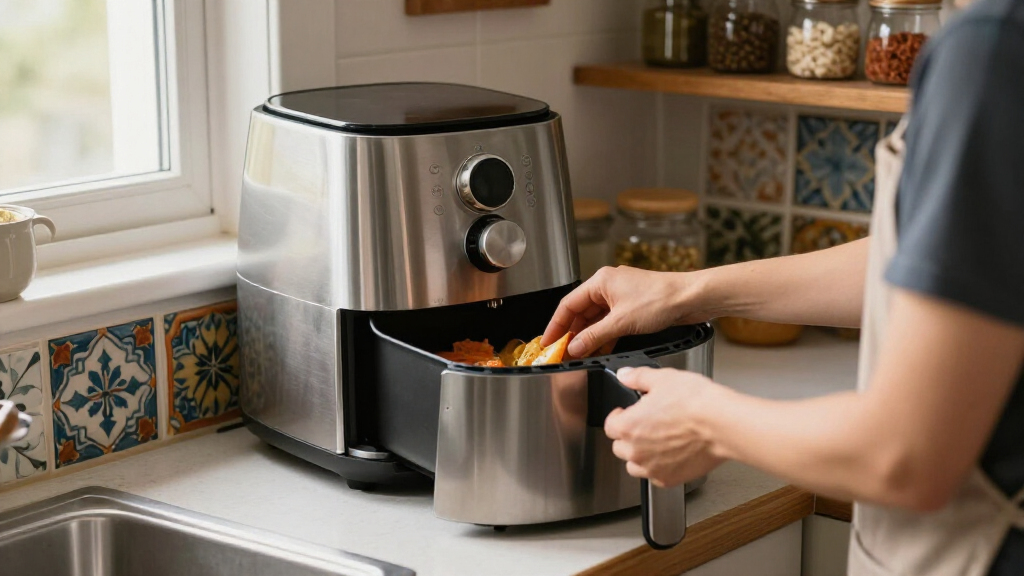
compact air fryer for small kitchens
As an affiliate, we earn on qualifying purchases.
As an affiliate, we earn on qualifying purchases.
Picking the Perfect Capacity for Small Portions
In small kitchens, you don’t need a 6-quart beast—unless you cook for a crowd. For singles or couples, a 2-3 quart model works wonders. It crisps up snacks, reheats leftovers, and takes up minimal space.
But beyond just capacity, consider how the shape of the basket influences cooking results. Shallow, wide baskets maximize the surface area exposed to heat, promoting even crisping and reducing cooking time. Tall, narrow baskets can create uneven results or require longer cooking times because less food is in contact with hot air. Recognizing this tradeoff helps you choose a model that not only fits your space but also cooks efficiently.
For instance, a 3-quart basket with a wide, shallow design can crisp fries or chicken evenly in fewer batches. Conversely, a tall, narrow basket might be less effective for certain foods, forcing you to cook in multiple rounds, which can be inconvenient and time-consuming.
Understanding how basket shape impacts heat transfer and airflow helps you select a model that truly meets your needs without sacrificing performance for the sake of size.
As an affiliate, we earn on qualifying purchases.
Basket vs. Toaster Oven Style: Which Fits Your Space and Cooking Style?
Choosing between a basket model or a compact toaster oven air fryer is a common dilemma. Basket air fryers are small, fast, and perfect for quick snacks—think crispy chicken wings or reheated fries. They’re easy to shake and clean but limited in shape and size.
In contrast, air-fryer toaster ovens can toast, bake, and broil alongside frying. They’re bigger and more versatile but take up more counter space and require more energy to operate. The tradeoff is in functionality versus footprint—if your main goal is quick, crispy snacks, a basket model is often more efficient. But if you want a multi-purpose appliance that can handle various cooking tasks, a small toaster oven offers extra flexibility at the expense of additional space and complexity.
Evaluating your typical cooking routines and available counter space helps determine the best fit. For example, if you often reheat large batches or bake small casseroles, a toaster oven style might justify its larger footprint. Conversely, if you mainly want fast snacks, a compact basket model simplifies your setup and reduces clutter.
Remember, the right choice depends on your specific needs and space constraints, and understanding these tradeoffs ensures you don’t compromise functionality for size or vice versa.
As an affiliate, we earn on qualifying purchases.
How To Maximize Performance in Tiny Spaces
Small air fryers can be surprisingly efficient—if you use them right. The key is proper arrangement and handling. Overcrowding the basket leads to uneven browning and soggy results. Think of it like a crowded dance floor—everyone needs space to move and shine.
Here’s a simple step-by-step:
- Arrange food in a loose, single layer. Avoid stacking or piling.
- Pre-dry wet ingredients and lightly oil for crispier finish.
- Shake or turn food midway through cooking to promote even browning.
- Cook in batches if needed—don’t cram everything in at once.
- Use the recommended temperature and check early; small appliances heat up fast.
Overcrowding not only hampers heat circulation but also increases cooking time and decreases crispiness. When food is piled or crowded, hot air cannot circulate evenly, leading to uneven cooking and soggy textures. Recognizing this tradeoff means accepting that in small appliances, quality often depends on doing multiple batches—it’s a small inconvenience for better results. Proper arrangement ensures each piece gets adequate exposure to hot air, maximizing crispiness and minimizing cooking time. This understanding helps you plan your cooking process more effectively, ensuring your tiny appliance performs at its best while maintaining the desired texture.
Efficiency might mean doing two or three batches, but it’s better than ending up with soggy, uneven results.
best tiny air fryers for apartments
As an affiliate, we earn on qualifying purchases.
As an affiliate, we earn on qualifying purchases.
Electrical, Ventilation, and Safety Tips for Tiny Kitchens
Most small air fryers draw around 900 to 1,700 watts, so they need a dedicated outlet. Plug directly into a wall socket—don’t use extension cords or power strips that can overheat.
Place your air fryer on a heat-resistant, stable surface. Keep it away from water, curtains, or combustible materials. Proper ventilation is crucial—ensure there’s enough space around the appliance for heat and steam to escape. If you block vents or push the unit against cabinetry, it can overheat or cause damage to surrounding surfaces.
When operating, the appliance releases heat, steam, and odors. Use in a well-ventilated area, and avoid operating inside enclosed cabinets or tight spaces where heat can build up dangerously. Good ventilation not only prolongs the life of your appliance but also ensures safety and reduces indoor odors.
Always inspect cords, plugs, and the appliance for damage before use. Damaged wiring or cracked components increase the risk of electrical failure or fire. In small kitchens, where space is limited, these safety precautions become even more critical to prevent accidents and ensure reliable operation.
Understanding these safety considerations helps you prevent common issues like overheating, electrical fires, or appliance damage—especially important in tight, often crowded, small kitchens.
Energy Saving and Cleaning Tips for Tiny Kitchen Appliances
Compared to full-sized ovens, small air fryers usually use less energy, especially for quick reheats or small meals. With wattages from 900 to 1,700, they heat up rapidly and preheat in minutes—saving power overall. Their focused heating means less wasted energy compared to larger appliances that take longer to reach temperature.
For cleaning, look for removable baskets and crisper plates that are dishwasher safe. Regularly wipe down the interior and exterior with a damp cloth to prevent grease buildup. Pay special attention to the heating element area, as grease or food particles can cause smoke or odors if left unchecked. Using minimal oil reduces not only calories but also smoke and residue, which in turn reduces cleaning frequency. Proper maintenance ensures your appliance stays efficient and safe, prolonging its lifespan.
In small kitchens, energy-efficient appliances are especially valuable—they conserve power and reduce utility bills. Adopting simple cleaning routines and mindful usage maximizes their benefits, making your tiny kitchen more sustainable and less cluttered with cleaning chores.
Understanding these energy and maintenance tips helps you keep your appliance running smoothly while minimizing environmental impact and keeping your space tidy.
Quiet, Safe, and User-Friendly Features for Small Kitchens
Fan noise varies across models. Some are whisper-quiet, others louder than a microwave. For tiny spaces, look for models with quiet fans and simple controls. Manual buttons and digital displays should be intuitive, with preset options to simplify cooking.
Features like a pause button—so you can check or turn food—are handy. An adjustable timer, temperature controls, and a viewing window make cooking easier. A retractable cord helps reduce clutter, and automatic shutoff prevents overheating, adding safety and convenience. For small kitchens where space is at a premium, these features can make a significant difference in usability and safety.
Models with cool-touch exteriors and non-slip feet enhance safety, preventing accidental burns or slips in cramped environments. A clear display and straightforward controls reduce user errors, especially for those unfamiliar with advanced appliances. Ultimately, choosing a model with user-friendly features ensures that even in tight quarters, operation remains safe, simple, and efficient.
Materials and Safety: What to Look for in Tiny Air Fryers
Safety and durability go hand-in-hand. Look for models with heat-safe materials like stainless steel, ceramic-coated baskets, or glass chambers. These materials can withstand high temperatures and are less prone to warping or damage over time. Avoid loose or flammable coatings, which can peel or emit fumes when heated. Always check for recalls before buying, especially if considering secondhand units.
Proper venting is crucial—blocked or inadequate vents can cause overheating or damage. Use heat-safe accessories and avoid operating the appliance with damaged cords or baskets. Replace worn components immediately to prevent safety hazards. Be mindful of coatings—“PFOA-free” and “PFAS-free” labels indicate safer, more environmentally friendly options, but also consider durability and ease of cleaning. For example, ceramic baskets resist odors and scratches better than some nonstick coatings, but they are heavier and may require more careful handling.
Prioritizing materials that resist heat and are easy to clean ensures longevity and safety, especially in small kitchens where accidents can happen quickly. Choosing high-quality, safe materials minimizes risks and keeps your cooking environment secure.
Latest Trends in Compact Air Fryers: What’s New and Worth Watching
Manufacturers are pushing smaller, smarter, and more versatile models. Newer designs often combine multiple functions—air frying, baking, steaming—in one compact device, reducing clutter and increasing utility. Vertical dual-basket designs maximize width efficiency, freeing up counter space while offering more cooking options. Removable dividers allow for simultaneous cooking of different foods, saving time and energy.
Features like internal lighting, viewing windows, and app controls are becoming standard, making cooking more convenient and accessible. Some models incorporate steam functions to prevent drying out delicate foods or to reheat dishes gently—an important feature for small kitchens where space for separate appliances is limited. These innovations reflect a trend towards multifunctionality and user-centric design, ensuring that small appliances deliver more value without expanding their footprint.
In 2024, expect to see repair-friendly models with easily available replacement parts, as manufacturers recognize the importance of sustainability and longevity. Higher-capacity claims in small footprints are often achieved through taller, squarer chambers, but the actual usable surface area remains limited. Staying informed about these trends helps consumers choose appliances that are not only space-efficient but also future-proof and repairable.
Overall, the evolution of compact air fryers aims to make tiny kitchens more versatile, efficient, and enjoyable without sacrificing the crispiness and speed users expect.
What You Should Do Before Buying Your Small Kitchen Air Fryer
Start by measuring your available space—width, depth, and height. Check clearance for vents and door openings. Think about what functions you need—just crisping or baking as well?
Read reviews focusing on real-life performance and durability. Look for models with removable, dishwasher-safe parts and good safety ratings. Don’t forget to check if the model has a recall record or ongoing safety issues.
Compare features like wattage, noise level, and extras such as viewing windows or app controls. And finally, consider your typical meals—will a 2-quart or 5-quart model serve you better?
Getting these details right makes tiny space cooking much simpler—less clutter, more crispiness.
Frequently Asked Questions
What size air fryer is best for one person or a couple?
A 2–3 quart model is perfect for singles or couples. It handles snacks, reheats, and small meals efficiently without taking up too much counter space.
How much counter clearance does an air fryer need?
Most small models require about 3 inches of clearance behind for vents and additional space around for safe operation. Always measure your space before buying.
Can an air fryer be used beneath kitchen cabinets?
Yes, but only if it has proper ventilation and enough clearance—typically at least 3 inches above and behind. Never operate inside a closed cabinet or directly against walls.
Is a basket model or air-fryer toaster oven better for limited space?
If space is tight and you mainly want quick, crispy snacks, a basket model is ideal. For multi-function cooking, a small toaster oven offers more versatility but takes up more room.
Will a small air fryer cook an entire meal?
It can handle small meals or parts of a larger one. For bigger family dinners, a larger or full-size oven might be more practical. Use batches for best results in tiny models.
Conclusion
In tiny kitchens, every inch counts. Pick a model that fits your space, matches your cooking style, and is easy to clean. The right small air fryer can turn your cramped counter into a crispy, convenient culinary corner—without the clutter.
Remember, compact doesn’t mean limited. It just requires smarter choices—so your kitchen stays open, your food stays crispy, and your time stays short.
Halloween Picks
halloween
As an affiliate, we earn on qualifying purchases.