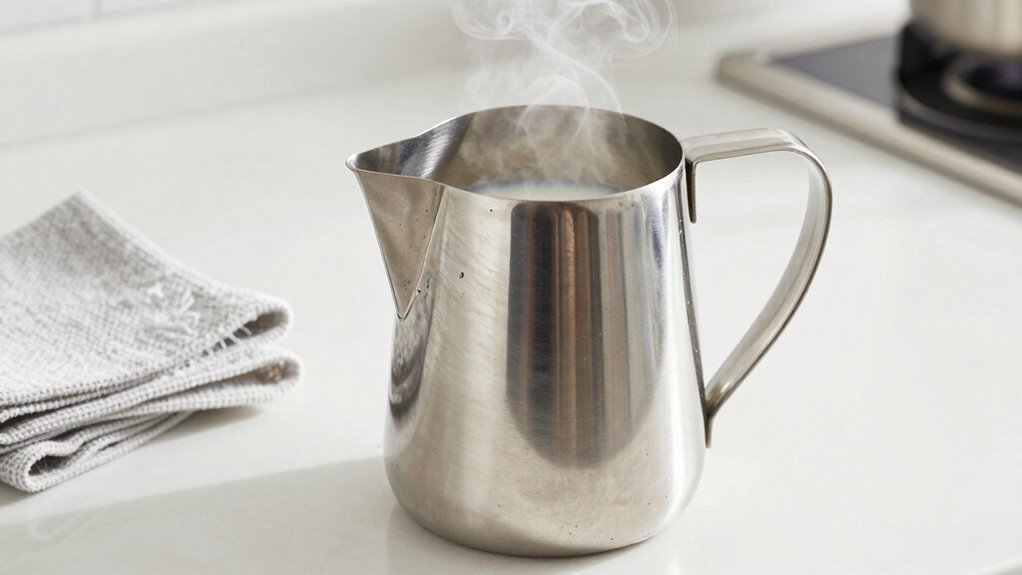

Residual milk films on your pitcher walls can cause off-flavors and harbor bacteria, affecting milk’s freshness and safety. To prevent this, rinse your pitcher immediately with warm water after use, scrub all surfaces with a mild detergent, and dry thoroughly. Regular deep cleaning with vinegar or dairy-safe solutions helps remove stubborn residues. Keeping your pitcher clean guarantees better taste and safety—if you want to know more tips, keep going to learn how to maintain a spotless, odor-free pitcher.
Prime for Young Adults — start your free trial
Fast free delivery, streaming and member deals for eligible 18–24 year olds.
As an affiliate, we earn on qualifying purchases.
Key Takeaways
- Residual milk proteins and fats form an invisible film that can alter milk flavor.
- Inadequate rinsing, especially with cold water, allows residues and film to build up.
- Proper cleaning with warm water, mild detergent, and thorough scrubbing removes the film effectively.
- Regular deep cleaning using vinegar or specialized dairy solutions prevents stubborn residue formation.
- Eliminating the film ensures fresh-tasting milk and maintains pitcher hygiene and safety.
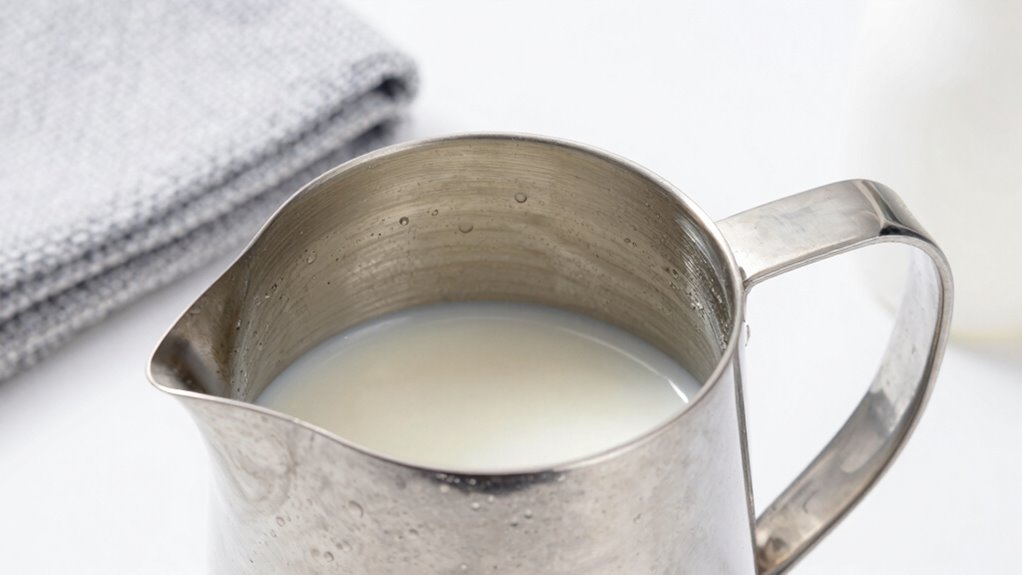
Ever wonder why your milk pitchers sometimes develop stubborn stains or lingering odors? It’s a common problem, and the culprit often comes down to poor milk hygiene and ineffective cleaning techniques. When milk residue isn’t thoroughly removed, it creates a film on the surface of your pitcher that can affect the taste of your milk and even harbor bacteria. Understanding how to properly clean your pitchers is essential to maintaining both the quality of your milk and your health.
The first step is recognizing that milk hygiene isn’t just about rinsing; it requires a systematic approach. Leftover milk proteins and fats can stick to the walls of your pitcher, forming a film that’s difficult to see but easy to smell. This film is more than just a visual nuisance—it’s a breeding ground for bacteria that can cause off-flavors and potentially lead to spoilage. That’s why effective cleaning techniques are *vital*.
Proper milk hygiene requires a systematic approach to prevent bacteria buildup and spoilage.
Start with a thorough rinse immediately after use to remove as much milk as possible. Use warm water because it helps break down milk fats and proteins more efficiently than cold water. Avoid just rinsing with cold water and leaving the pitcher to dry; this can leave behind residues that harden and become more difficult to remove later. After rinsing, apply a mild, food-safe detergent designed for dairy equipment. Use a soft brush or sponge to scrub every corner of the pitcher, paying special attention to the spout and any crevices where milk residue can hide. Consistent scrubbing helps prevent film buildup and maintains proper milk hygiene.
Once cleaned, rinse the pitcher thoroughly with warm water to remove all soap residues. Any leftover soap can interfere with milk flavor and contribute to film formation. After rinsing, dry the pitcher completely with a clean towel or air dry in a well-ventilated area. Moisture left inside can promote mold growth and unpleasant odors, which can further compromise milk quality.
Regularly deep cleaning your milk pitchers with a mixture of vinegar and water can help break down mineral deposits and remove any lingering film. For heavily stained or odorous pitchers, consider using specialized dairy cleaning solutions that are designed to eliminate milk film without damaging the material. Proper cleaning techniques not only improve milk hygiene but also extend the lifespan of your pitchers, ensuring every pour is fresh and free from off-flavors.
In short, maintaining good milk hygiene and adopting effective cleaning techniques are the keys to preventing that stubborn film and ensuring your milk always tastes its best. Don’t overlook the importance of these simple steps—they make a *significant* difference in the quality of your dairy experience.
As an affiliate, we earn on qualifying purchases.
Frequently Asked Questions
How Often Should I Replace My Milk Pitcher?
You should replace your milk pitcher when it shows persistent stains, cracks, or a lingering film, regardless of regular cleaning. Depending on the pitcher material—stainless steel or plastic—replace it more frequently if it absorbs odors or develops scratches that trap residue. Proper milk storage and thorough cleaning extend its life, but don’t hesitate to replace the pitcher when it compromises milk quality or hygiene, ensuring fresh-tasting beverages every time.
Can I Use Bleach to Clean Milk Pitchers?
Did you know that improper cleaning can cause milk taste issues? You shouldn’t use bleach to clean your milk pitchers because it’s not safe for food contact surfaces. Bleach safety isn’t guaranteed once it’s rinsed, and cleaning chemicals like that can leave residues, affecting your milk’s flavor. Stick to food-safe cleaners or hot water and soap to keep your pitchers clean and your milk tasting fresh.
What’s the Best Way to Remove Stubborn Film Buildup?
To remove stubborn film buildup from your milk pitcher, start by soaking it in a mixture of warm water and a small amount of white vinegar. Use a soft brush or sponge to scrub the inside gently, focusing on areas with stubborn film. Rinse thoroughly with clean water. Regular milk pitcher maintenance, including proper cleaning after each use, prevents stubborn film buildup and keeps your milk tasting fresh.
Does the Type of Milk Affect Pitcher Cleaning?
Yes, the type of milk can affect pitcher cleaning because different milks, like dairy versus plant-based, have varying fat and protein levels that influence milk flavor. You should also consider the pitcher material; for example, stainless steel is easier to clean and resists film buildup better than plastic. Regular cleaning with hot water and mild detergent helps prevent stubborn film, ensuring your milk tastes fresh and your pitcher stays in top shape.
Are There Eco-Friendly Cleaning Options for Milk Pitchers?
Sure, eco-friendly options exist, even if it seems like cleaning might never be green enough. You can use biodegradable cleaners or natural cleaning methods that cut through milk residue without harming the planet. It’s ironic, isn’t it? You get to keep your pitchers spotless while also caring for the environment. So, next time, skip harsh chemicals and embrace these sustainable choices—they’re just as effective and way kinder to Mother Earth.
stainless steel milk pitcher brush
As an affiliate, we earn on qualifying purchases.
As an affiliate, we earn on qualifying purchases.
Conclusion
Now that you know how vital proper milk pitcher cleaning is, will you continue to overlook those hidden film spots? Remember, that stubborn film isn’t just unsightly; it can subtly alter your milk’s flavor, ruining your coffee experience. Regular cleaning with the right tools and techniques keeps your milk tasting fresh and your drinks perfect. So, next time you clean your pitcher, ask yourself: am I doing everything I can to preserve that perfect sip?
milk pitcher deep cleaning solution
As an affiliate, we earn on qualifying purchases.
As an affiliate, we earn on qualifying purchases.
As an affiliate, we earn on qualifying purchases.
Fall yard work Picks
leaf blowers
As an affiliate, we earn on qualifying purchases.