
Coffee dust builds up in your grinder from tiny particles created during grinding, and over time, it can contaminate your brew with off-flavors, stale aromas, and inconsistent taste. Residual oils and dust can cause bitterness or sourness, especially if you don’t clean your grinder regularly. To keep your coffee fresh and flavorful, it’s essential to understand how dust impacts taste and how proper maintenance prevents flavor deterioration. Discover more tips to preserve your coffee’s quality below.
Key Takeaways
- Coffee dust causes off-flavors and bitterness by contaminating brews with residual oils and oxidation products.
- Accumulated dust leads to inconsistent grind size, resulting in uneven extraction and flavor degradation over time.
- Dust buildup promotes stale, rancid tastes due to oil residues and exposure to air and moisture.
- Regular cleaning reduces dust, preserving aroma, flavor integrity, and preventing flavor crossover between batches.
- Proper grinder maintenance and calibration minimize dust production, ensuring cleaner, fresher-tasting coffee over time.

Acooruiteng Coffee Grinder Cleaning Brush Dusting Espresso Brush Accessories Cleaner Barista Brush Machine Cleaning Brush Cleaning Tool for Bean Grain Coffee Tool Barista Home Kitchen
🧹【Package Included】The package contains 1 pcs dusting coffee grinder brush,the size is about 13cm × 1cm,can meet your…
As an affiliate, we earn on qualifying purchases.
As an affiliate, we earn on qualifying purchases.
What Is Coffee Dust and How Does It Form?

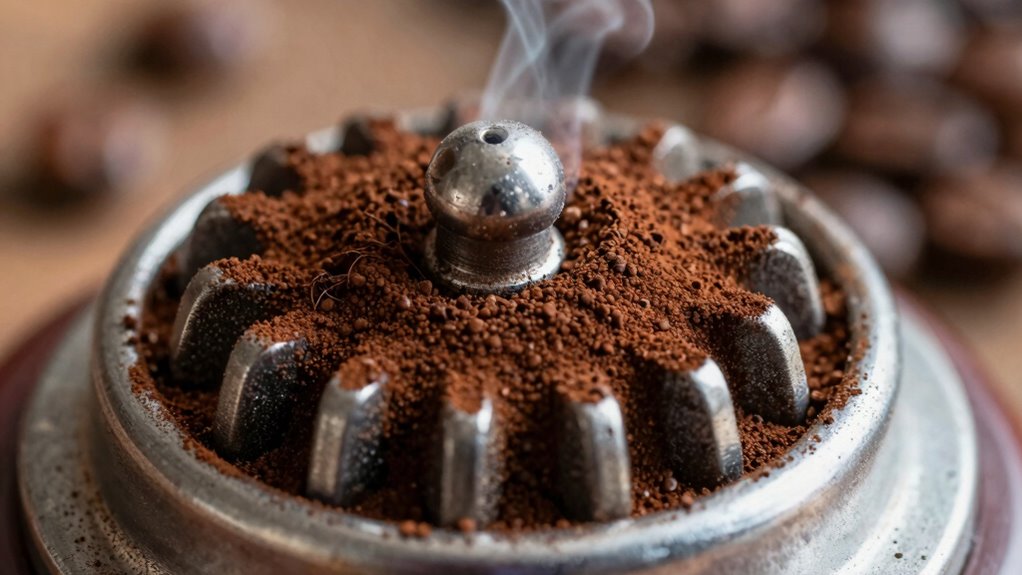
Have you ever noticed a fine, powdery residue in your coffee grinder after grinding beans? That’s coffee dust, a byproduct of the coffee grind. It forms when small particles break off from the beans during grinding, creating tiny, loose fragments. Over time, these particles settle and accumulate as dust in your grinder. Dust accumulation happens because not all coffee grounds are perfectly uniform; some are finer than others, and these fine particles easily become airborne or settle into the machine’s crevices. This coffee dust isn’t just leftover debris—it’s a natural part of the grinding process. Understanding how it forms helps you recognize its presence and prepares you to manage it for better coffee quality and cleaner equipment. Proper cleaning and maintenance of your grinder are essential to minimize dust buildup and preserve long-term coffee freshness. Regular cleaning also prevents the buildup of coffee dust that can negatively impact the flavor profile of your coffee, subtly altering its taste over time. Additionally, controlling dust buildup contributes to maintaining the efficiency of your grinder, ensuring consistent grind size and quality.

MIGAKU HOME Coffee Grinder Cleaning Kit – 5Pcs Large Soft Brush, Small Hard Brush, Group Head Brush, Long-reach Brush & Air Blower for Coffee & Espresso Machine Parts & Accessories
5Pcs Espresso Cleaning Kit: MIGAKU HOME set includes Black Walnut Large Soft Brush, Black Walnut Small Hard Brush,…
As an affiliate, we earn on qualifying purchases.
As an affiliate, we earn on qualifying purchases.
How Coffee Dust Changes the Flavor of Your Brew Over Time
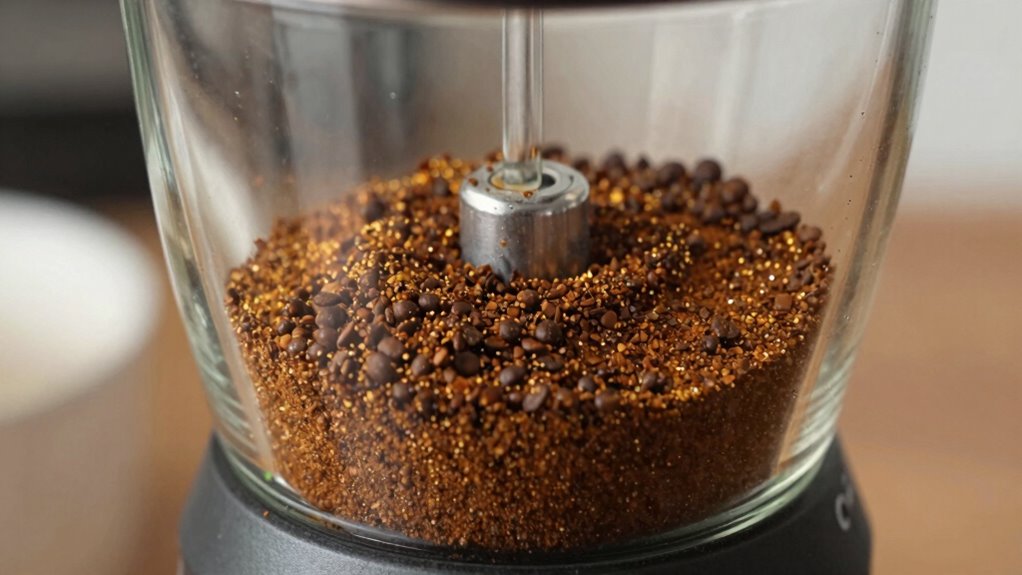
As coffee dust sticks around in your grinder, it can start contaminating the flavor of your brew, leading to off-tastes. Oxidation speeds up, causing the coffee’s aroma and flavor to weaken or change over time. Residual oils also build up, subtly altering the taste and making each cup less fresh and vibrant. Regular cleaning helps maintain the quality of your coffee, ensuring a consistently fresh flavor. Maintaining a clean grinder is also essential for Free Floating principles, which promote a healthier and more sustainable brewing environment. Additionally, understanding the lifecycle and performance metrics of your grinder can help you identify when a thorough cleaning is needed to prevent flavor degradation. Incorporating seasonal maintenance routines can further extend your grinder’s lifespan and preserve optimal flavor. Implementing proper storage techniques can also reduce dust accumulation and maintain the grinder’s performance efficiency over time.
Flavor Contamination Risks
Coffee dust trapped in grinders can lead to flavor contamination, subtly altering the taste of your brew over time. When you use the same grinder for different brewing methods or coffee bean types, residual dust mixes with fresh beans, creating off-flavors. Poor cleaning or inconsistent maintenance can also cause old coffee particles to linger, impacting the purity of each brew. Selecting high-quality beans and matching grind sizes to your brewing method reduces the risk, but contamination still occurs if the grinder isn’t cleaned regularly. Over time, these tiny dust particles introduce unwanted flavors, diminishing the nuanced profiles of specialty coffees. To preserve authentic taste, it’s essential to clean your grinder frequently and be mindful of your coffee bean choices to prevent flavor crossover. Additionally, regular maintenance and understanding the importance of proper equipment care can significantly reduce the buildup of coffee dust and maintain the integrity of your brew’s flavor. Implementing routine cleaning practices ensures that residual particles are minimized, protecting the delicate flavor profiles of your coffee. Recognizing the odor of old coffee residues can also help identify when your grinder needs cleaning to prevent flavor transfer. Moreover, understanding the impact of residual coffee dust highlights the importance of diligent grinder care to uphold the purity of each brew. Regularly inspecting your grinder for buildup and taking proactive steps can further safeguard against flavor contamination.
Oxidation Effects Accelerate
When coffee dust is exposed to air and moisture, oxidation begins to occur rapidly, altering its chemical composition. This process accelerates the loss of coffee bean freshness, causing the dust to develop stale, bitter flavors over time. The grinder material also influences how quickly oxidation impacts the coffee dust; metal grinders tend to promote faster oxidation compared to ceramic ones, which may slow the process slightly. As oxidation progresses, your brewed coffee’s flavor becomes more muted and less vibrant. You might notice a decline in aroma and brightness, especially if you store your ground coffee or dust for extended periods. Additionally, electric dirt bikes with high horsepower and speed capabilities often utilize durable materials that resist corrosion, highlighting the importance of material choice in prolonging equipment lifespan. The type of grinder used can significantly impact the rate of oxidation, with ceramic grinders offering a slightly slower process that helps preserve freshness. Halal certification in food processing facilities can also help ensure that the handling of coffee and related products maintains high standards of purity and safety. To preserve freshness and flavor, it’s best to grind only what you need and consider the grinder material’s role in slowing oxidation. Furthermore, selecting quality grinder materials can contribute to better preservation of coffee flavor over time. Proper storage in airtight containers can further reduce oxidation and help maintain the coffee’s original profile.
Residual Oils Alter Taste
Residual oils in coffee dust play a crucial role in shaping your brew’s flavor over time. These oils cling to coffee particles and can cause flavor contamination if not cleaned regularly. When oils accumulate in your grinder, they release subtle yet persistent flavors that alter the taste of fresh brews. Over time, this buildup can lead to a stale or rancid profile, masking the beans’ original aroma and flavor notes. The presence of residual oils means your coffee isn’t just affected by the beans themselves but also by the oils left behind in your equipment. Regular cleaning minimizes flavor contamination caused by these oils, ensuring each cup tastes fresh and true to its origin. Ignoring this can diminish your coffee experience considerably. Proper tool maintenance and cleaning techniques are essential to prevent oil buildup and preserve the integrity of your brew. Additionally, understanding equipment care helps maintain optimal performance and flavor preservation, especially since coffee dust buildup can accelerate flavor degradation if neglected. To maintain a consistently clean and flavorful grind, it’s beneficial to implement a routine cleaning schedule that addresses oil and dust accumulation regularly.

Coffee Grinder Cleaning Brush Set, Espresso Machine Brush Cleaner Tool with Walnut Wood Handle and Natural Bristles for Barista Home Kitchen
【Good tool for coffee lover】: This coffee grinder brush set is specially designed to brush away coffee grounds…
As an affiliate, we earn on qualifying purchases.
As an affiliate, we earn on qualifying purchases.
Signs That Coffee Dust Is Affecting Your Coffee’s Taste
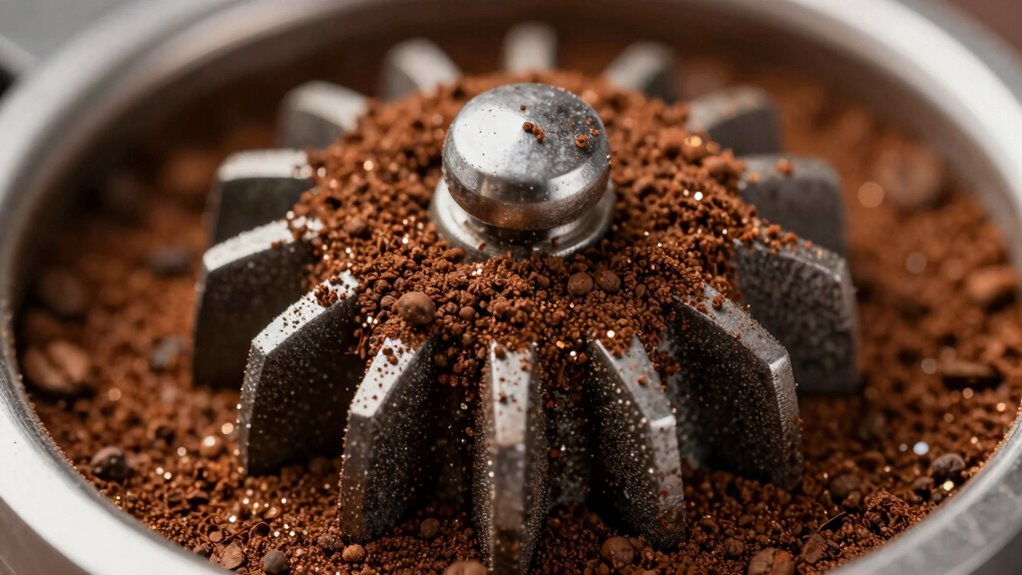
If your brewed coffee tastes off or has a gritty, uneven texture, it might be a sign that coffee dust is affecting the flavor. You may notice a dull or stale taste that doesn’t match the coffee bean origin, or inconsistent extraction even if your brewing temperature is correct. Here are some signs to watch for:
- Gritty Texture: You feel a sandy or rough mouthfeel, indicating fine dust particles.
- Odd Flavors: Unexpected bitterness or sourness that doesn’t match the coffee’s origin.
- Inconsistent Brew: Variations in strength or clarity from cup to cup.
- Reduced Aroma: Faint or stale aroma, often a result of dust buildup affecting freshness.
These signs suggest your grinder might be producing too much dust, impacting taste over time.

Universal Descaling Solution for Keurig, Nespresso, Breville, DeLonghi & Ninja (2 Uses) – Professional Coffee Descaler & Cleaner – Removes Limescale to Restore Flow & Temp – Odorless & Residue-Free
RESTORE COFFEE FLAVOR & AROMA: Our universal descaling solution removes bitter mineral buildup and calcium deposits from heating…
As an affiliate, we earn on qualifying purchases.
As an affiliate, we earn on qualifying purchases.
How to Clean Your Grinder to Minimize Coffee Dust
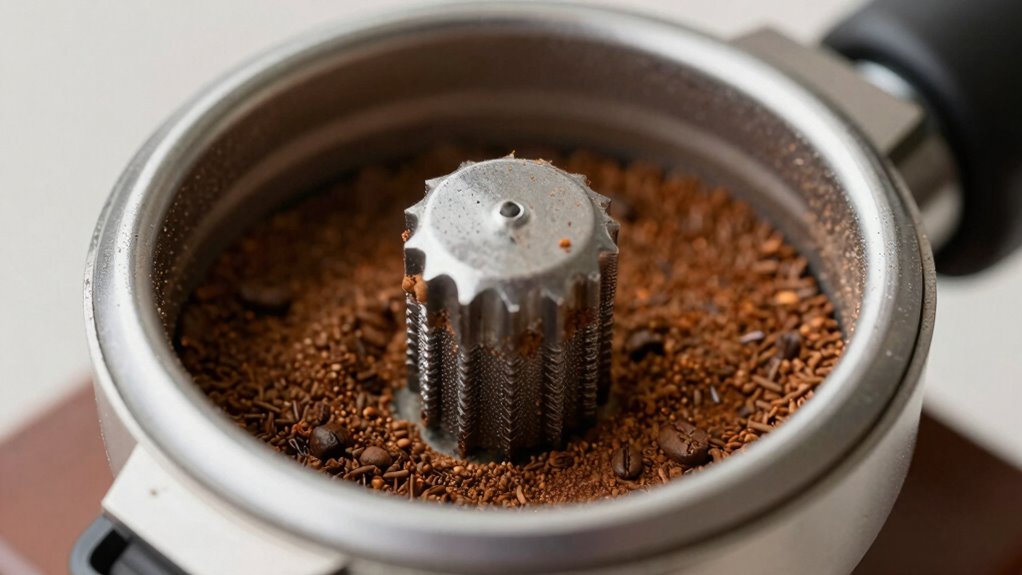
Keeping your grinder clean is key to reducing coffee dust and preserving flavor. Regular maintenance and proper cleaning techniques help prevent buildup that can affect your brew. Follow simple steps to keep your grinder in top shape and enjoy a better coffee experience.
Regular Grinder Maintenance
Regularly cleaning your grinder is essential for minimizing coffee dust and ensuring consistent flavor. Proper maintenance keeps your grinder calibrated and dust collection systems functioning at their best. Here are four key steps to maintain your grinder:
- Calibrate your grinder regularly to prevent uneven grounds and excess dust.
- Empty and clean dust collection systems to avoid buildup that impacts flavor.
- Use a soft brush or cloth to remove residual coffee dust from burrs and blades.
- Inspect for wear and tear, replacing parts as needed to keep grinding consistency high.
Proper Cleaning Techniques
To effectively minimize coffee dust, mastering proper cleaning techniques for your grinder is key. Start by unplugging the machine and removing any beans or grounds. Use a soft brush or cloth to wipe away loose dust and debris, paying attention to areas that cause grinder noise during operation. For stubborn residue, run a small amount of rice or specialized grinder cleaner through the machine to absorb oils and dust. After cleaning, transfer beans to airtight storage containers to prevent dust buildup. Regularly cleaning your grinder prevents dust accumulation, ensuring consistent flavor and minimal grinder noise. Remember, a well-maintained grinder not only improves taste but also prolongs its lifespan, making your coffee experience more enjoyable over time.
How Often Should You Clean Your Grinder for Fresh Coffee?
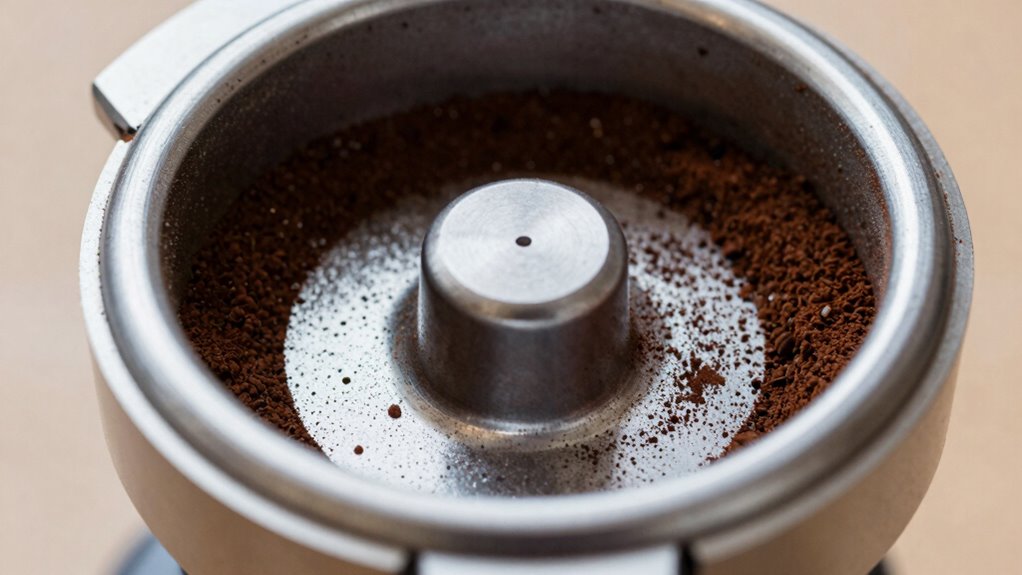
If you want your coffee to taste fresh and flavorful, it’s important to clean your grinder regularly. The ideal cleaning frequency depends on your grinder material and usage. Generally, you should consider:
- Cleaning after every 2-4 weeks if you grind daily.
- Doing a deep clean monthly for burr grinders.
- Wiping down blade grinders weekly.
- Adjusting cleaning frequency if you switch beans often or notice stale flavors.
For different grinder materials, like plastic or metal, cleaning needs may vary slightly. Metal grinders tend to be more durable and can go longer between cleanings, while plastic parts may require more frequent attention. Regular cleaning keeps coffee dust from building up, ensuring consistent flavor and performance.
Choosing a Grinder That Reduces Coffee Dust Buildup
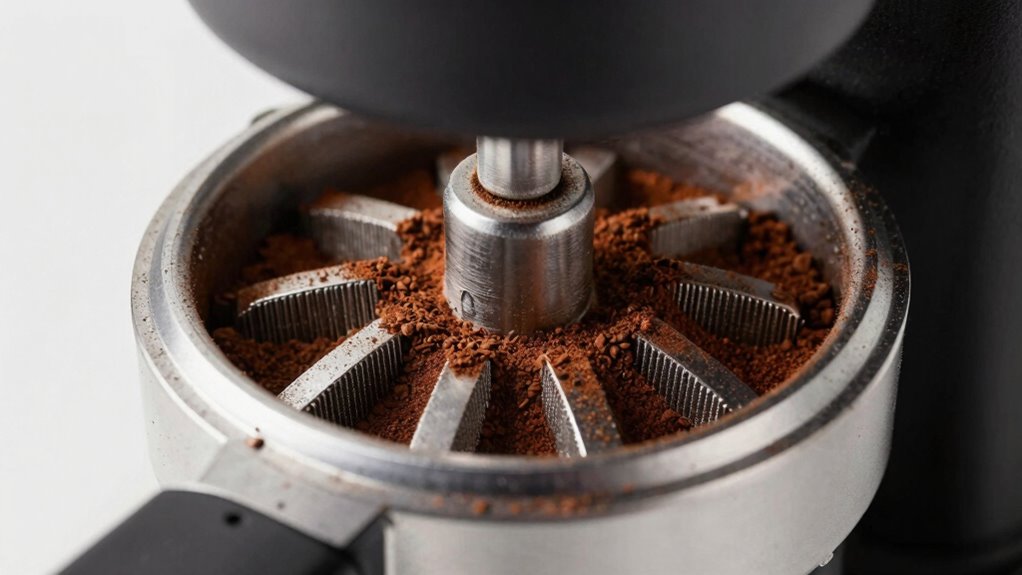
Choosing a grinder that minimizes coffee dust buildup can make cleaning easier and help maintain ideal flavor. Look for models with durable grinder material, such as stainless steel or ceramic burrs, which resist wear and reduce fine particles. Consistent dosing is essential; a grinder with precise measurement features ensures you use the right amount each time, preventing excess dust from leftover grounds. Conical burr grinders often produce less dust compared to flat burr models, thanks to their efficient grinding process. Additionally, grinders with easy-to-clean designs or built-in cleaning functions help keep dust levels low. By selecting a grinder with stable construction and consistent dosing, you reduce the chances of dust accumulation, preserving flavor quality over time and simplifying maintenance.
Common Mistakes That Cause Excess Coffee Dust and How to Avoid Them
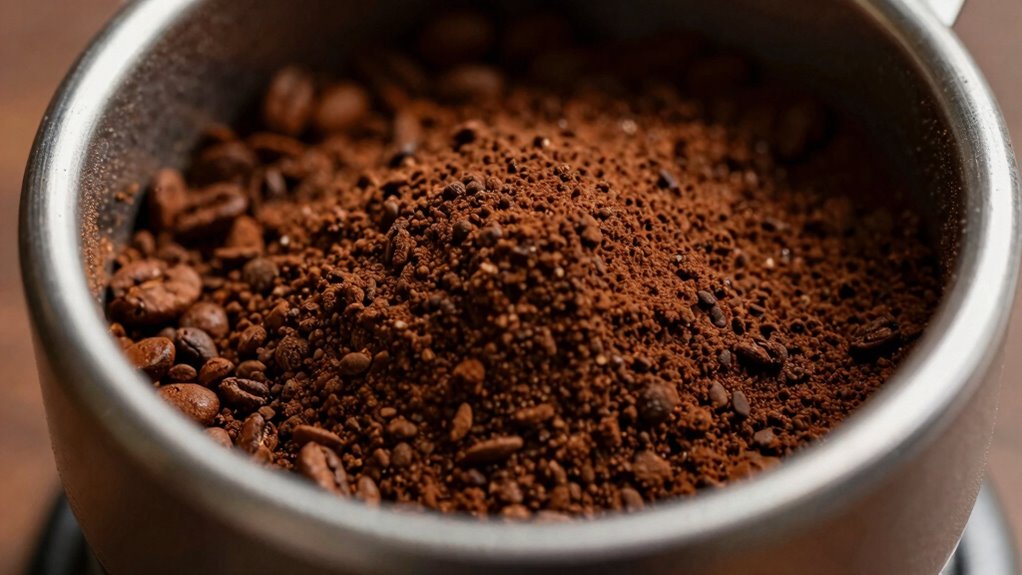
One common mistake that leads to excess coffee dust is using a grinder that’s not properly calibrated or set too fine, which creates more fine particles during grinding. Poor grinding consistency causes uneven particle sizes, increasing dust and affecting flavor extraction. To avoid this, keep these points in mind:
Using an uncalibrated or overly fine grinder increases coffee dust and affects flavor extraction.
- Always calibrate your grinder for the desired grind size.
- Avoid grinding beans too finely unless your brewing method requires it.
- Select high-quality coffee beans with consistent moisture and size.
- Regularly clean your grinder to prevent old grounds from contaminating fresh grinds.
Frequently Asked Questions
Can Coffee Dust Affect the Healthiness of My Brew?
Coffee dust can pose health risks if it contaminates your brew, especially if it’s mixed with mold or bacteria. While small amounts might not cause immediate harm, frequent exposure over time can affect your brewing safety and overall health. To protect yourself, regularly clean your grinder and brewing equipment, reducing the chance of harmful buildup. Staying vigilant guarantees your coffee remains both delicious and safe to enjoy.
Does the Type of Grinder Influence Coffee Dust Production?
Yes, the type of grinder influences coffee dust production. You should consider the grinder material, like ceramic or stainless steel, which can produce less dust. The grinding mechanism also matters; burr grinders create more uniform grounds and generate less dust compared to blade grinders. By choosing a high-quality grinder with a precise grinding mechanism, you’ll minimize dust, resulting in a cleaner brew and better taste over time.
Are There Specific Coffee Beans That Generate Less Dust?
You’ll notice that beans from different bean origin regions and roast levels produce varying amounts of dust. Light roasts tend to generate more dust because they’re less dense, while dark roasts produce less dust due to their denser structure. Single-origin beans might also create less dust if they’re processed carefully. To minimize dust, choose beans with a consistent roast level and origin, and opt for freshly roasted, high-quality beans.
How Does Humidity Impact Coffee Dust Accumulation?
Like a sponge soaking up water, humidity effects your coffee dust accumulation. When humidity rises, it causes the dust to clump and stick inside your grinder, increasing buildup over time. Conversely, low humidity keeps dust loose and less likely to accumulate. Monitoring humidity helps you control dust buildup, ensuring your grinder stays cleaner and your coffee tastes fresher. Keep your environment stable for the best grinding experience.
Is Coffee Dust More Common in Commercial or Home Grinders?
You’ll find coffee dust more common in commercial grinders due to their higher volume and continuous use. Commercial grinders, with their larger burrs and frequent operation, tend to produce more dust than home grinders, which are smaller and used less often. The main difference lies in usage patterns; home grinders typically generate less dust because of less frequent grinding, making them less prone to coffee dust buildup affecting taste over time.
Conclusion
If you ignore coffee dust, it quietly sabotages your brew’s flavor over time. Regular cleaning and choosing the right grinder can keep that dust at bay, but what if you’re missing hidden signs? The secret to consistently great coffee might depend on your next step. Stay vigilant—your perfect cup could be just one clean grind away, but only if you uncover what’s truly lurking in your grinder. Will you catch it before it’s too late?