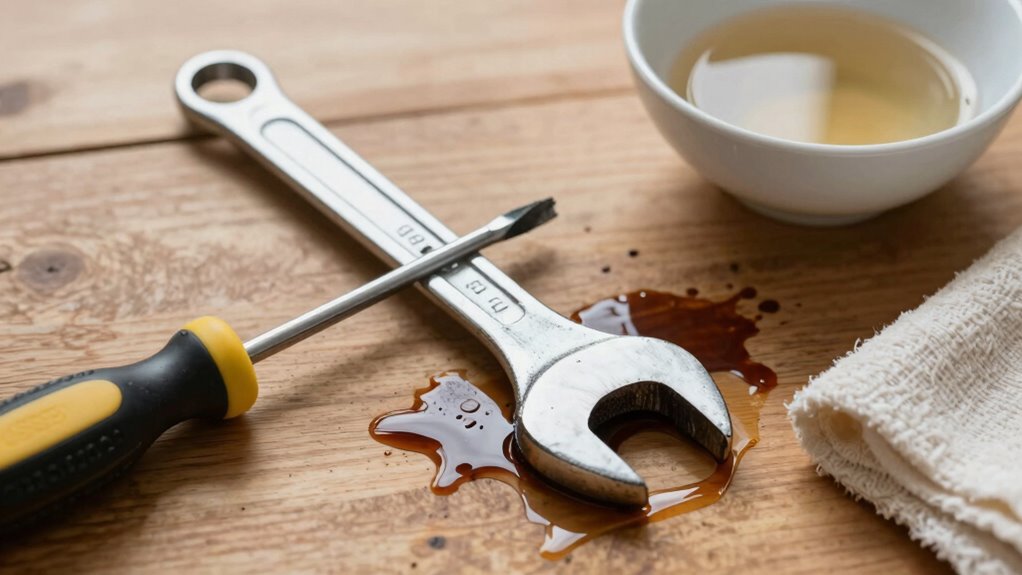

To safely remove coffee stains from your tools, start by applying vinegar directly or with a cloth to loosen the stain. Let it sit for a few minutes, then gently scrub with a soft brush or cloth. For tougher stains, sprinkle baking soda over the vinegar and scrub again to enhance cleaning. Rinse thoroughly and dry completely to prevent rust. If you want to learn more about effective stain removal methods, keep exploring these simple tips.

Get kitchen gear delivered free with Prime
- Fast, free delivery on millions of items
- Prime Video, Amazon Music and more included
- Member-only deals all year
Key Takeaways
- Use vinegar to break down coffee tannins without damaging the tool’s surface.
- Apply a baking soda paste for gentle abrasion and odor neutralization.
- Combine vinegar and baking soda for tougher stains, ensuring effective cleaning.
- Rinse tools thoroughly after cleaning to remove residues and prevent corrosion.
- Dry tools completely to avoid rust and maintain their longevity.

Coffee stains on tools can be stubborn, but removing them safely is straightforward if you know the right method. When tackling these stains, cleaning with vinegar is often your best first step. Vinegar’s acidity helps break down the coffee’s stubborn tannins, making it easier to lift the stain without damaging your tools. To use vinegar effectively, pour a small amount onto a cloth or directly onto the stained area, then let it sit for a few minutes. Afterward, scrub gently with a soft brush or cloth, focusing on the stained spots. Rinse thoroughly with water afterward to remove any vinegar residue, and dry the tool completely to prevent rust. Additionally, understanding cooking science can help you choose the best cleaning methods for different materials and stains. Using baking soda offers another safe and natural way to combat coffee stains. Baking soda’s mild abrasive qualities help lift stains while its alkaline nature neutralizes acids in the coffee, making it easier to wipe away. To apply, create a paste by mixing baking soda with a little water until you get a thick consistency. Spread this paste onto the stained area and let it sit for about 10-15 minutes. Then, scrub gently with a brush or cloth, working the baking soda into the stain. Once the stain starts to lift, rinse the tool with clean water and dry thoroughly. Baking soda not only removes stains but also deodorizes your tools, leaving them fresh and clean.
For tough stains, you can combine both methods for even better results. Start by spraying vinegar on the stain, allowing it to sit and loosen the coffee residue. After a few minutes, sprinkle baking soda over the vinegar-treated area to create a fizzy reaction. This bubbling action helps lift the stain and grease more effectively. Use a brush or cloth to scrub gently, then rinse and dry your tool thoroughly. This combined approach is both safe and effective, especially on tools that aren’t sensitive to mild acids and abrasives.
As an affiliate, we earn on qualifying purchases.
Frequently Asked Questions
Can Coffee Stains Affect the Durability of My Tools?
Coffee stains can affect your tools’ durability by causing surface discoloration and potentially leading to tool corrosion if not cleaned properly. The moisture and acids in coffee can weaken protective coatings and metal surfaces over time. To prevent damage, clean coffee stains promptly using safe methods. This helps maintain your tools’ appearance and functionality, ensuring they stay in good shape and resist corrosion for longer periods.
Are There Homemade Solutions for Removing Coffee Stains?
Yes, there are homemade solutions for removing coffee stains that feel like a breath of fresh air. You can use natural remedies and household solutions like baking soda paste, white vinegar, or lemon juice. These ingredients act like gentle scrubbing brushes, breaking down stubborn stains without harsh chemicals. Simply apply and let sit, then scrub lightly. Your tools will shine clean, as if revitalized by a morning sunrise, safe and stain-free.
How Long Should I Wait Before Cleaning Coffee Stains?
You should clean coffee stains as soon as possible to prevent them from setting. Stain timing is essential—waiting too long makes removal harder. Ideally, you’ll want to clean your tools within a few hours of staining, especially if they’re used frequently. Establish regular cleaning intervals to keep your tools in top shape. Prompt action guarantees easier stain removal and prolongs the life of your tools, so don’t delay cleaning after spills.
Do Commercial Cleaners Damage Tool Surfaces?
Commercial cleaners can damage tool surfaces if used improperly, especially those with harsh chemicals. You might think they’re safe because they’re designed for cleaning, but in reality, poor application or strong formulas can compromise tool maintenance. Always prioritize cleaning safety by selecting gentle, appropriate cleaners and testing them on a small area first. This approach helps preserve your tools’ longevity and ensures effective stain removal without risking damage.
Can Stain Removal Techniques Be Used on All Tool Materials?
Not all stain removal techniques are suitable for every tool material. You need to take into account tool material compatibility to avoid damage, ensuring stain removal safety. For example, delicate plastics or coated surfaces may require gentle methods, while metal tools can handle stronger cleaners. Always test a small area first, follow manufacturer guidelines, and use appropriate cleaning agents to prevent corrosion or surface damage during stain removal.
baking soda stain remover for tools
As an affiliate, we earn on qualifying purchases.
As an affiliate, we earn on qualifying purchases.
Conclusion
Don’t worry about coffee stains ruining your tools; with these simple, safe methods, you can keep them looking great without any harsh chemicals. Even if you’re worried about damaging delicate surfaces, using gentle solutions like baking soda or vinegar is effective and safe. Just stay patient and follow the steps, and you’ll have your tools spotless without risking their integrity. Cleaning your tools the right way keeps them in top shape for all your projects!
As an affiliate, we earn on qualifying purchases.
As an affiliate, we earn on qualifying purchases.
Fall Picks
fall essentials
As an affiliate, we earn on qualifying purchases.