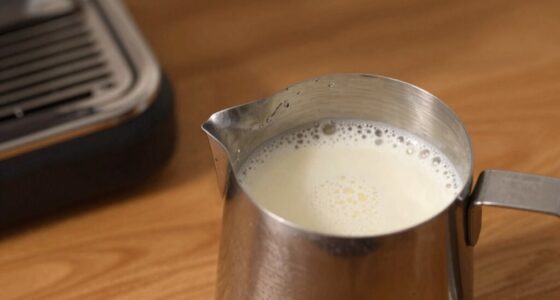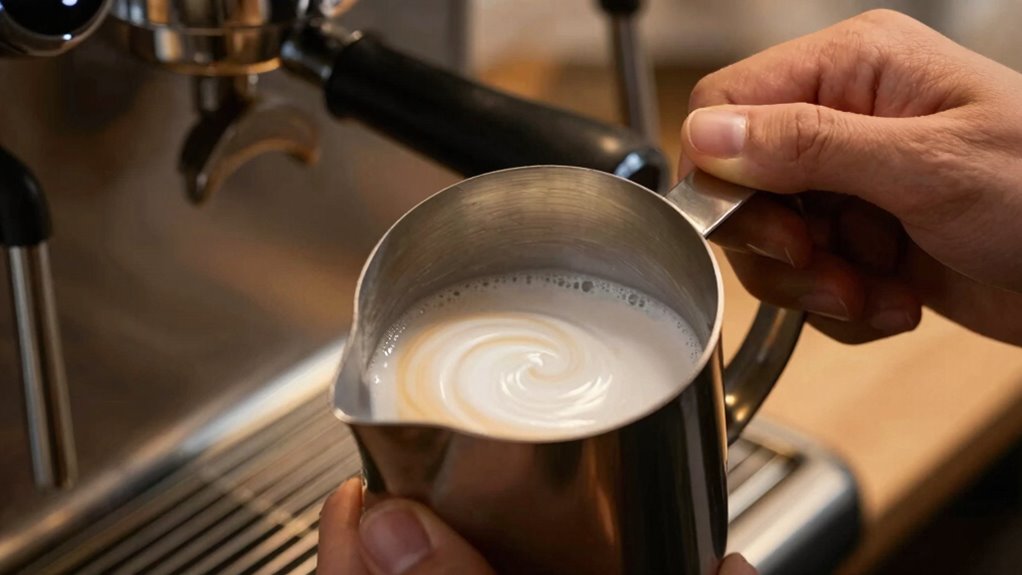

To improve your latte texture this week, focus on perfecting your milk steaming technique. Use a small stainless steel pitcher and keep the wand just below the surface to introduce air gently. Maintain a steady circular motion and keep the temperature between 150°F and 155°F for ideal microfoam. Warm your cups beforehand to help the foam stay silky longer. Mastering these shortcuts can make a noticeable difference—stick around to uncover more tips for flawless lattes.
Get ready for Prime Big Deal Days — try Prime free
Exclusive member deals on October 6–7, plus fast free delivery. Cancel anytime.
As an affiliate, we earn on qualifying purchases.
Key Takeaways
- Practice consistent milk steaming with proper wand positioning and circular motion to develop muscle memory quickly.
- Focus on maintaining milk temperature within 150°F–155°F for optimal microfoam and texture.
- Preheat cups to preserve microfoam quality and prevent rapid cooling.
- Use a small, stainless steel pitcher for better control during steaming.
- Create microfoam by introducing air gently and evenly, avoiding large bubbles for a velvety finish.

If you want to improve your latte texture quickly, focusing on your milk steaming technique is the fastest way to see results this week. Mastering how you steam your milk directly impacts its creaminess, silkiness, and overall mouthfeel. To begin, pay close attention to your milk steaming techniques. Start by choosing the right pitcher—preferably a small, stainless steel one that fits comfortably in your hand. As you steam, position the steam wand just below the milk’s surface to introduce air, creating microfoam. Keep the wand at a slight angle and adjust the position to avoid large bubbles, aiming instead for a velvety, smooth foam. Maintain steady, consistent pressure and keep the milk moving gently in a circular motion. This helps incorporate air evenly, resulting in a glossy, shiny microfoam that blends seamlessly with your espresso. As you get more comfortable, practice controlling the temperature—ideally around 150°F to 155°F—to prevent overheating, which can scald the milk and ruin its texture. Consistent practice will help you develop muscle memory for ideal steaming techniques. Additionally, being mindful of your milk temperature can significantly improve your results, making your microfoam even more refined. With consistent practice, you’ll notice your milk becoming more refined, creating that perfect, creamy layer that elevates your latte.
In addition to perfecting your milk steaming techniques, paying attention to cup warming methods plays an essential role. Cold cups can cause your milk to cool down rapidly, disrupting the texture and preventing proper integration with the espresso. Before you start steaming, warm your cups by rinsing them with hot water or placing them in a warming drawer. This simple step guarantees that the temperature remains stable from the first sip to the last. Warm cups also help maintain the microfoam’s integrity, allowing it to stay silky longer. Consider preheating your serving vessel, especially if you’re preparing multiple lattes or want to serve a visually appealing drink. When you pour the steamed milk into a warm cup, the heat is preserved, and the microfoam stays smooth and velvety. It’s a small adjustment that makes a noticeable difference in latte texture. Additionally, incorporating ventilation solutions in your workspace can help regulate temperature stability, further preserving the quality of your microfoam.
stainless steel milk steaming pitcher
As an affiliate, we earn on qualifying purchases.
As an affiliate, we earn on qualifying purchases.
Frequently Asked Questions
Can Specific Milk Brands Improve Latte Texture Better?
Yes, specific milk brands can improve your latte texture because of their milk fat and protein content. Higher milk fat creates a richer, creamier foam, while more protein helps stabilize the microfoam for better texture. Look for brands that advertise whole milk or barista-specific milk, as they often have ideal fat and protein levels. Experimenting with different brands allows you to find the perfect balance for a smooth, velvety latte.
How Does Ambient Room Temperature Affect Frothing Quality?
Surprisingly, your ambient room temperature has a sneaky way of messing with frothing consistency. When temperature fluctuations occur, they throw off the milk’s ability to froth evenly, leading to uneven textures. Cooler rooms might make it harder to achieve that creamy foam, while warmer spaces can cause over-foaming. To get the best latte texture, keep your environment steady—your milk will thank you for the consistent temperature.
Is It Possible to Fix Over-Aerated Milk?
Yes, you can fix over-aerated milk. Gently tap the frothing pitcher on a surface to release excess bubbles, then swirl the milk to incorporate the foam back into the liquid. For milk alternatives, use specific frothing techniques suited to each type, like adjusting steam pressure or frothing time. This helps you achieve a smoother, creamier latte texture without sacrificing flavor or consistency.
What’s the Best Way to Store Milk for Optimal Frothing?
You might think storing milk in the fridge is enough, but for perfect frothing, you need it ultra-cold and fresh. Keep it in the coldest part of your fridge, ideally at the back, and seal it tightly to prevent absorption of other aromas. Follow these frothing tips, like warming it slightly before frothing, and you’ll transform your latte texture overnight. Proper milk storage makes all the difference.
Do Different Espresso Machines Impact Latte Texture?
Yes, different espresso machines impact latte texture because they vary in machine consistency and brewing pressure. A machine with stable pressure guarantees your milk froths evenly, creating a smooth, velvety texture. Inconsistent machines can lead to uneven frothing and less desirable results. By choosing a machine with reliable pressure control, you’ll achieve better latte texture, making each cup consistently creamy and rich, elevating your overall coffee experience.
milk frothing wand for espresso machines
As an affiliate, we earn on qualifying purchases.
As an affiliate, we earn on qualifying purchases.
Conclusion
Think of your latte as a garden. With each practice session, you’re planting seeds of skill, nurturing them with patience and effort. Before long, your milk will bloom into silky, velvety perfection, transforming every cup into a masterpiece. Keep tending your craft this week, and you’ll harvest the rich, smooth textures you crave. Just remember, even the tallest trees started as tiny seeds—your latte journey is no different. Stay dedicated, and watch your skills flourish.
milk temperature thermometer for steaming
As an affiliate, we earn on qualifying purchases.
As an affiliate, we earn on qualifying purchases.
As an affiliate, we earn on qualifying purchases.
NFL season / tailgating Picks
team gear
As an affiliate, we earn on qualifying purchases.