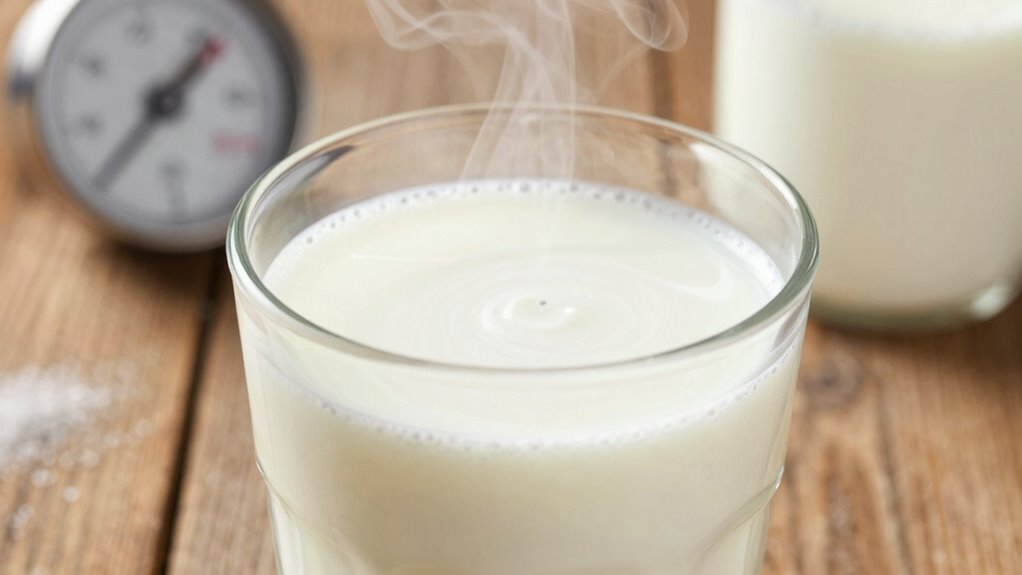

When you heat milk quickly or at high temperatures, it damages its delicate sugars, proteins, and fats that give it natural sweetness. Heat speeds up chemical reactions like lactose breakdown and protein denaturation, which quickly alter flavor and produce off-tastes. The faster you heat, the more this degradation accelerates, often more than you expect. To preserve that subtle sweetness, controlling temperature is key—if you’re curious about how to do that, keep going.
Key Takeaways
- Heating accelerates chemical reactions that break down sugars, reducing milk’s natural sweetness quickly.
- High temperatures denature proteins, producing off-flavors that mask the milk’s original sweet taste.
- Even brief warming can cause significant flavor degradation due to rapid molecular changes.
- The nonlinear effect of heat means small temperature increases cause disproportionately large flavor loss.
- Proper temperature control preserves milk’s sweetness by minimizing chemical reactions that occur during heating.
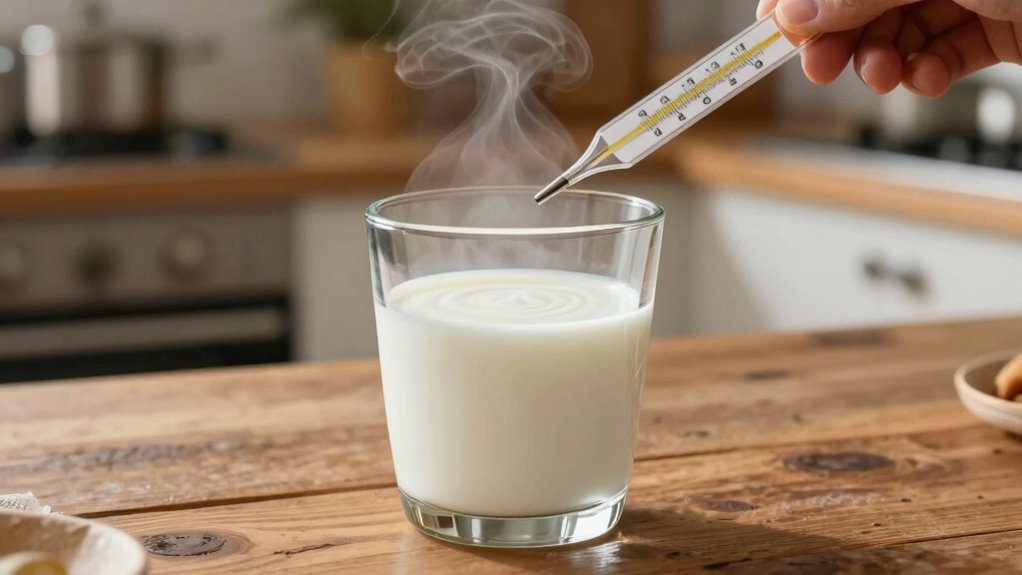
Many people assume that milk’s sweetness stays the same regardless of temperature, but in reality, warming milk can quickly diminish its natural flavor. This change isn’t just about the temperature feeling different on your tongue; it’s about how heat affects the chemical compounds responsible for milk’s sweet taste. When milk is heated, flavor degradation occurs rapidly because the heat alters the delicate balance of sugars, proteins, and fats. These components work together to give milk its characteristic sweetness, and once they break down or change, that sweetness diminishes.
Temperature effects on milk are far more significant than most realize. When you heat milk, the sugars—mainly lactose—begin to break down. While lactose is relatively stable at lower temperatures, high heat accelerates its decomposition into other compounds that don’t taste sweet. As a result, the milk’s natural sweetness lessens, giving it a more bland or even slightly cooked flavor. Additionally, proteins in milk can denature when exposed to heat, which impacts the overall flavor profile. This denaturation can cause the milk to develop a cooked or burnt aroma, further masking its original sweetness.
The rapidity of flavor degradation depends on how high and how long you heat the milk. Even a short warming can start to alter its chemical makeup, leading to a noticeable difference in taste. For example, steaming milk for a latte might seem harmless, but prolonged or excessive steaming can cause a significant loss in sweetness. The key is understanding that the effects of temperature aren’t linear; small increases in heat can cause disproportionate changes in flavor. Temperature control is crucial to preserve milk’s natural flavor during heating. Proper temperature management can help prevent unnecessary flavor loss and maintain quality.
You might notice that cold milk tastes naturally sweeter and fresher compared to warm or hot milk. That’s because lower temperatures preserve the integrity of the sugars and proteins, maintaining the milk’s original flavor. When you warm milk, these molecules react to the heat, leading to flavor degradation. This isn’t just about taste—heat can also cause chemical reactions that produce off-flavors, making the milk seem less appealing. Additionally, understanding the chemical reactions involved helps in appreciating how heat impacts flavor preservation.
In essence, the temperature effects on milk are swift and impactful. If you want to enjoy its sweetness at its best, keep your milk cold or at room temperature. Warming it too much or too quickly can rob it of its natural flavor, leaving you with a duller, less satisfying experience. Understanding this can help you better appreciate the subtle balance of flavors in milk and how temperature impacts flavor retention is a *vital* factor in preserving its natural sweetness.
As an affiliate, we earn on qualifying purchases.
Frequently Asked Questions
How Does Milk Temperature Affect Its Nutritional Value?
When you warm milk, its flavor degradation accelerates, making it taste less fresh. Higher temperatures also impact nutrient stability, especially vitamins like B12 and C, which degrade faster with heat. So, if you want to preserve milk’s nutritional value, keep it cool. Cooler temperatures slow down both flavor loss and nutrient degradation, ensuring you get the most benefit and best taste from your milk.
What Is the Ideal Temperature to Preserve Milk’s Sweetness?
The ideal temperature to preserve milk’s sweetness is around 1-4°C (34-39°F). Proper milk storage and temperature control are key to maintaining its flavor and freshness. When you keep milk too warm, enzymes break down sugars faster, causing sweetness loss. By consistently storing milk at the right temperature, you slow down this process, ensuring your milk stays sweet and fresh longer.
Does Repeated Heating Change Milk’s Flavor Over Time?
Repeated heating drastically alters milk’s flavor, like turning a sweet symphony into a sour cacophony. Heating effects cause flavor degradation, as each cycle breaks down delicate sugars and proteins, diminishing sweetness and enriching undesirable flavors. Over time, these changes accumulate, making milk taste more off and less fresh. So, if you reheat milk often, you’re fundamentally sabotaging its original sweetness, transforming it into a less appealing, flavorless liquid.
How Quickly Does Milk Lose Flavor When Heated?
Milk’s flavor degrades quickly when heated due to its temperature sensitivity. As soon as you raise its temperature, chemical reactions start happening, causing rapid flavor loss. Within just a few minutes of heating, you’ll notice a duller, less sweet taste. This quick flavor degradation happens because heat accelerates the breakdown of sugars and proteins, so you should keep milk at lower temperatures to preserve its natural sweetness longer.
Are Certain Types of Milk More Sensitive to Temperature Changes?
Some types of milk, like skim or almond milk, are more sensitive to temperature changes, leading to quicker flavor degradation. You might notice that they lose their sweetness faster when heated because of their higher temperature sensitivity. Whole milk, with its richer fats, tends to hold flavor longer, but all milk varieties are affected by high heat. So, paying attention to temperature helps preserve their natural sweetness and flavor quality.
milk steaming pitcher for latte art
As an affiliate, we earn on qualifying purchases.
As an affiliate, we earn on qualifying purchases.
Conclusion
So, next time you’re heating your milk, remember that a few extra seconds can turn that sweet, comforting sip into a bland disappointment faster than you’d expect. Don’t let your latte turn into a soggy biscuit—keep it just right! Think of it as your secret potion, like Gandalf carefully tending his pipeweed—small details matter. Pay attention, and your milk will stay deliciously sweet, no matter if you’re in the 21st century or a cozy Hobbit hole.
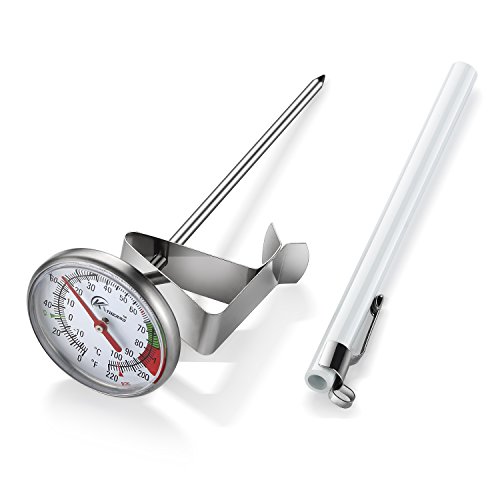
KT THERMO Instand Read 2-Inch Dial Thermometer,Best for The Coffee Drinks,Chocolate Milk Foam
- Multi-stage clip design: Adjusts for easy temperature reading
- Safe, simple measurement: Accurately measures coffee and milk foam
- Wide temperature range: 0°F to 220°F for boiling or freezing
As an affiliate, we earn on qualifying purchases.
As an affiliate, we earn on qualifying purchases.
As an affiliate, we earn on qualifying purchases.