To avoid a watery almond milk latte, focus on mastering your frothing technique to create silky microfoam and guarantee the almond milk is cold before steaming. Also, brew your espresso accurately within 25-30 seconds to prevent over- or under-extraction, which affects flavor intensity. Pay attention to both the texture of the milk and your brewing process to balance the flavors perfectly. Continue exploring these tips to perfect your almond milk latte every time.
Key Takeaways
- Froth cold almond milk carefully, aiming for silky microfoam to prevent flat or watery textures.
- Use proper espresso timing (25-30 seconds) to prevent over- or under-extraction that can dilute flavor.
- Position the steaming wand just below the almond milk surface to create smooth, velvety microfoam.
- Ensure thorough, consistent grinding and tamping to achieve a rich, well-extracted espresso shot.
- Practice balancing frothing and extraction techniques to maintain a full-bodied, creamy latte without watery notes.

Almond milk and espresso make a surprisingly perfect pairing for those looking to enjoy a creamy, flavorful coffee experience. However, achieving that ideal balance can be tricky, especially when your latte turns out watery or lacks richness. The key to avoiding a diluted taste lies in mastering milk frothing techniques and paying close attention to espresso shot timing. When you get these elements right, your almond milk latte will be smooth, velvety, and full-bodied, just as you want it.
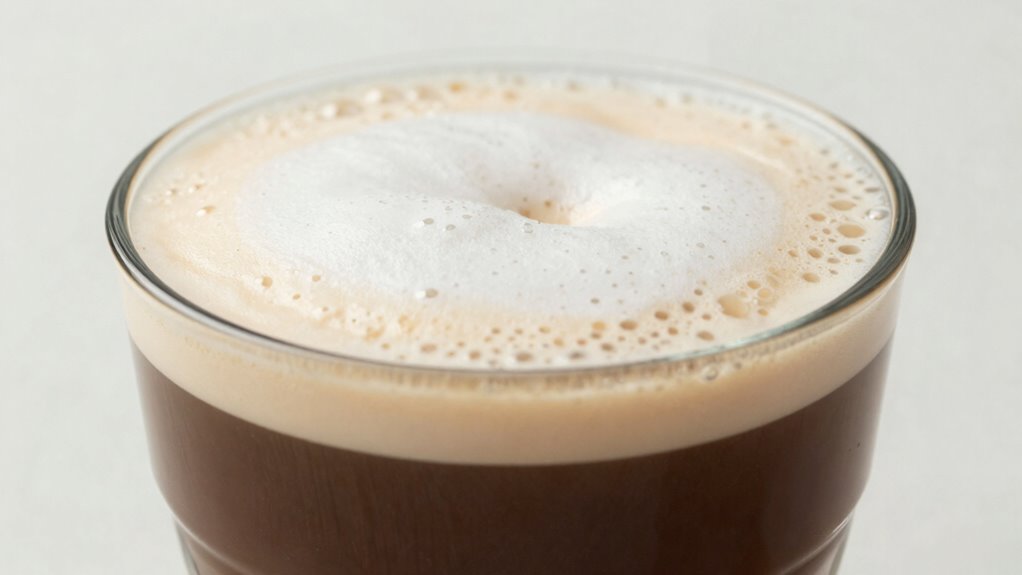
First, focus on milk frothing techniques. Almond milk doesn’t naturally foam as easily as dairy milk, so you need to be precise. Use a steaming wand or a frother designed for plant-based milks, and guarantee the almond milk is cold before frothing. Position the wand tip just below the surface of the milk, creating a whirlpool motion that incorporates air into the milk gradually. Don’t overdo it; too much froth will make your latte thick and clumpy, while too little will leave it flat. Aim for a silky, microfoam texture, which will blend seamlessly with your espresso and prevent the drink from feeling watery. Proper frothing also helps distribute the almond milk evenly, giving your latte a rich mouthfeel. Additionally, understanding the milk frothing process enhances your overall coffee craft.
Next, pay attention to espresso shot timing. This is essential because over-extraction results in a bitter, diluted taste, while under-extraction produces sourness and weak flavor. Generally, an espresso shot should take about 25 to 30 seconds to brew. When timing it correctly, you extract the best flavors and avoid brewing a shot that’s too weak or too strong. Keep your grind size consistent and your tamp firm to guarantee uniform extraction. A well-timed shot will have a rich, caramel color with a thick crema on top, signaling that you’ve hit the sweet spot. When combined with properly frothed almond milk, this shot will help prevent your latte from tasting watery or insipid.
When you combine these techniques—perfect milk frothing and precise espresso shot timing—you create a balanced, creamy latte that highlights the almond milk’s subtle nutty flavor without sacrificing richness. Remember, consistency is key; practice makes perfect. Adjust your techniques based on your equipment and the almond milk brand you prefer, and soon you’ll be crafting coffee drinks that are both delicious and satisfying. Avoid rushing the process, and always taste as you go. With patience and attention to detail, your almond milk and espresso creations will consistently impress without the dreaded watery finish.

SIMPLETASTE Milk Frother, 4-in-1 Electric Automatic Milk Steamer, Blue
- Creamy Milk Froth: Quickly creates smooth, velvety foam
- 4-in-1 Functionality: Warms milk and makes various foams
- Large Capacity: Froths 130ml, heats 300ml of milk
As an affiliate, we earn on qualifying purchases.
As an affiliate, we earn on qualifying purchases.
Frequently Asked Questions
Does the Type of Almond Milk Affect the Latte’s Creaminess?
Yes, the type of almond milk affects your latte’s creaminess. Different almond milk varieties have varying creaminess factors, depending on their ingredients and processing. For a richer, creamier texture, choose unsweetened, barista-style almond milk with added thickeners or fats. Regular almond milk may be lighter and less creamy, so experimenting with different brands helps you find the perfect balance for your latte.
Can Adding Flavorings Improve the Almond Milk Espresso Blend?
Adding flavorings can definitely enhance your almond milk espresso blend. You can experiment with flavor combinations like vanilla and cinnamon or mocha and caramel to create richer, more complex tastes. Sweetening options like honey, agave, or a splash of flavored syrup help balance the flavors and improve creaminess. Just be mindful not to overdo it, so your latte remains smooth and flavorful without overpowering the natural almond and espresso notes.
How Does Temperature Influence the Almond Milk’s Texture?
You might think temperature doesn’t matter much, but research shows milk frothing at the right temperature enhances almond milk’s texture. When you regulate temperature carefully, you prevent the milk from becoming too thin or watery. Warmth helps activate proteins and fats, creating a richer, creamier consistency. So, by maintaining proper temperature control during frothing, you guarantee your almond milk stays smooth and luscious, avoiding that undesirable watery feel.
Is There a Recommended Almond Milk Brand for Lattes?
You should try brands like Califia Farms, Silk, or Blue Diamond Almonds for better latte consistency. These almond milk brands are known for their creaminess and ability to blend well with espresso, preventing your latte from turning out watery. Always check labels for added thickeners or stabilizers, and opt for unsweetened, barista-style options. This way, you get a rich, smooth latte every time.
How Can I Prevent Separation Between Almond Milk and Espresso?
You can prevent separation between almond milk and espresso by warming the milk to a frosting consistency and ensuring foam stability. For example, a barista heated almond milk to just the right temperature, creating a velvety texture that held together when combined. This technique helps maintain smoothness and prevents separation, giving you a latte with consistent flavor and texture. Always stir gently after pouring to keep the mixture uniform.

Maestri House S2 Espresso Coffee Scale with Timer 0.1g Precision Shot Scale
- Compact and Portable Design: Fits in your palm, lightweight for travel
- High Precision Measurement: 0.1g accuracy for perfect brewing
- Multiple Units and Timer Modes: Switch between g/oz/ml and timing modes
As an affiliate, we earn on qualifying purchases.
As an affiliate, we earn on qualifying purchases.
Conclusion
Now that you know the secret to avoiding that watery latte, it’s time to put it into practice. Will your next almond milk espresso be perfectly creamy or fall into that disappointing thinness? The choice is yours, and the difference lies in these simple steps. So, are you ready to master the art of a rich, velvety sip that keeps everyone guessing? Your perfect latte awaits—don’t let it slip away.

Zulay Kitchen Milk Frother Handheld Electric Whisk – Frother Wand, Durable Drink Mixer, Coffee Frother, Hand Blender, Frother for Protein Powder, Matcha & More – Black
- Fast, Creamy Froth: Creates rich foam in seconds with 13,000 RPM motor
- Versatile Coffee Maker: Perfect for lattes, cappuccinos, hot chocolate, and more
- Easy to Use: Comfortable grip with simple on/off button
As an affiliate, we earn on qualifying purchases.
As an affiliate, we earn on qualifying purchases.

SHARDOR Electric Coffee Grinder, 70g Large Capacity Spice Grinder with Visual Timing Knob for Precise Grind, Quiet Coffee Bean Grinder for Espresso, French Press, Herbs and Grains, Black
- Precise Grinding Control: Visual timing knob for accurate grind
- Large Capacity & Versatile Use: 70g capacity for coffee and spices
- Quiet Operation: Operates at only 63 dB
As an affiliate, we earn on qualifying purchases.
As an affiliate, we earn on qualifying purchases.