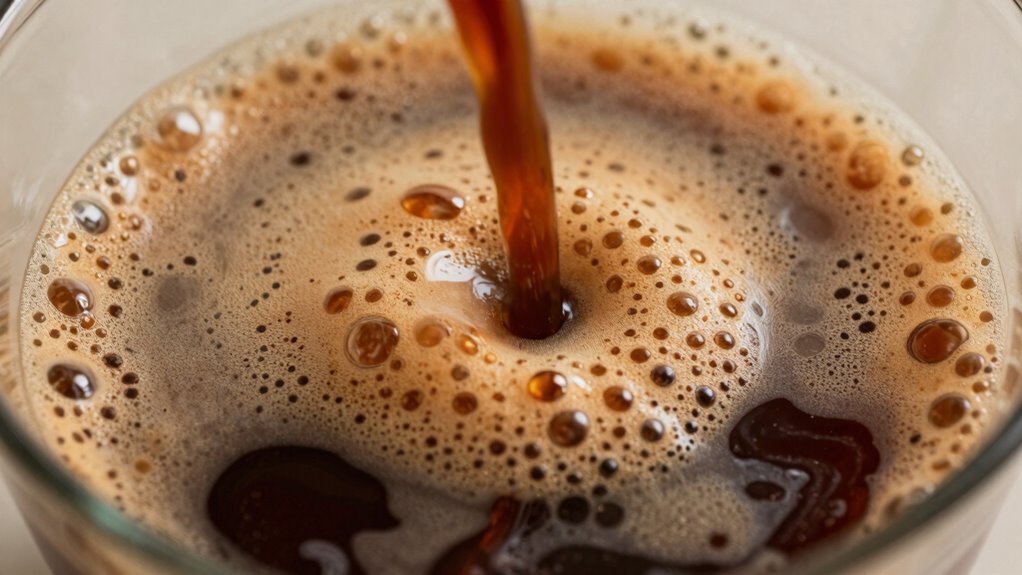

Even if your microfoam looks perfect, your pour can still go wrong if the foam doesn’t properly integrate with the espresso’s crema or if your pouring technique isn’t steady. Factors like uneven crema, temperature inconsistencies, or an uncontrolled pour can cause sputtering or splattering, ruining the flow. To get a smooth, beautiful pour, you need good foam, robust crema, and a controlled pour technique—stick with me to learn how these elements work together.
Key Takeaways
- Proper microfoam must be integrated well with the crema for smooth pouring, even if the foam looks fine visually.
- Inconsistent foam temperature or density can cause poor flow despite good appearance.
- Poor espresso extraction or thin crema can disrupt foam-coffee interaction, affecting pour quality.
- Technique issues, such as inconsistent pour speed or angle, can worsen pour results regardless of foam quality.
- Vessels with uneven shape or improper size can hinder steady, controlled pours even with excellent foam.

Even when your foam looks perfect, pouring it can still be a frustrating experience because appearances can be deceiving. You’ve likely experienced this: a beautifully textured milk frothing that seems ready to top your espresso, but when you pour, the foam either collapses or refuses to flow smoothly. This disconnect often leaves you puzzled, wondering what went wrong. The key lies in understanding that milk frothing isn’t just about creating a thick, velvety foam; it’s about the right balance between foam quality and the way it interacts with your coffee crema.
Milk frothing is a delicate process. When done correctly, it produces microfoam—tiny, uniform bubbles that give your milk a silky, glossy appearance. This kind of foam can be tempting to compare to the larger, more robust bubbles you might see in less refined frothing. But it’s the microfoam that creates the ideal texture for pouring latte art and achieving that smooth, integrated look in your drink. If your milk is over-foamed or under-foamed, it can cause pouring issues. Overly frothy milk tends to be thick and stiff, making it difficult to pour smoothly, often resulting in splashes or uneven streams. On the other hand, under-frothed milk lacks enough structure, causing it to collapse and lose its shape quickly, which ruins the visual appeal and pouring experience.
Microfoam creates the perfect silky texture; over- or under-frothed milk disrupts smooth, beautiful pouring.
Another vital factor is the coffee crema—a thin layer of caramel-colored foam that sits atop a well-pulled shot of espresso. A good crema acts as a natural barrier that helps your milk foam blend seamlessly into the coffee, creating a harmonious texture and flavor. If your crema is thin or uneven, the foam might not integrate properly, leading to a disjointed pour that feels awkward or unsteady. The crema’s quality can be affected by factors like extraction time, grind size, and even the freshness of your beans. When your crema is rich and consistent, it provides a sturdy foundation for pouring your milk, helping the foam flow more smoothly and evenly. Additionally, crema quality plays a crucial role in ensuring a smooth pour, as it influences how well the foam and coffee interact. Developing good espresso extraction techniques can significantly improve your crema quality and, consequently, your pouring results. Moreover, paying attention to temperature control during steaming and pouring can help maintain the ideal foam consistency and prevent collapse or separation. Properly timing the pour can also enhance how well the foam integrates with the espresso, leading to a more controlled and visually appealing latte art.
Furthermore, using appropriate pouring techniques can make a noticeable difference in the final presentation and flow of your milk. Ultimately, pouring troubles aren’t just about the foam’s appearance but how well it interacts with the coffee’s crema and the vessel’s shape. Even if your milk frothing looks perfect, if the foam isn’t properly integrated or if the crema isn’t robust enough, your pour will suffer. To get everything working together, focus on achieving microfoam with the right consistency, verify your espresso shot has a thick, even crema, and pour with confidence, aiming for a steady, controlled stream. When these elements align, your foam will pour beautifully, matching the stunning appearance it initially displayed.

Milk Frothing Pitcher, 8.5oz/12oz/20oz/32oz/50oz/66oz Milk Frother Cup Stainless Steel, Espresso Accessories, Milk Steaming Pitchers Coffee Cappuccino Latte Art Barista Milk Jug Cup with Art Pen,12oz
- Multi-functional Milk Frothing Pitcher: Froths, steams, measures, serves milk
- Includes Latte Art Pen: Create beautiful coffee patterns
- Premium Stainless Steel Construction: Rust-proof, stain-proof, heat-resistant
As an affiliate, we earn on qualifying purchases.
As an affiliate, we earn on qualifying purchases.
Frequently Asked Questions
How Does Water Temperature Affect Pouring Quality?
Water temperature directly impacts pouring quality because it affects temperature stability and water chemistry. When water’s too hot or cold, it disrupts the balance, causing inconsistent pours. Hot water can cause over-extraction, while cold water leads to under-extraction. Maintaining a stable temperature guarantees ideal extraction and flow. Pay attention to your water’s temperature and chemistry, as these factors help you achieve smooth, consistent pours every time.
Can Container Shape Influence Foam Performance?
Yes, container shape can influence foam performance. A wider or more open container allows better foam dispersion, leading to a smoother pour. Conversely, narrow or oddly shaped containers might cause uneven foam distribution, resulting in poor pouring quality. You should choose containers with a shape that promotes even dispersion and easy flow. This helps maintain consistent foam, reduces spillage, and improves overall pouring experience.
What Role Does Coffee Grind Size Play?
Your grind size plays a vital role in pour quality because inconsistent grind size can cause uneven extraction, leading to poor pours. When your coffee beans are fresh, maintaining grind size consistency guarantees you get the best flavor and flow. If the grind is too fine or coarse, it hampers water flow, making pours slow or uneven. Keeping your grind uniform and using fresh beans helps you achieve smoother, more controlled pours every time.
Is Equipment Cleanliness Crucial for Foam Quality?
Yes, equipment cleanliness is essential for foam quality. Regular equipment maintenance and cleaning routines prevent buildup of milk residues and mineral deposits, which can hinder frothing. Dirty steam wands and frothing pitchers compromise foam consistency and texture. By keeping your tools spotless, you guarantee ideal temperature, proper steam flow, and better foam formation, resulting in smoother, more stable microfoam that pours beautifully.
How Does Ambient Humidity Impact Pour Results?
Ambient humidity profoundly impacts your pour results due to humidity effects on the beverage’s consistency and foam stability. High humidity can cause the liquid to become more diluted, leading to poor pour control and thin foam, while low humidity might make the liquid too thick. Environmental factors like temperature and moisture levels influence how your beverage flows and foams, so adjusting your technique or environment can help achieve better pouring results.

Subminimal NanoFoamer Lithium Performance Milk Foamer | USB-C Rechargeable, IP4 Waterproof, Dual-Speed, Stainless Steel | Premium Microfoamed Milk in 30 Seconds, Barista-Style Coffee Drinks at Home
- High-Performance Milk Frother: Creates cafe-quality microfoamed milk
- Powerful Whisking Capabilities: 300% more power than standard frothers
- Advanced Features: Digital on/off, replaceable impeller, NanoScreens
As an affiliate, we earn on qualifying purchases.
As an affiliate, we earn on qualifying purchases.
Conclusion
So, don’t get discouraged if your foam looks perfect but pours poorly. It’s a common hiccup, often just a matter of adjusting your brewing technique or water temperature. Remember, even experienced baristas face this challenge. With a little patience and practice, you’ll get that smooth pour down pat. Keep experimenting, stay relaxed, and enjoy the process—soon enough, your perfect-looking foam will pour just as beautifully as it looks.
As an affiliate, we earn on qualifying purchases.
As an affiliate, we earn on qualifying purchases.