
To prevent channeling, the most vital step is proper distribution. Ensuring an even coffee bed before tamping creates a stable foundation that minimizes voids and uneven flow paths. While tamping is essential for compacting the grounds, if the bed isn’t distributed evenly first, water can still find weak spots. Mastering both steps helps produce uniform extraction, and continuing to explore these techniques will help you perfect your espresso.
Key Takeaways
- Proper distribution creates an even coffee bed, reducing thin spots that lead to channeling during extraction.
- Tamping compresses the grounds to minimize voids and control water flow, preventing uneven extraction paths.
- An uneven distribution can cause weak spots, but tamping alone cannot fix a poorly distributed bed.
- The foundation established by distribution is essential; tamping ensures the bed remains uniform under pressure.
- Prioritizing even distribution before tamping effectively prevents channeling and results in consistent extraction.
What Is Channeling and Why Does It Hurt Your Espresso?
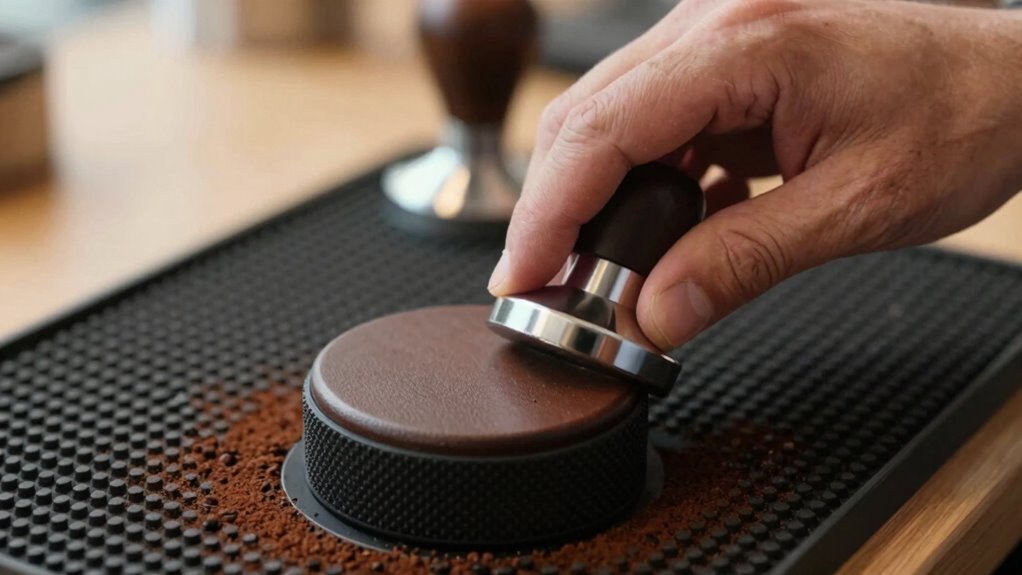
Have you ever noticed your espresso tasting sour or bitter despite using the right amount of coffee? That’s often due to channeling, which happens when water finds the path of least resistance through uneven coffee grounds. This uneven flow can be exacerbated by inconsistent grind size; if your grind isn’t uniform, some particles are finer and resist flow, while others are coarser and allow water to pass quickly. This uneven extraction results in sour or bitter flavors. Additionally, brew temperature can influence extraction, but poor grind consistency creates gaps where water bypasses coffee evenly packed during tamping. These channels cause the water to extract unevenly, ruining the espresso’s flavor. To prevent this, ensure your grind is consistent and your coffee bed is even, promoting uniform extraction. Proper grind consistency plays a crucial role in preventing channeling and achieving balanced flavor, especially when considering distribution vs tamping, which impacts how evenly the coffee is packed. Furthermore, practicing even tamping can help create a uniform resistance and minimize channel formation. Incorporating consistent grind size into your routine is essential for reliable and delicious espresso results. Additionally, understanding water flow dynamics can help in troubleshooting and optimizing your brewing process for better flavor.
How Proper Distribution Creates an Even Coffee Bed
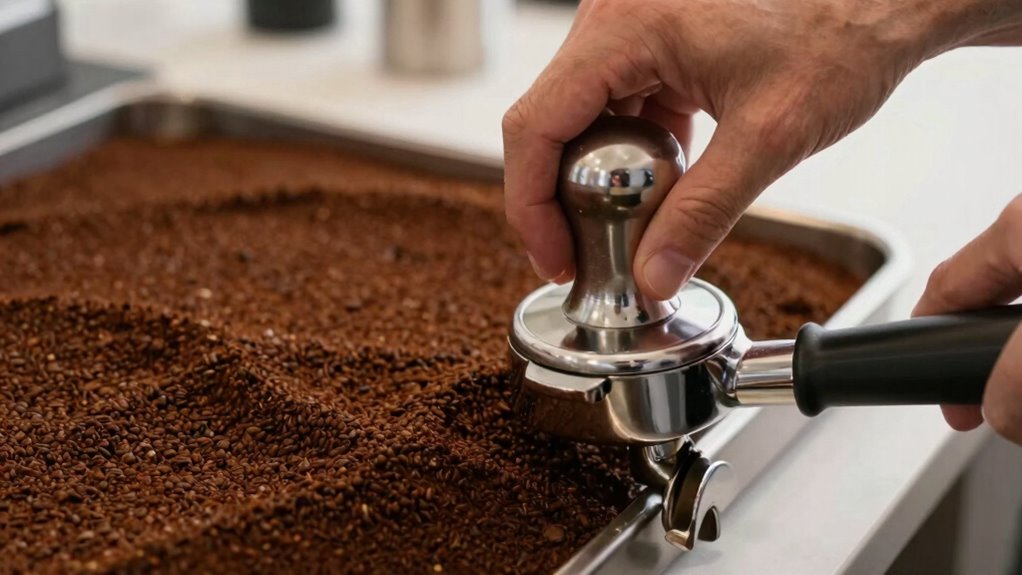
Proper distribution of coffee grounds is vital for creating an even coffee bed, which guarantees consistent water flow during extraction. If your grind consistency is off or your machine isn’t well calibrated, it can lead to uneven grounds piling up in certain areas. Proper distribution spreads the coffee evenly across the basket, preventing thin spots or dense clumps that cause channeling. Use a distribution tool or gentle sweeping motions to level the bed after dosing. Ensuring your grinder produces uniform particles and calibrating your machine correctly also help maintain an even surface. When the grounds are evenly spread, water flows smoothly through the entire coffee bed, extracting flavors uniformly. This setup minimizes the risk of channeling and results in a better, more balanced espresso. Consistent grind size plays a crucial role in achieving this evenness and optimal extraction. Additionally, maintaining machine calibration ensures consistent tamping pressure and water flow, further reducing the chance of uneven extraction. Regularly checking and adjusting your grinder settings can also contribute to a more reliable coffee bed distribution process.
How Tamping Pressure Affects Water Flow and Extraction
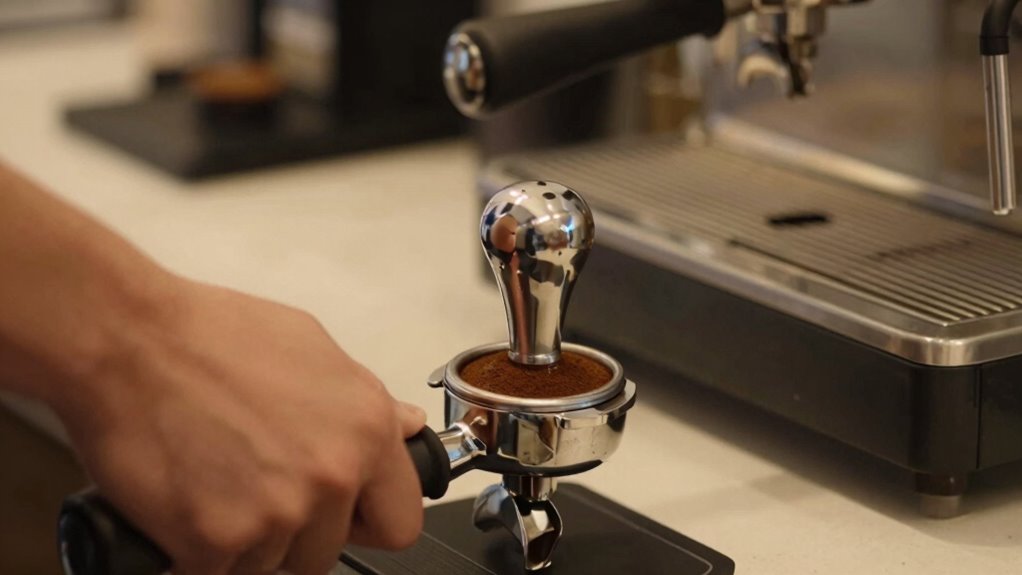
When you apply the right tamping pressure, it helps control how water flows through the coffee bed. Too much force can create uneven channels, leading to inconsistent extraction, while too little can cause water to pass too quickly. Finding the right balance ensures uniform water flow and ideal flavor extraction. Additionally, proper tamping technique can contribute to consistent results, which is essential for achieving the desired coffee quality. Understanding water flow dynamics can further improve your tamping technique and enhance extraction quality, especially when considering how smart automation can assist in maintaining consistent pressure during preparation.
Effects of Tamping Force
Ever wondered how the amount of force you use when tamping influences water flow during extraction? Applying too much tamping force compacts the coffee bed tightly, which can restrict water flow and lead to uneven extraction. Conversely, too little force leaves the grounds too loose, causing channeling. Your grind size also plays a role; a finer grind requires more force to achieve proper density, especially if your machine temperature is high, which speeds up extraction. High machine temperatures can intensify the effects of tamping force, making the water flow more aggressive or uneven. Striking the right balance ensures consistent water flow, preventing channeling and maximizing extraction. Proper tamping technique can significantly improve your espresso quality. Adjust your tamping pressure based on grind size and machine temperature for ideal results. Additionally, understanding coffee bed density helps in achieving the optimal extraction and avoiding common pitfalls like channeling. Maintaining consistent tamping pressure is essential for reproducible results and avoiding over-compression. To optimize your process, experimenting with different tamping forces can help identify the best pressure for your specific setup. Regularly checking coffee bed compaction ensures your tamping remains effective and consistent.
Uniformity of Water Flow
Have you noticed how uneven water flow can ruin an otherwise perfect espresso shot? It often stems from inconsistent grind size or improper machine calibration, which disrupts water distribution through the coffee bed. When your grind consistency isn’t precise, water finds easier paths, causing channeling and uneven extraction. Tamping pressure also plays a role; too little or too much can create voids or compacted areas, affecting flow uniformity. Proper tamping helps ensure even resistance, but if your machine isn’t calibrated correctly or your grind is inconsistent, water won’t flow smoothly. To prevent this, focus on maintaining consistent grind size and regularly calibrate your machine. These steps work together to promote uniform water flow, leading to a more balanced and flavorful espresso. Additionally, understanding how water flow dynamics influence extraction can help you refine your technique further, ensuring brew consistency in every shot. Recognizing the importance of distribution techniques can greatly improve your espresso quality.
Distribution vs. Tamping: Which Is More Critical to Prevent Channeling?

Both distribution and tamping play essential roles in preventing channeling during packing, but understanding which is more critical depends on the specific context. If your grind size is inconsistent or too fine, proper distribution helps guarantee even extraction. Conversely, if the grind size is right but tamping isn’t firm enough, channels can form regardless of distribution. To enhance your process, consider these key points:
- Use a consistent grind size suited for your brew temperature to promote uniform water flow.
- Distribute grounds evenly to prevent uneven density and channel formation by ensuring uniform particle placement.
- Tamp with enough pressure to create a uniform compact, minimizing voids and channels.
- Regular maintenance of equipment, such as ensuring proper filtration and pump protection, can also prevent blockages that contribute to channeling.
- Properly inspecting your packing technique can further reduce the risk of developing channels during extraction.
Balancing both steps effectively ensures minimal channeling and optimal extraction, regardless of other variables.
What Baristas Say About the Best Ways to Distribute and Tamp
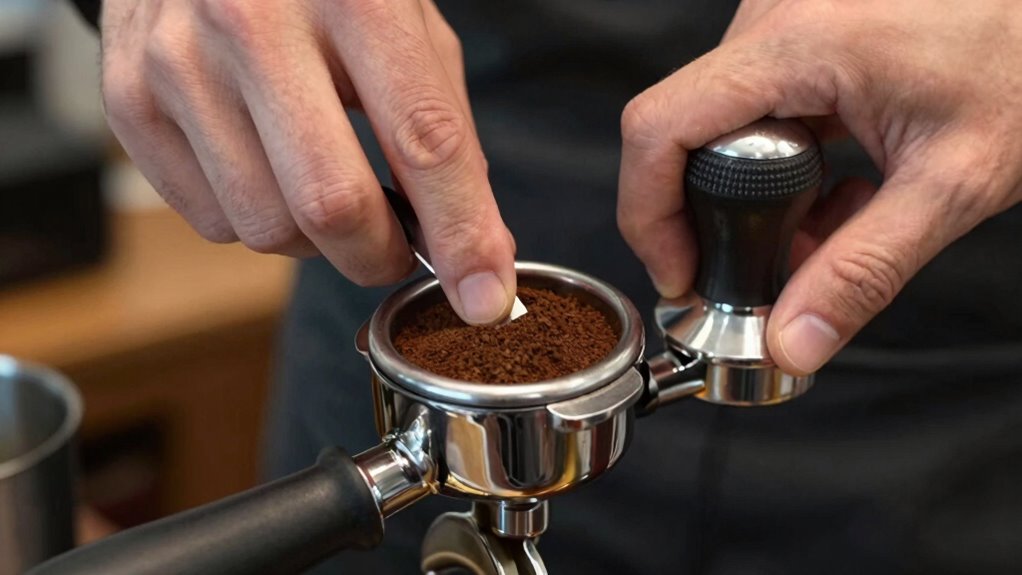
Many baristas emphasize that consistent distribution and firm tamping are the keystones of a good shot. They recommend adjusting your grind size to ensure even extraction, as a uniform grind helps with consistent flow. When distributing coffee, focus on leveling the bed to prevent thin spots, especially considering the basket shape—whether it’s conical or flat. A well-distributed puck reduces channeling risks and promotes even water flow. Tamping should be firm yet controlled, applying consistent pressure to compact the grounds without over-compressing. Some baristas use distribution tools or their fingers to spread coffee evenly before tamping, ensuring the puck is level and uniform. Following these practices helps achieve a balanced extraction and a flavorful espresso.
Common Mistakes That Lead to Channeling: and How to Avoid Them
If your coffee grounds aren’t evenly distributed, you risk channeling and uneven extraction. Applying inconsistent tamping pressure can create weak spots that let water flow through too quickly. To avoid these issues, focus on distributing grounds evenly and applying firm, steady pressure every time.
Uneven Distribution Techniques
Uneven distribution techniques are a common cause of channeling during tamping, which can compromise the quality of the final product. When you don’t evenly distribute your coffee grounds, issues like inconsistent grind size and dose fluctuations become more pronounced. To avoid this, focus on these key steps:
- Ensure your grind size is uniform across all grounds, preventing larger particles from creating gaps.
- Distribute coffee evenly in the basket, avoiding clumps or uneven layers that can lead to channeling.
- Maintain dose consistency, so the amount of coffee in each shot remains steady and predictable.
Proper Tamping Pressure
Applying the right amount of tamping pressure is essential for a consistent extraction, but pressing too hard or too lightly can lead to channeling. If you tamp too lightly, the puck becomes uneven, and water finds the path of least resistance, causing channeling. Conversely, excessive pressure can compact the coffee too much, restricting water flow. Pay attention to grind size, as a finer grind requires more careful tamping to avoid over-compactment, while a coarser grind needs less pressure. Additionally, maintaining proper brew temperature helps ensure the coffee’s resistance stays consistent, making tamping pressure more effective. Practice applying steady, even pressure—about 30 pounds—without overdoing it. This balance helps prevent channeling and promotes a uniform extraction.
Tips for Perfect Distribution and Tamping to Improve Your Espresso
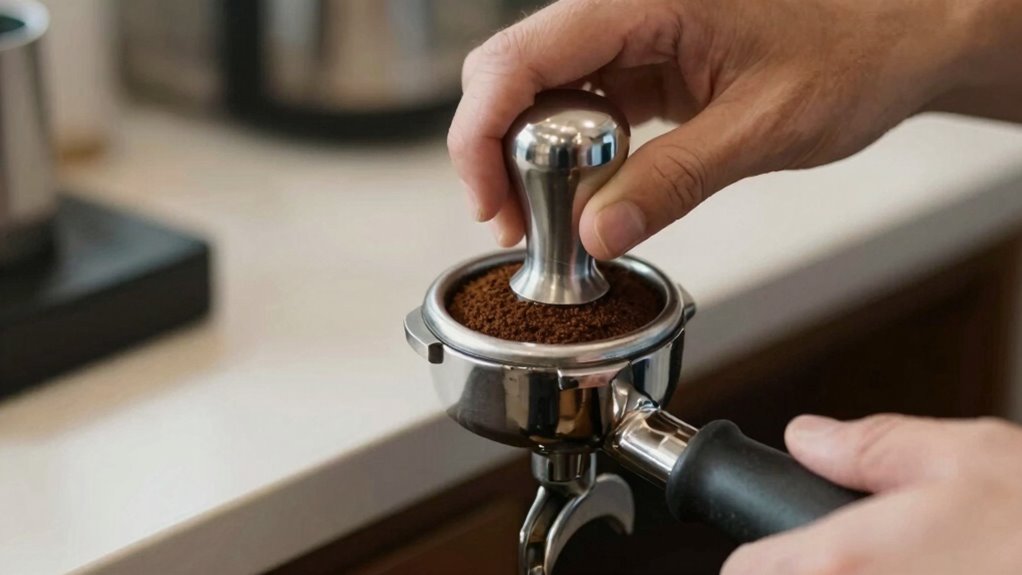
Achieving a perfect espresso shot starts with proper distribution and tamping, essential steps that guarantee even extraction and rich flavor. To improve your technique, follow these tips:
Perfect espresso begins with even distribution and tamping for rich, consistent flavor.
- Ensure consistent grind size: Use a uniform grind to prevent uneven flow and channeling.
- Distribute coffee evenly: Use a tool or your finger to level the coffee bed before tamping, avoiding air pockets.
- Calibrate your machine regularly: Proper calibration guarantees consistent pressure and temperature, making tamping more effective.
Final Tips: Which Step Should You Prioritize to Prevent Channeling?

To prevent channeling effectively, you should prioritize ensuring an even coffee bed before tamping. Start by focusing on grind consistency, so the coffee particles are uniformly sized, which promotes even extraction. Consistent grind size reduces the risk of uneven flow through the puck. Next, verify your machine calibration regularly; a properly calibrated machine maintains consistent pressure and temperature, preventing uneven tamping or extraction issues. When your grind is uniform and your machine is calibrated, you’ll find it easier to achieve a level, stable coffee bed. This foundation minimizes gaps and weak spots where channeling can occur. Remember, both distribution and tamping matter, but ensuring a solid, even bed beforehand is the most effective way to prevent channeling and get the best espresso.
Frequently Asked Questions
Can Improper Distribution Cause Channeling Even With Good Tamping?
Yes, improper distribution can cause channeling even with good tamping. If your coffee isn’t evenly distributed, water flows through the least resistant paths, creating channels. To prevent this, focus on freshness preservation by using fresh coffee beans and make sure your machine calibration is accurate for consistent tamping pressure. Proper distribution complements tamping, reducing the risk of channeling and ensuring a richer, more balanced extraction.
Does Tamping Pressure Matter More Than Distribution for Preventing Channeling?
Think of tamping pressure as the heartbeat of your espresso shot. It really matters more than distribution for preventing channeling because consistent pressure guarantees an even, dense puck. Using proper tamping techniques guarantees pressure consistency, which fills the coffee bed uniformly and blocks water paths. While good distribution helps, without proper tamping, uneven pressure can create channels. So, focus on mastering tamping pressure to truly prevent channeling.
Are There Specific Tools That Improve Distribution and Tamping Consistency?
You can improve distribution and tamping consistency with specific tools and techniques. Use a distribution tool, like a distribution spoon or leveler, to guarantee even coffee bed spread. For tamping, invest in a calibrated tamper to apply consistent pressure every time. Incorporating these tools into your routine and practicing proper techniques helps achieve uniform extraction, reducing channeling and enhancing overall espresso quality.
How Does Grind Size Interact With Distribution and Tamping to Prevent Channeling?
You want to understand how grind size, distribution, and tamping work together to prevent channeling. When your grind consistency is spot-on and dose uniformity is maintained, it guarantees even extraction. A fine grind promotes better flow and prevents gaps, while proper distribution and tamping create a compact puck, blocking channels. Together, these steps form a seamless process, reducing the risk of channeling and delivering a balanced, flavorful shot every time.
Is It Better to Focus on Distribution or Tamping When Troubleshooting Channeling Issues?
You should focus on tamping when troubleshooting channeling issues. Proper tamping guarantees even compression of the brew bed, promoting consistent water flow and reducing channel formation. While distribution helps spread the grounds evenly, tamping directly influences moisture control and bed stability. By applying firm, even pressure, you prevent uneven channels, ensuring ideal extraction and a balanced brew. Prioritize tamping to improve overall shot quality and prevent channeling effectively.
Conclusion
Ultimately, whether you focus on distribution or tamping, remember that both are essential in preventing channeling—like two sides of the same coin. Ignoring one risks compromising your shot, but mastering both creates harmony for perfect extraction. Think of it this way: neglecting either step is like trying to build a house on a shaky foundation—your espresso will suffer. Prioritize both to open the full potential of your brew and savor that flawless shot every time.