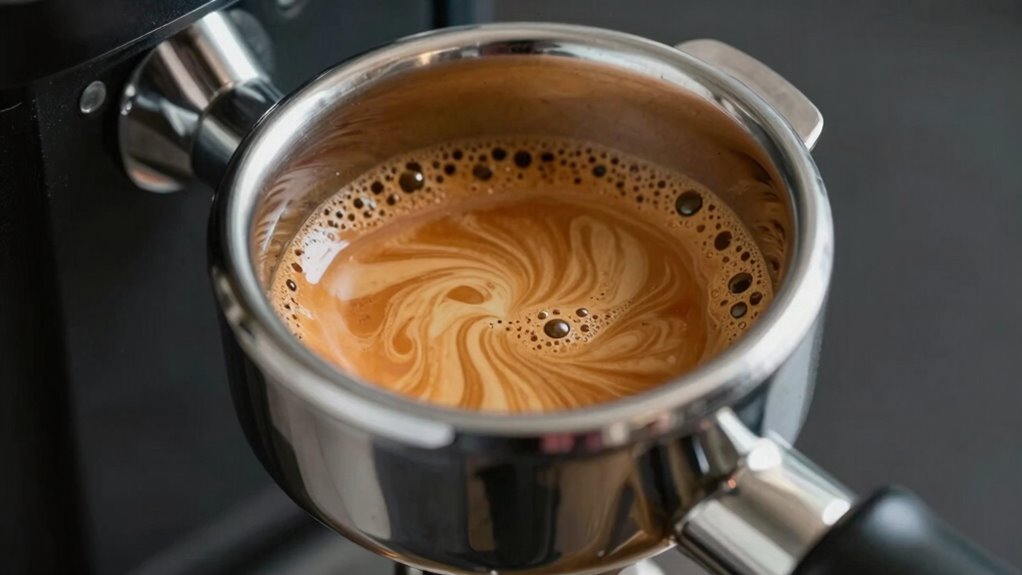
To read your shot like a map through a bottomless portafilter, focus on the flow, crema, and pattern of the espresso as it exits. A steady, honey-like stream indicates proper grind and tamping, while spurts or splashes reveal issues with technique or grind size. Color and consistency in the crema help you identify over or under-extraction. Keep observing these visual cues—continued practice will help you interpret them more precisely and improve your shot quality.

Get kitchen gear delivered free — and shop member deals
- Fast, free delivery on millions of items
- Access to Prime Big Deal Days deals on October 6–7
- Prime Video, Amazon Music and more included
Key Takeaways
- Observe the espresso flow: a steady, honey-like stream indicates proper extraction, while spurts or splashes signal tamping or grind issues.
- Analyze the crema color and consistency: rich, caramel-colored crema suggests balanced extraction; thin or pale crema points to over- or under-extraction.
- Use the bottomless portafilter to spot channeling: streaks or uneven spray patterns reveal uneven tamping or grind inconsistency.
- Watch for drips and flow pattern: consistent flow indicates good technique; inconsistent patterns highlight areas needing adjustment.
- Adjust grind size and tamping pressure based on visual cues to achieve a smooth, even flow and optimal extraction.
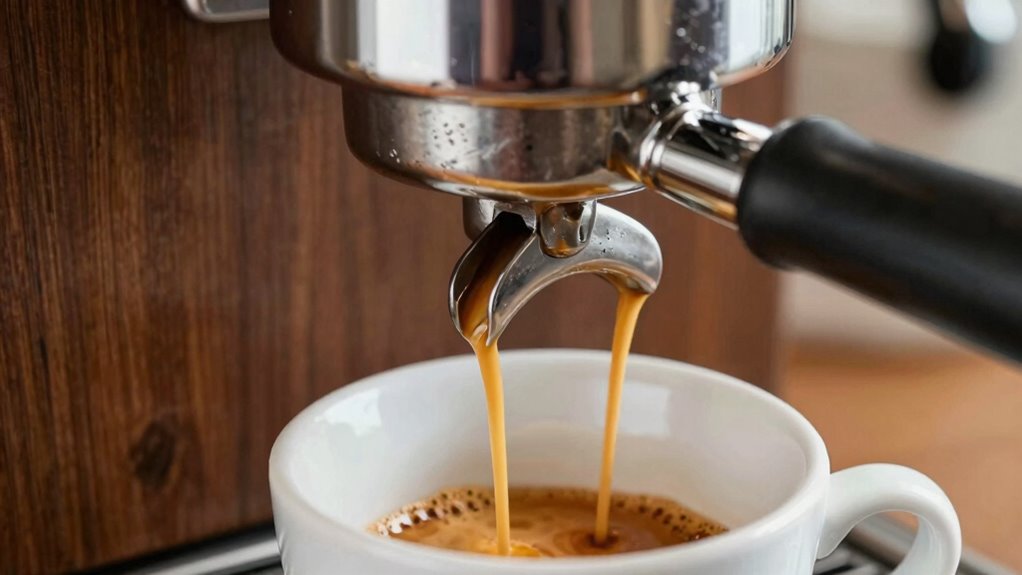
Ever wondered how to quickly diagnose issues with your espresso shot? Using a bottomless portafilter can be a game-changer, revealing subtle details about your extraction that are invisible with a standard espresso. When you pull a shot, pay close attention to the pattern and flow of the espresso as it exits. This visual feedback acts like a map, guiding you to the root of any problem. The first thing to consider is your grind consistency. If your grind is uneven or too coarse, you’ll notice a thin, watery stream that sputters rather than flows smoothly. On the other hand, if your grind is too fine, the shot might be slow or even clog, causing uneven extraction. Achieving consistent grind size ensures a uniform flow, and it’s the foundation for a good shot. Use a high-quality grinder and adjust in small increments to maintain consistent particle size. Next, your tamping technique plays an essential role. Uneven tamping can cause channeling, where water finds the path of least resistance and bypasses the coffee, resulting in a streaky or uneven spray. When you look at the bottomless portafilter’s spout, a well-tamped shot should produce a steady, honey-like stream with a consistent, even flow. If you see spurts, splashes, or inconsistent drips, it signals that your tamping may be uneven or too light. Practice applying even pressure with your tamper, making sure the coffee bed is level and compact. Consistent tamping pressure creates a uniform resistance, forcing water through the coffee evenly. Also, examine how the coffee bed appears after tamping; it should look flat and smooth. Variations in tamping pressure or uneven distribution can cause uneven extraction, visible as color streaks or inconsistent flow patterns in the shot. When diagnosing issues, don’t just focus on the flow; observe the crema and color. A good shot will have a rich, caramel-colored crema with a steady, unbroken stream. If the crema is thin or pale, or if the shot drips out in spurts, it indicates over or under-extraction, often linked to grind consistency or tamping flaws. Remember, your goal is to create a balanced, even extraction, and the visual cues from a bottomless portafilter are invaluable. By paying attention to these details and adjusting your grind consistency and tamping technique accordingly, you’ll develop a more intuitive sense of what your espresso needs. Over time, you’ll learn to read your shot like a map, quickly diagnosing issues and making precise adjustments for the perfect espresso every time. Understanding extraction dynamics can further help you refine your technique and improve your results.
As an affiliate, we earn on qualifying purchases.
Frequently Asked Questions
How Do I Clean My Bottomless Portafilter Effectively?
To clean your bottomless portafilter effectively, start by removing the basket and rinsing it with warm water. Use a brush or cloth to scrub away coffee oils and residue, paying attention to the basket and spout. Follow up with a deep cleaning using cleaning techniques like soaking in a solution of espresso machine cleaner. Regular maintenance tips include daily rinsing and weekly thorough cleaning to keep your shots tasting perfect.
Can I Use a Bottomless Portafilter With Any Espresso Machine?
Can you use a bottomless portafilter with any espresso machine? Think of it as a key fitting into a lock—compatibility is essential. Not all machines support portafilter customization, so check your machine’s specifications first. Most commercial and high-end home machines do, but some budget models may not. Always verify compatibility to guarantee a seamless fit, allowing you to craft espresso with precision and enjoy the full benefits of your bottomless portafilter.
What’s the Best Way to Practice Visual Shot Analysis?
To practice visual shot analysis effectively, start by observing your espresso’s crema and flow during extraction. Use tasting techniques to identify flavor nuances and aroma evaluation to assess aroma layers. Take notes on color, consistency, and aroma changes. Repeating this process helps you recognize ideal shots. Focus on the visual cues combined with tasting insights, which sharpen your sensory skills and improve your ability to dial in perfect espresso shots consistently.
How Often Should I Replace My Portafilter Components?
Think of your portafilter components as the heartbeat of your espresso machine—they need regular checkups to stay in rhythm. Usually, you should replace gaskets and screens every 6-12 months, depending on usage. For the component lifespan, inspect for wear and tear monthly. Replacement frequency varies with how often you brew, but staying vigilant guarantees your shots stay smooth and your machine runs like a well-oiled symphony.
Are There Specific Grind Sizes for Optimal Bottomless Shot Analysis?
For ideal bottomless shot analysis, you should aim for a consistent grind size, usually medium-fine, but it varies with your machine. Use shot timing techniques to refine your grind size, ensuring proper extraction. Consistency in grind size helps you interpret shot color and flow better, making it easier to diagnose issues. Adjust gradually, keep detailed notes, and always observe how your espresso responds to different grind settings.
As an affiliate, we earn on qualifying purchases.
Conclusion
Now that you know how to read your shot like a map, you can troubleshoot and perfect your espresso with confidence. Imagine the control you’ll have when every shot is dialed in just right—no more guesswork, just consistent, delicious coffee. Isn’t it satisfying to see that perfect flow and know you’ve mastered your craft? Keep practicing with your bottomless portafilter, and soon, crafting barista-quality espresso will feel like second nature.
As an affiliate, we earn on qualifying purchases.
As an affiliate, we earn on qualifying purchases.
Fall Picks
fall essentials
As an affiliate, we earn on qualifying purchases.