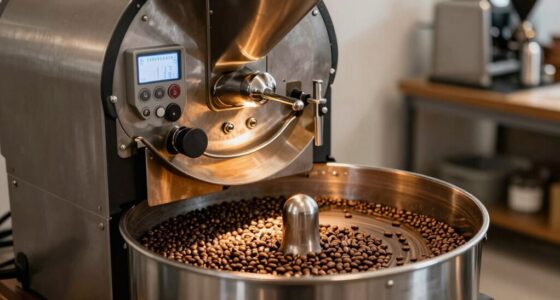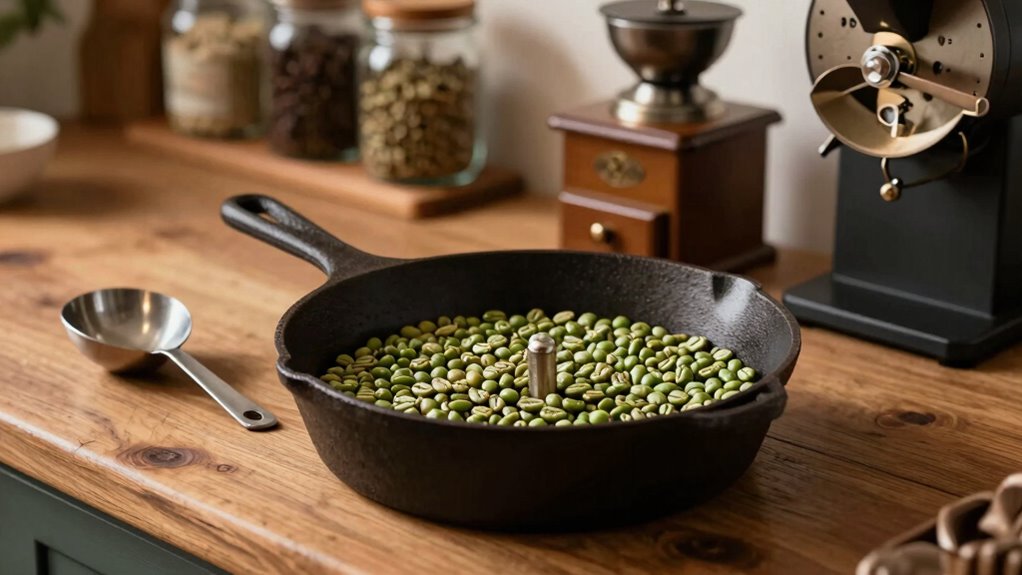

Starting with home coffee roasting is exciting, but it’s important to learn the basics first. Begin by choosing small batches of different bean varieties like Arabica and Robusta to understand how each reacts to heat. Experiment with simple techniques such as stovetop or oven roasting, and watch for cues like color and smell. Practice patience and keep notes to improve your skills. If you keep exploring, you’ll discover how to craft perfect roasts that bring out unique flavors.

Get kitchen gear delivered free — and shop member deals
- Fast, free delivery on millions of items
- Access to Prime Big Deal Days deals on October 6–7
- Prime Video, Amazon Music and more included
Key Takeaways
- Begin with small batches and experiment with different bean varieties to understand their roasting responses.
- Choose a simple, affordable roasting method like stovetop or oven to learn the basics safely.
- Focus on mastering temperature cues and visual indicators like color and smell for consistent results.
- Keep detailed notes on each roast to track flavor development and improve over time.
- Learn about bean origin and variety to tailor your roasting approach for desired flavor profiles.
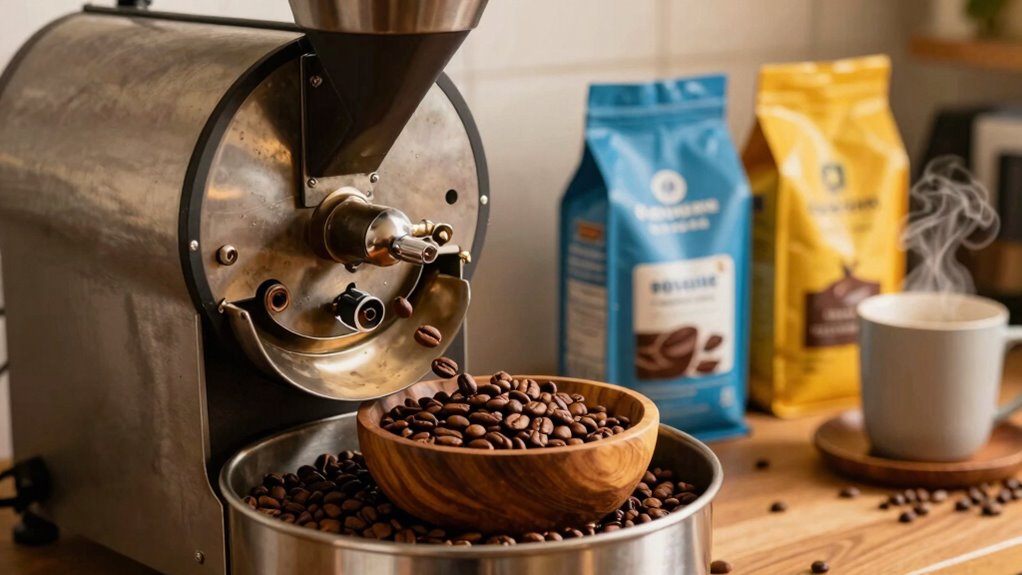
Home coffee roasting looks like a fun and rewarding hobby, but before diving in, it’s important to understand the basics to guarantee a smooth start. The first step is familiarizing yourself with coffee bean varieties. Not all beans are created equal—Arabica beans tend to be softer, with a sweeter, more complex flavor profile, while Robusta beans are stronger, with a bitter edge and higher caffeine content. Knowing the differences helps you choose beans that match your taste preferences and roasting goals. Start with a small batch of different varieties to experiment and discover what you enjoy most. This approach allows you to learn how each type reacts to roasting and how it impacts flavor, aroma, and body.
Once you’ve selected your beans, understanding roasting techniques becomes essential. There are several methods, from air roasters and drum roasters to simple stovetop or oven methods. Each technique affects the final flavor and roast level. For example, air roasters often produce a clean, even roast, while drum roasters can give you more control over the roast profile. If you’re just starting out, you might prefer the stovetop method, which is affordable and straightforward. You’ll want to monitor the beans closely, listening for the first crack—a vital auditory cue indicating light to medium roast levels. As you gain experience, you can experiment with longer or shorter roast times to develop darker or more nuanced profiles.
Temperature control is another key aspect of roasting techniques. Some home roasters come with precise temperature controls, while others require you to rely on visual and auditory cues. Keep in mind that different bean varieties respond differently to heat, so it’s essential to adjust your technique accordingly. For instance, darker roast levels tend to bring out bold, smoky flavors, but over-roasting can mask the beans’ natural characteristics. Light roasts preserve the origin flavors and complex acids, but require careful attention to avoid under-roasting. Additionally, understanding bean variety characteristics can help you fine-tune your roasting process to enhance specific flavors and aromas. Practicing with different roast levels and noting how each affects the final product will help you develop a better understanding of the roasting process over time. Developing an understanding of coffee origin influences can further refine your roasting approach, allowing you to highlight regional flavor profiles. Being aware of roast level indicators such as color and smell can also improve your consistency and results. To deepen your knowledge, reading about how bean characteristics influence roasting outcomes can be highly beneficial. As you practice, you’ll learn how to balance these factors to create a roast that highlights the unique qualities of each bean variety.
In the beginning, focus on small batches, take notes, and be patient. Roasting is as much an art as it is a science. By understanding the different coffee bean varieties and mastering basic roasting techniques, you’ll set yourself up for success and enjoy the process of crafting your perfect cup. Home roasting isn’t just about saving money; it’s about exploring flavors and gaining a deeper appreciation for every sip.
As an affiliate, we earn on qualifying purchases.
Frequently Asked Questions
What Types of Coffee Beans Are Best for Home Roasting?
You should start with versatile coffee bean varieties like Arabica, known for its smooth flavor, or Robusta, which offers a stronger, bolder taste. Look for beans labeled as fresh to guarantee peak flavor. To preserve freshness, buy in small quantities and store them in airtight containers. This way, you maintain the beans’ quality during your home roasting journey, giving you the best possible coffee experience.
How Much Space Is Needed for a Home Coffee Roasting Setup?
You can start roasting coffee in a surprisingly small space—think the size of a closet or small kitchen corner. Just make sure your setup has enough room for your equipment, plus clear airflow. Remember, equipment maintenance is key, so choose a spot that’s easy to access. Storage considerations matter too; keep beans and tools organized to avoid clutter. With smart planning, your home roasting station will be a coffee haven, not a chaos zone!
Is Home Roasting Safe for Beginners?
Yes, home roasting is safe for beginners if you follow proper precautions. Use quality roasting equipment designed for beginners, and work in a well-ventilated area to manage smoke and fumes. Pay close attention to your coffee flavor preferences, adjusting roasting times accordingly. Always stay attentive during the process, and keep a fire extinguisher nearby. With care, you’ll enjoy fresh, flavorful coffee right from your own setup.
How Long Does It Take to Learn Proper Roasting Techniques?
Learning proper roasting techniques takes about a few weeks to a few months of consistent practice. Think of it like tuning a guitar—you’ll start with basic notes, like controlling roasting temperature and understanding bean freshness, then gradually master the nuances. In my experience, paying close attention to roasting temperature and choosing fresh beans accelerates your progress. With patience, you’ll develop a keen sense for perfect roasts that suit your taste.
What Are Common Mistakes to Avoid When Roasting Coffee at Home?
When roasting coffee at home, avoid common mistakes like neglecting equipment cleaning, which can affect flavor development, and overroasting, leading to bitter tastes. Pay attention to your beans’ color and smell to guarantee proper roast levels. Also, don’t rush the process—patience helps develop better flavor. Regularly clean your equipment to prevent old oils or residues from contaminating your beans, guaranteeing a fresh, vibrant cup every time.
As an affiliate, we earn on qualifying purchases.
Conclusion
So, go ahead and plunge into home roasting—because who needs store-bought beans when you can risk burning your kitchen down for that perfect cup? Just remember, it’s more about the adventure than the aroma (unless you like your house smelling like a burnt marshmallow). Start slow, stay safe, and embrace the chaos. After all, what’s life without a little smoky surprise in your morning brew? Happy roasting—or at least, trying to!
coffee bean roasting thermometer
As an affiliate, we earn on qualifying purchases.
As an affiliate, we earn on qualifying purchases.
As an affiliate, we earn on qualifying purchases.
Fall Picks
fall essentials
As an affiliate, we earn on qualifying purchases.