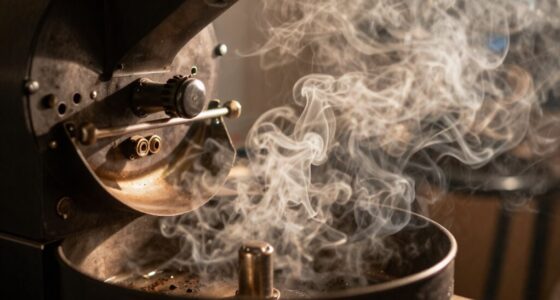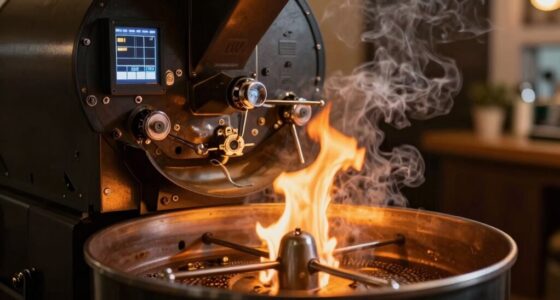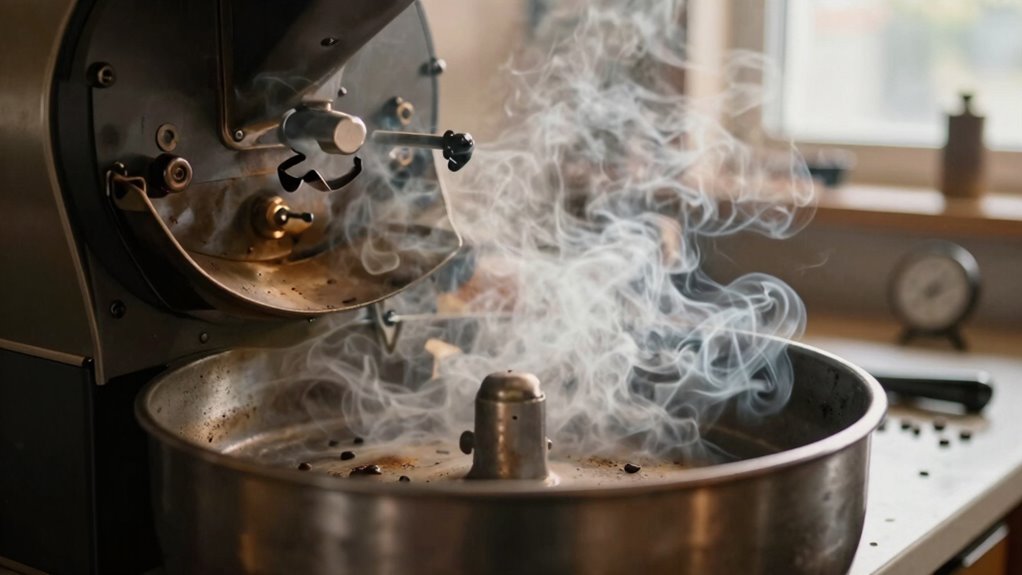

If you roast coffee at home without proper ventilation, you risk losing flavor, damaging your equipment, and harming your health. Poor airflow causes smoke, gases, and odors to build up, leading to uneven roasts and stale beans. It can also increase fire hazards and respiratory irritation. To avoid these issues, make certain there is good airflow with windows or exhaust fans. Keep going to discover how to master ventilation and improve your coffee experience.

Get kitchen gear delivered free with Prime
- Fast, free delivery on millions of items
- Prime Video, Amazon Music and more included
- Member-only deals all year
Key Takeaways
- Poor ventilation leads to smoke and odors lingering, negatively affecting coffee flavor and freshness.
- Inadequate airflow causes temperature fluctuations, resulting in uneven or over-roasted beans.
- Lack of proper ventilation increases health risks from inhaling harmful fumes and particles.
- Insufficient airflow can damage roasting equipment due to heat buildup and residue accumulation.
- Neglecting ventilation allows smoke and residues to accumulate, creating fire hazards and household odors.
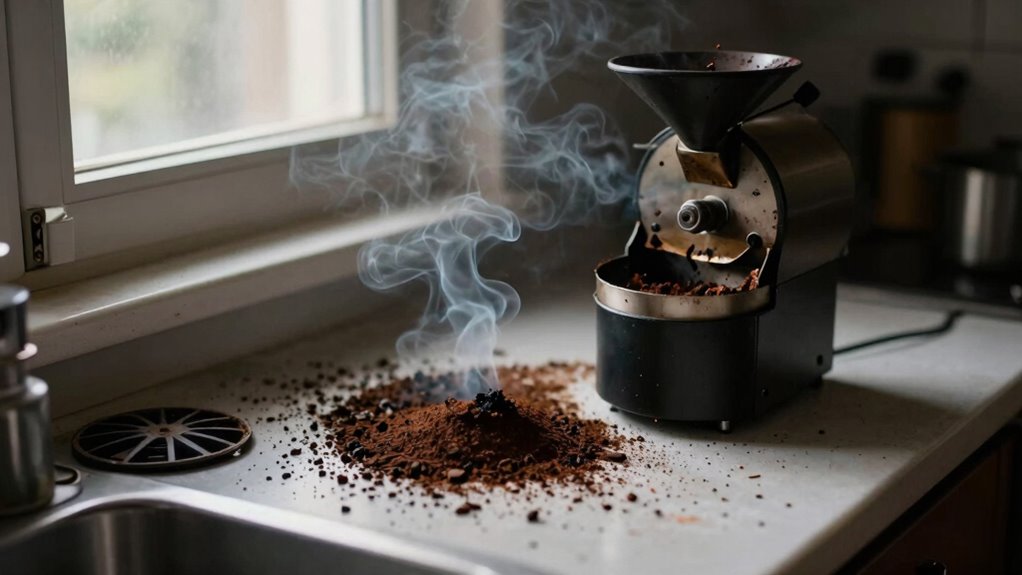
Are you aware that a common mistake in home coffee roasting is inadequate ventilation? Many home roasters overlook this critical aspect, but it significantly impacts your results. Proper ventilation isn’t just about managing the smell; it directly influences the freshness of your coffee beans and your ability to control the roasting process effectively. When you don’t have sufficient airflow, the smoke and gases produced during roasting can linger in your space, affecting both your environment and the quality of your beans.
Good ventilation helps remove chaff, smoke, and excess heat, which can otherwise interfere with maintaining a consistent roasting temperature. Roasting temperature control is essential if you want to develop complex flavors and achieve the perfect roast. Without proper airflow, your oven or roast device might not reach or maintain the ideal temperatures, leading to uneven roasts or over-roasting. This inconsistency can cause a loss of coffee bean freshness because uneven or overly aggressive roasting accelerates deterioration, reducing the beans’ aromatic oils and nuanced flavors.
When you neglect ventilation, the heat and smoke don’t escape efficiently, trapping volatile compounds that are vital for preserving coffee bean freshness. These compounds include aromatic oils that give your coffee its unique flavor profile. If these are compromised due to poor airflow, your beans may lose their vibrant aroma, and your overall roast can develop off-flavors. Additionally, stale smoke and residual odors can cling to your beans, affecting future batches or creating unpleasant smells in your home.
Beyond flavor, inadequate ventilation can also pose health risks. The smoke and fumes generated during roasting contain compounds that can irritate your respiratory system over time. Proper airflow ensures harmful particles are expelled quickly, making your roasting environment safer. It also helps prevent smoke buildup, which can cause discomfort and even damage your smoke detectors or other household appliances. Ensuring proper ventilation setup is crucial for a safe and effective home roasting process. Incorporating proper airflow not only improves safety but also enhances your control over the roast, leading to better results. Additionally, maintaining good air quality can contribute to a healthier home environment, especially when roasting regularly.
A well-ventilated space also minimizes the risk of fire hazards, which can be a concern if flammable residues or excessive heat accumulate. Remember that adequate ventilation can also extend the lifespan of your roasting equipment by preventing excessive heat buildup and accumulation of residues. You can improve ventilation by opening windows, using exhaust fans, or investing in a dedicated venting system tailored for home roasting. These measures allow fresh air to circulate while removing smoke and heat efficiently. When you prioritize good airflow, you maintain more precise roasting temperature control, which is key to unlocking the full potential of your beans. Ultimately, understanding and implementing proper ventilation isn’t just about comfort; it’s an essential step toward achieving consistently fresh, flavorful, and well-roasted coffee every time.
Products Worth Considering

De'Longhi Rivelia Automatic Espresso Machine with Milk Frother

Le Creuset Enameled Cast Iron Round Bread Oven, 9.5-Inch, Cerise

Vitamix VX1 Professional-Grade Blender, 64 oz, Black
As an affiliate, we earn on qualifying purchases.
Frequently Asked Questions
How Can I Tell if My Ventilation Is Insufficient During Roasting?
You can tell if your ventilation is insufficient during roasting by noticing poor airflow patterns, such as smoke lingering or smelling stronger than usual. If the smoke isn’t dispersing quickly, open windows or use ventilation accessories like exhaust fans to improve airflow. Also, check for a buildup of smoke or fumes, which indicates your ventilation isn’t maintaining pace. Proper airflow ensures safer roasting and better flavor development.
What Are the Health Risks of Poor Roasting Ventilation?
Poor roasting ventilation can harm your health by decreasing air quality and increasing smoke exposure. You might experience headaches, dizziness, or respiratory irritation from inhaling smoky fumes. Over time, prolonged exposure can lead to more serious issues like lung problems or allergies. To protect yourself, guarantee proper ventilation during roasting, use exhaust fans, and open windows to reduce smoke buildup and maintain a healthier environment at home.
Are There Specific Ventilation Systems Recommended for Home Roasting?
Think of your kitchen as a brewing storm—proper airflow is essential. For home roasting, consider ventilation systems that optimize airflow, like range hoods with high extraction rates or exhaust fans designed for smoke and fumes. Ventilation upgrades, such as ducting improvements or air purifiers, can help. These systems guarantee smoke and odors don’t linger, making your roasting safer and more enjoyable while protecting your health.
How Does Ventilation Impact the Flavor of Roasted Coffee?
Good ventilation directly impacts your coffee’s flavor by influencing the coffee aroma and ventilation efficiency. When ventilation is poor, smoke and chaff linger, overpowering the delicate aroma and potentially imparting a burnt or off-flavor. Proper airflow clears out these byproducts quickly, preserving the fresh, vibrant aroma and allowing the true flavor of your roast to shine. You’ll notice a cleaner, more balanced taste when ventilation is optimized during home roasting.
Can I Improve Ventilation Without Professional Installation?
Think of yourself as a coffee alchemist, transforming beans into aroma-rich brews. You can improve ventilation without professional help by focusing on airflow optimization and simple ventilation upgrades. Open windows, add a small exhaust fan, or install a vent cover to boost air circulation. These small steps help clear smoke and odors, ensuring a safer, more enjoyable roasting experience without needing complex or costly installations.
Conclusion
Ignoring proper ventilation is like closing your kitchen windows during a storm—you might avoid the breeze, but the storm’s still inside. Without good airflow, your home fills with smoke and fumes, turning your cozy space into a smoky room. Ventilation isn’t just about fresh air; it’s about safety and flavor. So, don’t let poor airflow turn your roasting adventure into a smoky mistake. Clear the air, and enjoy your perfect roast with peace of mind.