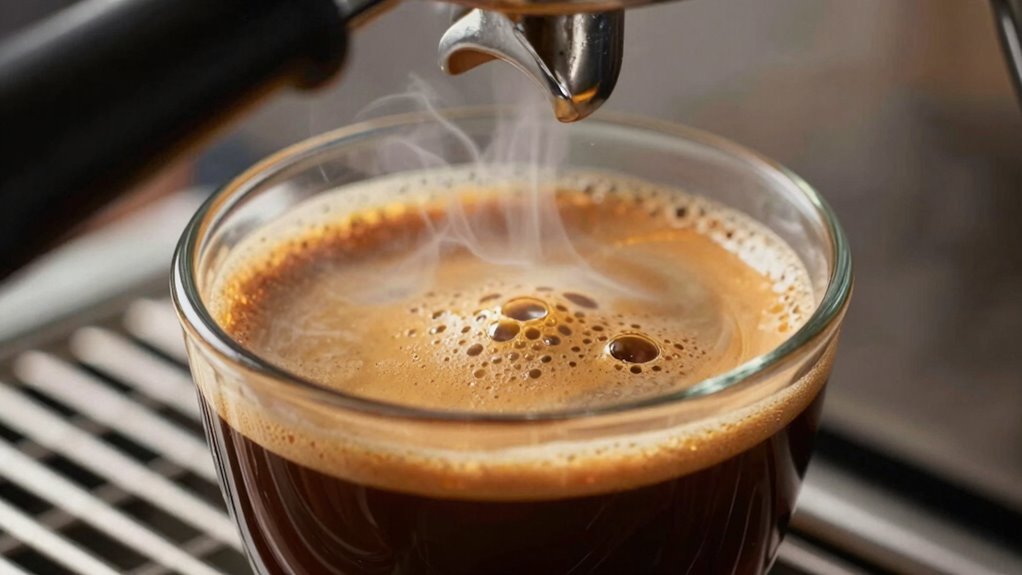

Even if your espresso doesn’t look overdone, it can still taste burnt because factors like over-extraction, incorrect grind size, or too hot water cause harsh, bitter flavors. Using too fine a grind or brewing at temperatures above 205°F can scorch the coffee, releasing burnt notes, even without visible signs of over-roasting. Fine-tuning your technique by adjusting these variables can help you avoid this issue. Stay with us to uncover how to perfect your brew and prevent burnt-tasting espresso.
Key Takeaways
- Over-extraction from high pressure or long brew time can cause bitterness even without over-roasting.
- Water temperature above 205°F can scorch coffee, producing burnt flavors without visible signs of over-roasting.
- Fine grind size increases resistance, risking over-extraction and burnt-tasting espresso.
- Uneven tamping creates channeling, leading to uneven extraction and burnt flavors.
- Using dark beans with improper brewing parameters can produce burnt taste without dark appearance.
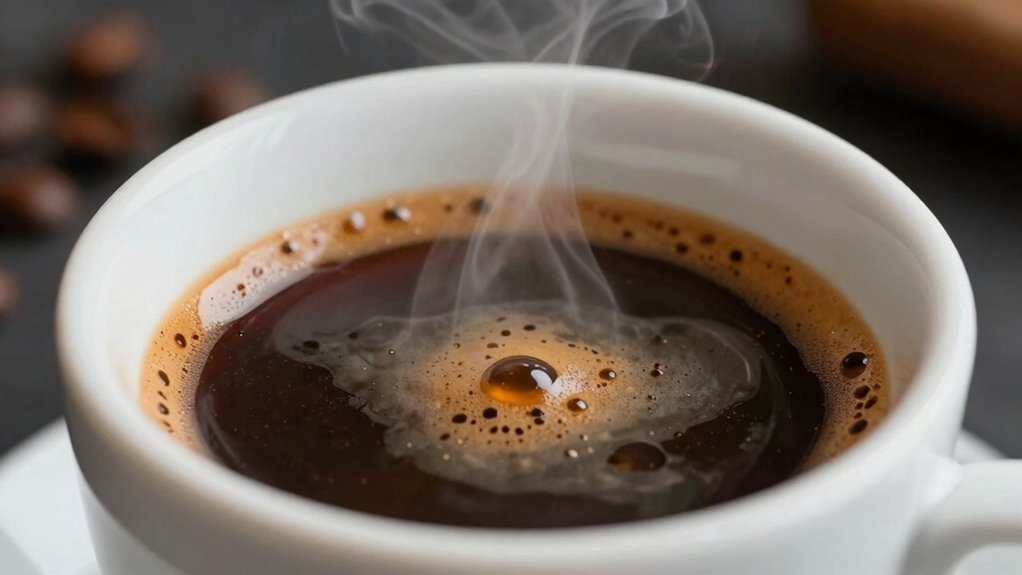
Have you ever sipped a shot of espresso and wondered why it tastes burnt even though it doesn’t look overdone? It’s a common experience, and the answer often lies in the nuances of coffee bean roasting and espresso brewing techniques. When you choose darker roasts, the beans undergo a longer roasting process, developing rich, deep flavors. But that darker roast can also introduce bitter, burnt notes if not handled carefully during brewing. The key is understanding that appearance isn’t the only indicator of proper roasting; flavor is what truly matters. You might think a visibly dark bean signifies over-roasting, but it’s possible to roast beans just enough for a bold flavor without crossing into bitterness. The problem occurs when the beans are roasted too aggressively or for too long, which can lead to an overly bitter profile even if the surface looks appealingly dark.
Your espresso brewing technique also plays a significant role. If you’re using high pressure or extracting for too long, you risk pulling out too many bitter compounds from the coffee grounds, resulting in that burnt taste. Even with well-roasted beans, improper extraction can cause the espresso to taste scorched. Water temperature is another factor—if it’s too hot, it accelerates extraction and can burn the coffee during brewing, releasing harsh flavors. It’s essential to aim for a balanced approach: a water temperature around 195-205°F helps you extract the best flavors without scalding the grounds. Additionally, grind size matters. If your grind is too fine, the water struggles to flow through, causing over-extraction and bitterness. Conversely, a too-coarse grind might under-extract, making the shot sour and weak, but improper grind can also heighten bitter notes if combined with high brewing pressure.
Understanding the roast level and how it influences extraction can help you better tailor your brewing process to avoid that burnt taste. Adjusting your tamping pressure and technique can also make a significant difference in achieving an even extraction. You also need to pay attention to tamping pressure and consistency. Uneven tamping can cause channels where water flows too quickly, leading to uneven extraction and burnt-tasting spots. To avoid this, apply steady, even pressure every time. Properly understanding coffee bean quality and freshness can also drastically improve the final taste and prevent undesirable burnt notes. Additionally, experimenting with different brewing parameters and maintaining a detailed record of your adjustments can help identify what makes a difference in flavor. Ultimately, it’s about matching your roast level with your brewing method, adjusting variables carefully, and tasting critically. When you fine-tune these elements, you’ll find that your espresso can be rich and flavorful without tasting burnt—even if the beans look darker than usual.

SHARDOR Electric Coffee Grinder, 70g Large Capacity Spice Grinder with Visual Timing Knob for Precise Grind, Quiet Coffee Bean Grinder for Espresso, French Press, Herbs and Grains, Black
- Precise Grinding Control: Visual timing knob for accurate grind
- Large Capacity & Versatile Use: 70g capacity for coffee and spices
- Quiet Operation: Operates at only 63 dB
As an affiliate, we earn on qualifying purchases.
As an affiliate, we earn on qualifying purchases.
Frequently Asked Questions
Can Water Quality Affect Espresso Flavor?
Yes, water quality affects your espresso flavor. If the water’s mineral content is off, it can cause bitterness or flatness. A proper pH balance guarantees the extraction is smooth and balanced, preventing burnt or scorched tastes. Using water with the right mineral levels and pH balance helps you achieve a richer, more vibrant espresso, avoiding those undesirable burnt flavors caused by poor water quality.
Does the Type of Coffee Bean Influence Bitterness?
Yes, the type of coffee bean influences bitterness. You’ll notice that beans from different origins, like African or South American, have distinct flavor profiles, affecting bitterness levels. Additionally, the roasting level plays a vital role; darker roasts tend to be more bitter because of the longer roasting process. So, choosing beans from specific regions and adjusting the roasting level can help you control the bitterness in your espresso.
How Does Grind Size Impact Espresso Taste?
A slightly coarse grind can make your espresso taste a bit sharp, while a too-fine grind risks over-extraction, leading to bitterness. Maintaining grind consistency is key, as uneven grounds cause uneven extraction timing, which affects flavor. If your grind is just right, water flows smoothly through, resulting in a balanced shot. Pay close attention to extraction timing, and you’ll enjoy a richer, smoother espresso without the burnt taste.
Is Pressure Regulation Related to Burnt Flavors?
Yes, pressure regulation is related to burnt flavors. When you maintain pressure consistency, you control extraction, preventing over-extraction that causes burnt tastes. Proper pressure ensures water flows evenly through the coffee, extracting the right flavors without burning the grounds. If pressure fluctuates, you risk uneven extraction, leading to bitter or burnt notes. Consistent pressure and extraction control are essential for a balanced, flavorful espresso.
Can Cleaning Routines Prevent Burnt-Tasting Espresso?
Think of your cleaning routine as a tune-up for your espresso machine—just like a well-maintained orchestra, it keeps everything harmonious. Regular cleaning prevents old coffee oils and residues from tainting your brew, ensuring peak coffee freshness. It also helps maintain consistent brewing temperature, reducing the risk of burnt flavors. When your machine is clean, your espresso stays rich and flavorful, free from that charred taste that lurks when buildup occurs.
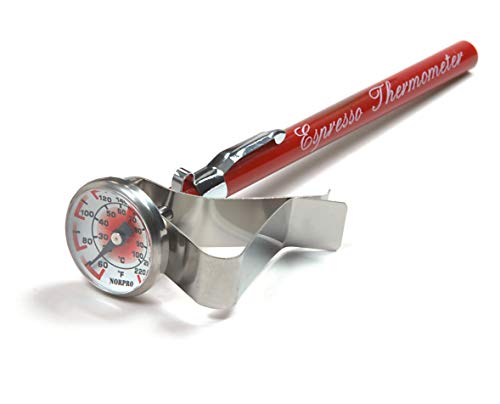
Norpro 5981 Espresso Thermometer
- Accurate temperature readings: Effortlessly reach perfect temperature
- Optimum steamed milk indicator: Red shaded area for ideal milk temp
- Versatile use: Suitable for hot drinks and frothing
As an affiliate, we earn on qualifying purchases.
As an affiliate, we earn on qualifying purchases.
Conclusion
So, if your espresso tastes burnt but doesn’t look overdone, don’t blame your machine or beans. It’s often about the grind size, tamping pressure, or extraction time. Adjust these, and you’ll find that perfect balance—rich flavor without bitterness. Remember, a slightly darker roast isn’t always burnt; it’s about how you brew it. With a few tweaks, you can enjoy a smooth, flavorful espresso without the unwanted char.

Normcore Espresso Tamping Mat I Food Safe Rubber Coffee Tamper Mat I Portafilter Mat For Baristas I Coffee Tamp Mat I Waterproof, Heat Resistant Tamping Pad and Tamp Station
- Material: Food-grade silicone, odorless and safe
- Comfort: Secure grip for comfortable tamping
- Storage: Large enough for portafilter and tamper
As an affiliate, we earn on qualifying purchases.
As an affiliate, we earn on qualifying purchases.
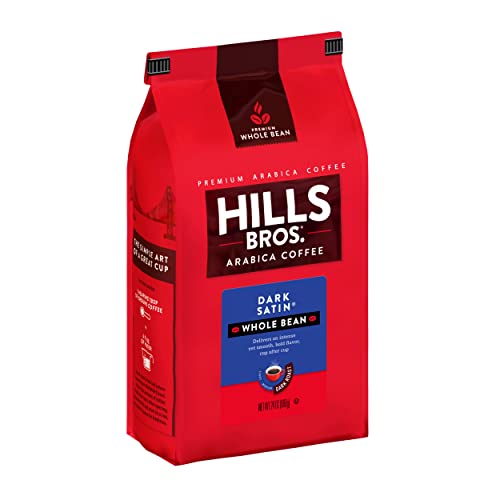
Hills Bros. Dark Satin Whole Bean Coffee – Rich and Bold Premium Arabica Coffee Beans – Orthodox Union Kosher – Dark Roast, Fresh Grind for Best Aroma & Taste – Dark Satin, 1 Pack of 24oz
- Bold, Rich Flavor: Strong dark roast with smooth finish
- Premium Arabica Beans: Ensures fresh, aromatic coffee
- Freshly Ground for Aroma: Grind just before brewing for peak freshness
As an affiliate, we earn on qualifying purchases.
As an affiliate, we earn on qualifying purchases.