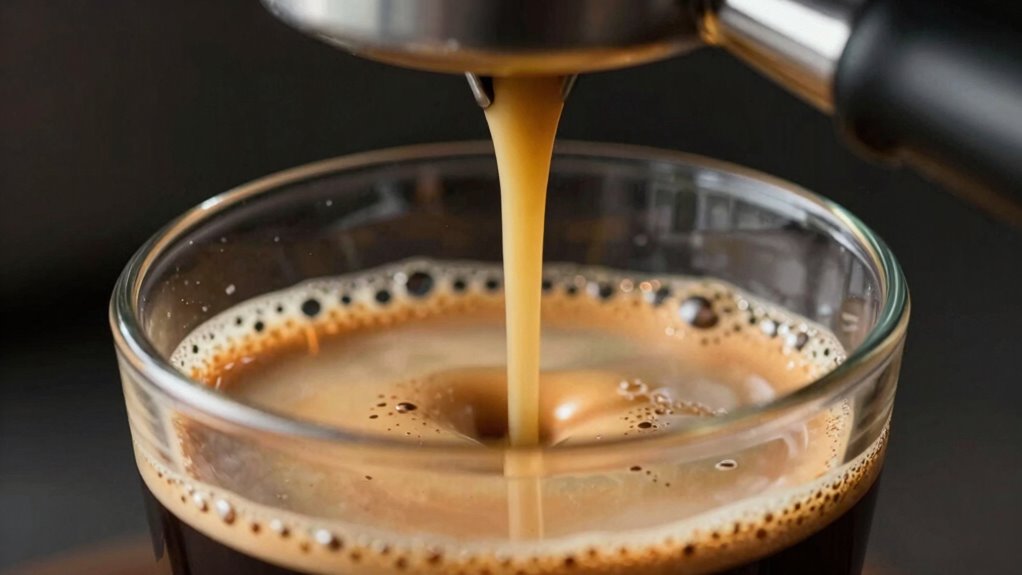

If your shot runs too fast despite a fine grind, chances are you’re not applying enough tamp pressure, or the grounds aren’t evenly distributed, causing channeling. It could also be due to machine issues, incorrect calibration, or stale beans that don’t resist water properly. Fixing these factors—by tamping firmly, ensuring proper distribution, and maintaining your machine—can slow down the flow. Keep exploring to learn more ways to perfect your espresso.
Key Takeaways
- Insufficient tamp pressure or uneven distribution creates channels, allowing water to pass quickly through the coffee puck.
- The coffee grind may be too fine, but improper tamping or packing density still causes fast extraction.
- Machine calibration issues or inconsistent water temperature can accelerate flow despite a fine grind.
- Coffee beans may be stale or of poor quality, leading to uneven resistance and faster shots.
- Lack of regular cleaning and maintenance can cause clogs or water flow issues, speeding up extraction.

51mm Espresso Tamper-Premium Barista Coffee Tamper Coffee Tamper Classic Series Stainless Steel Espresso Tamper Coffee Press Tool Tamper Espresso Handle, 90x51mm, Solid wood, Stainless steel
- Diameter: 51mm fits standard portafilters
- Material: Stainless steel and solid wood handle
- Design: Ergonomic handle for easy grip
As an affiliate, we earn on qualifying purchases.
As an affiliate, we earn on qualifying purchases.
Why Your Espresso Is Flowing Too Fast Despite a Fine Grind
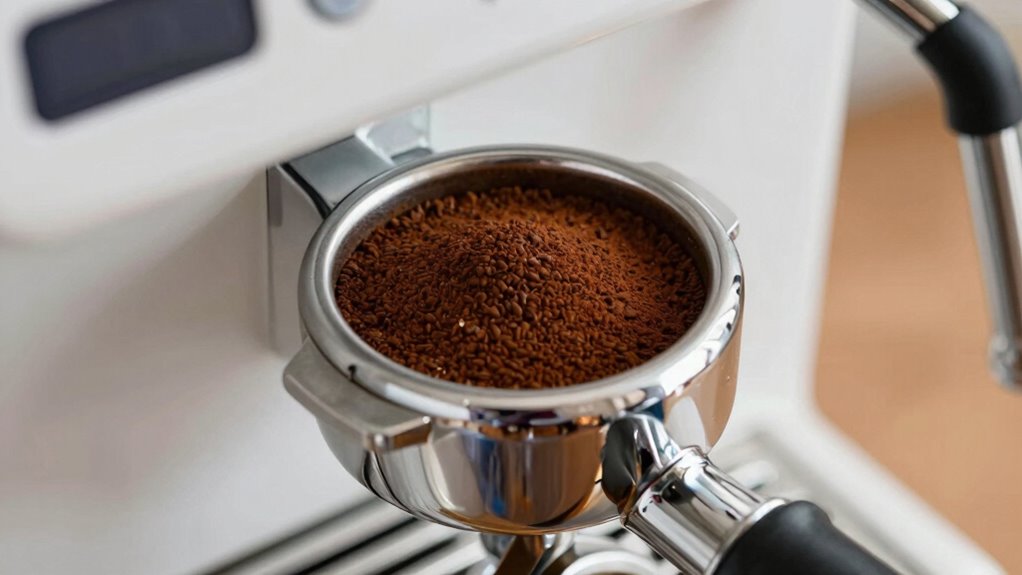
Even if you’ve ground your coffee finely, your espresso might still flow too quickly because of insufficient tamping pressure. Consistent grind size is vital; uneven grounds create channels that let water pass through too fast. However, even with a good grind, your tamp technique plays a fundamental role. If you don’t tamp firmly and evenly, the puck won’t resist water properly, resulting in a fast extraction. Focus on applying consistent pressure with each tamp to create a uniform, compact coffee bed. Proper tamping ensures the coffee resists water flow evenly, helping to slow down your shot. Remember, grind consistency alone can’t fix a fast flow if your tamp technique is weak or inconsistent. Combining a fine, uniform grind with proper tamping is key to achieving a balanced, slow extraction. Additionally, using a reliable tamping technique can significantly improve your espresso quality.

WDT Espresso Distribution Tool Espresso Stirrer Tools for Barista, 0.35mm 7 Needles Espresso Coffee Stirrer with Extra 7 Replaceable Needles, Aluminum Alloy Handle with Stand (Black)
- Thin 14 Needles for Even Distribution: 7 stainless steel needles, 0.35mm diameter, with 7 spares
- Removable Needles for Custom Use: Easily assemble/disassemble needles as needed
- Anti-slip Handle for Easy Stirring: Non-slip pattern handle for secure grip
As an affiliate, we earn on qualifying purchases.
As an affiliate, we earn on qualifying purchases.
How to Adjust Tamp Pressure and Coffee Distribution to Slow Down Your Shot
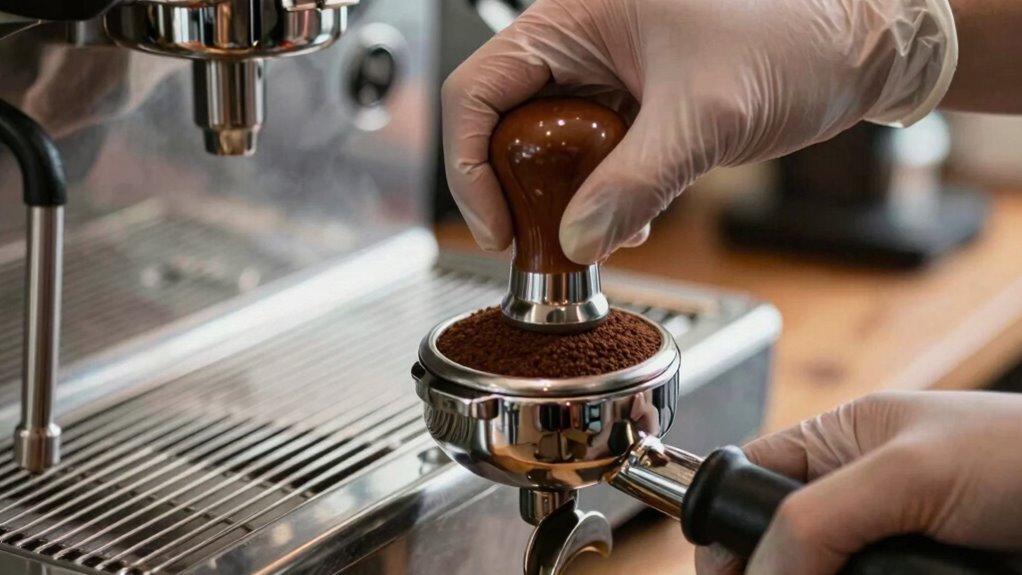
To slow down your shot, start by adjusting your tamp pressure and ensuring even coffee distribution. Use a consistent tamping technique, applying firm, even pressure to create uniform resistance. Proper coffee distribution prevents channeling and promotes even extraction. Visualize your tamping process with this table:
| Light Tamp | Moderate Tamp | Heavy Tamp |
|---|---|---|
| Gaps in coffee | Slow flow | Too slow or no flow |
| Uneven surface | Consistent shot | Overly compressed coffee |
| Risk of under-extraction | Proper extraction | Risk of over-extraction |
Focusing on your tamping technique helps you find the right pressure, and making sure the coffee is evenly distributed before tamping is essential. Additionally, controlling tamp pressure can significantly influence shot speed and extraction quality. These adjustments will help slow your shot for a richer, more balanced espresso.

Mytdkxin 7 PCS Espresso Accessories,WDT Tool Espresso Machine Tamper Tools
- All-In-One Espresso Kit: Includes 7 essential barista tools
- 54mm Tamper & Tamping Station: Ergonomic tamper and rustic tamping station
- WDT Tool & Needle Distributor: Ensures even grounds distribution for perfect extraction
As an affiliate, we earn on qualifying purchases.
As an affiliate, we earn on qualifying purchases.
Are Your Machine Settings and Maintenance Affecting Your Shot Speed?
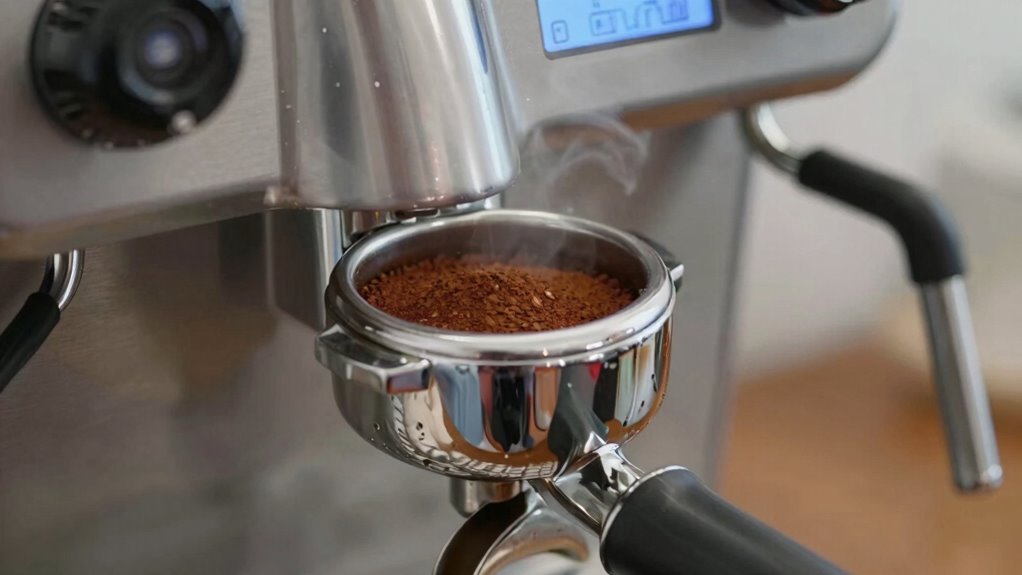
Your espresso shot speed isn’t just about tamping and distribution; your machine’s settings and maintenance play a vital role as well. Proper machine calibration ensures your grinder and espresso machine work together for ideal flow. If your machine isn’t calibrated correctly, water may pass through too quickly, resulting in a fast shot. Water temperature is equally important—if it’s too low, extraction speeds up, causing a quick pull. Regular maintenance, like cleaning the brew head and checking for clogs, maintains consistent water flow and temperature stability. Neglecting these factors can lead to inconsistent shot speeds regardless of grind size or tamping pressure. Adjusting machine calibration and monitoring water temperature can markedly slow down your shot, helping you achieve better extraction and flavor. Additionally, Regular maintenance ensures all components function properly, preventing issues that could accelerate shot speed.

SHARDOR Electric Coffee Grinder, 70g Large Capacity Spice Grinder with Visual Timing Knob for Precise Grind, Quiet Coffee Bean Grinder for Espresso, French Press, Herbs and Grains, Black
- Precise Grinding Control: Visual timing knob for accurate grind
- Large Capacity & Versatile Use: 70g capacity for coffee and spices
- Quiet Operation: Operates at only 63 dB
As an affiliate, we earn on qualifying purchases.
As an affiliate, we earn on qualifying purchases.
Does Your Coffee Dose and Pack Density Really Matter?
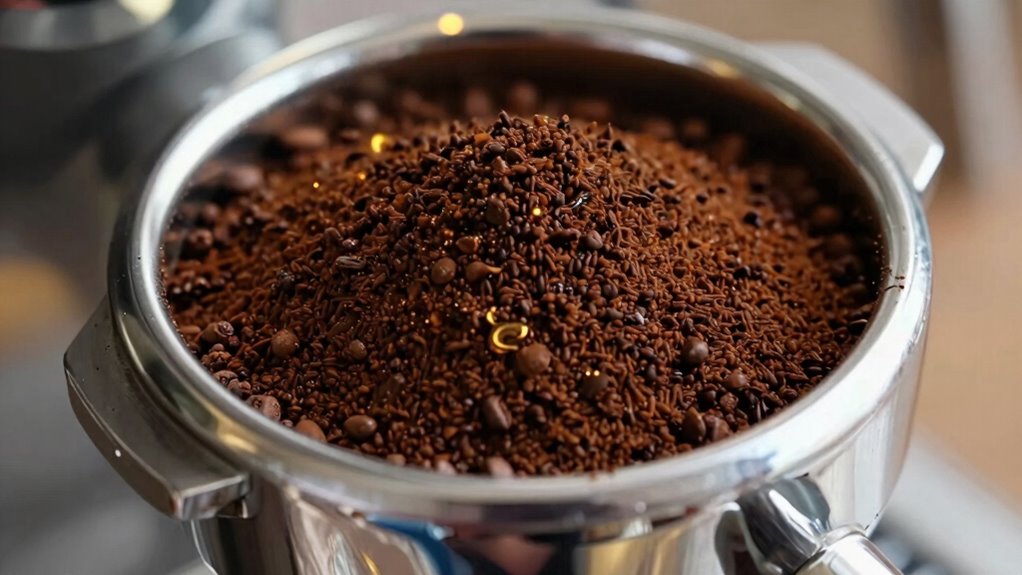
Have you ever considered how much your coffee dose and pack density influence shot speed? Your coffee dose—the amount of coffee you use—directly impacts extraction time. Too little coffee can cause rapid flow, while too much may slow it down, but often leads to over-extraction. Pack density refers to how tightly you tamp the coffee in the portafilter. A loose pack creates channels for water to pass through quickly, speeding up the shot. A denser, evenly packed coffee bed offers resistance, slowing water flow and improving extraction. Even with a fine grind, inconsistent dose or pack density can cause your shot to run too fast. Adjusting these factors guarantees better control over shot speed, helping you achieve a balanced, flavorful espresso. Understanding extraction is key to dialing in your espresso for optimal flavor.
Troubleshooting Common Reasons for Rapid Espresso Shots
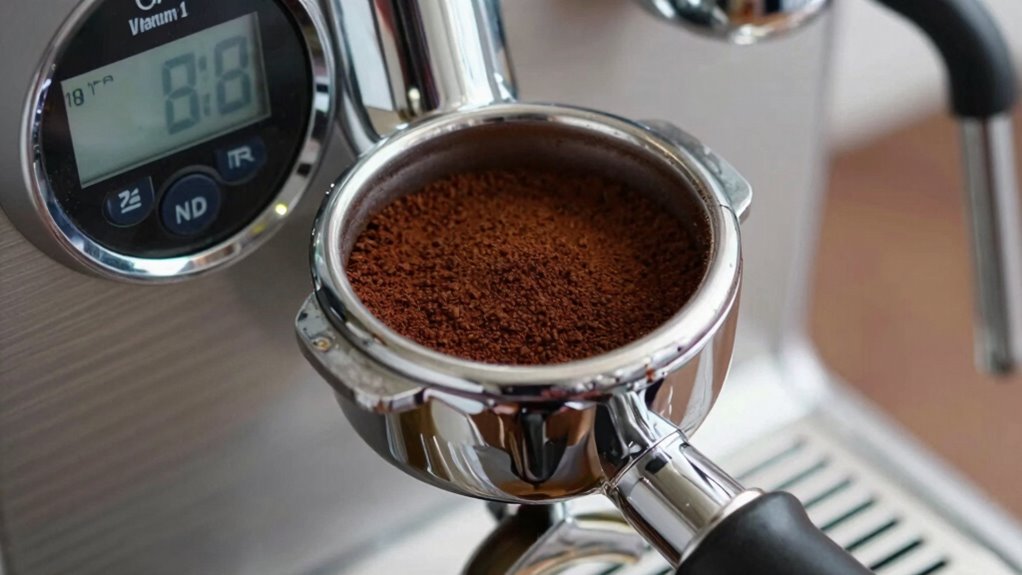
When espresso shots run too quickly, it’s often due to issues beyond just dose and pack density. One key factor is coffee freshness; stale beans can cause uneven extraction and faster flow. Second, water temperature plays a vital role—if it’s too low, extraction slows, but if it’s too high, the shot can run faster than expected. Third, consider the grind size again: even a fine grind might need slight adjustment if your machine’s temperature or freshness isn’t ideal. To troubleshoot: 1. Make certain your coffee is fresh—preferably within a few weeks of roasting. 2. Check that your water temperature is between 195°F and 205°F. 3. Reassess your grind size, making it slightly finer if shots are still too quick. Additionally, ensuring your machine’s maintenance and calibration are up to date can significantly impact shot quality. Addressing these issues helps slow down your shot for better flavor.
Frequently Asked Questions
Can Water Temperature Influence Shot Flow Speed?
Yes, water temperature influences shot flow speed. When water temperature is higher, the flow rate increases because the heat reduces the coffee’s resistance, making water pass through more easily. Conversely, lower water temperatures slow down the flow rate, resulting in a slower extraction. Adjusting your water temperature can help you control the shot flow speed, ensuring a more balanced extraction and improving your espresso’s flavor.
Does Ambient Humidity Affect Espresso Extraction?
Ambient humidity impacts your espresso extraction by affecting the coffee’s moisture content. When humidity levels are high, ambient moisture can cause the grounds to clump or become unevenly tamped, leading to inconsistent flow and faster shots. Lower humidity dries out the coffee, making it harder to extract fully. To maintain ideal extraction, you should control ambient moisture around your setup, adjusting grind size or using airtight containers to minimize humidity effects.
How Does Bean Age Impact Shot Timing?
Think of your beans as time travelers; as they age, their story changes. Bean age directly impacts shot timing because older beans lose freshness, leading to uneven extraction. Proper storage conditions, like cool, airtight containers, slow this aging process. When beans get too old, they produce faster shots because their oils and sugars diminish, reducing resistance during extraction. Fresh beans yield more control, giving you a richer, more balanced espresso.
Are Different Roast Levels More Prone to Rapid Shots?
Yes, roast level affects shot speed. Light roasts tend to be more prone to rapid shots because they’re denser and require a finer grind, which can still lead to quick extraction. Dark roasts, being more brittle and oily, often produce slower shot speeds even with a fine grind. Adjusting your grind and tamping pressure based on roast level helps control shot speed, ensuring better extraction and flavor.
Can Equipment Wear Cause Faster Espresso Flow?
Yes, equipment wear can cause faster espresso flow. Over time, worn-out parts like the group head gasket or shower screen may create uneven pressure, leading to quicker shots. Additionally, improper tamping techniques can contribute; if you don’t tamp evenly or use too little pressure, water flows faster through the coffee. Regular maintenance and careful tamping help guarantee consistent extraction and prevent your shot from running too fast.
Conclusion
Understanding what’s causing your shot to run too fast can improve your espresso quality. Did you know that inconsistent tamping can reduce shot time by up to 20%? By adjusting tamp pressure, ensuring proper distribution, and maintaining your machine, you can take control of your brew. Remember, small tweaks make a big difference—so keep experimenting until you get that perfect extraction. Your ideal shot is within reach, and every adjustment gets you closer to barista-level results.