
If your grinder suddenly clumps more, humidity isn’t the only culprit. Residual oils from beans, inconsistent or overly fine grind sizes, and poor maintenance can cause grounds to stick and build up. Also, moisture from poorly stored beans or environmental factors can worsen clumping. Regular cleaning, proper calibration, and storing beans and grounds correctly can help. Keep exploring these tips to get your grinder performing smoothly again.

Get kitchen gear delivered free with Prime
- Fast, free delivery on millions of items
- Prime Video, Amazon Music and more included
- Member-only deals all year
Key Takeaways
- Residual oils and particles build up inside the grinder, increasing stickiness and clumping over time.
- Inconsistent or overly fine grind settings cause uneven particles that tend to stick together.
- Poor grinder maintenance, such as infrequent cleaning, leads to residual buildup and clumping.
- Using beans with added oils or higher moisture content enhances grounds’ tendency to clump.
- Improper storage or overfilling the grinder can cause moisture absorption and particle compacting.
As an affiliate, we earn on qualifying purchases.
Why Is My Coffee Grinder Clumping?

Clumping in your coffee grinder often happens when moisture or oils from the beans cause the grounds to stick together. Proper coffee storage can help prevent this by keeping beans in an airtight container away from humidity. If your beans are exposed to air or dampness, their oils can transfer to the grounds, leading to clumping. Additionally, grinder calibration plays a role; if your grinder isn’t set correctly, it may produce unevenly sized grounds that stick together more easily. Regularly checking and adjusting your grinder ensures consistent particle size and reduces clumping. Keeping beans dry and your grinder well-calibrated helps maintain smooth grinding and prevents the grounds from clumping, making your brewing process more efficient and your coffee taste better. Proper grinder maintenance can further prevent buildup and improve performance. Understanding bean freshness can also influence how much moisture interacts with your grounds, and using appropriate grind settings can help ensure even grounds and reduce clumping. Using a desiccant packet in your storage container can also absorb excess moisture and keep your beans dry, while also considering the impact of storage conditions on moisture exposure.
coffee grinder desiccant packets
As an affiliate, we earn on qualifying purchases.
As an affiliate, we earn on qualifying purchases.
Main Causes of Coffee Grounds Clumping

Your grind size, moisture levels, and grinder upkeep all play a role in clumping. If your grind is too fine, it’s more likely to stick together, especially with humid beans. Regular maintenance and proper settings help prevent these clumps from forming. Additionally, using appropriate jewelry materials can reduce the chances of moisture retention and clumping around your grinder components. Ensuring your grinder has proper metallic components can also minimize static buildup that contributes to clumping. Proper cleaning routines are essential in reducing residual oils and particles that can cause clumping over time, and understanding auditory processing can help in recognizing and addressing subtle issues with your equipment. Being aware of environmental factors like temperature and air circulation can also help maintain consistent grind quality.
Grind Size Settings
Choosing the right grind size is essential because it directly affects how coffee grounds interact and stick together. If your grind is too fine or inconsistent, it can cause clumping and hinder proper flavor extraction. To avoid this, consider these factors:
- Adjust to a consistent grind size for uniformity, preventing uneven grounds that stick together.
- Coarser grinds reduce surface area, minimizing clumping and allowing for better flow.
- Fine-tuning your grinder can improve grind consistency, leading to smoother brewing and richer flavor.
- Match grind size to brewing method to optimize flavor extraction and prevent grounds from compacting.
- Paying attention to grind uniformity can significantly reduce clumping and enhance overall coffee quality.
Coffee Bean Moisture
Moisture content in coffee beans plays a significant role in how grounds behave during grinding. Beans with higher moisture can cause clumping, making grounds stick together unexpectedly. Flavored beans often contain added oils or moisture to preserve taste, which can increase clumping risk. Similarly, roasting levels influence moisture; darker roasts tend to lose more water, but uneven roasting can leave residual moisture that promotes clumping. Understanding bean moisture levels and their impact can help you better predict and prevent clumping issues. Visualize this with the following:
| Bean Type | Roasting Level | Moisture Impact |
|---|---|---|
| Flavored beans | Medium to dark | Higher oil, more moisture |
| Light roasts | Light | Lower moisture, less clumping |
| Dark roasts | Dark | Residual moisture possible |
| Special blends | Varies | Inconsistent moisture levels |
Understanding these factors helps you predict when clumping might occur during grinding. Additionally, the moisture level of beans can vary based on storage conditions, further influencing grounds’ behavior.
Grinder Maintenance Habits
Regular grinder maintenance is essential to prevent coffee grounds from clumping. Neglecting proper care can lead to uneven grind size and stubborn clumps. Here’s what you might be doing wrong:
- Skipping grinder calibration, causing inconsistent grind particles.
- Storing beans or grounds in humid or poorly ventilated areas.
- Failing to clean your grinder regularly, letting old grounds build up.
- Using the grinder without adjusting for beans’ age or roast level, which impacts grind consistency.
- Ignoring the importance of lease terms and maintenance in your content can also lead to less trust and engagement from your audience.
As an affiliate, we earn on qualifying purchases.
How Residual Oils and Fine Particles Build Up

Residual oils from coffee beans and processing equipment can quickly accumulate on grinder surfaces, creating a sticky layer that attracts fine particles. These oils coat the burrs and chamber, making it easier for tiny coffee grounds to stick and build up over time. As you grind, residual oils blend with fine particles, forming a stubborn residue that hampers proper grinding. This buildup reduces airflow and increases friction, causing grounds to clump more often. The sticky surface traps more fine particles, creating a cycle that worsens with each use. Regular cleaning helps prevent this accumulation, but if neglected, residual oils and fine particles will continue to gather, leading to uneven grinds and more frequent clumping. Staying vigilant about cleanliness is key to keeping your grinder functioning smoothly. **Understanding how residual oils and fine particles contribute to buildup can help you choose the best cleaning routine.** Incorporating knowledge about turbulence and airflow in your cleaning process can also improve the efficiency of debris removal, helping to minimize clumping and maintain consistent grind quality.
As an affiliate, we earn on qualifying purchases.
Adjusting Grind Size and Settings to Prevent Clumping

Adjusting your grind size and settings is a straightforward way to minimize clumping and improve your coffee’s consistency. When you fine-tune your grinder, you enhance grind consistency, which directly impacts flavor preservation. To prevent clumping, consider these steps:
Fine-tuning your grinder enhances consistency and reduces coffee clumping for better flavor.
- Coarsen your grind slightly if grounds are sticking together excessively.
- Adjust the grind setting to a more uniform size, reducing fine particles that cause clumping.
- Clean your grinder regularly to remove residual oils and build-up that promote clumping.
- Experiment gradually to find the perfect balance, ensuring ideal extraction and flavor.
- Be aware of regulatory exposure in your equipment choices, as maintaining proper hygiene and standards can also help prevent clumping issues caused by contamination or oil buildup. Additionally, choosing grinders that meet safety and quality standards can help maintain consistent results. Proper maintenance and understanding of filtration systems in your grinder can further reduce issues related to particle buildup and clumping. Regular inspections of filtration systems can help identify any issues early, ensuring your grinder operates smoothly.
How Coffee Bean Moisture Affects Grounds
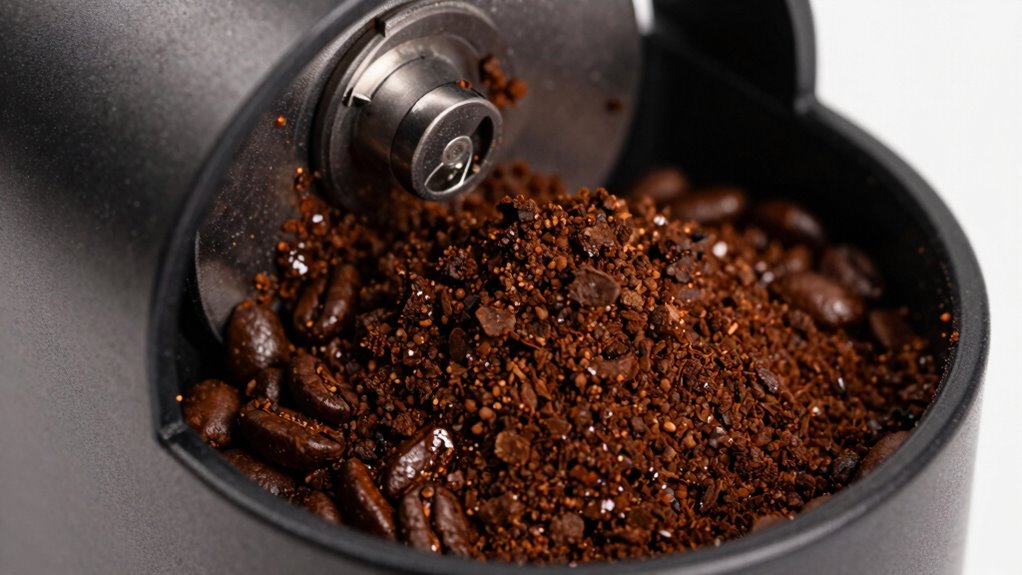
Moisture content in coffee beans considerably influences how grounds clump together, especially during grinding. When beans absorb moisture from poor coffee bean storage or environmental conditions, their internal moisture levels increase. This moisture absorption causes the beans to stick together more tightly, leading to uneven grounds and increased clumping. Freshly harvested beans naturally contain some moisture, but improper storage—like humid environments—can elevate moisture levels beyond ideal. As a result, when you grind these beans, the grounds tend to clump more, making your brewing process messier and more inconsistent. To minimize this, ensure proper coffee bean storage in a cool, dry place, and avoid exposure to excess humidity. Proper storage helps maintain suitable moisture levels, preventing grounds from clumping due to excess moisture absorption. Understanding moisture levels can help you better manage your coffee quality and grinding consistency.
Proper Grinder Maintenance and Cleaning Tips
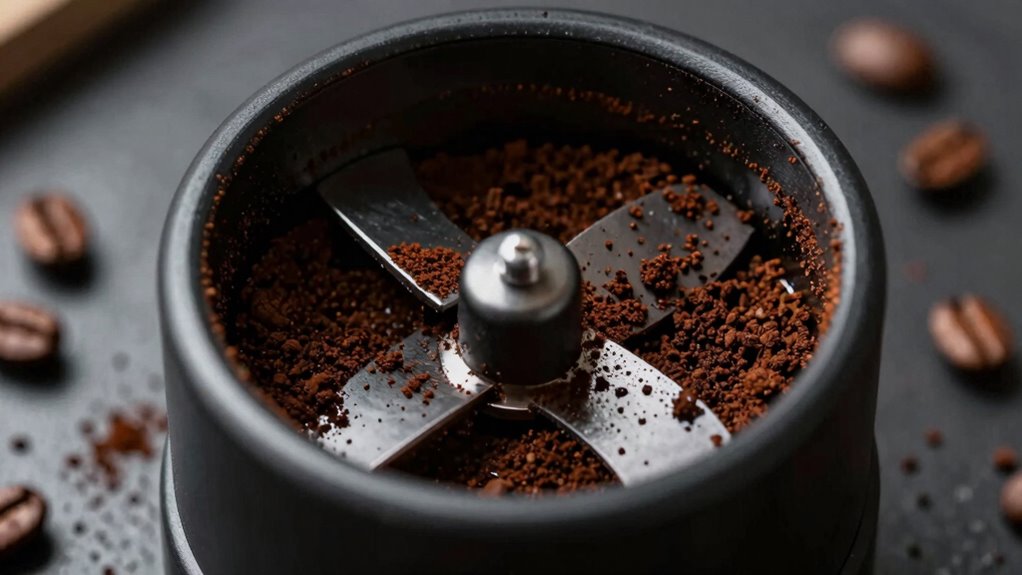
Maintaining your grinder with a regular cleaning schedule keeps clumping at bay and guarantees fresh grounds. Use the proper tools, like a brush or cleaning brush, to remove residue without damaging the equipment. Staying consistent with these tips makes a noticeable difference in your coffee’s quality.
Regular Cleaning Schedule
Establishing a regular cleaning schedule for your grinder is essential to prevent clumping and guarantee consistent coffee quality. When you clean your grinder regularly, you preserve grinding consistency and ensure bean freshness, which are crucial for great-tasting coffee. Here’s what you should do:
- Clean after every few uses to remove residual oils that cause clumping.
- Deep clean weekly with appropriate brushes or tools to eliminate built-up particles.
- Use proper cleaning solutions to avoid residue that impacts flavor.
- Inspect and replace parts as needed to keep your grinder in top shape.
Following these steps helps prevent stubborn clumps, maintains the integrity of your grind, and guarantees each cup is as fresh and flavorful as possible. Consistency starts with routine maintenance.
Use Proper Tools
Using the right tools for grinder maintenance and cleaning makes a significant difference in preventing clumping and ensuring ideal performance. Proper tools, like a small brush, compressed air, and toothpicks, help you remove leftover coffee grounds and residue effectively. Regular grinder calibration ensures consistent grind size, reducing uneven clumping. Also, check your storage conditions; moisture and temperature fluctuations can cause grounds to stick together. Keep your grinder clean and well-calibrated, and store beans in a cool, dry place. Using these tools and practices minimizes buildup and clumping, maintaining a smooth, even grind. Proper maintenance isn’t just about cleanliness—it’s about optimizing your grinder’s performance and extending its lifespan. Stay vigilant with your tools, calibration, and storage to enjoy fresh, clump-free coffee every time.
Prevent Clumping Without Relying on Humidity

To prevent grinder clumping without relying on humidity, the key is to keep the coffee grounds dry and well-separated during storage and handling. Use airtight storage containers to protect grounds from moisture and air exposure, which can cause clumping. Regularly check and adjust your grinder calibration to ensure consistent grind size, preventing fine particles from sticking together. Here are four ways to avoid clumping:
- Choose high-quality, airtight storage containers for your coffee.
- Store grounds in a cool, dark place away from moisture sources.
- Calibrate your grinder regularly for uniform particle size.
- Avoid overfilling the grinder, which can lead to uneven grinding and clumping.
Should You Upgrade Your Coffee Grinder?
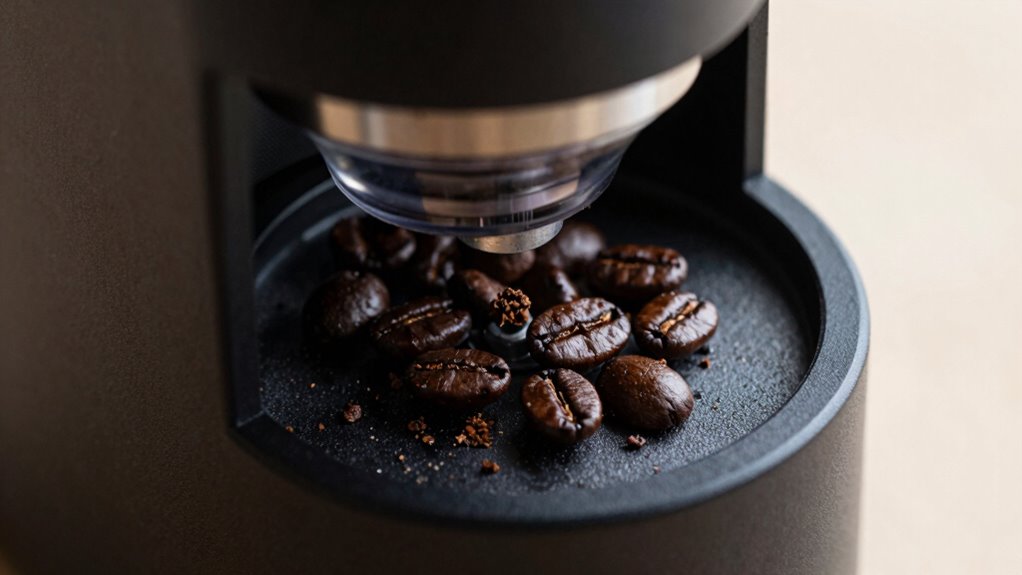
If you’ve been managing to prevent grinder clumping by keeping your grounds dry and well-separated, you might find it worthwhile to contemplate whether your current grinder is meeting your needs. Upgrading could improve grinder durability and offer aesthetic upgrades, making your brewing station more appealing. Consider if your existing grinder struggles with consistent grind size or wears out quickly. An upgrade might provide better performance, longer lifespan, and a more stylish look.
| Feature | Your Current Grinder | Upgraded Option |
|---|---|---|
| Grinder Durability | Moderate | Higher, longer-lasting |
| Aesthetic Upgrades | Limited | Modern, sleek designs |
| Grind Consistency | Variable | Precise and uniform |
| Ease of Use | Basic | Enhanced controls |
| Maintenance | Frequent | Easier cleaning |
Frequently Asked Questions
Can Different Coffee Bean Types Cause More Clumping?
Yes, different coffee bean types can cause more clumping. Beans with varying freshness levels impact grind consistency, making some produce finer or uneven grounds that tend to clump. Older beans or those with high oil content may stick together more easily, leading to clumping issues. To avoid this, make sure your beans are fresh and grind consistently, regardless of the bean type, for a smoother, more uniform grind.
How Does Aging Coffee Beans Influence Clumping?
Aging coffee beans causes freshness loss, which impacts grind consistency and leads to more clumping. As beans age, their oils break down, making them more prone to sticking together in the grinder. You might notice that your grind becomes uneven or clumpy over time. To prevent this, use fresh beans and grind just before brewing. Proper storage also helps maintain freshness and reduces the chances of clumping caused by aging.
Do Specific Grinder Materials Reduce Clumping?
Yes, certain grinder materials can reduce clumping. Burr grinders with ceramic or stainless steel burrs tend to promote better grinding consistency, preventing grounds from sticking together. Regular grinder maintenance, like cleaning burrs and removing leftover grounds, also helps minimize clumping. By choosing quality materials and maintaining your grinder properly, you guarantee more uniform grounds, which leads to better extraction and flavor in your coffee.
Is Clumping More Common With Manual or Electric Grinders?
Clumping is more common with electric grinders because their burrs or blades can become uneven over time, affecting grind consistency. Manual grinders generally maintain better control, reducing clumping issues. Regular grinder maintenance, such as cleaning and checking for worn parts, helps prevent clumping regardless of type. When your grinder is well-maintained, you’ll notice improved grind consistency and fewer clumps, making your brewing process smoother and more enjoyable.
Can Climate Changes Affect Coffee Grounds Stability?
Climate changes can definitely affect coffee grounds stability. When moisture absorption increases due to shifts in temperature or humidity, your coffee grounds may clump more easily. Poor storage conditions, like leaving grounds in a humid environment or not sealing your container properly, exacerbate this issue. To keep your grounds fresh and free-flowing, guarantee you store them in a cool, dry place and use airtight containers to minimize moisture absorption.
Conclusion
Clumping isn’t just about humidity—residual oils, fine particles, and grind settings play a big role. Regular cleaning and proper adjustments can keep your grounds consistent, saving you time and frustration. Did you know that over 60% of home baristas experience clumping at some point? By understanding these factors, you can enjoy fresher, better-tasting coffee every time. So, stay proactive with your grinder, and your brew will thank you!
Fall Picks
fall essentials
As an affiliate, we earn on qualifying purchases.