Hollow taste in filter coffee often comes from improper extraction, usually caused by incorrect grind size or water temperature. If your coffee is under-extracted, it’ll taste dull and weak; over-extraction, on the other hand, makes it bitter and harsh. Coffee that’s too coarsely ground or brewed with too cool water can lead to a hollow flavor. Mastering these variables improves your brew and helps avoid that hollow flat taste — if you want to explore more, keep going.

Get kitchen gear delivered free with Prime
- Fast, free delivery on millions of items
- Prime Video, Amazon Music and more included
- Member-only deals all year
Key Takeaways
- Hollow or flat coffee taste often results from over- or under-extraction caused by improper grind size or water temperature.
- Using too fine grounds or excessively hot water can lead to over-extraction, producing bitterness.
- Coarse grounds or cooler water can cause under-extraction, resulting in weak, dull flavor.
- Consistent grind size and maintaining optimal water temperature (195°F–205°F) are essential for balanced extraction.
- Small adjustments in grind and temperature help prevent hollow taste and improve overall coffee flavor.
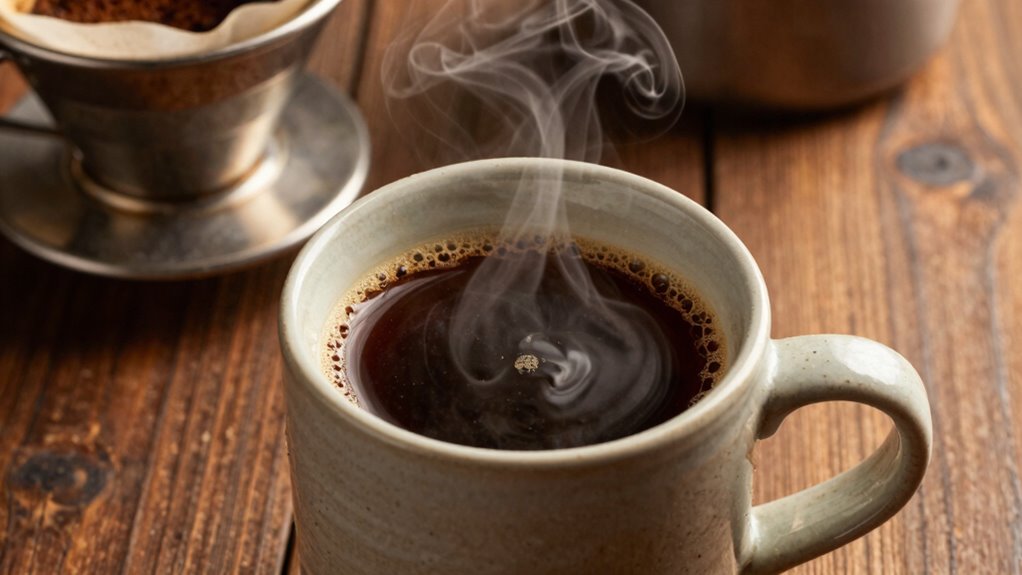
Have you ever wondered why your filter coffee sometimes turns out bitter or weak? The answer often lies in the details of your brewing process, especially in how you handle coffee grinding and water temperature. Both play crucial roles in extracting the right flavors from your coffee grounds. If the coffee is over-extracted or under-extracted, it can lead to that hollow, unsatisfactory taste you’re trying to avoid. Understanding these factors can help you troubleshoot and improve your coffee every time.
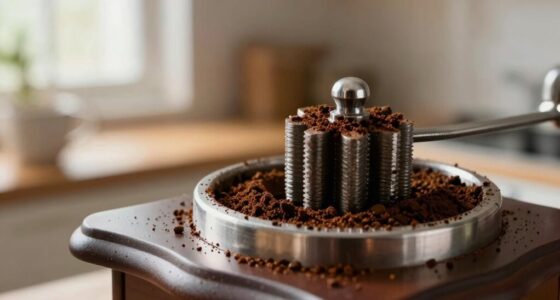
First, consider your coffee grinding. If your grounds are too fine, the water struggles to flow through the coffee bed, leading to over-extraction. This results in a bitter, harsh flavor because the water extracts too many compounds from the coffee. Conversely, if the grind is too coarse, the water passes through too quickly, under-extracting the coffee. This produces a weak, watery brew lacking in richness. The key is to find the right grind size for your filter method—usually medium to medium-coarse for drip filters. Adjusting your grinder and paying attention to consistency can make a huge difference in balancing the flavors. Additionally, using a consistent grind size helps ensure more predictable and controlled extraction. Proper grind size control is essential for achieving the desired flavor profile.
Proper grind size ensures balanced extraction; too fine leads to bitterness, too coarse results in weak, underwhelming coffee.
To further optimize your brewing, consider the water temperature, as it directly influences extraction quality. Water that’s too hot can cause over-extraction, making the coffee bitter, while water that’s too cool results in under-extraction, leaving your coffee dull. The optimal water temperature for filter coffee is generally between 195°F to 205°F (90°C to 96°C). Using a thermometer or a kettle with temperature control can help you maintain this range. When the water is at the right temperature, it interacts with the coffee grounds efficiently, extracting the complex flavors without turning bitter or weak. Additionally, the extraction process is influenced by both grind size and water temperature, emphasizing the importance of controlling these variables for a balanced brew. Proper brewing technique involves paying attention to these details to achieve the best results. Remember, water quality can also impact the flavor, so using clean, filtered water can make a noticeable difference.
Combining proper coffee grinding with the correct water temperature ensures a more balanced extraction. If you still notice a hollow or flat taste, it might be worth experimenting with slight adjustments—try a coarser grind or slightly cooler water, and see how the flavor changes. Remember, small tweaks can have a big impact on the final cup. By paying attention to these details, you can prevent that hollow, disappointing taste and enjoy a rich, flavorful filter coffee every time. Improving your technique isn’t complicated—it’s about understanding the science behind brewing and applying it consistently. With patience and practice, you’ll master the art of brewing perfect filter coffee, free from that hollow problem once and for all.
As an affiliate, we earn on qualifying purchases.
Frequently Asked Questions
Does Water Quality Affect the Hollow Filter Coffee Problem?
Yes, water quality impacts the hollow filter coffee problem. When mineralization levels are too high or too low, or if the pH level isn’t balanced, it can cause clogging and poor extraction. Using water with ideal mineral content and a neutral pH level guarantees smoother flow through the filter, improving flavor and preventing the hollow filter issue. Good water quality is crucial for a consistent, delicious coffee experience.
Can Filter Paper Type Influence the Hollow Filter Issue?
Your choice of filter paper can definitely influence the hollow filter coffee issue; it’s like choosing the right sieve for your needs. A thicker or poorly designed filter paper might trap fewer coffee grounds, causing a hollow center. Similarly, the coffee grind size matters — too fine or too coarse can disrupt extraction. Using the proper filter paper and a consistent coffee grind guarantees even flow, reducing the hollow effect and boosting flavor.
Is Filter Size Related to the Hollow Filter Coffee Problem?
Yes, filter size is related to the hollow filter coffee problem. If your filter is too large or too small, it can disrupt water flow, causing uneven extraction. This affects your coffee aroma, making it less vibrant and balanced. To avoid this, choose a filter size that matches your brewing method, ensuring proper water contact with coffee grounds. Proper filter sizing helps preserve aroma and prevents hollow filter issues.
How Does Brewing Temperature Impact the Hollow Filter Problem?
Imagine brewing as a dance—your temperature control sets the rhythm, directly influencing brewing consistency. When you maintain a steady temperature, you prevent the hollow filter coffee problem from brewing up, ensuring uniform extraction. Too high or low, and you risk uneven flavors or hollow spaces. Precise temperature control keeps your coffee balanced and rich, avoiding the hollow filter pitfalls and making every cup a harmonious masterpiece.
Are There Specific Coffee Bean Types Prone to This Issue?
Certain coffee bean types are more prone to experiencing the hollow filter coffee problem, especially those with less freshness. Overly roasted beans can also contribute, as they tend to produce a hollow or flat flavor. You should prioritize fresh beans and specific varieties known for their balanced flavor profiles. This way, you enhance your coffee flavor and reduce the risk of hollow filter issues, ensuring a richer, more satisfying brew.
digital coffee water temperature thermometer
As an affiliate, we earn on qualifying purchases.
As an affiliate, we earn on qualifying purchases.
Conclusion
Now that you’ve understood the hollow filter coffee problem, you can see the importance of proper filter design, correct water flow, and consistent technique. By paying attention to these details, you prevent clogging, guarantee smooth brewing, and enjoy a rich, aromatic cup every time. Remember, a well-maintained filter, a steady hand, and patience create the perfect coffee experience. With these simple steps, you turn a common problem into a perfect brew, every single time.
electric kettle with temperature control
As an affiliate, we earn on qualifying purchases.
As an affiliate, we earn on qualifying purchases.
As an affiliate, we earn on qualifying purchases.
Halloween Picks
halloween
As an affiliate, we earn on qualifying purchases.