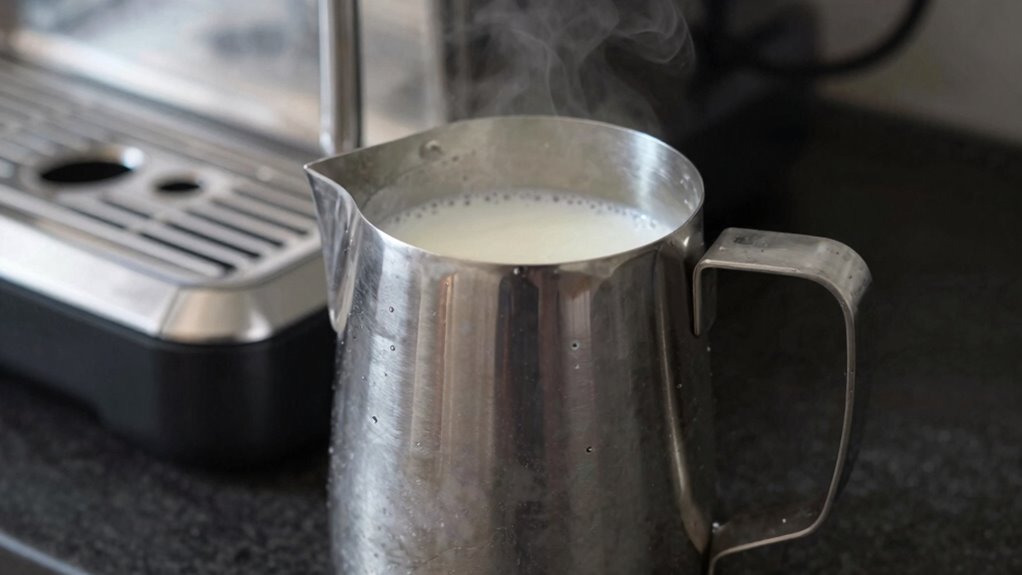
If your milk isn’t foaming, the top causes include milk that’s too cold or hot, improper steaming technique, insufficient air injection, using low-quality or incompatible milk, and incorrect wand positioning. Make sure your milk is between 140°F and 150°F, and practice steady hand movements while introducing the right amount of air. If these issues sound familiar, scrolling further will help you troubleshoot each problem and improve your foam every time.

Get kitchen gear delivered free with Prime
- Fast, free delivery on millions of items
- Prime Video, Amazon Music and more included
- Member-only deals all year
Key Takeaways
- Milk temperature is outside the ideal range (140°F-150°F), either too cold or too hot, preventing proper foam formation.
- The steam wand is improperly positioned or not creating enough turbulence, hindering air incorporation.
- Insufficient or uneven air introduction results in flat milk with no foam development.
- Using low-fat or alternative milks can reduce foam stability, causing minimal or no frothing.
- Inadequate steam pressure or improper technique can prevent the milk from incorporating air effectively.
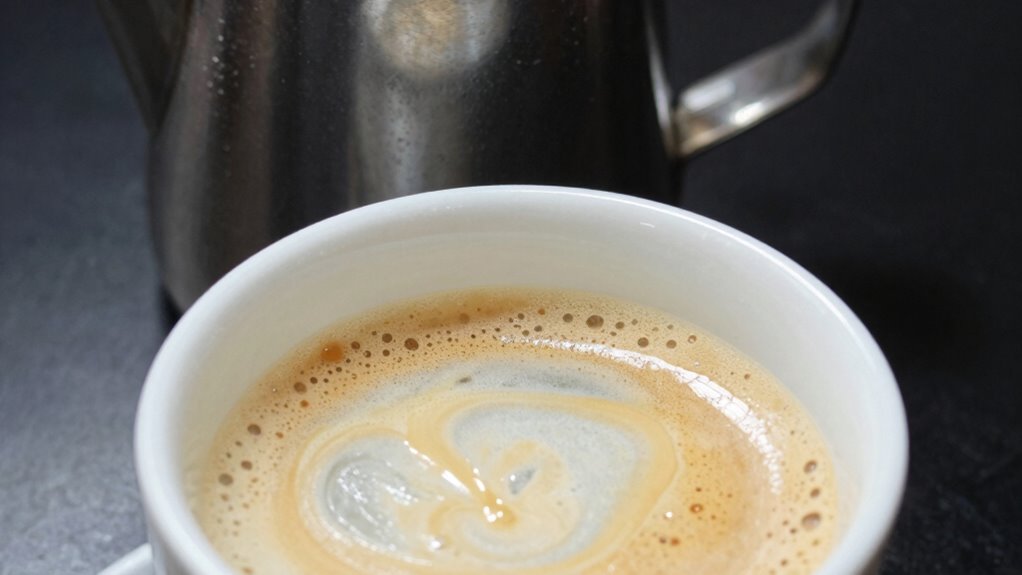
If your milk refuses to foam despite your best efforts, it can be frustrating, especially when you’re aiming for that perfect cappuccino or latte art. One of the most common reasons is the milk temperature. Milk that’s too cold or too hot won’t froth properly. Ideally, you want to heat your milk to around 140°F to 150°F (60°C to 65°C). At this range, the proteins in the milk are at just the right level to trap air and create stable foam. If your milk is colder, say below 130°F, it lacks the necessary energy to form bubbles, resulting in flat or no foam at all. Conversely, if you heat it beyond 160°F, the proteins start to break down, which hampers foam formation and can produce a scorched taste. Always use a thermometer to monitor milk temperature; relying solely on touch can be unreliable.
Another key factor is your frothing technique. If you’re not positioning the steam wand correctly or aren’t creating enough turbulence, your milk may not foam. When frothing, insert the steam wand just below the surface of the milk and turn on the steam. You want to start with a gentle, consistent motion, creating a whirlpool effect. This motion helps incorporate air into the milk evenly. If you don’t introduce enough air or if you don’t move the wand properly, the milk won’t produce the microfoam you need for latte art or a rich cappuccino. Also, avoid immersing the wand too deep or too shallow, as both can hinder foam creation. Keep the pitcher at a slight angle and listen for a consistent hissing sound—this indicates proper steam flow.
Additionally, the type of milk you use plays a role. Whole milk generally froths better than skim or plant-based alternatives because of its fat content, which stabilizes the foam. But no matter the milk, the frothing technique and temperature are critical. If the milk is overheated or underfrothed, it won’t develop the desired foam. Remember, creating good foam is a balance: maintain the right temperature, use a steady hand with your frothing technique, and monitor your milk’s progress closely. With practice, you’ll get a feel for the ideal temperature and motion, making your milk foam reliably every time.
Frequently Asked Questions
Can I Fix a Non-Foaming Milk Frother?
Yes, you can fix a non-foaming milk frother. First, check if the frother’s clean, as residue can affect milk texture and frothing consistency. Make sure you’re using cold, fresh milk, and avoid overfilling. If the frother still doesn’t work, inspect the heating element or motor for damage. Sometimes, replacing worn parts or cleaning thoroughly restores your frother’s ability to create rich foam again.
Does Milk Temperature Affect Foam Quality?
Think of milk temperature as the stage for a perfect performance; too hot or too cold, and the act falls flat. When you get milk temperature just right—around 140°F to 160°F—you set the scene for ideal foam quality. If the milk’s too warm, the proteins break down, and foam deflates; too cold, and it won’t froth properly. Temperature truly is the maestro behind your frothy masterpiece.
Are There Specific Milk Brands Better for Frothing?
You’ll find that certain milk brands, like Barista Prima or Oatly, tend to offer better frothing quality because they’re designed with baristas in mind. These brands often have higher fat or protein content, which helps create richer, creamier foam. Experimenting with different brands can help you discover which produces the best froth for your preferred coffee style. Keep in mind, fresh, cold milk generally froths better regardless of the brand.
How Long Should I Steam Milk for Perfect Foam?
Master the magic of frothing by steaming milk for about 20-30 seconds until it reaches 150°F to 155°F, ensuring silky, smooth foam. Your frothing technique matters—position the wand just below the surface and tilt the pitcher slightly. Keep an eye on the temperature and listen for a gentle hissing sound. With patience, your perfect foam will flourish, fueling fabulous flavor and finesse in every cup.
Is Plant-Based Milk Suitable for Good Froth?
Yes, plant-based milk can produce good froth if you follow the right frothing tips. Choose varieties like almond, soy, or oat milk, which tend to foam better. Use cold milk and steam until it’s around 150°F, then tap and swirl to eliminate large bubbles. Remember, some plant-based milks naturally foam better than others, so experiment to find the best for your coffee.
Conclusion
Just like the alchemist’s quest for gold, perfect frothed milk can feel elusive. When your milk refuses to foam, it’s a sign to look closer—perhaps the temperature’s off or the milk’s not fresh. Remember, even the best baristas face hurdles; patience and attention turn the ordinary into magic. So, don’t give up. With each attempt, you’re just one step closer to transforming simple milk into a frothy masterpiece—your own brewing myth.
Halloween Picks
halloween
As an affiliate, we earn on qualifying purchases.