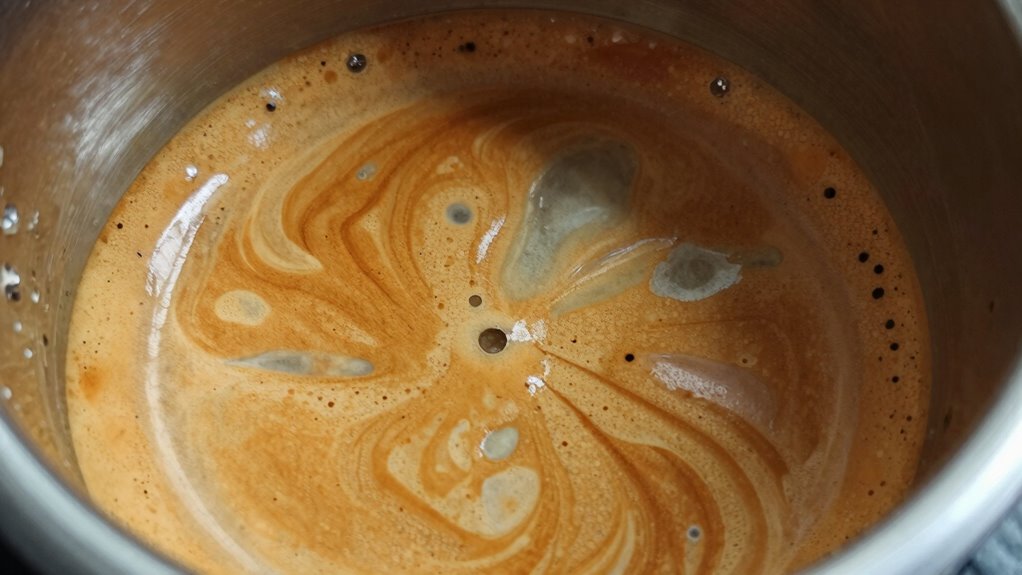

You can spot uneven espresso extraction by looking for color variations and patchy crema that appears thin or broken. Inconsistent flow during brewing or quick bypass indicates channeling or uneven grounds. You’ll notice off-flavors like sour, bitter, or flat, along with weak aromas, signaling extraction problems. Pay attention to these cues, and you’ll pick up key signs of trouble—if you want to learn more, keep exploring these indicators further.
Key Takeaways
- Look for patchy or streaked crema with inconsistent color and texture on the espresso surface.
- Observe uneven flow or inconsistent stream during extraction indicating channeling or bypass.
- Detect dry or under-extracted spots by inspecting the pour for uneven coverage or color variation.
- Use aroma and flavor cues—sour, bitter, or flat notes suggest uneven extraction.
- Ensure smooth, uniform pouring and consistent taste to identify proper extraction without a bottomless portafilter.
How to Recognize Uneven Extraction by Color and Crema
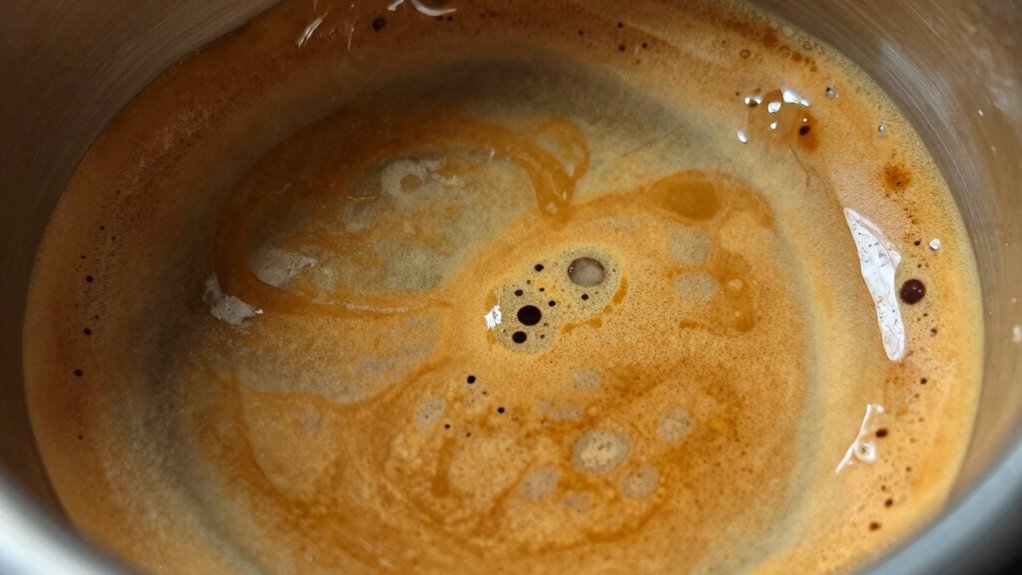
To recognize uneven extraction by color and crema, start by observing the espresso shot immediately after brewing. Look for color variation across the surface; an uneven shot often displays streaks or patches of lighter and darker areas. Crema inconsistency is another key indicator—if the crema appears patchy, thin, or uneven in texture, it suggests uneven extraction. A well-extracted espresso typically has a uniform, rich caramel color with a thick, persistent crema. Conversely, inconsistent crema may break apart quickly or show discoloration, signaling that some grounds extracted more than others. These visual cues help identify uneven extraction early, allowing you to adjust your grind size or tamping technique for a more balanced shot. Additionally, understanding extraction balance can help you fine-tune your process for more consistent results.
Signs of Channeling and Bypass in Your Espresso

Channeling and bypass are common issues that can compromise the quality of your espresso. You might notice uneven extraction, with some areas over-extracted and others under-extracted. Signs include inconsistent flow during brewing and strange taste notes. To prevent this, check your tamper pressure—too little or uneven pressure creates gaps in the puck. Also, ensure your machine temperature is stable; fluctuations can cause bypassing of water through less resistant parts.
| Sign | What to Look For | How to Fix |
|---|---|---|
| Uneven flow | Inconsistent stream during extraction | Adjust tamping pressure and distribute coffee evenly |
| Bypass or channeling | Water bypasses coffee, quick flow | Reassess grind size and tamp pressure |
| Strange taste or weak brew | Under-extraction in parts | Stabilize machine temperature and check puck density |
Checking Grind and Dissolution Without a Bottomless Portafilter

Without a bottomless portafilter, evaluating extraction quality requires careful observation and technique. Focus on the coffee bed and your shot’s appearance. Check for even dissolution by observing the color and uniformity of the espresso as it pours. Variations can indicate inconsistent grind size or tamping pressure. To assess grind and dissolution effectively:
Observe espresso flow and color for consistent extraction without a bottomless portafilter.
- Look for even extraction across the surface
- Notice any dry or under-extracted spots
- Observe if the espresso flows smoothly
- Check for signs of channeling or bypass
- Ensure the grind consistency allows for uniform flow
- Remember that proper grind size and tamping pressure are critical for achieving consistent extraction.
How Tasting and Aromas Reveal Extraction Issues

You can often detect extraction issues through the flavors and aromas of your espresso. If you notice flavor inconsistencies—such as sour, bitter, or flat tastes—it’s a sign that your extraction isn’t even. Aroma clues are just as revealing; a well-extracted shot should have a rich, inviting fragrance. If the aroma is weak, stale, or overly sharp, it indicates uneven extraction or over/under-extraction. Tasting helps identify subtle differences in sweetness, acidity, and bitterness that reveal where the process might be off. Pay attention to these sensory cues, as they provide immediate feedback on your technique. Recognizing aroma clues and flavor inconsistencies allows you to fine-tune your grind, tamp, and extraction time for a more balanced espresso. Additionally, understanding the contrast ratio can help you optimize your setup for better image quality during brewing, ensuring consistent results.
Common Mistakes That Cause Uneven Extraction and How to Fix Them
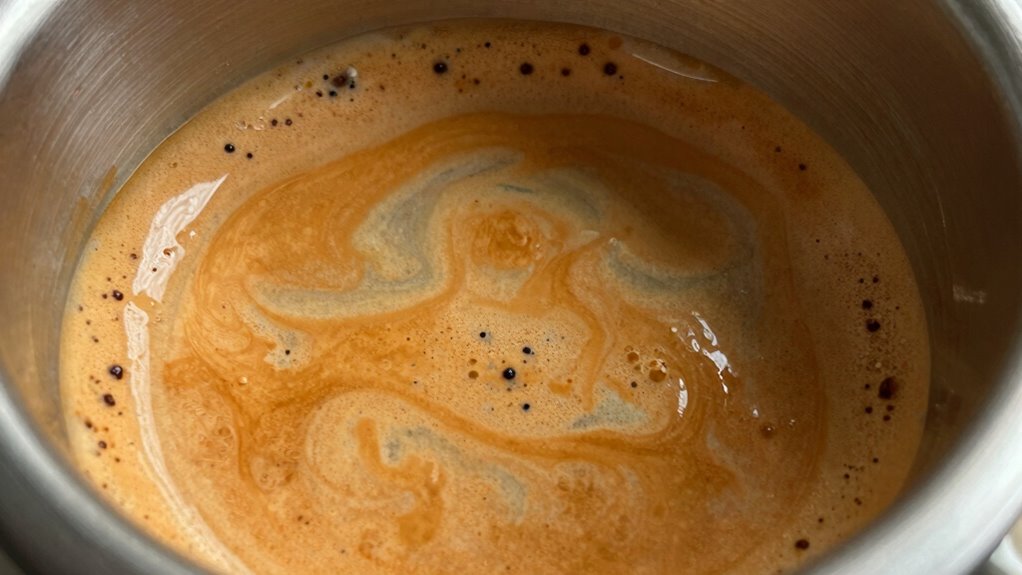
Uneven extraction often results from common mistakes during the brewing process that disrupt the flow of water through the coffee grounds. One mistake is inconsistent tamping pressure, which causes channels and uneven extraction. Using stale coffee can also hinder water flow, leading to unevenness. Additionally, uneven distribution of grounds before tamping creates pockets that water bypasses. Rushing the grind size or tamping too hard can compact grounds unevenly. Finally, neglecting coffee freshness affects extraction quality and consistency. To fix these issues:
- Apply even tamping pressure
- Ensure coffee is fresh and properly stored
- Distribute grounds evenly before tamping
- Use a consistent grind size
- Take your time during extraction for better flow control
Frequently Asked Questions
Can Uneven Extraction Affect the Overall Flavor Profile of My Espresso?
Yes, uneven extraction can definitely affect your espresso’s flavor profile. When extraction isn’t uniform, it causes a flavor imbalance, resulting in a taste variation that might be sour, bitter, or weak. You’ll notice your espresso lacks consistency and depth. To improve flavor, focus on evenly tamping your coffee, adjusting grind size, and ensuring proper extraction techniques. This helps you achieve a balanced, rich, and satisfying espresso every time.
What Tools Besides a Bottomless Portafilter Help Detect Extraction Issues?
You can use visual inspection and monitor your brew ratio to detect extraction issues. By observing the espresso flow and crema, you spot signs of uneven extraction. Adjust your grind size or tamp pressure if the flow looks uneven. Keeping an eye on your brew ratio guarantees you’re using the right coffee-to-water balance, helping you achieve a more consistent extraction and better flavor, even without a bottomless portafilter.
How Does Tamping Pressure Influence Even Extraction?
Tamping pressure directly impacts even extraction by ensuring consistent tamping consistency and pressure distribution across the coffee bed. If you tamp too hard or unevenly, water flows unevenly, causing under- or over-extraction. To avoid this, apply steady, even pressure each time, maintaining uniformity. Proper tamping technique helps water permeate the coffee evenly, resulting in a balanced shot with ideal flavor.
Are Certain Coffee Beans More Prone to Uneven Extraction?
You’ll find that lighter roast level beans are more prone to uneven extraction compared to darker roasts. While bean select impacts flavor, the roast level influences how uniformly water penetrates, affecting extraction. If you choose beans with inconsistent size or quality, you risk unevenness regardless of tamping pressure. To improve extraction, opt for uniform beans and consider roast level, as these factors play essential roles in achieving a balanced espresso.
How Often Should I Calibrate My Grinder to Prevent Uneven Extraction?
You should calibrate your grinder every 1-2 weeks to maintain extraction consistency. Regular grinder calibration guarantees your coffee grounds are uniform, which helps prevent uneven extraction. If you notice changes in flavor or extraction signs, it’s a clear indicator to recalibrate sooner. Consistent calibration keeps your coffee tasting great and ensures your espresso shots are balanced and flavorful every time.
Conclusion
Think of your espresso shot like a symphony—you want every instrument to play in harmony. When uneven extraction occurs, it’s like a musician missing their cue, throwing off the whole performance. By spotting signs early—color, crema, taste—you can fine-tune your process. Remember, even seasoned baristas had to learn to listen and adjust. With patience and practice, your espresso will flow smoothly, delivering a balanced, harmonious brew every time.