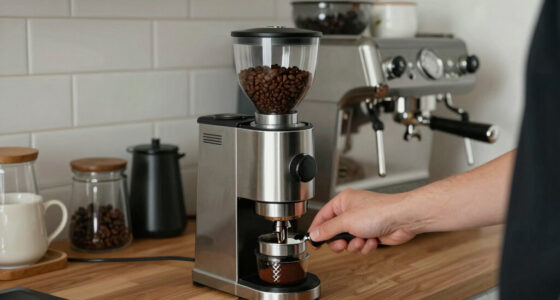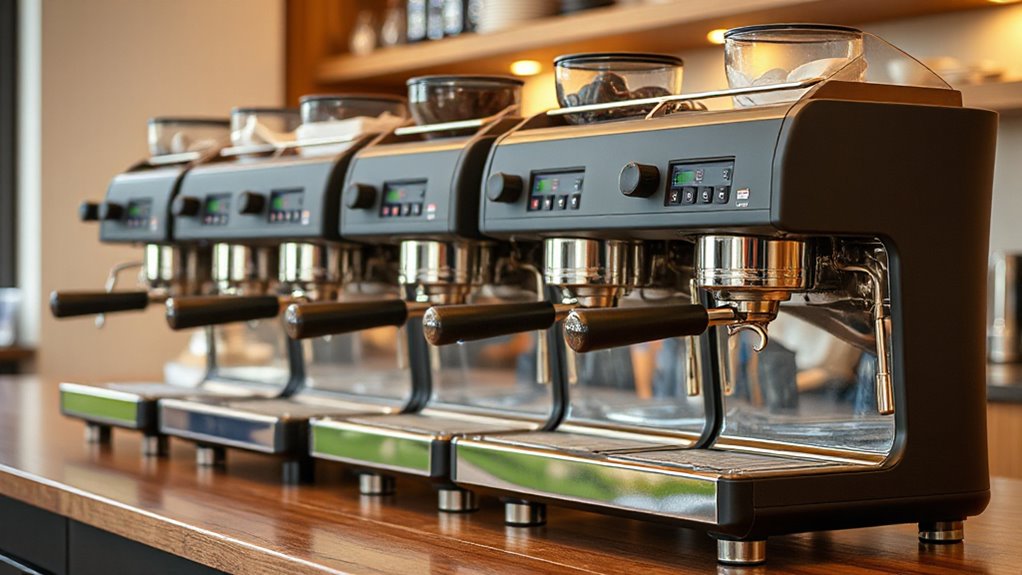

An E61 espresso machine for cappuccinos pairs a traditional group head with a capable steam system, but this lineup also includes non-E61 machines that may better fit a first-time buyer or a smaller kitchen. My best overall pick is the Rocket Espresso Appartamento TCA for buyers who want an actual E61 machine and hands-on control; the Breville Barista Express is a more approachable all-in-one alternative, while the Meraki Dual Boiler stands out for its grinder and built-in scales. The main tradeoffs are E61-style control versus faster, simpler workflows, and separate equipment versus an integrated grinder and frother. Several listed models are compact or budget-oriented, but they should not be mistaken for E61 machines. Read on for the full breakdown and guidance on choosing the right cappuccino setup.

Get kitchen gear delivered free with Prime
- Fast, free delivery on millions of items
- Prime Video, Amazon Music and more included
- Member-only deals all year
Complete the kit


Key Takeaways
- The Rocket Appartamento TCA is the lineup’s clearest E61 match; most of the other machines are compact thermoblock, pump, or all-in-one designs rather than E61 models.
- The Breville Barista Express balances control and convenience with a built-in grinder, while the Rocket leaves grinding to separate equipment.
- The Meraki combines a dual boiler, grinder, and scales, giving it a distinct all-in-one feature set, though its more involved setup may not suit buyers seeking a simple routine.
- Compact machines such as the De’Longhi Stilosa and Casabrews CM5418 prioritize a smaller footprint over the traditional E61 workflow and its hands-on control.
- Several machines advertise integrated milk frothing or one-touch convenience, but buyers should compare how much manual steaming and espresso adjustment they want before choosing.


| e61 espresso machine for cappuccino | Wattage | Dimensions | Operation mode | Weight |
|---|---|---|---|---|
| Mr. Coffee 4-Shot Steam Espres | 1200 watts | 11.2 x 11.2 x 15 inches | Semi-automatic | — |
| Rocket Espresso Appartamento T | 1350 watts | 17.6 x 10.7 x 14 inches | — | 48.5 pounds |
| Chefman 6-in-1 Espresso Machin | 1350 watts | 8.3 x 11 x 12.6 inches | Semi-automatic | 10.6 pounds |
| IMUSA 4 Cup Electric Espresso | 800 watts | 7.48 x 9.05 x 11.02 inches | Semi-automatic | 4.8 pounds |
| Aromaster 1400W Semi-Automatic | — | 13 x 7 x 14 inches | Semi-automatic | — |
| Meraki Dual Boiler Espresso Ma | 1600 watts | 14.57 x 14.57 x 16.33 inches | — | — |
| De’Longhi Stilosa Compact Manu | 1100 watts | 12.13 x 9.45 x 14.17 inches | Manual | 8.6 pounds |
| De’Longhi Classic Signature Es | 1350 watts | 11.22 x 13.98 x 15.94 inches | Fully automatic | — |
| Casabrews CM5418 Compact Espre | 1350 W | — | Semi-automatic | — |
| Arecovas Espresso Machine with | 1300 W | 12 x 5.2 x 11.9 inches | Semi-automatic | — |
| Compact Espresso Machine with | 1400 watts | 11.4 x 5.3 x 11.4 inches | Semi-automatic | 7.2 pounds |
| EUHOMY Automatic Espresso Mach | — | — | — | — |
| Breville BES870XL Barista Expr | 1600 watts | 13.8 x 12.5 x 15.9 inches | Manual | 22.1 pounds |
| Espresso Machine with Grinder | 1350 watts | 12 x 10 x 14 inches | Semi-automatic | 15 pounds |
| Breville BES870BTR Barista Exp | 1600 watts | 13.8 x 12.5 x 15.9 inches | Semi-automatic | 22.1 pounds |
More Details on Our Top Picks
Mr. Coffee 4-Shot Steam Espresso Cappuccino and Latte Maker
The four-shot portafilter gives this Mr. Coffee a practical advantage for households making several cappuccinos in one session: it can prepare a larger batch than the single- or double-shot workflow of the Chefman 6-in-1 Espresso Machine. Its steam wand and included stainless steel pitcher also put milk drinks at the center of the experience. But this is a steam-brewing machine, not an E61 espresso machine, so buyers seeking an E61 group head and its temperature-management approach should look to the Rocket Appartamento TCA instead. The tradeoff for batch convenience is more hands-on brewing and frothing, with a learning curve that may frustrate anyone expecting one-touch cappuccinos. Check the listed 240-volt requirement against your home’s electrical supply before buying.
Pros:- Portafilter accommodates up to four shots in one brewing session.
- Includes a steam wand and stainless steel frothing pitcher for cappuccinos.
- Marked water pitcher helps guide measured brewing.
- Supports espresso, cappuccino, and latte preparation.
Cons:- Steam-brewing design is not an E61 machine.
- Manual brewing and frothing take practice.
- Listed 240-volt specification may not suit every household.
Best for: Households that want to make several espresso-based drinks together and are comfortable learning manual brewing and milk frothing.
Not ideal for: Buyers specifically seeking an E61 group head, one-touch convenience, or a machine confirmed to suit standard 120-volt outlets.
- Operation mode:Semi-automatic
- Brewing method:Steam brewing
- Portafilter capacity:Up to 4 shots
- Wattage:1200 watts
- Voltage:240 volts
- Frother:Integrated steam wand
- Dimensions:11.2 x 11.2 x 15 inches
- Materials:Metal, plastic, and stainless steel
Our verdict“Choose this Mr. Coffee for batch-making milk drinks on a hands-on steam machine, not for E61 brewing or push-button convenience.”
Rocket Espresso Appartamento TCA Espresso Machine, Black (Copper)
This is the clearest match for the roundup’s E61 focus: its E61 group head, heat-exchanger boiler, and adjustable brew-temperature settings give a home barista more control than the steam-driven Mr. Coffee 4-Shot. The heat exchanger supports brewing and steaming at the same time, a useful advantage when preparing cappuccinos back-to-back instead of waiting between tasks. That capability comes with a more involved routine: the Rocket is semi-automatic, has limited digital controls, and asks the owner to manage espresso preparation and milk texture manually. Compared with the compact Chefman, it also takes up more room and weighs substantially more. I’d rank it ahead of the other options for buyers specifically seeking an E61 platform, but its size and hands-on operation make it a poor fit for casual, low-effort cappuccino making.
Pros:- E61 group head directly fits the roundup’s machine criteria.
- Heat-exchanger boiler supports brewing and steaming simultaneously.
- Four brew-temperature settings offer adjustment for different beans.
- 58mm portafilter and stainless-steel construction suit a hands-on home-barista setup.
Cons:- Manual operation demands more skill and attention than the Chefman’s one-touch controls.
- At 48.5 pounds and 17.6 inches deep, it is cumbersome for small counters.
- Limited digital controls provide less guidance during brewing.
Best for: Experienced home baristas who specifically want an E61 group head, adjustable brew temperatures, and simultaneous brewing and steaming.
Not ideal for: Beginners seeking guided controls, small-kitchen owners, or buyers who want a compact, low-effort cappuccino machine.
- Group head:E61
- Boiler type:Heat exchanger
- Boiler capacity:1.8 liters
- Brew temperature settings:4
- Portafilter size:58mm
- Wattage:1350 watts
- Voltage:120 volts
- Dimensions:17.6 x 10.7 x 14 inches
- Weight:48.5 pounds
Our verdict“Pick the Rocket if an E61 group head and simultaneous milk steaming matter more than compact size or beginner-friendly automation.”
Chefman 6-in-1 Espresso Machine with Built-In Milk Frother, 15-Bar Pump, Digital Display, One-Touch Single or Double Shot, 1.8L Water Reservoir, Stainless Steel
One-touch single- or double-shot brewing makes the Chefman easier to approach than the Rocket Appartamento TCA, where the barista has more manual control over espresso and steaming. Its integrated frother and 1.8-liter reservoir make it a practical choice for regular cappuccino routines without frequent refills. The compact footprint also beats the Rocket’s bulky, heavy setup for kitchens with limited counter space. The tradeoff is that the Chefman is not an E61 machine, and its semi-automatic design still leaves some technique to the user; the built-in frother does not turn it into a fully automatic drink maker. It also takes ground coffee only and has no grinder, so buyers who want an all-in-one setup should compare it with the listed machines that include grinders.
Pros:- One-touch single- and double-shot controls simplify routine brewing.
- Integrated milk frother supports cappuccino and latte preparation.
- 1.8-liter reservoir reduces how often it needs refilling.
- Compact 11-inch width uses less counter space than the Rocket Appartamento TCA.
Cons:- Does not have an E61 group head.
- Uses ground coffee and has no built-in grinder.
- Semi-automatic operation still requires some espresso-making practice.
Best for: Newer espresso makers who want straightforward single- or double-shot controls, an integrated frother, and a relatively compact footprint.
Not ideal for: Buyers who require an E61 group head, want freshly ground coffee from an integrated grinder, or expect fully automatic cappuccino preparation.
- Operation mode:Semi-automatic
- Pump pressure:15 bar
- Water reservoir:1.8 liters
- Wattage:1350 watts
- Voltage:120 volts
- Shot controls:One-touch single or double shot
- Dimensions:8.3 x 11 x 12.6 inches
- Weight:10.6 pounds
Our verdict“Choose the Chefman for accessible, compact cappuccino making, but skip it if an E61 group head is a firm requirement.”
IMUSA 4 Cup Electric Espresso Cappuccino Coffee Maker, Black
Small size and a four-cup batch capacity define the IMUSA’s appeal: at 9.05 inches wide and 4.8 pounds, it is easier to fit into a tight kitchen than either the Rocket Appartamento TCA or the Mr. Coffee 4-Shot. A built-in milk frother and permanent filter provide the basics for making cappuccinos without assembling a larger barista setup. But this is a simple, compact choice rather than an E61 alternative; it has no listed E61 group head, and its plastic construction feels less substantial than the Rocket’s stainless-steel body. Its four-cup limit also makes it less suited to repeated rounds for a group. I’d favor it over the larger Mr. Coffee when storage and a small footprint matter most, but not when temperature control or serious espresso workflow is the priority.
Pros:- Compact dimensions and low weight suit limited counter space.
- Brews up to four cups per cycle.
- Built-in milk frother supports cappuccino preparation.
- Permanent filter and removable drip tray support simpler cleanup.
Cons:- Does not have an E61 group head or listed temperature controls.
- Four-cup capacity limits larger or repeated serving needs.
- Plastic exterior feels less substantial than the Rocket’s stainless-steel construction.
Best for: Occasional cappuccino drinkers in small kitchens who want a lightweight machine with a built-in frother and room to brew several servings.
Not ideal for: E61 seekers, frequent cappuccino makers who need sustained batch capacity, or buyers looking for premium metal construction and adjustable brew settings.
- Operation mode:Semi-automatic
- Capacity:4 cups
- Wattage:800 watts
- Filter type:Permanent
- Frother:Yes
- Dimensions:7.48 x 9.05 x 11.02 inches
- Weight:4.8 pounds
- Exterior material:Plastic
Our verdict“Choose the IMUSA for a small, lightweight cappuccino setup, not for E61 features or demanding daily batch brewing.”
Aromaster 1400W Semi-Automatic Espresso Machine with Milk Frother
PID temperature control and pre-infusion give the Aromaster more brewing-focused features than the compact IMUSA, while its 7-inch width makes it a space-conscious alternative to the much larger Rocket Appartamento TCA. For cappuccinos, the 360-degree swivel steam wand can be positioned for milk texturing, and the stated dual-circuit design is intended to let users switch between hot espresso and iced coffee without waiting. Still, its 37-ounce tank is smaller than the Chefman’s 1.8-liter reservoir, so frequent drink makers may need to refill it more often. The semi-automatic workflow also requires practice, and the product data does not list an E61 group head. I’d shortlist it for buyers who value temperature features and a narrow machine, but not for anyone whose key requirement is E61 construction.
Pros:- PID temperature control and pre-infusion add brewing control beyond the IMUSA’s listed feature set.
- 360-degree swivel steam wand can be positioned for milk texturing.
- Seven-inch width suits narrow counter spaces.
- One-touch descaling function and removable parts support routine maintenance.
Cons:- No E61 group head is listed in the product data.
- 37-ounce capacity is smaller than the Chefman’s 1.8-liter reservoir.
- Semi-automatic preparation can require a learning period.
Best for: Space-conscious home baristas who want PID temperature control, pre-infusion, and a repositionable steam wand for cappuccinos.
Not ideal for: Buyers specifically seeking an E61 group head, beginners who want fully guided preparation, or households that prefer a larger water reservoir.
- Operation mode:Semi-automatic
- Power:1400 watts
- Pressure:20 bar
- Capacity:37 fluid ounces
- Temperature control:PID
- Additional brew feature:Pre-infusion
- Steam wand:360-degree swivel
- Dimensions:13 x 7 x 14 inches
- Material:Stainless steel
Our verdict“Pick the Aromaster for temperature-oriented features in a narrow machine, but choose the Rocket if an E61 group head is non-negotiable.”
Meraki Dual Boiler Espresso Machine with Grinder and Built-In Scales
For cappuccinos, the Meraki’s biggest advantage is being able to brew and steam at the same time. Its independent dual boilers reduce the wait between pulling espresso and texturing milk, while built-in scales help baristas repeat doses and yields instead of guessing. The integrated grinder and micro-adjustments also make this a more self-contained setup than the De’Longhi Classic Signature, which requires separately ground coffee. A 58 mm portafilter adds compatibility with familiar barista-style tools. The tradeoff is size and complexity: at over 16 inches tall and nearly 15 inches deep, it needs a dedicated counter spot, and its controls may be more than casual cappuccino drinkers want to learn. I’d choose it for hands-on control, not convenience.
Pros:- Independent boilers allow brewing and milk steaming at the same time.
- Built-in scales support repeatable coffee doses and extraction yields.
- Integrated grinder offers micro-adjustments for dialing in espresso.
- 58 mm portafilter supports familiar barista-style accessories.
Cons:- Large footprint takes substantial counter space.
- Multiple precision features create a steeper learning curve than simpler machines.
- A feature-rich setup may be excessive for people who make cappuccinos only occasionally.
Best for: Home baristas who make cappuccinos regularly and want simultaneous steaming, precise dosing, and an integrated grinder.
Not ideal for: Occasional cappuccino drinkers or small-kitchen owners who want a simple, compact machine with little setup.
- Boiler system:Dual boilers
- Integrated grinder:Yes
- Built-in scales:Yes
- Milk frother:Yes
- Temperature control:PID
- Pump:Commercial rotary pump
- Portafilter:58 mm
- Dimensions:14.57 x 14.57 x 16.33 inches
- Wattage:1600 watts
Our verdict“Choose the Meraki if you want precise, simultaneous espresso and milk preparation and have room for a more involved setup.”
De’Longhi Stilosa Compact Manual Espresso Machine, Manual Milk Frother
The Stilosa is a straightforward way to learn the basic cappuccino routine without giving up much counter space. Its manual steam wand lets beginners practice texturing milk directly, and its 8.6-pound weight makes the machine easier to move or store than the larger Meraki. Unlike the De’Longhi Classic Signature, it keeps the controls and setup simple rather than adding preset recipes. That simplicity comes with limits: it uses ground coffee only, has no integrated grinder, and manual brewing and steaming take practice. Its 1,000 ml capacity also makes it a less comfortable fit for households preparing several drinks in a row. I’d pick it for learning and occasional cappuccinos, not for high-volume service or a hands-off routine.
Pros:- Compact, lightweight body suits smaller kitchens.
- Manual steam wand gives beginners direct practice frothing milk.
- Stainless steel boiler is built for regular home use.
- Includes single- and double-shot filters and a measuring scoop.
Cons:- Manual brewing and steaming require practice and active attention.
- Ground coffee only, with no built-in grinder or pod option.
- Small capacity is inconvenient for repeated drinks or larger households.
Best for: First-time espresso makers with limited counter space who want to practice making single or occasional cappuccinos with ground coffee.
Not ideal for: Households making several cappuccinos back to back or buyers who want an integrated grinder, automatic drink preparation, or pod compatibility.
- Operation mode:Manual
- Pump pressure:15 bar
- Boiler:Stainless steel
- Milk frother:Manual steam wand
- Water capacity:1000 ml
- Dimensions:12.13 x 9.45 x 14.17 inches
- Weight:8.6 pounds
- Wattage:1100 watts
- Warranty:1 year
Our verdict“Pick the Stilosa if you want an affordable-in-complexity, compact machine for learning manual cappuccino making with ground coffee.”
De’Longhi Classic Signature Espresso Machine with Adjustable Milk Frother
The Classic Signature suits cappuccino drinkers who want a more guided routine than the Stilosa provides, without moving to a machine with an integrated grinder. Its adjustable steam wand offers control over milk frothing, while preset single- and double-espresso recipes reduce some of the guesswork before steaming. Thermoblock temperature control is designed to manage brewing heat in a compact body. Compared with the Casabrews CM5418, this model puts more emphasis on customizable recipes and frother adjustment rather than a semi-automatic workflow. The compromises are that it still relies on ground coffee, so a separate grinder is needed for fresh-bean use, and the recipe options may add a learning step for people who want basic manual controls. I’d favor it for variety and guided preparation, not a fully hands-off cappuccino.
Pros:- Adjustable steam wand gives more flexibility when frothing milk.
- Preset single- and double-shot recipes simplify repeat preparation.
- Thermoblock temperature control supports managed brewing heat.
- Removable tank and auto shut-off add practical convenience.
Cons:- Ground coffee input means a separate grinder is needed for whole beans.
- Preset options may take time to learn for buyers seeking basic controls.
- Milk must still be steamed manually rather than prepared automatically.
Best for: Home cappuccino drinkers who want adjustable milk frothing and preset espresso options but prefer a compact machine.
Not ideal for: Buyers who need a built-in grinder, want simple manual controls, or expect automatic milk preparation.
- Operation mode:Fully automatic
- Pump pressure:15 bar
- Milk frother:Adjustable steam wand
- Temperature technology:Thermoblock
- Coffee input:Ground coffee
- Wattage:1350 watts
- Dimensions:11.22 x 13.98 x 15.94 inches
- Water tank:Removable
- Auto shut-off:Yes
Our verdict“Choose the Classic Signature if adjustable manual milk frothing and preset espresso recipes matter more than an integrated grinder.”
Casabrews CM5418 Compact Espresso Machine with Milk Frothing Steam Wand
The CM5418 is a compact semi-automatic choice for cappuccino drinkers who want a steam wand and a removable 34-ounce tank without committing to a larger, more involved setup like the Meraki. Its stainless steel construction and small-kitchen positioning make it a practical fit for a counter shared with other appliances. The machine still asks you to manage espresso preparation and milk steaming yourself, so it offers more involvement than the De’Longhi Classic Signature’s preset approach. One workflow limitation matters especially for cappuccinos: the supplied information says it may need to cool down after steaming milk before brewing again. That can slow preparation when making multiple drinks. The 20-bar figure is a pump specification, not a guarantee of better cappuccino flavor; grinder choice and technique still matter.
Pros:- Compact design suits limited kitchen or office counter space.
- Steam wand lets users froth milk for cappuccinos and lattes.
- Removable 34-ounce tank is convenient to refill.
- Semi-automatic operation gives the user control over drink preparation.
Cons:- May need to cool after steaming before brewing another shot.
- No built-in grinder, so espresso grind and dose require separate equipment or preparation.
- Supplied information warns of possible overheating if the machine is used improperly.
Best for: Apartment dwellers or office users who want a compact semi-automatic machine with a steam wand and a removable water tank.
Not ideal for: People preparing several cappuccinos in quick succession or buyers seeking a built-in grinder and minimal temperature-management steps.
- Operation mode:Semi-automatic
- Pressure:20 bar
- Water tank capacity:34 oz
- Milk frother:Steam wand
- Material:Stainless steel
- Wattage:1350 W
Our verdict“Choose the CM5418 for occasional cappuccinos in a compact space, but skip it if you need fast, repeated milk-drink preparation.”
Arecovas Espresso Machine with 20-Bar Pressure, Touch Screen, and Milk Frother
The Arecovas is the space-saving pick for cappuccino drinkers who want more brewing guidance than a basic manual machine offers. At 5.2 inches wide, it is notably narrow, while PID temperature control and pre-infusion give the user tools to manage extraction before steaming milk. Its touch screen, LED display, and real-time pressure gauge make settings and brew feedback more visible than on the simpler Stilosa. The machine remains semi-automatic, though, so the user still handles the espresso workflow and milk frothing; the controls do not replace practice. It also lacks a built-in grinder, unlike the Meraki, which means an additional grinder is needed for whole-bean cappuccinos. I’d choose it when counter width and extraction adjustments matter more than an all-in-one setup.
Pros:- Very narrow 5.2-inch width helps preserve counter space.
- PID temperature control and pre-infusion provide brewing adjustments.
- Touch screen, LED display, and pressure gauge make controls and feedback easy to see.
- Steam wand supports microfoam preparation for cappuccinos.
Cons:- No built-in grinder, requiring separate equipment for whole-bean coffee.
- Semi-automatic operation still requires practice with espresso and milk preparation.
- The listed weight and capacity details may warrant verification before purchase.
Best for: Space-conscious home baristas who want PID temperature control, pre-infusion, and visible brewing feedback for cappuccino preparation.
Not ideal for: Beginners seeking automatic milk drinks or buyers who want a grinder included with the espresso machine.
- Operation mode:Semi-automatic
- Pressure:20 bar
- Temperature control:PID
- Pre-infusion:Yes
- Milk frother:Steam wand
- Water tank capacity:41 oz / 1.2 L
- Dimensions:12 x 5.2 x 11.9 inches
- Wattage:1300 W
- Display and controls:Touch screen, LED display, and real-time pressure gauge
Our verdict“Pick the Arecovas if a slim footprint and adjustable extraction matter more than an integrated grinder or automatic cappuccino preparation.”
Compact Espresso Machine with Steam Wand, PID + NTC Dual Control
For cappuccino drinkers short on counter space, this machine pairs a 5.3-inch width with a manual steam wand, making it easier to fit into a small kitchen than the wider Breville Barista Express models. Its PID and NTC temperature controls give more control over brewing temperature than a basic entry-level machine, while the 45-second heat-up claim suits quick drink preparation. The wand lets you texture milk yourself, so it offers more hands-on cappuccino making than the automatic frother on the EUHOMY. That control comes with a learning curve: expect to practice steaming and espresso preparation rather than rely on one-touch drinks. The 57.5-ounce tank is also smaller than several larger-capacity options, so frequent cappuccino rounds mean more refilling.
Pros:- Narrow 5.3-inch width suits tight counter spaces.
- PID and NTC temperature controls offer more brewing control.
- Manual steam wand supports hands-on milk texturing and latte art.
- 45-second heat-up claim is suited to quick preparation.
Cons:- Semi-automatic operation requires practice with shots and milk steaming.
- 57.5-ounce water tank may need frequent refills in a multi-drink household.
- At 7.2 pounds, it is light but may feel less stable when handling the portafilter.
Best for: Apartment dwellers who want a narrow machine, manual milk steaming, and temperature controls without a large countertop footprint.
Not ideal for: Beginners who want automatic cappuccinos or households making several milk drinks between refills.
- Wattage:1400 watts
- Voltage:120 volts
- Pump pressure:20 bar
- Water tank capacity:57.5 oz
- Dimensions:11.4 x 5.3 x 11.4 inches
- Weight:7.2 pounds
- Operation mode:Semi-automatic
- Heating claim:45-second heat-up
Our verdict“Choose this compact machine if counter width matters more than automatic milk preparation or a larger reservoir.”
EUHOMY Automatic Espresso Machine with Built-in Grinder and Milk Frother
The EUHOMY suits buyers who would rather select a drink than manage a separate grinder, portafilter, and steam wand. Its built-in grinder and automatic milk frother make cappuccino preparation more hands-off than the manual Breville Barista Express, where users control grinding, extraction, and milk texturing themselves. Fifteen grind settings provide room to adjust the coffee, while the self-cleaning system may reduce routine cleanup. The tradeoff is less direct control over milk texture than a manual wand can offer, which matters to people pursuing fine microfoam or latte art. Product details also point to a larger machine and potentially noisy grinding, so this is a convenience-first countertop choice rather than the compact pick in this lineup.
Pros:- Automatic milk frother simplifies cappuccino preparation.
- Built-in grinder avoids needing a separate grinder.
- Fifteen grind settings allow adjustment for different beans and preferences.
- Self-cleaning system can reduce some maintenance work.
Cons:- Automatic frothing offers less direct texture control than a manual steam wand.
- Large size may take more counter space than the Compact Espresso Machine with PID + NTC Dual Control.
- Grinding may be noisy, which could bother early-morning users.
Best for: Busy households that want an integrated grinder and automatic milk frothing for convenient cappuccinos with fewer manual steps.
Not ideal for: Espresso hobbyists seeking hands-on control of milk texture, or small kitchens without room for a larger all-in-one machine.
- Water tank capacity:1.5 L
- Bean hopper capacity:200 g
- Pump pressure:20 bar
- Grind settings:15 adjustable levels
- Milk preparation:Automatic milk frother
- Controls:Smart touch controls
- Maintenance feature:Self-cleaning system
Our verdict“Pick the EUHOMY for convenient, largely automated cappuccinos rather than manual control over every step.”
Breville BES870XL Barista Express Espresso Machine, Brushed Stainless Steel
The brushed stainless steel Barista Express is a strong fit for cappuccino drinkers who want to control the process from grinding through milk texturing. Its integrated conical burr grinder keeps fresh grinding in the same machine, while PID temperature control and a powerful steam wand support more deliberate espresso preparation and microfoam than the EUHOMY’s automatic frother. That hands-on approach can reward practice, but it is not the easy-button option: users must learn dosing, extraction, and steaming. Compared with the narrower Compact Espresso Machine with PID + NTC Dual Control, this Breville takes up more room and weighs substantially more, but its larger 67-ounce tank and 1/2-pound bean hopper suit regular home use. The tradeoff is a heavier, more involved setup.
Pros:- Integrated conical burr grinder supports fresh grinding without a separate appliance.
- PID temperature control helps manage brewing temperature.
- Steam wand supports hands-on microfoam preparation for cappuccinos.
- 67-ounce water tank reduces refill frequency compared with the compact pick.
Cons:- Manual workflow takes practice to produce consistent shots and milk texture.
- At 22.1 pounds, it is substantially heavier than the compact machine in this roundup.
- Its 13.8-inch depth and 15.9-inch height need more counter and cabinet clearance.
Best for: Home cappuccino enthusiasts who want an integrated grinder and the ability to practice manual espresso extraction and milk texturing.
Not ideal for: Buyers who want one-touch drinks, minimal learning, or a light machine they can move around easily.
- Material:Stainless steel
- Wattage:1600 watts
- Voltage:120 volts
- Bean hopper capacity:1/2 lb
- Water tank capacity:67 oz
- Dimensions:13.8 x 12.5 x 15.9 inches
- Weight:22.1 pounds
- Operation mode:Manual
Our verdict“Choose the Barista Express if you want to learn manual cappuccino making with an integrated grinder and have room for a heavier machine.”
Espresso Machine with Grinder and Frother, 30 Grind Settings, 20 Bar
This semi-automatic machine stands out for buyers who want an integrated grinder but more adjustment range than the EUHOMY’s 15 settings. Its 30 grind settings give cappuccino makers more room to tune grounds to different beans, while the manual steam wand leaves milk texturing in the user’s hands. The LCD display and 61-ounce tank add practical convenience, and its 12-by-10-inch footprint is more compact than the Breville Barista Express dimensions listed here. That combination makes it a flexible middle ground between convenience and manual control. Still, more settings do not remove the need to learn dose and extraction, and this machine requires regular cleaning. Compared with the narrow Compact Espresso Machine, it offers a grinder but needs a broader counter space.
Pros:- Thirty grind settings offer broad adjustment compared with the EUHOMY’s 15.
- Built-in conical burr grinder combines grinding and brewing in one appliance.
- Manual steam wand allows user-controlled milk texturing.
- 61-ounce water tank supports multiple drinks before refilling.
Cons:- Semi-automatic controls still require practice with grinding and extraction.
- Regular cleaning and maintenance are needed for the grinder and espresso components.
- At 15 pounds, it is heavier than the narrow compact machine.
Best for: Cappuccino drinkers who want an integrated grinder, plenty of grind adjustments, and manual control of milk steaming.
Not ideal for: First-time users expecting automatic cappuccinos, or buyers who prefer the simplest possible cleaning routine.
- Grind settings:30
- Pump pressure:20 bar
- Water tank capacity:61 oz
- Listed capacity:1.8 L
- Wattage:1350 watts
- Dimensions:12 x 10 x 14 inches
- Weight:15 pounds
- Display:LCD digital display
- Operation mode:Semi-automatic
Our verdict“Choose this model if grind adjustment matters more to you than one-touch operation or minimal upkeep.”
Breville BES870BTR Barista Express Espresso Machine, Black Truffle
The Black Truffle Barista Express brings the same core cappuccino-making approach as the brushed stainless BES870XL: integrated conical burr grinding, PID temperature control, and a manual steam wand. For buyers choosing between the two Breville listings, the supplied data shows matching dimensions, weight, and 67-ounce capacity, so the clearest distinction here is the black finish and included accessories—not a different milk-making workflow. Compared with the EUHOMY, this model asks you to grind, extract, and texture milk yourself, giving more hands-on control but less convenience. Its portafilter, filter baskets, tamper, milk jug, and cleaning tools provide a useful starting kit. The 22.1-pound body and practice required for consistent microfoam make it a less suitable choice for buyers wanting automatic drinks or easy portability.
Pros:- Integrated conical burr grinder keeps grinding alongside espresso preparation.
- PID temperature control supports more controlled brewing.
- Steam wand gives users direct control over cappuccino milk texture.
- Includes a milk jug, tamper, portafilter, filter baskets, and cleaning tools.
Cons:- Manual milk texturing and espresso preparation require practice.
- At 22.1 pounds, it is heavy to reposition.
- The 1/2-pound bean hopper limits how many beans can be stored in the machine.
Best for: Home users who want a manual cappuccino workflow, an integrated grinder, and included tools for learning espresso preparation.
Not ideal for: People seeking automatic milk frothing, a lightweight machine, or a clearly different feature set from the brushed stainless BES870XL.
- Operation mode:Semi-automatic
- Wattage:1600 watts
- Voltage:120 volts
- Water capacity:67 fluid ounces
- Dimensions:13.8 x 12.5 x 15.9 inches
- Weight:22.1 pounds
- Portafilter:54 mm stainless steel
- Included accessories:Single and dual wall filter baskets, coffee scoop, tamper, milk jug, cleaning tools, and water filter
Our verdict“Pick the Black Truffle Barista Express for an accessory-equipped manual workflow, not for automatic cappuccinos or a lighter alternative to the BES870XL.”

How We Picked
I ranked these machines by how well they fit the specific goal of making cappuccinos, not by their headline pressure numbers or feature count. I gave weight to group-head design, temperature management, steam capability, workflow, grinder integration, footprint, and the amount of control a buyer gets over espresso and milk. The presence of an E61 group head matters here: it changes the machine’s style of operation, but it does not automatically make it the easiest or fastest cappuccino choice.
The Rocket Appartamento TCA leads because it is the most directly aligned with a buyer seeking an E61 machine. The Breville Barista Express and Meraki Dual Boiler follow for buyers who value integrated preparation tools, while the remaining models are ranked as alternatives for compact spaces, simpler operation, or lower-complexity entry points. Product names and listed features do not establish that every model has an E61 group head, so I distinguish genuine fit from useful non-E61 alternatives rather than treating the whole list as one machine type.
| e61 espresso machine for cappuccino | Operation mode |
|---|---|
| Mr. Coffee 4-Shot Steam Espres | Semi-automatic |
| Rocket Espresso Appartamento T | — |
| Chefman 6-in-1 Espresso Machin | Semi-automatic |
| IMUSA 4 Cup Electric Espresso | Semi-automatic |
| Aromaster 1400W Semi-Automatic | Semi-automatic |
| Meraki Dual Boiler Espresso Ma | — |
| De’Longhi Stilosa Compact Manu | Manual |
| De’Longhi Classic Signature Es | Fully automatic |
| Casabrews CM5418 Compact Espre | Semi-automatic |
| Arecovas Espresso Machine with | Semi-automatic |
| Compact Espresso Machine with | Semi-automatic |
| EUHOMY Automatic Espresso Mach | — |
| Breville BES870XL Barista Expr | Manual |
| Espresso Machine with Grinder | Semi-automatic |
| Breville BES870BTR Barista Exp | Semi-automatic |
Factors to Consider When Choosing E61 Espresso Machine For Cappuccinos
Choosing a cappuccino machine is partly about espresso quality and partly about the rhythm you want at the counter. These factors can help you decide whether an E61 machine is the right fit or whether a smaller, more automated alternative better matches your routine.
Check whether the machine is actually E61
The phrase “espresso machine” covers very different designs, and a steam wand or pump rating does not confirm an E61 group head. If E61 is a firm requirement, verify the manufacturer’s specifications for the group head rather than relying on a listing title or a similar-looking front panel. E61 machines are valued for their traditional, hands-on workflow, but that design can bring more warm-up time and operating steps than compact alternatives. A machine without an E61 group may still make a good cappuccino, just through a different heating and brewing system. Decide whether you want the E61 experience itself or simply espresso and steamed milk; that distinction can prevent buying the wrong kind of machine.
Match steam capacity to how many drinks you make
A cappuccino requires both espresso and textured milk, so steaming performance affects the pace of a morning as much as brewing does. If you make one drink at a time, a single-boiler or compact machine may be adequate, though you may need to switch between brewing and steaming. For back-to-back drinks, a dual-boiler design can reduce waiting between those tasks, but adds complexity and may demand more counter space. Do not assume that a high pressure figure means the machine will produce silky milk; boiler design, steam delivery, wand control, and technique matter more to the result. Think about your usual number of cups, not the largest gathering you might host.
Decide whether a built-in grinder helps or limits you
An integrated grinder reduces the number of purchases and keeps the coffee workflow in one place, as seen with the Barista Express and several other all-in-one models in this roundup. That convenience can be valuable for a new home setup, but it ties grinder replacement or upgrades to a machine that may otherwise still work well. Separate grinders give you more freedom to change burrs or upgrade independently, though they take extra space and require their own dialing-in process. A grinder’s adjustment range and consistency are more useful than a long list of settings on its own. Choose integrated grinding when simplicity matters most; choose separate equipment when flexibility is a priority.
Treat milk frothing as a skill and workflow choice
“Milk frother” can mean a manual steam wand or a more automated system, and those options suit different expectations. A manual wand offers control over texture and temperature, but it takes practice to create fine foam for a balanced cappuccino. A one-touch or assisted approach may shorten the routine, yet it can offer less control over the final milk texture. If cappuccinos are your main drink, check how the wand is positioned, how much room a pitcher needs, and how the machine handles repeated steaming. Buyers often focus on espresso features and only later discover that milk preparation is the slower or less comfortable part of the routine.
Plan for counter space, warm-up, and maintenance
Traditional E61 machines tend to suit a dedicated coffee area better than a very tight counter, while compact models trade some of that traditional format for easier placement. Measure the full space, including room to open the water tank, lift the hopper lid, and move a milk pitcher under the wand. Also account for warm-up time: a machine that fits your desired workflow on paper may feel inconvenient if you need a quick drink before leaving home. Regular cleaning matters for every machine, especially around the group head, steam wand, and grinder chute. A realistic daily routine is a better buying test than a long feature list.
Pay for control you will actually use
More control can help experienced home baristas adjust brewing and steaming, but it does not automatically improve a cappuccino if the owner prefers a simple, repeatable process. A traditional E61 setup makes the most sense when you are willing to learn its workflow and pair it with a suitable grinder. Beginners may get more immediate value from an integrated grinder or a straightforward control layout, even if the machine is not E61. Avoid choosing by the largest number on a feature sheet; look for useful temperature management, practical steam capability, and clear controls. Spend more when the added flexibility solves a real need, such as preparing several milk drinks in succession.
Frequently Asked Questions
Are all 15 machines in this roundup E61 espresso machines?
No. The Rocket Espresso Appartamento TCA is the clearest E61 option in the supplied lineup, while the other products are presented as compact, manual, semi-automatic, or all-in-one espresso machines without confirmed E61 group heads. That does not make those alternatives unsuitable for cappuccinos, but they offer a different machine design and workflow. If an E61 group head is a must-have, check the exact manufacturer specification before buying. If your main goal is a cappuccino rather than E61 construction, compare steam performance, grinder setup, and ease of use as well.
Is an E61 machine a good choice for someone new to making cappuccinos?
It can be, if you want to learn a hands-on espresso routine and are comfortable managing separate steps for grinding, brewing, and steaming. An E61 machine is not automatically the easiest starting point, since it may require more setup, warm-up time, and practice than a compact all-in-one model. In this lineup, the Barista Express offers a more guided path with its built-in grinder, while the De’Longhi Stilosa is a simpler compact alternative. Choose the E61 route for its traditional workflow, not because you expect it to remove the learning curve.
Should I choose the Barista Express or the Rocket Appartamento TCA for cappuccinos?
Choose the Rocket if a true E61-style machine and a more traditional, separate-equipment setup are your priorities. The Barista Express makes more sense if you value an integrated grinder and a consolidated counter workflow. The Rocket’s format asks you to select and manage a grinder separately, which adds flexibility but also another decision and more space needs. The Breville’s integrated approach is convenient, though it is not the same E61 experience. Your preference for control versus convenience should decide between them.
Do I need a dual boiler to make several cappuccinos in a row?
A dual boiler can make repeated drink preparation more convenient because brewing and steaming do not have to share the same heating system. It is not a strict requirement for a home user who makes one or two cappuccinos and can tolerate a pause between tasks. In this roundup, the Meraki Dual Boiler is the option with that design paired with an integrated grinder and scales. Before choosing it, weigh those workflow benefits against a more involved machine setup. For occasional use, a simpler machine may fit your habits better.
Is a built-in grinder worth choosing over a separate grinder?
A built-in grinder is useful when you want fewer separate appliances and a single place to adjust your coffee routine. It can be a practical starting point, especially with an all-in-one machine such as the Barista Express. A separate grinder offers more freedom to upgrade or replace that part without changing the espresso machine, but it needs counter space and its own setup. Neither arrangement guarantees better coffee by itself; grind consistency and appropriate adjustment matter more than whether the grinder is built in. Pick the format that suits your space and how much you expect to refine your setup.
Conclusion
For buyers set on a traditional E61 machine, my best overall pick is the Rocket Espresso Appartamento TCA, with the caveat that it calls for a separate grinder and a more hands-on routine. My best value in workflow is the Breville Barista Express for an integrated grinder and approachable all-in-one setup, while the Meraki Dual Boiler is my best premium feature-led choice for buyers who want a dual boiler, grinder, and scales together. For beginners who prefer a compact manual machine, the De’Longhi Stilosa is the simpler starting point; for tight counters, compare it with the Casabrews CM5418. If your priority is one-touch convenience or a specific combination of built-in features, examine the Chefman, EUHOMY, and other integrated models—but do not assume they are E61 machines. Match the machine to the workflow you will use every day, then confirm the group-head design before purchase.
Halloween Picks
halloween
As an affiliate, we earn on qualifying purchases.