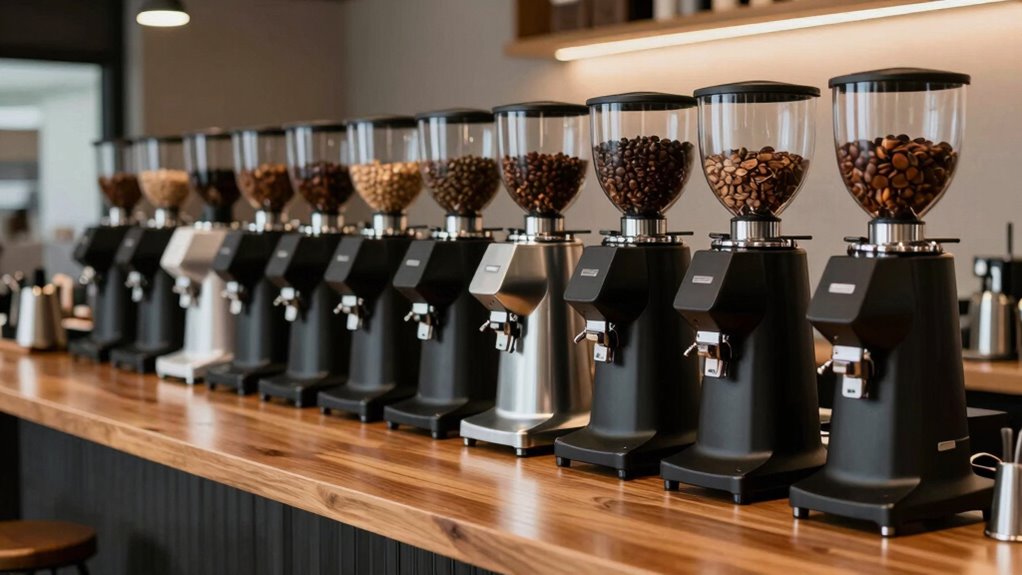

If you want a quiet espresso grinder under 1500, the Breville Smart Grinder Pro is my best overall pick for its broad adjustment range and espresso-focused controls. The OXO Brew stands out for a simpler daily routine and a larger bean hopper, while the AAOBOSI offers useful grind settings and timed dosing in a more budget-minded design. The tradeoff is that published grind settings and anti-static features do not tell you how loud a grinder sounds or how consistently it can produce espresso-fine grounds. I compare these seven models by their espresso suitability, noise-related design clues, usability, and upkeep. Read on for the full breakdown and a guide to choosing for your machine, routine, and tolerance for grinder noise.

Get kitchen gear delivered free with Prime
- Fast, free delivery on millions of items
- Prime Video, Amazon Music and more included
- Member-only deals all year
Complete the kit


Key Takeaways
- The Breville Smart Grinder Pro leads for espresso control: its broad adjustment range and dosing features make it the strongest fit for buyers who want to fine-tune shots.
- The OXO Brew prioritizes straightforward use and capacity: its 12-ounce hopper suits regular brewing, but it offers less espresso-specific control than the Breville.
- More grind settings do not prove better espresso: the 51-setting dual-dosing model and other high-count options still need to be judged by adjustment precision and real machine compatibility.
- Anti-static design targets mess, not noise: several picks advertise reduced static, but that feature does not establish quieter operation.
- The SHARDOR‘s 16 settings make it the simpler choice, not the most flexible: it may suit occasional espresso and other brewing styles, while frequent espresso dialing calls for finer control.


| quiet espresso grinder under 1500 | Grind settings | Material | Dimensions | Power |
|---|---|---|---|---|
| AAOBOSI Espresso Coffee Grinde | 45 | Stainless steel | 7.28 × 4.72 × 14.17 inches | 200 watts |
| Aromaster Conical Coffee Bean | 48 | Stainless steel | 8 × 5 × 16 inches | — |
| Electric Coffee Bean Grinder w | 38 | Plastic | 6.7 × 3.9 × 12.2 inches | 200 watts |
| OXO Brew Conical Burr Electric | — | Stainless steel | — | — |
| Breville BCG820BSS Smart Grind | 60 | Stainless steel | 6.28 × 8.46 × 15.33 inches | 165 watts |
| Electric Coffee Grinder with D | 51 | — | 3.9 × 12.2 × 7.1 in | 200 watts, 120 volts |
| SHARDOR Electric Burr Coffee G | 16 | Stainless steel | 7.48 × 5.16 × 9.76 in | 150 watts |
More Details on Our Top Picks
AAOBOSI Espresso Coffee Grinder, Anti-Static, 45 Grind Settings, 40s Timer
The AAOBOSI earns its place for buyers who want a small-footprint grinder with enough adjustment to switch between espresso and coarser brewing. Its 45 settings offer more range than the 38-setting Electric Coffee Bean Grinder, while the listed 7.28-by-4.72-inch footprint is narrower than the Aromaster. That can make it easier to fit on a crowded counter. The anti-static design is intended to reduce grounds clinging around the workspace, and the 40-second timer gives a straightforward way to set a grind duration. The tradeoff is a relatively simple control setup: product details do not mention a digital display, and no removable burr or cleaning aid is specified. I would choose it for compactness and range, not for heavy-duty use or the most hands-off maintenance.
Pros:- 45 settings span espresso through coarser brew methods
- Narrow 4.72-inch width suits tighter counter spaces
- Anti-static design aims to keep grounds from scattering
- 40-second timer provides a simple timed-grinding control
Cons:- No digital timer display is specified
- No removable burr or built-in cleaning feature is listed
- Described for home use rather than commercial workloads
Best for: Home espresso drinkers with limited counter space who also want settings for occasional French press or other brew methods.
Not ideal for: Frequent, high-volume users or buyers who want a digital timer display and clearly specified removable parts for cleaning.
- Grind settings:45
- Burr type:Conical
- Burr size:51/53 mm
- Timer:Up to 40 seconds
- Material:Stainless steel
- Power:200 watts
- Dimensions:7.28 × 4.72 × 14.17 inches
- Color:Silver
Our verdict“Choose the AAOBOSI if a compact footprint and broad grind range matter more than advanced controls or specified cleaning features.”
Aromaster Conical Coffee Bean Grinder, 48 Settings, Anti-Static, Silver
The Aromaster is the clearest fit here for espresso drinkers who want cleaning access built into the design. Its removable ring burr and included brush offer a more explicit maintenance setup than the AAOBOSI, whose supplied details do not specify removable burr parts or a cleaning tool. It also has 48 grind settings, giving it a slightly broader adjustment count than the AAOBOSI’s 45. Quiet operation is claimed in the product description, which aligns with this roundup’s focus, though no noise measurement is supplied. The main compromise is capacity: 3.9 ounces means more refills than the OXO’s 12-ounce hopper or Breville’s 18-ounce hopper. At 16 inches tall, it also needs more vertical clearance than the compact Electric Coffee Bean Grinder.
Pros:- Removable ring burr and built-in brush support easier cleaning
- 48 settings provide broad adjustment across brew styles
- Anti-static feature is intended to reduce loose grounds
- Quiet operation is stated in the product description
Cons:- 3.9-ounce capacity calls for more frequent refills than the OXO or Breville
- 16-inch height may not fit beneath low cabinets
- No digital display or advanced control interface is specified
Best for: Home espresso makers who regularly clean their grinder and want removable burr access, a brush, and a stated quiet-operation feature.
Not ideal for: Households that grind large batches or have low shelves, since its 3.9-ounce capacity and 16-inch height may be limiting.
- Model:CG204
- Grind settings:48
- Capacity:3.9 ounces
- Material:Stainless steel
- Power source:Electric
- Features:Anti-static, removable burr, adjustable timer, quiet operation
- Dimensions:8 × 5 × 16 inches
- Color:Silver
Our verdict“Pick the Aromaster if accessible cleaning and stated quiet operation matter more than hopper capacity or compact height.”
Electric Coffee Bean Grinder with 38 Settings and Anti-Static Design
This grinder takes the smallest listed footprint in this group, measuring 6.7 by 3.9 inches, and pairs it with a 60-second timer that remembers the prior setting. That makes it a practical choice for a small kitchen where the grinder may be tucked away between uses. Its description also calls out quiet operation and a chamber blower for clearing grounds, features that suit buyers trying to limit both noise and cleanup. The tradeoff is 38 grind settings, fewer than the AAOBOSI’s 45 or the Breville’s 60, so it offers less adjustment on paper. Its plastic construction may also be less appealing to buyers prioritizing a metal-bodied appliance. I’d favor it over the larger Aromaster when space is the main constraint, but not for the widest grind range.
Pros:- Small 6.7-by-3.9-inch footprint fits tight counters
- 60-second timer includes a memory function
- Quiet operation and anti-static design are stated
- Built-in chamber blower helps clear leftover grounds
Cons:- Plastic construction may be less durable or substantial than stainless-steel options
- 38 settings are fewer than the AAOBOSI and Breville offer
- No digital display for settings is specified
Best for: Apartment dwellers and espresso drinkers with very limited counter space who value a remembered timer and a stated quiet-operation feature.
Not ideal for: Buyers seeking a metal-bodied grinder or the widest adjustment range, since its housing is plastic and it has fewer settings than the AAOBOSI or Breville.
- Model:CG011E
- Burr type:Conical
- Grind settings:38
- Timer:Up to 60 seconds with memory
- Material:Plastic
- Power:200 watts
- Voltage:120 volts
- Dimensions:6.7 × 3.9 × 12.2 inches
Our verdict“Choose this model for a tight kitchen and timer memory, provided its plastic construction and narrower adjustment range suit your priorities.”
OXO Brew Conical Burr Electric Coffee Grinder – 12 oz, Storm Blue
The OXO stands apart from the smaller-capacity grinders with a 12-ounce hopper, making it a better match for households that prepare several cups or prefer fewer refills. Its 15 main settings plus 43 micro-adjustments provide finer tuning than the headline setting count suggests, though the Breville offers a simpler-to-read 60-setting range and an LCD interface. The OXO’s UV-blocking hopper is designed to limit light exposure to stored beans, a useful distinction if beans remain in the hopper between sessions. For a quiet-grinder roundup, the caution is that the supplied product details flag possible noise rather than claiming quiet operation. It also lacks a digital timer or display, so buyers wanting precise, screen-guided dosing may find the Breville more suitable.
Pros:- 12-ounce hopper reduces the need for frequent refills
- 43 micro-adjustments add tuning steps beyond the 15 main settings
- UV-blocking hopper is designed to protect beans from light
- Stainless-steel conical burrs are specified
Cons:- Product details flag potential operating noise, making it a less certain fit for quiet kitchens
- No digital timer or display is specified
- Designed for whole beans rather than grinding pre-ground coffee
Best for: Multi-cup households that want a large hopper, adjustable grind tuning, and reduced light exposure for beans stored in the grinder.
Not ideal for: Noise-sensitive users or espresso drinkers who want a digital timer and display for more controlled dosing.
- Model:8726200
- Capacity:12 ounces
- Burr type:Conical burr
- Main grind settings:15
- Micro-adjustments:43
- Material:Stainless steel
- Listed dimension:7.5 inches
- Color:Storm Blue
Our verdict“The OXO suits batch-oriented households that value hopper capacity and micro-adjustments more than quiet-operation assurances or digital dosing controls.”
Breville BCG820BSS Smart Grinder Pro, Brushed Stainless Steel
The Breville is the most control-focused option in this group: 60 grind settings, programmable grind time, direct grinding into a portafilter or container, and an LCD display. Those controls make it a stronger fit for espresso drinkers who want repeatable dosing than the AAOBOSI, whose listed timer is limited to 40 seconds and has no display specified. Its 18-ounce bean hopper also exceeds the OXO’s 12 ounces, though that capacity comes with a larger body: at 15.33 inches tall and 8.46 inches wide, it takes more room than the small-kitchen Electric Coffee Bean Grinder. The product details do not make a quiet-operation claim, so I would not rank it first for noise-sensitive use. Its advantage is dosing control and flexibility, not a compact or explicitly quiet design.
Pros:- 60 settings offer the broadest stated adjustment range in this group
- Programmable grind time supports repeatable dosing
- LCD display makes controls easier to read
- Can grind directly into a portafilter or container
Cons:- Larger than the compact Electric Coffee Bean Grinder and may take more counter space
- No quiet-operation claim is provided in the product details
- 165-watt motor is described as less suited to high-volume use
Best for: Espresso drinkers who want programmable timing, an LCD display, and the option to grind directly into a portafilter.
Not ideal for: Noise-sensitive buyers or owners of small kitchens who need a compact grinder with an explicit quiet-operation claim.
- Model:BCG820BSS
- Grind settings:60
- Bean hopper capacity:18 ounces
- Power:165 watts
- Voltage:110–120 volts
- Material:Stainless steel
- Dimensions:6.28 × 8.46 × 15.33 inches
- Weight:6.4 pounds
Our verdict“Choose the Breville for adjustable, display-guided dosing and direct portafilter grinding, but look elsewhere if quietness or a small footprint comes first.”
Electric Coffee Grinder with Dual Dosing Modes and 51 Grind Settings
The HAUSCAFE makes the strongest case here for households that switch between espresso and other brew methods but want to keep grinding noise down: its listed operating level is under 60 dB, and its 51 grind settings offer finer adjustment than the SHARDOR’s 16. Dual dosing modes and a timer display also give you more control over repeatable portions, while the portafilter holder keeps espresso grinding direct and tidy. The tradeoff is a relatively large 350 g hopper, which can mean beans sit in the grinder between uses, and the product data does not specify burr material or anti-static features. Compared with the OXO Brew, this pick offers more stated grind positions and a noise figure, but less established detail on the broader user experience. Choose it for flexibility and quieter operation, not for a compact footprint.
Pros:- Listed noise level under 60 dB suits noise-conscious kitchens.
- 51 grind settings provide more adjustment options than the SHARDOR’s 16.
- Dual dosing modes, a timer display, and a quick top-up function support flexible daily use.
- Portafilter holder and easy-to-clean burrs make espresso prep and maintenance more convenient.
Cons:- The 350 g hopper may be more capacity than occasional users need and can require attention to bean freshness.
- No built-in storage or extra accessories are listed.
- Burr material and anti-static performance are not specified, limiting comparison on those details.
Best for: Home espresso drinkers who also brew pour-over or French press and want a grinder with a stated low-noise level and several dosing controls.
Not ideal for: Buyers who need a compact grinder, want specified anti-static performance, or regularly grind large batches without refilling.
- Brand:HAUSCAFE
- Model:USAMZ-HC-G102-BK
- Burr:40 mm conical burr
- Grind settings:51
- Hopper capacity:350 g
- Noise level:Under 60 dB
- Power:200 watts, 120 volts
- Dimensions:3.9 × 12.2 × 7.1 in
Our verdict“Pick the HAUSCAFE if quiet operation and broad grind adjustment matter more than a compact design or documented anti-static features.”
SHARDOR Electric Burr Coffee Grinder 2.0, Automatic Coffee Bean Grinder for Home Use, Adjustable Burr Mill with 16 Precise Settings for Espresso & French Press, Glossy Black
The SHARDOR is the simpler, smaller-footprint choice for home users who want automatic grinding without a long list of controls. Its 16 grind settings cover espresso through French press, and the auto-stop function means you can start a grind without watching it closely. At 7.48 × 5.16 × 9.76 inches, it takes up less counter space than the wider HAUSCAFE, though the two models are not directly comparable on noise: SHARDOR provides no decibel figure. Its removable grounds chamber and cleaning brush make routine cleanup straightforward, while the safety lock helps prevent operation when parts are not fitted correctly. The main compromise is less adjustment range than the HAUSCAFE’s 51 settings, which may frustrate espresso drinkers dialing in different beans. Pick this for ease and footprint, not for a documented quiet-performance advantage.
Pros:- Compact dimensions suit kitchens with limited counter space.
- Auto-stop operation reduces the need to monitor each grind.
- Removable grounds chamber and included cleaning brush support routine maintenance.
- Safety lock helps prevent spills or operation with parts improperly fitted.
Cons:- 16 settings offer fewer adjustment steps than the HAUSCAFE’s 51, limiting fine espresso dialing.
- No noise-level specification is provided, so quietness cannot be verified from the product data.
- The 8.5-ounce capacity may require frequent refills for multi-person households or larger batches.
Best for: Beginners with limited counter space who want automatic grinding, basic espresso-to-French-press flexibility, and removable parts for cleaning.
Not ideal for: Noise-sensitive espresso drinkers seeking a specified low-decibel rating or experienced users who want many fine grind adjustments.
- Grind settings:16
- Capacity:8.5 oz
- Weight:2.6 lb
- Dimensions:7.48 × 5.16 × 9.76 in
- Power:150 watts
- Voltage:120 volts
- Material:Stainless steel
- Power source:Corded electric
Our verdict“Choose the SHARDOR for straightforward, space-conscious home grinding, but look elsewhere if quietness or fine espresso adjustment is your priority.”

How We Picked
I ranked these grinders around the needs behind the search: producing grounds fine enough for espresso, making repeatable adjustments, and fitting into a home routine where noise matters. I compared stated grind-range controls, dosing options, hopper capacity, anti-static claims, and the clarity of each model’s intended use. A high number of settings earns credit only when it appears useful for dialing in a shot; it is not a guarantee of finer adjustment or better extraction.
Because the supplied product details do not include measured sound levels, I do not claim that any model is proven quiet. The ranking favors the Breville for espresso-focused control, then gives weight to ease of use, capacity, and flexibility. Models with fewer settings or less evidence of espresso-specific adjustment rank lower for frequent espresso use, even if they may suit simpler routines. Buyers should check current manufacturer specifications and return terms, especially if noise is a deciding factor.
| quiet espresso grinder under 1500 | Material |
|---|---|
| AAOBOSI Espresso Coffee Grinde | Stainless steel |
| Aromaster Conical Coffee Bean | Stainless steel |
| Electric Coffee Bean Grinder w | Plastic |
| OXO Brew Conical Burr Electric | Stainless steel |
| Breville BCG820BSS Smart Grind | Stainless steel |
| Electric Coffee Grinder with D | — |
| SHARDOR Electric Burr Coffee G | Stainless steel |
Factors to Consider When Choosing Quiet Espresso Grinder Under 1500
A quiet grinder is not just a matter of choosing the model with the most settings. I would start with your espresso machine, your household’s noise constraints, and how often you change beans, then use capacity and cleanup to narrow the field.
Match the Grinder to Your Espresso Machine
Espresso machines differ in how much control they give you over shot preparation, so the grinder needs to suit the machine rather than the other way around. A pressurized basket can be more forgiving of a broad grind range, while a non-pressurized basket usually rewards finer adjustment. Check that the grinder is described as suitable for espresso and confirm its adjustment range before buying. A large setting count can be misleading if the steps near espresso fineness are too widely spaced. Buyers who make espresso every day should favor precise, repeatable adjustment over extra coarse settings they rarely use. If the machine is entry-level, avoid paying for controls that will not change your brewing routine.
Treat Noise Claims With Caution
Noise can come from the motor, burrs, vibration against the counter, and beans moving through the hopper. A product page that mentions anti-static grounds or a quiet-sounding design does not replace a measured sound comparison. Look for a published decibel figure, if available, and check whether it was recorded at a stated distance and during grinding. The counter matters too: a stable, heavy surface may reduce rattling, while a hollow cabinet can amplify it. If early-morning use is the main concern, consider whether you can grind a dose ahead of time and store it briefly in an airtight container, while recognizing that freshly ground coffee is generally preferable. Do not assume a premium price automatically means lower operating noise.
Choose Settings for Useful Control, Not a Big Number
Setting counts are not directly comparable across brands because each grinder spaces its adjustments differently. What matters is whether a small change can correct a shot that runs too fast or too slowly. For espresso, a stepped grinder with large jumps can leave you switching between shots that are both imperfect. If you alternate between espresso and French press, a wide range can help, but frequent switching may also mean resetting and dialing in again. New buyers can benefit from a straightforward adjustment system and a simple way to repeat a dose. Before choosing by setting count alone, check whether the grinder’s instructions explain espresso adjustment and dosing.
Pick Hopper Capacity Around Your Bean Routine
A larger hopper reduces refilling, but it can encourage keeping more beans exposed to air than you need for a short brewing window. If you drink several cups a day or share the grinder with others, capacity can save small daily tasks. For a single espresso drinker who changes beans often, a smaller fill or single-dose routine can keep the workflow more flexible. Check whether the grinder supports the way you plan to dose; a timer is helpful only if it produces a consistent amount with your beans and settings. Do not treat timer seconds as a universal measure of coffee weight. A small scale can help establish a repeatable dose regardless of the grinder’s controls.
Account for Cleanup and Static
Grounds clinging to the chute can make a tidy countertop harder to maintain and can leave old coffee behind between bean changes. Anti-static features may help with mess, but the label alone does not show how much retention or cleanup to expect. Check whether the grounds container is easy to remove and whether the chute and burr area can be reached for routine cleaning. Regular brushing helps prevent stale residue from affecting later doses, especially when switching between coffees. Avoid rinsing electrical components or burrs unless the manufacturer specifically allows it. A grinder that is easy to maintain may fit a busy household better than one with more settings but a fussy cleanup routine.
Spend More Only for a Specific Workflow Gain
Paying more makes sense when it buys a feature you will use, such as finer espresso adjustment, repeatable dosing, or capacity that suits a shared kitchen. It makes less sense to spend extra for a high setting count if you mainly make one style of coffee. For a quieter household, prioritize credible noise information over polished language about smooth or premium operation. Also account for the grinder’s footprint, hopper height, and clearance under cabinets, since a larger model can disrupt a compact counter. Compare warranty coverage and the availability of cleaning instructions before deciding. The best fit is the one that addresses your daily constraints, not the one with the longest feature list.
Frequently Asked Questions
Can I tell which of these grinders is actually the quietest?
Not from the listed features alone: none of the supplied details includes a measured sound level. Anti-static claims describe grounds handling, not motor noise, and a larger number of grind settings says nothing about sound. I would look for a decibel measurement taken while grinding and check that the test distance and setup are stated. If no reliable measurement is available, prioritize a retailer with a useful return policy and try the grinder in the setting where you plan to use it. Countertop vibration and room acoustics can change how loud a grinder seems.
Is the Breville Smart Grinder Pro a better choice than the OXO Brew for espresso?
The Breville is the stronger match if you want more espresso-focused adjustment and dosing control. The OXO Brew’s 12-ounce hopper may be more convenient for regular household brewing, but its listed appeal is simpler operation rather than the same degree of espresso tuning. Your machine also matters: a pressurized basket can be more forgiving, while a non-pressurized basket can expose limits in grind adjustment. Compare the controls you will actually use, not just the hopper size or brand name. Neither listing establishes which grinder is quieter.
Do 45, 48, or 51 grind settings make a grinder better for espresso?
No. Setting counts describe the number of labeled positions, but not how finely those positions are spaced near espresso fineness. A grinder with fewer settings can be easier to use, while a grinder with many settings can still have adjustment jumps that make shot dialing difficult. Look for espresso suitability, repeatable adjustment, and a clear explanation of how to change the grind. If possible, check owner guidance for your type of basket and machine before buying. Treat the count as one clue, not a quality score.
Is the SHARDOR with 16 settings enough for espresso and French press?
Its listed range covers espresso and French press, so it may suit someone who wants one simple grinder for occasional use across both styles. The tradeoff is less adjustment flexibility than the higher-setting models in this roundup, which can matter when dialing in espresso on a non-pressurized basket. Buyers who change beans often or pursue precise shot tuning may prefer the Breville or another model with broader control. For a forgiving espresso setup and a straightforward routine, the SHARDOR’s lower setting count may be acceptable. Check the manufacturer’s guidance for your machine before relying on it for espresso.
Should I choose a timed grinder or a dual-dosing model?
A timer can make a familiar routine quicker, but grinding for a set number of seconds does not guarantee the same coffee weight every time. Bean density, roast, and grind setting can affect how much coffee passes through during that interval. Dual-dosing modes may suit households that switch between single servings and larger batches, though added modes are useful only if they fit your habits. If dose consistency matters, weigh the beans or finished grounds and use the grinder controls as a convenience rather than a precision measure. Choose the simpler workflow if you make the same drink each day.
Conclusion
For most espresso-focused buyers, I would start with the Breville Smart Grinder Pro as the best overall because its adjustment and dosing controls offer the clearest path to dialing in shots. The AAOBOSI is my best value-style pick for shoppers who want a useful setting range and timed dosing without making a larger hopper the priority. The Breville is also the best premium-leaning choice in this lineup for buyers who will use its extra control, while the SHARDOR is the simpler option for beginners who want a straightforward grinder for occasional espresso and other brewing styles. Choose the OXO Brew for capacity and uncomplicated daily use, or look at the dual-dosing model if switching dose sizes is your main need. For anyone making noise the deciding factor, compare verified sound measurements before purchase: the listed specifications do not establish a quietest winner.