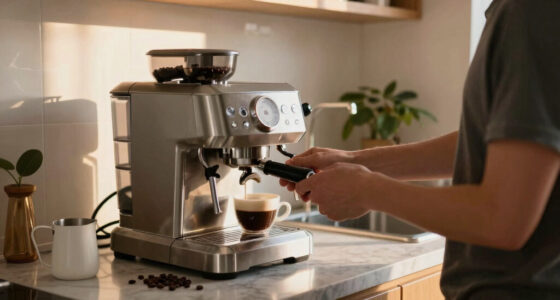
The best semi-automatic espresso machine for lattes pairs dependable espresso brewing with a steam wand that lets you control milk texture. My best overall pick is the Breville Barista Express, which combines a built-in grinder with hands-on milk steaming; the Breville Bambino stands out for a smaller footprint, while the Meraki Dual Boiler is aimed at buyers who want more integrated brewing tools. The main tradeoffs are convenience versus control, counter space versus capability, and an all-in-one grinder versus a separate grinder. A low-pressure learning curve may matter more than a high bar-pressure claim when you are making lattes every day. Read on for the full comparison, selection criteria, and buying advice.

Get kitchen gear delivered free with Prime
- Fast, free delivery on millions of items
- Prime Video, Amazon Music and more included
- Member-only deals all year
Complete the kit


Key Takeaways
- The Barista Express is the most balanced all-in-one choice in this lineup: its built-in grinder cuts down on separate equipment, though it asks for more counter space and hands-on dialing in than the Bambino.
- The Bambino prioritizes a compact, approachable setup over an integrated grinder, so buyers need to budget counter space and effort for a separate grinder if they want to grind fresh.
- The Meraki and AMZCHEF stand out for integrated grinding features, but extra settings and built-in scales are useful only if you want to adjust recipes rather than simply steam milk and pull a shot.
- The Gaggia Classic Evo Pro favors hands-on control and a more traditional setup; it suits buyers willing to build skill and pair the machine with suitable equipment, not those seeking the simplest latte routine.
- Several compact and budget-oriented models advertise 20-bar pumps, but that figure alone does not establish latte quality; milk-steaming control, grinder quality, workflow, and cleanup matter more to the daily result.





| semi automatic espresso machine for latte | Pump pressure | Power |
|---|---|---|
| AIRMSEN 20 Bar Espresso Machin | 20 bar | 1350 W coffee; 1000 W milk |
| Breville Bambino Espresso Mach | — | 1560 W |
| Meraki Dual Boiler Espresso Ma | — | 1600 W |
| AMZCHEF Espresso Machine with | — | 1350 W |
| Kismile Espresso Machine with | 20 bar | 1350 W |
| Neretva 20-Bar Super Compact E | 20 bar | — |
| Espresso Machine with Milk Fro | 20 bar | — |
| XIXUBX Espresso Machine with M | 20 bar | — |
| De’Longhi Classic Matte Black | — | — |
| Gaggia Classic Evo Pro Espress | — | — |
| Breville BES870XL Barista Expr | — | 1600 W |
| Gevi 20 Bar Compact Espresso M | 20 bar | — |
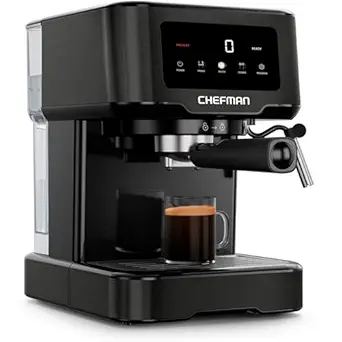
| Chefman CraftBrew Espresso Mac | 15 bar | 1350 W |
| 20 Bar Semi-Automatic Retro Es | 20 bar | 1350 W |
| Casabrews 3700 Essential Stain | 20 bar | 1350 W |
More Details on Our Top Picks
AIRMSEN 20 Bar Espresso Machine with Automatic Milk Frother and Dual Boiler
The AIRMSEN is the most latte-oriented pick here for buyers who want milk preparation to take less hands-on work. Its automatic milk frother and dual boilers let you make espresso and steamed milk with less waiting and less wand technique than the Breville Bambino requires. A touchscreen and pre-infusion add convenience, while the 60-ounce water tank reduces refill interruptions.
The tradeoff is control: a hands-on barista may prefer the Bambino’s steam wand for shaping microfoam, or the Meraki’s grinder and scales for dialing in beans and doses. AIRMSEN also leaves some espresso-making decisions to the user, so its simple milk system does not make the whole process fully automatic. Its compact footprint is a plus, though the stainless exterior calls for regular wiping.
Pros:- Automatic milk frother simplifies preparing latte milk.
- Dual boilers allow brewing and milk preparation with less waiting.
- 60-ounce water tank cuts down on frequent refills.
- Touchscreen, pre-infusion, and compact dimensions combine convenience with a relatively small footprint.
Cons:- Semi-automatic brewing still requires some user technique.
- Automatic frothing offers less direct control over milk texture than a manual steam wand.
- Stainless steel exterior can show fingerprints and needs frequent wiping.
Best for: Home latte drinkers who want assisted milk frothing, a roomy water tank, and quicker brewing without a separate grinder.
Not ideal for: Espresso hobbyists who want hands-on control of milk texture or integrated grinding and dosing tools.
- Pump pressure:20 bar
- Heating system:Dual boiler
- Power:1350 W coffee; 1000 W milk
- Water tank:60 oz
- Milk reservoir:17 oz
- Controls:Touchscreen
- Dimensions:10.2 in D x 7.9 in W x 12 in H
- Weight:9.3 lb
- Material:Stainless steel
Our verdict“Choose the AIRMSEN if assisted milk frothing and reduced wait time matter more than manual texture control or built-in grinding.”
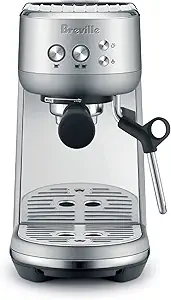
Breville Bambino Espresso Machine, Brushed Stainless Steel
The Bambino suits latte drinkers who want a compact machine and are willing to learn milk texturing. Its three-second ThermoJet heat-up gets a drink underway quickly, while the automatic steam wand helps produce microfoam without requiring fully manual wand control. Compared with the AIRMSEN, it has no automatic milk reservoir or dual-boiler setup, but its included milk jug and wand make it a more hands-on route to textured milk.
That distinction matters for repeat latte making: the Bambino’s small footprint and quick heating are appealing in a tight kitchen, but the user still has to manage the espresso and milk workflow. The Meraki offers a built-in grinder and scales for more control over dosing, though it takes up more counter space and asks more of the operator. The Bambino is a simpler fit for buyers who prioritize speed and a compact setup over integrated grinding.
Pros:- ThermoJet system heats in about three seconds.
- Automatic steam wand assists with microfoam for lattes.
- Compact design suits kitchens with limited counter space.
- Includes a milk jug, portafilter, tamper, and one- and two-cup filter baskets.
Cons:- No built-in grinder, so fresh-bean users need separate equipment.
- Milk preparation still requires managing the wand and learning the workflow.
- Home-focused design is not intended for commercial use.
Best for: Apartment dwellers and newer home baristas who want fast heat-up, a compact machine, and room to learn milk texturing.
Not ideal for: Buyers seeking a built-in grinder, automatic milk dispensing, or a machine designed for high-volume use.
- Heating system:ThermoJet
- Heat-up time:About 3 seconds
- Power:1560 W
- Voltage:110–120 V
- Brew settings:1 cup, 2 cups, hot water, and steam
- Milk system:Automatic steam wand
- Material:Brushed stainless steel
- Included accessories:Milk jug, portafilter, tamper, 1-cup and 2-cup filter baskets, cleaning tool, descaling powder
- Warranty:1-year limited product warranty
Our verdict“Pick the Bambino for a small, quick-heating setup that supports hands-on latte making without adding a built-in grinder.”
Meraki Dual Boiler Espresso Machine with Grinder and Built-In Dual Scales
The Meraki is the most equipment-rich choice for latte makers who want control over both espresso and milk. Its built-in burr grinder, integrated scales, and PID temperature control help users repeat doses and tune extraction, while dual boilers let brewing and steaming happen at the same time. Compared with the AIRMSEN’s automatic frother, the Meraki is a better match for someone who wants to operate a milk frother and manage the process rather than hand milk preparation off to an automatic system.
Those tools bring a real learning curve. The Meraki is larger than the Bambino and offers more variables to manage, so it is a poor fit for someone seeking a quick, simple latte routine. Its 9-bar output pressure is specified, but the product data does not give a grinder setting range or tank capacity beyond a stated 2-liter capacity. I’d choose it for repeatability and workflow integration, not for the smallest footprint.
Pros:- Built-in burr grinder and scales support consistent dosing.
- Dual boilers allow brewing and steaming at the same time.
- PID temperature control helps manage extraction temperature.
- 9-bar output pressure is specified for espresso brewing.
Cons:- Advanced controls and integrated tools can be challenging for beginners.
- 14.57-inch width and depth demand substantial counter space.
- Manual workflow requires more involvement than the AIRMSEN’s automatic milk frother.
Best for: Experienced home baristas who make milk drinks often and want integrated grinding, weighing, temperature control, and simultaneous brewing and steaming.
Not ideal for: Beginners or space-constrained buyers who prefer fewer settings, automatic milk frothing, or a smaller machine.
- Operation mode:Semi-automatic
- Boilers:Dual
- Grinder:Integrated burr grinder with micro-adjustments
- Scales:Integrated weighing scales
- Temperature control:PID
- Output pressure:9 bar
- Power:1600 W
- Capacity:2 liters
- Dimensions:14.57 in D x 14.57 in W x 16.33 in H
Our verdict“Choose the Meraki if precise, integrated espresso preparation matters more to you than simplicity or a compact counter footprint.”
AMZCHEF Espresso Machine with Grinder, Temperature Control, 44 Grind Settings
The AMZCHEF stands out for latte drinkers who want to adjust beans and brewing temperature without assembling a separate grinder setup. Its 44 grind settings and 190°F–201°F temperature range offer more ways to tune extraction than the Bambino, which has no built-in grinder. The 8 mm steam wand gives users a hands-on path to microfoam, rather than the AIRMSEN’s automatic milk frothing.
That flexibility comes with added upkeep: the grinder and steam system both need attention, and the product description flags a large footprint. The touchscreen and one-touch modes may simplify selecting a drink, but they do not remove the cleaning or learning involved in managing a grinder and wand. Cold brew is listed as a mode, though this is not the strongest fit for someone seeking a compact, low-maintenance latte machine. I’d favor it when adjustment options outweigh countertop space.
Pros:- 44 grind settings offer broad adjustment for different beans and brewing preferences.
- Temperature range of 190°F–201°F supports extraction tuning.
- 8 mm stainless steel steam wand gives users hands-on control of milk texturing.
- 60-ounce water tank and touchscreen simplify routine operation.
Cons:- Built-in grinder and steam system add cleaning work.
- Large footprint may not suit limited counter space.
- Manual steam-wand use takes more involvement than the AIRMSEN’s automatic frother.
Best for: Curious home latte makers who want an integrated grinder, fine temperature adjustments, and a manual steam wand for milk texturing.
Not ideal for: Small-kitchen buyers or people seeking low-maintenance milk drinks without grinder cleaning and steam-wand care.
- Grind settings:44
- Temperature range:190°F–201°F
- Water tank:60 oz
- Power:1350 W
- Steam wand:8 mm stainless steel
- Display:IMD HD touchscreen
- Integrated grinder:Yes
- Listed brew modes:One-touch brewing modes, including cold brew
Our verdict“Choose the AMZCHEF if you want integrated grinding and adjustable extraction and can accommodate the machine’s size and cleaning routine.”
Kismile Espresso Machine with Milk Frother, 20Bar Hot & Cold Brew Semi-Automatic Espresso Coffee Machine with Single & Double Shot, LED Display for Home Barista Latte and Cappuccino
The Kismile is the most flexible pick here for households that want espresso-based lattes alongside cold coffee drinks. Its hot and cold extraction modes, single- and double-shot options, and 58 mm portafilter give it a broader drink brief than the Bambino, which is focused on hot espresso and steam. A thermoblock heating system is designed for quick warm-up, and the steam wand keeps milk texturing in the user’s hands.
For latte-focused buyers, that variety is useful only if cold drinks are part of the routine. The description lists a 20-bar pump, but does not provide grinder details, temperature control, or a water-tank capacity, so it offers less information for buyers comparing dialing-in tools with the AMZCHEF or Meraki. The setup and cleaning can also be demanding for newcomers. I’d choose it for a mixed hot-and-cold menu, not for the simplest daily latte workflow.
Pros:- Hot and cold extraction modes support more drink styles than hot-only options.
- Thermoblock heating system is designed for fast heating.
- 58 mm portafilter provides a clearly specified portafilter size.
- Steam wand allows hands-on milk texturing for lattes and cappuccinos.
Cons:- Setup may be complex for beginners.
- Regular cleaning is needed for the brewing and milk systems.
- Product data does not specify a grinder, temperature range, or water-tank capacity.
Best for: Home drink makers who alternate between hot milk-based espresso drinks and cold coffee and want single- and double-shot options.
Not ideal for: Latte-only beginners who want a clearly specified tank, integrated grinder, or assisted milk frothing.
- Extraction modes:Hot and cold
- Power:1350 W
- Pump pressure:20 bar
- Portafilter size:58 mm
- Display:LED
- Milk system:Milk steamer wand
- Shot options:Single and double
- Heating system:Thermoblock
Our verdict“Pick the Kismile if hot-and-cold drink options matter as much as lattes and you are comfortable with setup and routine cleaning.”
Neretva 20-Bar Super Compact Espresso Machine
The Neretva suits latte drinkers who want a compact stainless-steel machine and a capable manual steam wand without adding a grinder to the counter. Its 198°F temperature control gives the brewing process a defined target, while the wand lets you work toward the milk texture needed for lattes. Compared with the plastic-bodied Espresso Machine with Milk Frother, it offers a stainless-steel build, but that model has a larger 50-ounce tank and a lighter listed weight. The Neretva’s 1.3-liter reservoir is adequate for home use, though frequent back-to-back drinks mean more refills. It also weighs 17 pounds and can be noisy during operation. I’d choose it for a small kitchen where materials and milk-steaming matter more than an integrated grinder or especially easy portability.
Pros:- Compact stainless-steel design suits tighter kitchen counters.
- Precise 198°F temperature control provides a clear brewing target.
- Steam wand supports milk foam and latte-art practice.
Cons:- No integrated grinder, so ground coffee must be prepared separately.
- At 17 pounds, it is heavy for a compact countertop appliance.
- The high-power boiler may produce noticeable operating noise.
Best for: Home latte drinkers with limited counter space who prefer a stainless-steel body and are comfortable grinding coffee separately.
Not ideal for: Buyers who want an all-in-one grinder, need a lightweight machine to move often, or make many drinks in succession without refilling.
- Operation:Semi-automatic
- Pump pressure:20 bar
- Water tank capacity:1.3 L
- Wattage:1350 watts
- Temperature control:198°F
- Dimensions:11 x 12 x 9.1 inches (D x W x H)
- Weight:17 lbs
- Filter type:Reusable pressurized
Our verdict“Choose the Neretva if you want compact stainless-steel construction and manual latte steaming, and can accept its weight, noise, and separate-grinder requirement.”
Espresso Machine with Milk Frother, 20 Bar Semi-Automatic Coffee Maker for Home, 50oz Removable Tank, Hot & Cold Brew, Single & Double Shot Latte Machine
The most practical latte advantage here is the 50-ounce removable tank: it reduces refill interruptions compared with the XIXUBX’s 42-ounce reservoir, especially when making several drinks at home. A 58mm brew head, adjustable temperature, and quick-heating steam system add control for users who want to work on espresso and milk texture rather than rely on automatic frothing. The listed 12.1-pound weight also makes it easier to reposition than the 17-pound Neretva. The tradeoff is its plastic construction, which may be less reassuring to buyers seeking a more substantial-feeling machine. Its push-button interface and LCD are approachable, but this is still a semi-automatic setup, not a one-touch latte maker. I’d pick it for tank capacity and accessible controls, not for premium materials.
Pros:- Removable 50-ounce tank supports multiple drinks before refilling.
- 58mm brew head offers a familiar size for espresso preparation.
- Quick-heating steam system is suited to microfoam and latte-art practice.
- LCD and push-button controls keep operation approachable.
Cons:- Plastic construction may not suit buyers seeking a more durable-feeling exterior.
- Semi-automatic operation still calls for hands-on brewing and milk steaming.
Best for: Households making several lattes between refills that want a removable large-capacity tank, quick heating, and straightforward controls.
Not ideal for: Buyers who prioritize a stainless-steel body or expect fully automatic espresso and milk preparation.
- Operation:Semi-automatic
- Brew head:58 mm
- Pump pressure:20 bar
- Water tank capacity:50 fl oz
- Dimensions:10.8 x 7.96 x 12.02 inches (D x W x H)
- Weight:12.1 lbs
- Material:Plastic
- Controls:LCD display and push-button controls
Our verdict“Pick this model for a generous removable tank and accessible controls, but choose the Neretva or XIXUBX if stainless-steel construction matters more.”
XIXUBX Espresso Machine with Milk Frother for Cappuccino & Latte, Silver
The XIXUBX keeps its appeal focused on the latte routine: fast heating, a 360-degree rotating steam wand, and an included frothing pitcher make it a ready-to-practice setup for milk drinks. Its 42-ounce tank is larger than the Neretva’s 1.3-liter reservoir, giving it an edge for multiple cups between refills, while its stainless-steel construction offers a more substantial material choice than the plastic-bodied 50-ounce model. That comparison also shows the compromise: the other machine holds more water and is lighter according to its listed specifications. The XIXUBX’s pressure gauge can help users monitor extraction, but dialing in espresso and milk still takes practice. With a one-year warranty and a stated fit for small spaces, I’d favor it for occasional home lattes rather than high-volume use.
Pros:- Fast heating helps shorten the wait between brewing and steaming.
- 360-degree rotating, detachable steam wand offers flexible positioning.
- 42-ounce tank can serve multiple cups before a refill.
- Milk frothing pitcher is included.
Cons:- Dialing in extraction and milk texture may take practice.
- Not suited to high-volume use.
- Its tank is smaller than the 50-ounce capacity on the comparison model.
Best for: Small-household latte makers who want stainless-steel construction, a rotating steam wand, and a pitcher included for milk practice.
Not ideal for: High-volume users or buyers who want an especially simple first espresso setup without a learning curve.
- Pump pressure:20 bar
- Heating system:Fast heating technology
- Steam wand:360-degree rotating and detachable
- Material:Stainless steel
- Water tank capacity:42 oz
- Included accessory:Milk frothing pitcher
- Warranty:1 year
Our verdict“Choose the XIXUBX for a compact stainless-steel latte setup with a rotating wand and included pitcher, but not for frequent large batches.”
De’Longhi Classic Matte Black Espresso Machine with Milk Frother
For someone learning to make lattes, the De’Longhi’s single- and double-espresso presets offer a simpler starting point than the more hands-on Gaggia Classic Evo Pro. Thermoblock temperature control and a steam wand with adjustable positioning make it a practical choice for pairing espresso with frothed milk, while the matte-black stainless-steel design keeps the machine relatively compact. Its 9-bar extraction is a clear point of difference from the 20-bar Neretva and XIXUBX: the headline pump-pressure number is not the only measure of a latte setup, and this model’s selling case is the combination of preset recipes and manual steaming. The limits are narrow drink options, no built-in grinder, and a learning curve for milk technique. I’d choose it for straightforward home recipes, not for broad customization.
Pros:- Single- and double-shot presets simplify basic espresso preparation.
- Thermoblock technology supports temperature control.
- Adjustable steam wand gives users control over milk frothing.
- Matte-black stainless-steel design is described as compact.
Cons:- No built-in grinder, so coffee preparation requires separate equipment or pre-ground coffee.
- Drink options are limited to espresso and milk-based drinks.
- Milk steaming can take practice for beginners.
Best for: Newer home baristas who want preset single and double espresso options while learning to steam milk for lattes.
Not ideal for: Buyers seeking an integrated grinder, a wide range of drink presets, or a machine designed around extensive manual customization.
- Extraction pressure:9 bar
- Temperature control:Thermoblock technology
- Frothing system:Steam wand
- Design:Matte-black stainless steel
- Preset recipes:Single and double espresso
- Adjustable tray:Yes
Our verdict“Pick the De’Longhi for a compact, preset-led starting point for lattes, but look elsewhere if you want a grinder or more drink flexibility.”
Gaggia Classic Evo Pro Espresso Machine, Brushed Stainless Steel
The Gaggia is the most hands-on choice in this group, built around a 58mm commercial portafilter and commercial steam wand rather than preset-led convenience. For latte makers, that setup favors practicing espresso preparation and shaping milk into velvety microfoam; the included pressurized and non-pressurized baskets also let buyers choose between a more forgiving start and a more involved approach. Compared with the De’Longhi Classic, the Gaggia offers more manual control and a larger 2.1-liter tank, but gives up the De’Longhi’s preset single- and double-shot simplicity. Its brushed steel housing and corrosion-resistant boiler support a sturdier, long-term-oriented role. The cost of that control is effort: this semi-automatic machine requires manual input, weighs 20 pounds, and has no integrated grinder. I’d reserve it for buyers who want to learn the process, not just press a drink button.
Pros:- 58mm commercial portafilter supports a hands-on espresso workflow.
- Commercial steam wand is suited to microfoam and latte art.
- Pressurized and non-pressurized baskets allow different preparation approaches.
- 2.1-liter water tank reduces refill frequency compared with smaller-tank models.
Cons:- Manual operation requires practice and active control.
- At 20 pounds, it is difficult to move regularly.
- No integrated grinder is included.
Best for: Experienced or motivated home baristas who want a commercial-size portafilter, manual milk control, and room to refine latte technique.
Not ideal for: Buyers seeking one-touch lattes, a lightweight appliance, or an integrated grinder and minimal hands-on preparation.
- Model:RI9380/46
- Operation:Semi-automatic
- Extraction pressure:9 bar
- Portafilter size:58 mm commercial
- Water tank capacity:2.1 L
- Wattage:1200 watts
- Dimensions:8 x 9.5 x 14.2 inches (D x W x H)
- Weight:20 lbs
- Coffee input types:Ground coffee and ESE pods
Our verdict“Choose the Gaggia if latte craft and manual control matter more than preset convenience, light weight, or an integrated grinder.”
Breville BES870XL Barista Express Espresso Machine, Brushed Stainless Steel
For latte drinkers who want control from whole bean to steamed milk, the Barista Express is the most complete setup in this group. Its built-in conical burr grinder removes the need to buy a separate grinder, while PID temperature control supports steadier espresso extraction. The manual steam wand gives you room to practice fine-textured milk for latte art, unlike a simpler milk-frothing setup. Compared with the Chefman CraftBrew, this machine bundles more of the coffee-prep process into one unit, but the tradeoff is a steeper learning curve and more hands-on work. Its 67-ounce tank is useful for home routines, though it may need frequent refilling in a busy household. Choose it for capability and control, not push-button convenience.
Pros:- Built-in conical burr grinder keeps the grinder and espresso machine in one setup.
- PID temperature control supports more consistent brewing temperature.
- Manual steam wand allows hands-on microfoam texturing for lattes.
- Includes a 54mm portafilter, milk jug, tamper, and cleaning tools.
Cons:- Requires practice with grinding, dosing, extraction, and milk steaming.
- The 67-ounce water tank may need refilling during frequent or multi-person use.
- More involved than the Chefman CraftBrew for buyers who want a simpler espresso routine.
Best for: Home latte makers who want an integrated grinder and are willing to practice espresso dosing and manual milk texturing.
Not ideal for: Beginners seeking a low-effort routine or households making many consecutive drinks without stopping to refill the 67-ounce tank.
- Bean hopper:1/2 lb
- Water tank:67 oz
- Power:1600 W
- Voltage:120 V
- Temperature control:Digital temperature control with PID
- Portafilter:54mm stainless steel
- Included accessories:Razor Dose Trimming Tool, filter baskets, coffee scoop, tamper, milk jug, cleaning tools, and water filter
Our verdict“Choose the Barista Express if you want a grinder-equipped machine for hands-on latte making and are ready to learn its workflow.”
Gevi 20 Bar Compact Espresso Machine for Home, Latte & Cappuccino Coffee Maker
The Gevi suits buyers who want a compact semi-automatic machine with a milk frother and hot-water function, but do not need an integrated grinder. Its pre-infusion and pressure gauge offer useful brewing feedback in a small footprint, while the removable frother nozzle makes cleanup more straightforward after milk drinks. Compared with the Breville Barista Express, it takes up a simpler role: the Barista Express handles grinding in the same machine and offers PID control, whereas the Gevi keeps the setup more compact but requires separately prepared coffee grounds. That means less equipment on the counter, not necessarily less work. The 20-bar pump rating is part of its spec, but it does not remove the need to dial in grind and technique for balanced espresso.
Pros:- Compact stainless steel design is suited to kitchens with limited counter space.
- Pre-infusion and a pressure gauge provide feedback during brewing.
- Removable frother nozzle simplifies cleaning after milk drinks.
- Hot-water function adds utility for tea and other hot drinks.
Cons:- No built-in grinder, so fresh grounds require separate equipment or preparation.
- Espresso quality still depends on grind, dosing, and user technique.
- The machine’s compact format may be less suited to making drinks for a crowd.
Best for: Apartment dwellers and first-time home baristas who want a compact machine with a frother, hot water, and basic extraction feedback.
Not ideal for: Buyers who want an all-in-one grinder setup or expect consistently excellent espresso without learning to dose and tamp.
- Pump pressure:20 bar
- Material:Stainless steel
- Frother:Milk frother with removable nozzle
- Operation:Semi-automatic
- Temperature control:NTC
- Brewing features:Pre-infusion and pressure gauge
- Additional function:Hot-water function
Our verdict“Pick the Gevi for a small kitchen if you are comfortable supplying your own grounds and want frothing plus basic brew feedback.”
Chefman CraftBrew Espresso Machine, 15-Bar Pump Digital Espresso Maker with Steam Wand, 1.5L Removable Water Reservoir, Stainless Black
The CraftBrew is a practical choice for people who want to make lattes regularly without adding an integrated grinder to their counter. Its 1.5-liter removable reservoir means fewer interruptions than the smaller tank on the Casabrews 3700, and customizable shot sizes help make repeat drinks less fiddly. A built-in steam wand keeps milk preparation within the same workflow, though the machine remains semi-automatic, so you still need to manage the espresso and milk yourself. Compared with the Breville Barista Express, the CraftBrew offers a more compact, simpler feature set but gives up the built-in burr grinder and PID temperature control. It also lacks a digital display for detailed adjustments. This is a sensible fit for everyday espresso drinks when accessible controls and tank capacity matter more than extensive customization.
Pros:- 1.5-liter removable reservoir supports several drinks before refilling.
- Built-in steam wand handles milk frothing for lattes and cappuccinos.
- Customizable shot sizes support repeatable drink portions.
- Compact dimensions fit more easily than a larger, separate grinder-and-machine setup.
Cons:- No built-in grinder, unlike the Breville Barista Express.
- No digital display for detailed brewing adjustments.
- Semi-automatic brewing and milk steaming still require user skill, and operation may be noisy.
Best for: Households making regular lattes and cappuccinos that want a removable, larger-capacity reservoir and customizable shot sizes.
Not ideal for: Coffee enthusiasts seeking an integrated grinder, detailed digital adjustments, or a machine designed to minimize hands-on technique.
- Pump pressure:15 bar
- Water reservoir:1.5 L, removable
- Power:1350 W
- Voltage:120 V
- Operation:Semi-automatic
- Steam wand:Built in
- Dimensions:10.8 in D x 8.9 in W x 11.9 in H
Our verdict“Choose the CraftBrew for a compact daily latte setup with a roomy reservoir, provided you do not need an integrated grinder or detailed controls.”
20 Bar Semi-Automatic Retro Espresso Machine with Milk Frother
This retro-style machine is aimed at buyers who want a distinctive countertop look without giving up hands-on espresso and milk preparation. Its PID temperature control, pre-infusion, and pressure gauge provide more brewing feedback than the Gevi’s compact, more utility-focused setup, while the 50-ounce removable tank is a solid fit for home or office use. A milk frother makes lattes possible, but there is no built-in grinder, so freshly ground coffee means adding another appliance. The manual workflow also asks more of the user than the Chefman CraftBrew’s customizable shot-size approach. The vintage styling is a clear point of difference, not a substitute for convenience: buyers need to be comfortable grinding, dosing, and steaming milk themselves.
Pros:- Retro design offers a distinctive alternative to the stainless steel Gevi and Casabrews.
- PID temperature control and pre-infusion support a more informed manual workflow.
- Built-in pressure gauge gives feedback during extraction.
- Removable 50-ounce water tank and drip tray support easier cleaning.
Cons:- No built-in grinder, so whole-bean preparation requires separate equipment.
- Manual brewing and milk frothing have a learning curve.
- The supplied details do not specify included accessories such as a milk jug or grinder.
Best for: Design-conscious home baristas who want a retro-looking machine, manual brewing control, and visible extraction feedback.
Not ideal for: Beginners wanting a low-learning-curve latte maker or buyers who do not want to purchase and operate a separate grinder.
- Pump pressure:20 bar
- Water tank:50 oz
- Power:1350 W
- Temperature control:PID
- Brewing features:Pre-infusion and built-in pressure gauge
- Milk frother:Included
- Cleaning features:Removable water tank and drip tray
Our verdict“Choose this retro machine if its styling and brewing feedback appeal to you and you are prepared for a manual, grinder-dependent latte routine.”
Casabrews 3700 Essential Stainless Steel Espresso Machine with Steam Wand
The Casabrews 3700 keeps the latte essentials together: a semi-automatic espresso workflow, a steam wand, and one- or two-cup filters in a compact stainless steel body. Its 43.9-ounce removable tank offers more capacity than a very small countertop machine, though it is smaller than the Chefman CraftBrew’s 1.5-liter reservoir. The steam wand is the key advantage for latte drinkers who want to texture milk themselves; the tradeoff is that there is no built-in grinder or pressure gauge to simplify preparation or monitor extraction. Compared with the Gevi, it has a similarly approachable compact format, but the listed specs emphasize filter options and steam-wand use rather than pre-infusion or a gauge. Expect to bring your own grounds and learn the basics of dosing and steaming.
Pros:- Steam wand supports hands-on milk frothing for lattes.
- Includes one-cup and two-cup filters for different serving sizes.
- Removable 43.9-ounce tank supports multiple brews between refills.
- Compact stainless steel construction suits smaller counters.
Cons:- No built-in grinder, so ground coffee must be prepared separately.
- No pressure gauge to provide extraction feedback.
- First-time setup and semi-automatic operation may require patience.
Best for: Budget-conscious home latte makers who want a compact stainless steel machine, manual milk frothing, and single- or double-cup filters.
Not ideal for: Buyers who need a built-in grinder, a pressure gauge for extraction feedback, or a larger tank for frequent back-to-back drinks.
- Pump pressure:20 bar
- Water tank:43.9 oz
- Power:1350 W
- Voltage:120 V
- Material:Stainless steel
- Operation:Semi-automatic
- Filter types:One cup and two cup
Our verdict“The Casabrews 3700 makes sense for a compact latte station if you have ground coffee ready and prefer a manual steam wand over extra brew feedback.”

How We Picked
I compared these 15 machines through the needs of a latte drinker: whether the setup supports espresso and milk preparation, how much control it offers, and how much equipment or practice a buyer may need. I weighed grinder inclusion, temperature and workflow features, machine footprint, reservoir and cleaning practicality, and the likely learning curve. Since a latte depends on both espresso and textured milk, I gave more weight to a useful steam-wand workflow than to pump-pressure numbers in isolation.
The ranking favors machines with a clear fit for repeated home latte preparation and a sensible balance of capability, effort, and equipment needs. The Barista Express leads as a flexible all-in-one; the Bambino earns a place for buyers who value a compact, straightforward machine and can supply a grinder separately. Picks with integrated grinders, dual-boiler designs, or more traditional controls serve narrower priorities, while basic compact models make more sense when a simpler setup matters more than fine control. Product claims alone do not establish cup quality, so buyers should check current manufacturer specifications and included accessories before choosing.
Factors to Consider When Choosing Semi Automatic Espresso Machine For Lattes
Choosing a latte machine is less about finding the biggest specification and more about matching the workflow to how you want to make coffee. I would decide how much control you want, what equipment you already own, and how much daily cleaning you will tolerate before choosing a model.
Choose a Grinder Setup Before Choosing the Machine
Fresh, consistent grounds make it easier to adjust espresso extraction, and milk cannot cover every problem caused by a poor shot. An integrated grinder, as found in all-in-one designs, saves counter space and simplifies the equipment list, but it ties grinder upgrades to the machine purchase. A separate grinder costs extra and occupies room, yet it can be replaced independently if your preferences change. Avoid assuming that a machine with many grind settings will automatically produce better espresso; adjustment range matters only when the grinder can make consistent changes. If you already own a capable espresso grinder, a machine without one may be the more sensible fit.
Match the Milk Workflow to Your Latte Routine
A steam wand gives you control over foam and texture, but it also requires a pitcher, practice, and a brief cleanup after each use. If you make one latte at a time and want to learn milk steaming, a manual wand can be a worthwhile trade for control. If multiple people will use the machine, think about how quickly it can move between brewing and steaming and whether the process feels manageable for each person. A large drink menu or an automatic milk feature may sound convenient, but neither removes the need to clean milk-contact parts. Check the actual wand design and cleaning instructions rather than relying on the word “automatic” in a product name.
Treat Boiler Design as a Workflow Choice
Boiler and heating design affect how a machine handles the sequence of pulling espresso and steaming milk. A dual-boiler design can support more simultaneous or closely timed tasks, which may help in a busy household, but it can add complexity and may not matter for a single morning latte. A compact, simpler machine can suit a slower routine if you are comfortable preparing espresso and milk in sequence. Do not choose a dual boiler solely for speed without checking the machine’s footprint, controls, and maintenance needs. For occasional drinks, a straightforward workflow may be more valuable than extra capacity.
Measure the Full Countertop Footprint
Machine width is only part of the space calculation: allow room for a grinder, a milk pitcher, and access to the water tank and drip tray. A compact model can be easier to place, but a separate grinder may erase some of that space advantage. Measure cabinet clearance too, especially if the reservoir lifts out from the top. Think about where wet accessories will dry and whether you can move the machine comfortably for cleaning. Before buying, compare the machine’s dimensions with the complete setup you plan to use, not just the bare unit.
Set a Realistic Learning and Cleanup Budget
Semi-automatic brewing involves decisions about grind, dose, shot timing, and milk texture, so a beginner may need time to produce repeatable drinks. More controls can help you refine a recipe, but they also create more variables to manage. Simple controls may feel easier at first, while a machine with more adjustability can make sense if you enjoy tuning your coffee. Cleaning is part of the daily routine: wipe and purge the steam wand after use, empty the drip tray, and follow the maker’s descaling guidance. A machine that fits your willingness to practice and maintain it is more likely to become a regular part of your kitchen.
Pay for Capability You Will Use
Extra features are worth paying for when they solve a recurring problem, such as reducing separate equipment or helping you repeat a preferred recipe. A built-in grinder has clear value for a buyer starting from scratch, while it may be redundant for someone with a grinder already. Scales and temperature controls appeal to people who want repeatability, but they add little for someone who mainly wants a convenient milk drink. Likewise, a premium traditional machine can reward an involved home barista without being the easiest first purchase. Write down your actual routine before paying for features that sound impressive but will rarely be used.
Frequently Asked Questions
Should I choose a machine with a built-in grinder or buy a separate grinder?
A built-in grinder can simplify a first setup by combining two pieces of equipment and saving some counter space. The Barista Express and other integrated-grinder options in this roundup suit buyers who want one coordinated station. A separate grinder costs more and takes room, but it lets you upgrade grinding performance without replacing the espresso machine. If you already own an espresso-capable grinder, paying for another one inside the machine may not make sense. Choose based on your existing equipment and willingness to adjust grind settings, not on the convenience claim alone.
Can a beginner make good lattes with a semi-automatic machine?
Yes, though expect a learning period: espresso and milk steaming each require a little practice. A simpler machine such as the Bambino can keep the initial workflow approachable, while a built-in grinder can reduce the number of separate purchases. Beginners should focus on repeatable basics, including using fresh grounds, weighing a consistent dose if possible, and cleaning the wand after steaming. A long feature list does not automatically make a machine easier to learn. If you do not want to practice milk steaming, consider whether a semi-automatic format fits your routine before choosing by model.
Does a 20-bar pump make a machine better for lattes?
Not by itself. A pump-pressure figure is only one specification and does not tell you whether the grinder, brewing temperature, or steam wand will suit your needs. For a latte, the espresso still needs to taste balanced beneath the milk, and the wand needs to produce texture you enjoy. Compare the machine’s controls, accessories, cleaning process, and grinder arrangement alongside any pressure claim. Do not rank a 20-bar model above another machine based on that number alone.
Is a dual-boiler machine worth choosing if I mostly make one latte at a time?
A dual boiler is most compelling when you want to prepare espresso and steam milk with less waiting or make drinks in quick succession. For one latte at a relaxed pace, the workflow advantage may be smaller than the added footprint, controls, or cost of a more elaborate setup. A compact single-boiler-style machine can suit a slower routine if you are comfortable working through brewing and steaming in sequence. Consider how many drinks you actually make at once rather than buying for a rare busy morning. The Meraki is a more feature-rich choice in this lineup, while simpler models may fit a single-drink habit better.
What should I check before buying a compact espresso machine for a small kitchen?
Measure the machine’s width, depth, and height, then check whether the water tank can be removed beneath your cabinets. Include the grinder, milk pitcher, and space needed to access the drip tray in your plan. A compact espresso maker with no built-in grinder may still need a second appliance, so compare the full setup rather than the machine alone. Also check how the steam wand and controls are positioned; tight clearance can make filling or cleaning awkward. If storage is limited, the Bambino or a compact model may be a better starting point, provided its equipment requirements fit your counter.
Conclusion
For most buyers who want one machine to cover grinding, espresso, and milk drinks, I would start with the Breville Barista Express as the best overall fit. The Breville Bambino is my pick for a beginner who values a compact, approachable machine and is prepared to choose a separate grinder; the AMZCHEF is a value-minded option for shoppers who want an integrated grinder and adjustable settings. For buyers seeking a more feature-rich setup, the Meraki Dual Boiler is the premium-leaning choice, while the Gaggia Classic Evo Pro better fits a hands-on espresso enthusiast who wants traditional control. If counter space is the main constraint, compare compact models such as the Neretva and Bambino against the dimensions of the complete setup you need. Choose the machine that matches your daily drink count, practice level, and willingness to maintain it—not the one with the longest feature list.
Halloween Picks
halloween
As an affiliate, we earn on qualifying purchases.