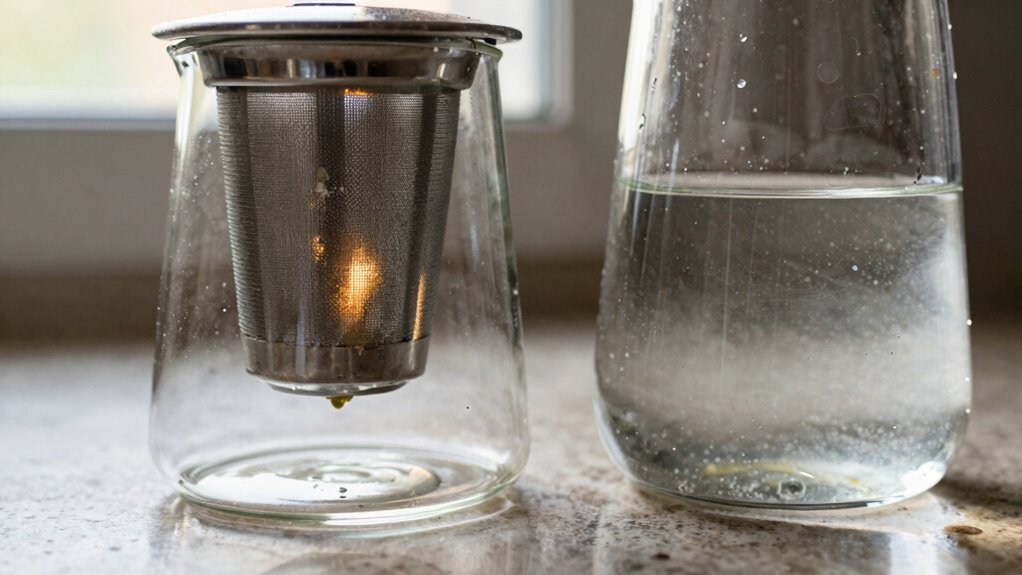
Your descaling schedule depends on your water’s mineral content, not a fixed calendar. Hard water contains high levels of calcium and magnesium, which cause mineral buildup inside appliances, making them less efficient and more prone to damage. Soft water, on the other hand, leads to less buildup and longer intervals between cleanings. By understanding your water quality, you can tailor your descaling routine and keep your appliances running smoothly—more insights await if you keep exploring.

Get kitchen gear delivered free — and shop member deals
- Fast, free delivery on millions of items
- Access to Prime Big Deal Days deals on October 6–7
- Prime Video, Amazon Music and more included
Key Takeaways
- Water hardness varies by location, affecting mineral buildup more than a fixed schedule.
- High mineral content in water accelerates deposits, requiring more frequent descaling.
- Soft water minimizes mineral accumulation, reducing the need for routine descaling.
- Appliance performance issues often indicate mineral buildup, not calendar time.
- Tailoring descaling based on water quality ensures optimal appliance efficiency and longevity.
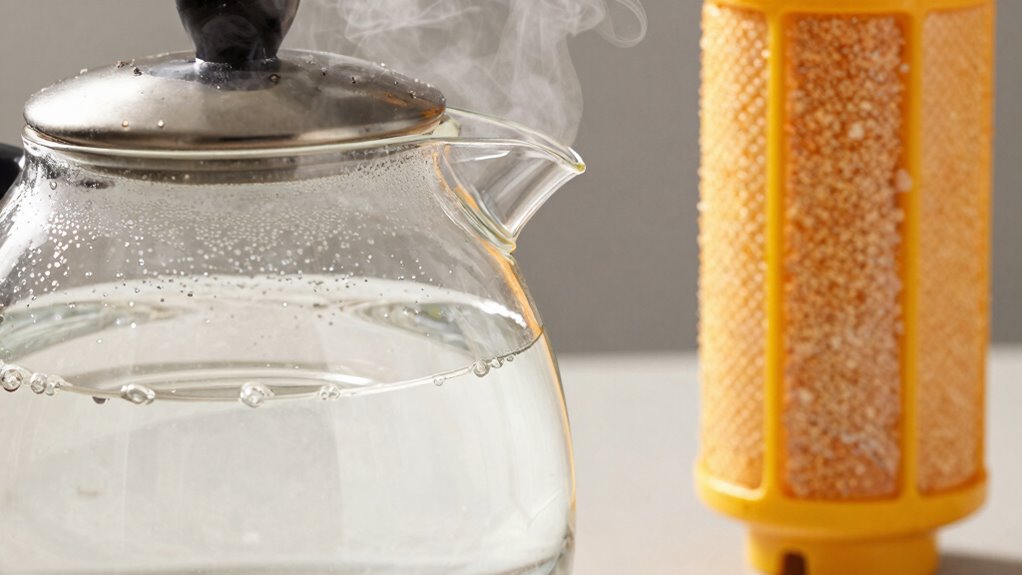
Have you ever wondered how often you should descale your appliance to keep it running smoothly? The truth is, the answer depends less on a set schedule and more on your water quality. When it comes to descaling, water hardness and mineral buildup are the main factors that determine how frequently you need to tackle this task. Hard water, which contains high levels of dissolved minerals like calcium and magnesium, accelerates mineral buildup inside your appliances. Over time, these minerals form deposits that hinder performance, cause clogs, and even lead to damage. So, rather than sticking to a generic timetable, you should pay attention to the specific characteristics of your water supply.
If your tap water is classified as hard, you’ll likely see mineral deposits forming faster than in areas with soft water. This means your appliances—be it a coffee maker, kettle, or dishwasher—may require descaling more often. Conversely, if your water is soft, the mineral buildup process slows down significantly, and you might extend the time between descales. To determine your water’s hardness, you can use home test kits or contact your local water supplier. Once you know your water’s mineral content, you can better gauge how frequently you need to descale each appliance. Remember, even if you don’t notice obvious signs of mineral buildup, it’s still wise to follow a schedule based on your water quality to prevent long-term damage.
The key is to observe your appliance’s performance and look for signs of mineral buildup. If you notice your coffee maker taking longer to brew or your kettle not heating efficiently, it’s a good indicator that mineral deposits are accumulating. Regular descaling in response to these signs can prevent more serious issues down the line. However, even without visible symptoms, if you know you have hard water, a quarterly or biannual descaling routine is a smart preventative measure. This approach saves you money and prolongs your appliance’s lifespan by removing deposits before they cause problems. Additionally, understanding your water’s composition and mineral levels can help you tailor your maintenance routine more precisely. Furthermore, being aware of the impact of mineral deposits on appliance efficiency can motivate timely maintenance. Recognizing that water quality varies by location can also help you adapt your descaling schedule to specific circumstances. To further optimize your routine, consider using descaling solutions designed specifically for your appliances, which can be more effective at removing mineral buildup.
In essence, the frequency of descaling isn’t dictated by a calendar but by the water you use daily. The harder your water, the more often you should descale. Paying attention to your water’s mineral content and your appliance’s performance will help you keep everything running at peak efficiency, ensuring you don’t have to deal with costly repairs or replacements down the road. So, get to know your water, and descaling becomes a simple, maintenance-focused task rather than an arbitrary chore. Proper water hardness awareness can help you optimize your descaling routine and extend the lifespan of your appliances.
water hardness test kit for appliances
As an affiliate, we earn on qualifying purchases.
As an affiliate, we earn on qualifying purchases.
Frequently Asked Questions
How Does Water Hardness Affect Descaling Needs?
Water hardness directly impacts your descaling needs because hard water contains high mineral levels, like calcium and magnesium, which cause buildup in appliances. You should consider water treatment options to reduce mineral content and prolong appliance lifespan. Regular descaling becomes essential when your water is hard, ensuring efficient appliance maintenance and preventing damage. Monitoring your water hardness helps you determine the right descaling frequency, saving you time and money.
Can Water Temperature Influence Scaling Rates?
Yes, water temperature impacts scaling rates profoundly. When you heat water, heating effects cause minerals like calcium and magnesium to become less soluble, leading to more scale buildup. Higher temperatures accelerate mineral precipitation, so the hotter your water gets, the faster scaling occurs. To minimize buildup, you should consider descaling more frequently if you regularly use high temperatures, especially with hard water.
What Specific Minerals Cause Scaling in Appliances?
You might not realize it, but certain minerals secretly threaten your appliances. Calcium and magnesium are the primary culprits behind scaling, building up over time and causing damage. Their mineral composition makes them prone to forming stubborn deposits. To prevent costly repairs, focus on scaling prevention by adjusting your water treatment or descaling regularly. Recognizing these minerals’ role helps you stay ahead of buildup and keeps your appliances running smoothly.
Does Bottled or Filtered Water Reduce Descaling Frequency?
Using bottled or filtered water can reduce descaling frequency because water filtration lowers mineral content, especially calcium and magnesium, which cause scaling. When you choose filtered water, you’re removing or decreasing these minerals, so appliances experience less buildup. This means you won’t need to descale as often, saving you time and effort. Keep in mind, however, that some mineral content may remain, so regular maintenance is still recommended.
How Often Should I Test My Water’s Mineral Levels?
Ever wondered how often you should test your water’s mineral levels? You should test it every 6 to 12 months for accurate mineral analysis. Regular water testing helps you monitor mineral content, which directly impacts how often you need to descale your appliances. By staying proactive, you can prevent buildup and extend the lifespan of your equipment. Keep a schedule, and adjust based on your water quality over time.
descaling solution for coffee maker
As an affiliate, we earn on qualifying purchases.
As an affiliate, we earn on qualifying purchases.
Conclusion
Remember, the secret to effective descaling isn’t ticking off a calendar but understanding your water’s story. Just as a gardener tends to each plant’s unique needs, you must listen to your water’s whispers—hardness, mineral content, and flow. By doing so, you’re not just maintaining your appliances; you’re nurturing them, ensuring they serve you longer and better. After all, isn’t it wiser to heed the voice of your water than blindly follow a schedule?
As an affiliate, we earn on qualifying purchases.
As an affiliate, we earn on qualifying purchases.
Fall Picks
fall essentials
As an affiliate, we earn on qualifying purchases.