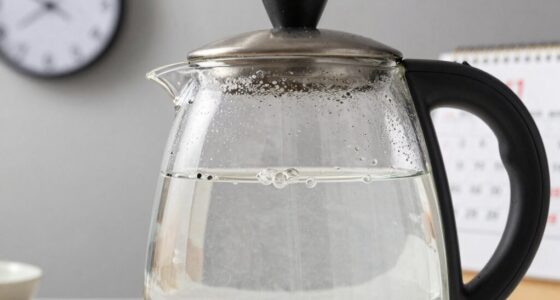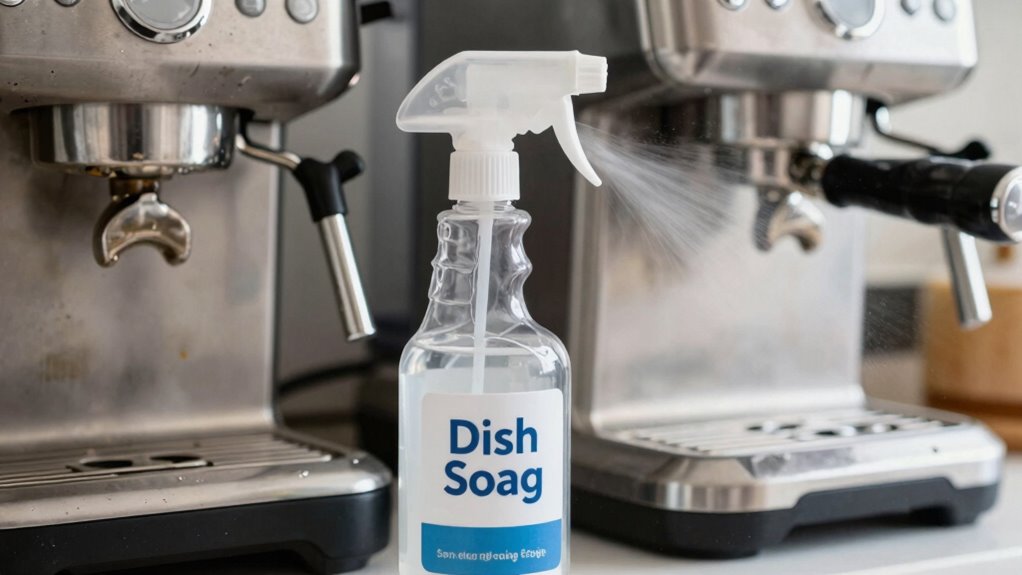

Using harsh cleaning products like bleach, strong detergents, or chemical-based agents can damage your coffee gear by causing corrosion, residue buildup, and wear on seals, filters, and metal parts. These chemicals can also taint your coffee’s flavor and lead to malfunctions. To avoid such issues, opt for natural or eco-friendly alternatives and follow proper cleaning techniques. Keep your equipment in top shape by choosing the right products—if you want to learn more, stay tuned.

Get kitchen gear delivered free with Prime
- Fast, free delivery on millions of items
- Prime Video, Amazon Music and more included
- Member-only deals all year
Key Takeaways
- Using harsh chemicals like bleach or strong detergents can corrode metal parts and rubber gaskets.
- Inappropriate cleaning products may leave residues that taint coffee flavor or cause buildup.
- Chemical reactions from incompatible cleaners can damage seals and delicate components.
- Overly abrasive cleaners or scrubbing agents risk scratching or eroding machine surfaces.
- Products containing corrosive agents can accelerate wear and reduce the lifespan of coffee gear.
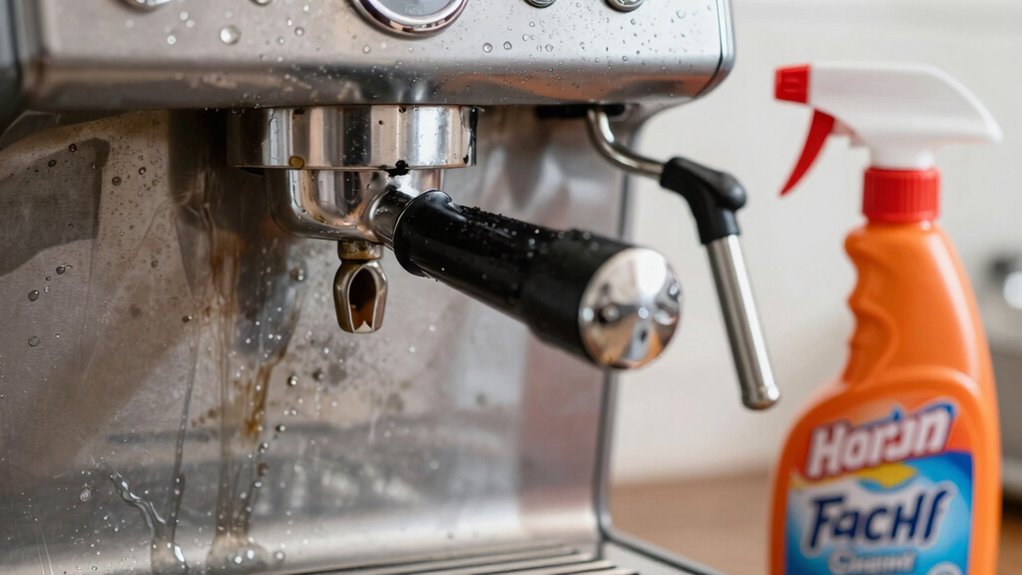
Choosing the wrong cleaning products for your coffee gear can cause more harm than good, even if they seem effective at first glance. Many people assume that any cleaning solution will do, but the reality is that some products can damage delicate components like the espresso machine’s seals, filters, and tubing. Instead, you should prioritize eco friendly alternatives whenever possible. These environmentally conscious options often contain fewer harsh chemicals, reducing the risk of corrosion or residue buildup that can compromise your coffee maker’s performance. Using eco friendly alternatives also benefits the environment, making your cleaning routine more sustainable without sacrificing effectiveness. Proper cleaning techniques are just as important as choosing the right products. Rushing through a cleaning session or neglecting certain parts can lead to clogs, mold, or mineral deposits that affect the taste and longevity of your equipment. Always disassemble your coffee gear as instructed by the manufacturer, and pay close attention to areas where oils, coffee grounds, and mineral buildup tend to accumulate. Regularly descaling your machine with a vinegar or citric acid solution, followed by thorough rinsing, helps prevent mineral deposits and keeps your coffee tasting fresh. Remember, the goal is to remove residues without damaging the internal mechanisms, which is why gentle cleaning methods and proper product selection matter. Additionally, understanding the chemical composition of cleaning agents can help you make more informed choices and avoid products that may harm your equipment or the environment. Using products with harsh chemicals can accelerate wear and tear on your machine’s components, so opting for milder options is always better. Many commercial cleaning solutions contain harsh chemicals like bleach or strong detergents that might seem effective at removing stains and buildup but can also erode rubber gaskets and metal parts over time. These substances can leave behind residues that taint the flavor of your coffee or cause malfunctions. Being aware of chemical reactions can help you select safer, more compatible cleaning agents. Informed product selection and understanding the ingredients can help prevent accidental damage. Instead, look for natural, food-safe cleaning agents or simple household items like baking soda, vinegar, or lemon juice. These substances are powerful enough to clean without risking damage to your equipment. Always follow proper cleaning techniques by applying these solutions carefully, avoiding excessive scrubbing, and thoroughly rinsing to prevent any lingering tastes or residues.
eco-friendly coffee machine cleaner
As an affiliate, we earn on qualifying purchases.
As an affiliate, we earn on qualifying purchases.
Frequently Asked Questions
Can Natural Cleaning Products Also Harm Coffee Equipment?
Yes, natural cleaners can harm coffee equipment if they contain acidic or harsh ingredients that cause equipment corrosion. Even though they’re marketed as safe, some natural cleaners may still have substances that damage delicate parts like the boiler or grinder. Always check ingredients and test in small areas first. Properly formulated, natural cleaners can be safe, but caution is key to avoid damaging your coffee gear.
How Often Should I Clean My Coffee Gear?
You should clean your coffee gear after every use to prevent buildup and guarantee peak taste. Follow a regular maintenance schedule—deep cleaning weekly or biweekly, depending on usage. Regular cleaning maintains the equipment’s performance and longevity. Using the right cleaning products and adhering to the recommended cleaning frequency helps avoid damage and keeps your coffee tasting fresh. Consistent maintenance makes brewing easier and more enjoyable.
Are Dishwasher-Safe Cleaning Products Safe for Coffee Machines?
Dishwasher-safe cleaning products aren’t always safe for coffee machines. Think of it like mixing oil and water—they can cause unexpected chemical reactions, harming your equipment. Always check material compatibility first; many coffee components aren’t designed to withstand harsh dishwasher chemicals. Using products specifically made for coffee gear guarantees your machine stays in top shape, avoiding damage from incompatible cleaners. Stick to recommended cleaning solutions for the best results.
What Signs Indicate My Coffee Gear Is Damaged?
You’ll notice signs of damage if your coffee grinder produces uneven grounds, smells burnt, or makes strange noises, indicating it needs proper maintenance. For descaling coffee machines, watch for reduced water flow or poor extraction, which signals buildup. Regular Coffee grinder maintenance and descaling coffee machines help prevent damage, ensuring your equipment stays in top shape. Address issues early to avoid costly repairs and keep brewing quality high.
Can I Use Vinegar to Clean My Coffee Maker Safely?
Certainly, you can safely use vinegar to clean your coffee maker. Vinegar’s effectiveness in dissolving mineral buildup makes it a popular natural alternative. Mix equal parts vinegar and water, run it through the machine, then rinse thoroughly with water to eliminate residues. This simple solution keeps your coffee gear pristine without risking damage. Just avoid using vinegar too frequently, as excessive acidity might wear down components over time.
natural descaling solution for espresso machine
As an affiliate, we earn on qualifying purchases.
As an affiliate, we earn on qualifying purchases.
Conclusion
Remember, prevention is better than cure. Choosing the wrong cleaning product can silently damage your coffee gear, leading to costly repairs or replacements. Always opt for manufacturer-recommended cleaners and steer clear of harsh chemicals. Your coffee machine is an investment—treat it with care. As the saying goes, “A stitch in time saves nine.” Stay vigilant with your cleaning routines, and your coffee gear will serve you well for years to come.
food-safe coffee gear cleaning products
As an affiliate, we earn on qualifying purchases.
As an affiliate, we earn on qualifying purchases.
gentle cleaning brushes for coffee equipment
As an affiliate, we earn on qualifying purchases.
As an affiliate, we earn on qualifying purchases.
Halloween Picks
halloween
As an affiliate, we earn on qualifying purchases.