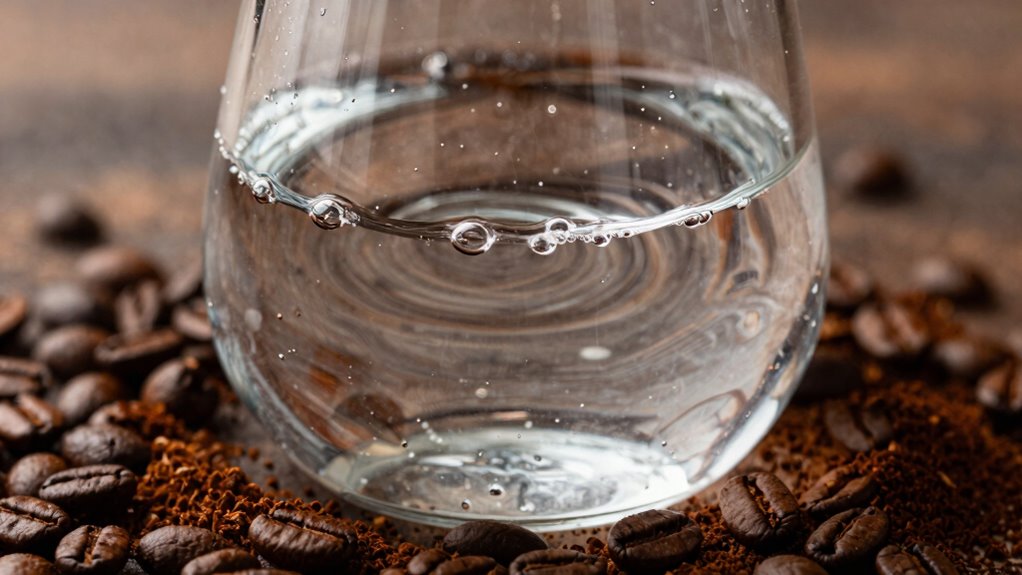

Many baristas and enthusiasts overlook water quality and temperature because they seem less obvious than grind size or tamping, yet these factors greatly influence flavor and extraction. Poor water control can mask subtle notes or cause bitterness, while incorrect temperature leads to under- or over-extraction. Despite their importance, these variables often get ignored in favor of more visible adjustments. If you want to access your espresso’s true potential, understanding and managing water is essential — keep exploring to discover how.

Get kitchen gear delivered free — and shop member deals
- Fast, free delivery on millions of items
- Access to Prime Big Deal Days deals on October 6–7
- Prime Video, Amazon Music and more included
Key Takeaways
- Many baristas prioritize grind size and tamping, overlooking water temperature and mineral content.
- Water quality and temperature are less visible and harder to control consistently during brewing.
- Equipment limitations often prevent precise regulation of water variables, leading to neglect.
- Lack of awareness about water’s impact on flavor and extraction causes it to be undervalued.
- Focus on more tangible factors like coffee beans and technique shifts attention away from water variables.

While espresso enthusiasts often focus on grind size, tamping pressure, and brewing time, water quality and temperature are frequently overlooked, even though they have a profound impact on your shot’s flavor. These variables can make the difference between a balanced, vibrant espresso and one that tastes flat or off. Understanding how water temperature and mineralization affect extraction is essential if you want to elevate your brewing game. Water temperature is critical because it influences how coffee solubles dissolve during extraction. If your water’s too hot, it can over-extract, pulling out bitter compounds and masking the coffee’s nuanced flavors. Too cold, and you risk under-extraction, resulting in a sour or weak shot. The ideal water temperature for espresso generally falls between 195°F and 205°F (90°C to 96°C). Maintaining this range ensures a balanced extraction that highlights the coffee’s inherent qualities. However, many machines don’t regulate temperature precisely, so you might need to experiment or invest in a machine with better temperature control to get consistent results. Additionally, using proper water mineralization can help optimize extraction and flavor clarity. Water mineralization is another factor that often goes unnoticed but plays a crucial role in flavor. Hard water, rich in minerals like calcium and magnesium, can enhance extraction and add a certain body to your espresso. Conversely, water that’s too mineral-heavy can lead to scale buildup in your machine and introduce off-flavors. On the other hand, soft water, lacking sufficient minerals, might produce a flat or insipid shot because it fails to extract the full range of flavors from the coffee. Ideally, you want water with balanced mineral content—enough to facilitate proper extraction without causing scale or flavor issues. Many baristas recommend using filtered water or water with a specific mineral profile, such as that used in specialty coffee circles, to achieve the best flavor profile. Despite its importance, water often remains the most ignored variable because it’s less visible and easier to overlook than grind size or tamping. Moreover, consistent water temperature is crucial for repeatable results, especially for those aiming for professional-level brewing at home. Paying attention to water quality and how it interacts with your equipment can significantly improve your overall espresso experience. Yet, neglecting water temperature and mineralization can undermine even the best brewing techniques. If you’re serious about improving your espresso, don’t just focus on the coffee grounds—they’re only part of the story. Pay close attention to your water’s temperature and mineral content. Doing so will elevate your brewing, allowing the true character of your coffee to shine through, and ensure every shot you pull is as flavorful and well-balanced as possible.
Frequently Asked Questions
How Does Water Mineral Content Specifically Affect Espresso Flavor?
Water mineral content, especially mineral balance and water hardness, directly impacts your espresso’s flavor. High mineral levels can cause over-extraction, leading to a bitter taste, while too soft water may result in under-extraction, making the coffee flat. The right mineral balance enhances extraction, highlighting the espresso’s nuanced flavors. Adjusting water hardness guarantees clarity, balance, and a richer, more vibrant espresso experience, emphasizing how vital water quality truly is.
Are There Any Health Risks Associated With Water Impurities in Espresso?
You might worry about health risks from water impurities in espresso, but proper water filtration and impurity detection greatly reduce these concerns. Think of filtration as a shield, catching harmful particles before they reach your cup. While trace impurities can pose risks if unchecked, using quality filters ensures your espresso remains safe and pure. Regularly testing water helps detect any lurking contaminants, giving you peace of mind with every shot.
What Water Temperature Is Ideal for Brewing the Perfect Espresso?
You should aim for a water temperature of around 195-205°F (90-96°C) for brewing the perfect espresso. Maintaining a consistent temperature guarantees ideal extraction, which affects brew clarity and flavor. Additionally, pay attention to water pH, ideally between 6.5 and 7.5, to prevent bitterness or sourness. Proper temperature and balanced pH help you achieve a smooth, flavorful shot with the right clarity.
How Often Should I Change My Water to Maintain Consistency?
You should change your water daily to maintain consistency, especially if you notice a decline in flavor. Studies show that water quality impacts 70% of espresso taste. Regularly refresh your water, ensuring proper filtration and mineral balance, to prevent buildup of impurities that can alter extraction. Proper water management keeps your espresso consistent, vibrant, and flavorful, helping you avoid off-tastes and machine issues over time.
Can Water Quality Influence Espresso Extraction Time?
Yes, water quality can influence espresso extraction time. If your water has high water hardness, it can slow down extraction due to mineral build-up, while low hardness may result in quicker extraction. Water pH also plays a role; overly acidic or alkaline water can affect extraction efficiency. Monitoring and modifying these factors ensures consistent extraction times and a better-tasting espresso.
Conclusion
If you ignore water, you’re practically brewing with invisible ghosts—because it’s that essential yet overlooked. Water’s influence on flavor, extraction, and crema is so colossal, it’s like trying to win a race with one shoe missing. Don’t let this silent hero sabotage your perfect shot. Pay attention to water, or risk turning your espresso into a bland, lifeless swamp. Remember, ignoring water isn’t just a mistake—it’s a catastrophe waiting to happen!
Fall Picks
fall essentials
As an affiliate, we earn on qualifying purchases.