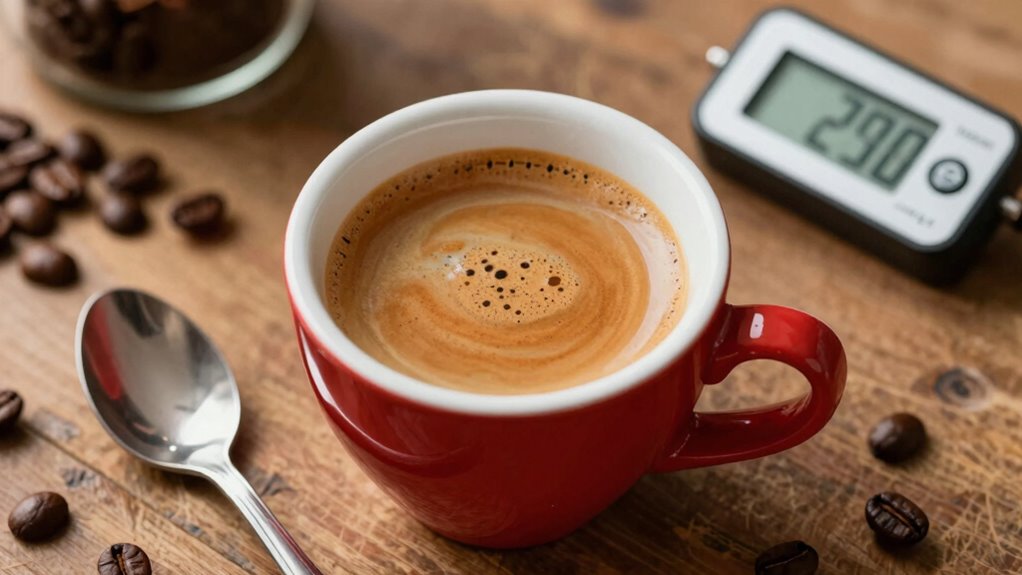

If your espresso has no crema, start by checking your beans—ensure they’re fresh and stored properly. Adjust your grind to a slightly finer consistency, and make sure you’re tamping with even pressure around 30 pounds. Verify your machine’s pressure and temperature settings are ideal, around 9 bar and 200°F. Clean your equipment regularly, and monitor shot timing. If issues persist, there are more tips to help restore rich, lasting crema.

Get kitchen gear delivered free with Prime
- Fast, free delivery on millions of items
- Prime Video, Amazon Music and more included
- Member-only deals all year
Key Takeaways
- Check if your beans are fresh, high-quality, and stored properly to ensure aroma and crema richness.
- Verify your grind size is uniform and slightly finer than drip coffee, grinding immediately before brewing.
- Ensure your espresso machine is correctly calibrated for pressure (~9 bar) and temperature (around 200°F).
- Maintain clean equipment by regularly descaling and cleaning to prevent residue buildup affecting crema.
- Perfect your tamping pressure (~30 pounds) and shot timing (25-30 seconds) for consistent extraction and crema formation.
Products Worth Considering

De'Longhi Dinamica Plus Fully Automatic Espresso Machine

Breville Bambino Espresso Machine, Brushed Stainless Steel

De'Longhi Stilosa Compact Manual Espresso Machine with Milk Frother
As an affiliate, we earn on qualifying purchases.
What Causes Your Espresso Crema to Disappear?

If your espresso’s crema suddenly vanishes, several factors could be at play. One common reason is a loss of the rich coffee aroma, which indicates the freshness of your beans; stale beans produce less crema. Additionally, poor milk frothing techniques can interfere with crema formation if you’re adding milk or foam, as improper frothing can disturb the espresso’s surface. The grind size and extraction pressure also matter—if the grind is too coarse or the pressure is off, your crema may disappear quickly. Even the cleanliness of your equipment impacts the outcome. Ensuring your beans are fresh, your grind is correct, and your milk frothing is precise can help preserve that beautiful, golden crema that signals a well-pulled shot. Proper temperature control and consistent brewing methods are also critical in maintaining crema quality for each shot.
How to Check if Your Coffee Beans and Grind Are Right for Crema
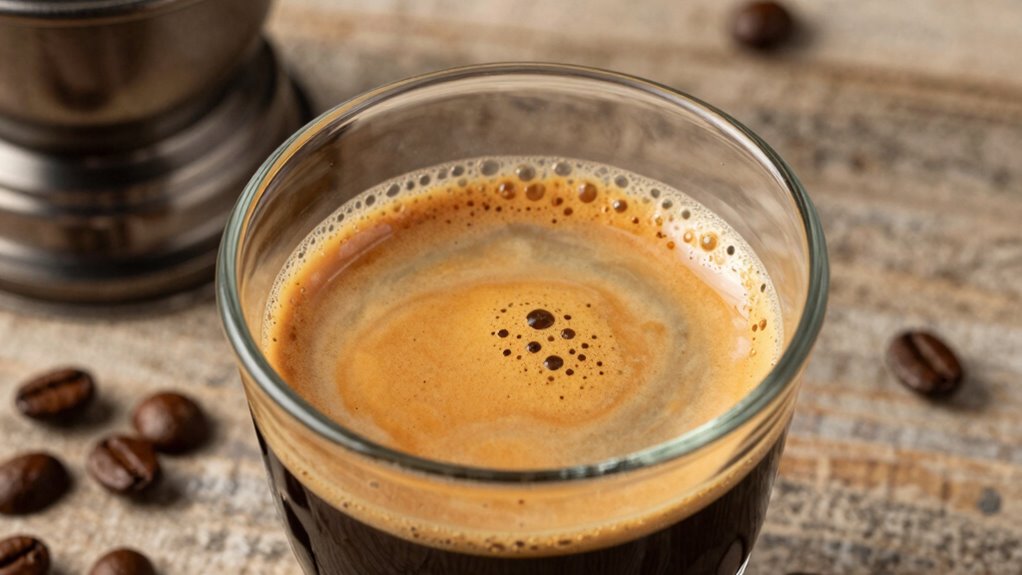
Ensuring your beans and grind are just right is key to achieving that perfect crema. Start with coffee bean testing: fresh, high-quality beans produce better crema. Check for aroma and freshness—if they smell dull or stale, it’s time to replace them. Next, focus on grind consistency; your grind should be uniform and slightly finer than for drip coffee. An uneven grind can cause poor extraction, resulting in thin or no crema. Use a consistent grinder setting and avoid large particles or powdery fines. Before brewing, examine the grounds—should be even and well-packed. Adjust your grind size if your espresso shot pulls too quickly or slowly. Proper coffee bean testing combined with grind consistency ensures your espresso has the rich, velvety crema you’re aiming for. Additionally, maintaining a clean brewing equipment and precise temperature control can significantly impact crema quality.
Is Your Machine’s Pressure and Temperature Optimized for Rich Crema?

Your machine’s pressure and temperature settings play a crucial role in producing a rich, velvety crema. Proper machine calibration guarantees these settings are accurate, helping you achieve ideal extraction. Check the pressure gauges during brewing; they should typically read around 9 bar for espresso. If pressure is too low or too high, it can hinder crema formation. Similarly, temperature influences extraction quality—aim for about 200°F (93°C) at the brew head. If your machine isn’t calibrated correctly, you might not get the right pressure or temperature, resulting in thin or no crema. Regularly verify your pressure gauges and adjust your machine settings as needed. Ensuring your machine operates within the correct pressure and temperature range is essential for consistently rich, creamy espresso. Using proper tools can help you maintain optimal machine performance and achieve the best crema quality.
How to Clean and Maintain Your Espresso Machine for Better Results
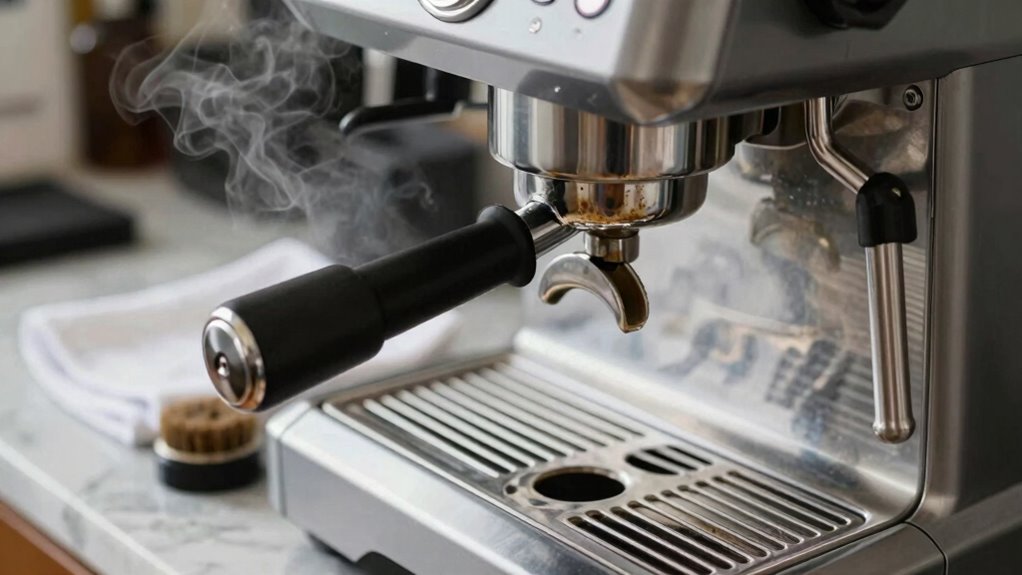
Regular cleaning and maintenance are essential to keep your espresso machine producing ideal results. Over time, coffee oils and residue build up, impacting coffee acidity and flavor. Regular descaling and cleaning of brew heads help prevent blockages and guarantee consistent extraction. Properly maintaining your machine also involves checking and calibrating it regularly, so it brews at the perfect temperature and pressure. This calibration directly influences coffee acidity and overall taste, including the development of crema. Use fresh water and clean filters to avoid mineral buildup that can dull flavors. Wiping down surfaces and descaling as recommended keeps the machine in top shape, ensuring every shot is flavorful and balanced. Consistent maintenance is your best strategy for better espresso quality. Incorporating holistic SEO principles into your maintenance routine can also help you stay informed about best practices and innovations in espresso machine care.
Tamping Tips: How Proper Pressure Enhances Crema

Applying the right amount of pressure when tamping is essential for creating a strong, uniform coffee puck that promotes ideal crema formation. Proper tamping pressure guarantees the coffee grounds are evenly compressed, allowing water to flow consistently through the puck. This process directly impacts crema enhancement, giving your espresso a rich, velvety layer. To improve your tamping technique, consider these tips:
- Use consistent pressure, about 30 pounds, to avoid uneven extraction.
- Apply steady, downward force without excessive force that could damage the puck.
- Ensure the tamp surface is level for uniform density.
- Practice controlled pressure to maintain suitable tamping pressure every time.
- Remember that the quality of tamping directly influences crema development and overall espresso quality.
Mastering tamping pressure leads to better extraction and more luxurious crema.
Does Coffee Freshness Affect Your Espresso’s Crema?
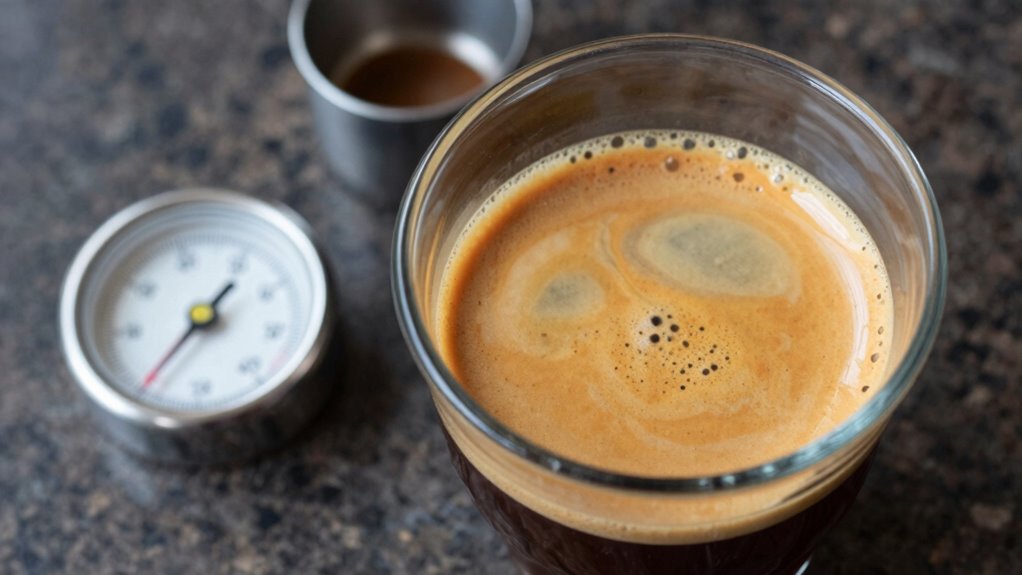
Your espresso’s crema depends heavily on how fresh your coffee is. Older beans or poorly stored grounds can lead to thin or absent crema, even with perfect technique. Paying attention to roast date and proper storage helps guarantee your coffee maintains its peak freshness. Additionally, using freshly ground coffee can significantly improve crema quality and overall flavor.
Freshness and Crema Quality
Freshness plays a critical role in the quality of espresso crema. When your coffee beans are fresh, they produce a richer, more stable crema that enhances the overall shot. If your beans are stale, the crema may be thin or disappear quickly, affecting milk frothing and latte art. To improve your crema quality:
- Use freshly roasted beans and grind just before brewing.
- Store coffee properly to maintain freshness.
- Ensure your machine’s pressure is ideal.
- Properly steam milk to complement the crema, creating smooth foam for latte art.
- Embracing artistic expression can help you better understand the nuances of coffee preparation and enhance your overall experience.
Roast Date Importance
Since the roast date indicates how long ago the coffee was roasted, it directly influences its freshness and flavor potential. Freshly roasted beans tend to produce better crema because they retain ideal volatile compounds needed for good emulsification. Over time, coffee bean storage methods impact how quickly these compounds degrade, affecting crema quality. Beans with a darker roasting level often release oils more readily, which can enhance crema when fresh, but may lose this benefit as they age. Knowing the roast date helps you gauge coffee freshness and anticipate crema development. Proper storage practices also play a crucial role in preserving these essential compounds. If your beans are too old, even the best grind and brew technique won’t fully compensate for diminished freshness. Opt for recently roasted beans stored properly to maximize crema potential in your espresso.
Storage Impact on Freshness
Proper storage plays a essential role in maintaining coffee’s freshness, which directly impacts the crema quality in your espresso. When you focus on coffee storage, you preserve the beans’ aromatic oils and prevent oxidation, both critical for freshness preservation. Here are four tips to optimize your coffee storage:
- Keep beans in an airtight container to prevent exposure to air.
- Store in a cool, dark place away from sunlight and heat.
- Avoid refrigeration, as moisture can damage the beans.
- Only grind what you need immediately before brewing to retain maximum freshness.
How to Adjust Brew Time and Shot Volume for Perfect Crema

To get that perfect crema, you should start by adjusting your brew time. If your shot pulls too fast or too slow, it can affect the crema quality, so tweak accordingly. Additionally, modifying the shot volume helps control extraction and improves the crema’s appearance. Remember, consistent grind size and tamping pressure also play a vital role in achieving optimal crema extraction techniques.
Adjust Brew Time
Adjusting the brew time is key to achieving the perfect crema. Proper extraction timing ensures the espresso develops rich flavor and a silky top layer. To fine-tune your brew duration, consider these steps:
- Adjust grind size—a finer grind slows extraction, extending brew time.
- Modify tamp pressure—a firmer tamp increases resistance, lengthening extraction.
- Alter brew temperature—a slightly higher temp can speed up extraction if it’s too slow.
- Monitor shot timing—aim for a shot duration of about 25-30 seconds; too short or long affects crema quality.
Modify Shot Volume
Modifying the shot volume is an effective way to influence both brew time and crema quality. Reducing shot volume can increase extraction time, resulting in richer crema, while increasing volume may dilute flavor and weaken crema. Before adjusting, warm your cups to maintain ideal temperature, which helps preserve crema’s texture. During milk frothing, ensure the espresso shot is not over-extracted, as this can affect crema formation. If you notice your crema is thin, try decreasing shot volume slightly and warming your cups beforehand. Conversely, for a more robust crema, increase shot volume or shorten the brew time. Small adjustments can make a big difference. By controlling shot volume and maintaining proper temperature, you maximize extraction and improve your espresso’s crema. Proper technique is essential for achieving consistent and high-quality crema with every shot.
When Should You Seek Professional Help to Restore Your Espresso Crema?
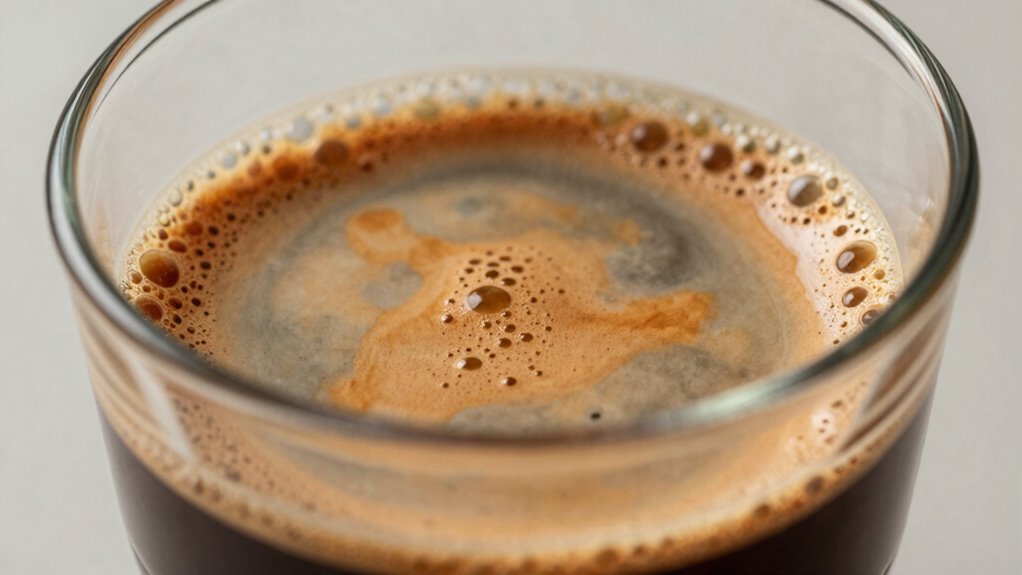
If your espresso consistently lacks the rich, golden crema you expect, it might be time to contemplate professional help. When your efforts don’t improve the espresso flavor or coffee aroma, a specialist can identify underlying issues. Consider seeking help if:
- Your shots taste flat or bitter despite proper technique
- The crema remains thin or disappears quickly
- Your grinder or machine shows persistent problems
- You’ve tried adjustments but see no improvement in crema quality
- The calibration of your equipment seems off despite routine maintenance
Professional technicians can fine-tune your equipment, test water quality, and suggest ideal settings. They can also diagnose if your grinder’s grind size or tamping pressure is off. Remember, consistent crema is a sign of proper extraction, which directly influences espresso flavor and aroma. When in doubt, expert advice ensures your espresso reaches its full potential.
Frequently Asked Questions
Can Water Quality Impact the Appearance of Espresso Crema?
Yes, water quality can impact your espresso crema. If your water isn’t properly filtered, minerals like calcium and magnesium can alter extraction, resulting in thin or inconsistent crema. Using water with the right mineral content and proper filtration helps maintain ideal pressure and extraction, producing a rich, thick crema. So, guarantee your water is filtered and has balanced mineral levels to achieve that perfect espresso crema every time.
Does Altitude Affect Espresso Crema Quality?
Like a mountain’s peak tests the sky, altitude variations influence your espresso’s crema stability. Higher altitudes often mean lower boiling points and altered pressure, which can cause thinner or less stable crema. Conversely, at lower elevations, stability improves. To guarantee quality, adjust grind size and extraction time accordingly. By understanding how altitude impacts your brew, you’re better equipped to perfect each shot, no matter where you are.
How Does Storage Method Influence Coffee Bean Freshness?
Your storage method greatly impacts coffee bean freshness. Using airtight storage containers helps preserve aroma and flavor by preventing exposure to air. Additionally, controlling humidity is essential; too much moisture can cause mold, while too little can dry out beans. Keep your beans in a cool, dark place, and choose containers designed for humidity control. This way, you maintain ideal freshness, ensuring your coffee always tastes its best.
Are Certain Coffee Varieties More Prone to Lacking Crema?
Certain coffee varieties are more prone to lacking crema, especially those with lower oil content. Coffee bean age and roast level markedly influence crema formation; fresher beans with a medium roast tend to produce better crema. If your espresso lacks crema, consider using newer beans and a medium roast to enhance oil release. Experimenting with different varieties and ensuring proper storage can also help improve crema in your brews.
Can Using Pre-Ground Coffee Instead of Fresh Beans Impact Crema Formation?
Using pre-ground coffee can definitely affect crema formation because it often has a less ideal grind size, which impacts extraction. Also, pre-ground coffee may not be as fresh, reducing CO2 release necessary for crema. To improve your results, make sure your grind size is appropriate for your brewing method and maintain the right brewing temperature. These factors help create a stable foam, giving you that rich crema you desire.
Conclusion
Think of your espresso as a delicate garden; if the right conditions aren’t met, it won’t bloom beautifully. When your crema disappears, don’t panic—check your beans, machine settings, and maintenance routine. With a little troubleshooting, you can revive your brew’s vibrant crown. Remember, patience and attention are your best tools. Keep experimenting and fine-tuning, and soon your espresso will flourish with rich, velvety crema, just like a well-tended garden in full bloom.