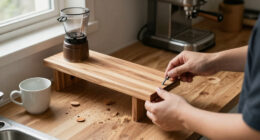
The best prosumer espresso machines balance hands-on control, reliable temperature management, and practical home use. My best overall pick is the Rancilio Silvia with PID for its focused espresso setup and added temperature control, while the Breville Barista Pro stands out for pairing a grinder with quick, guided operation. For a more automated workflow, the Breville Barista Touch adds a touchscreen and assisted drink preparation. The main tradeoff is between control and convenience: machines with built-in grinders save counter space, while separate-grinder setups give you more flexibility. Read on for how all 11 options compare and which one fits your routine.

Get kitchen gear delivered free with Prime
- Fast, free delivery on millions of items
- Prime Video, Amazon Music and more included
- Member-only deals all year
Complete the kit
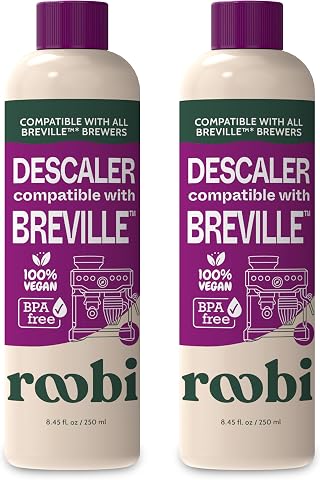

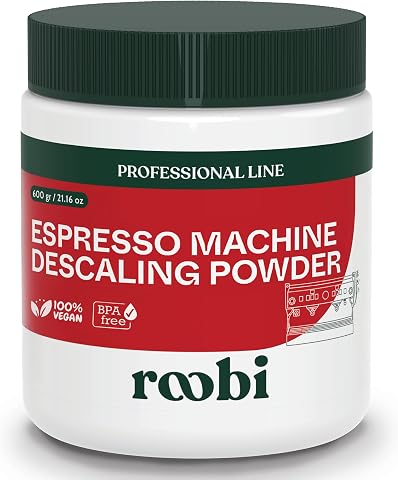
Key Takeaways
- The Rancilio Silvia with PID is the control-focused pick: its PID gives temperature feedback in a machine built around espresso preparation, but it does not offer the integrated grinder convenience of the Breville and De’Longhi all-in-one models.
- Breville separates its lineup by workflow: the Barista Express bundles grinding and brewing, the Barista Pro prioritizes a faster guided routine, and the Barista Touch adds touchscreen drink assistance.
- De’Longhi offers multiple levels of automation: the La Specialista Opera, La Specialista Touch, and Classic Signature suit different preferences for grinder integration, guided preparation, and milk frothing.
- The Gaggia Classic E24 and Rancilio Silvia favor hands-on buyers: both make more sense for people willing to manage preparation themselves than for anyone seeking an appliance-led routine.
- All-in-one convenience carries a flexibility tradeoff: integrated grinders simplify setup, but a separate grinder gives buyers more freedom to change or upgrade that part of the coffee workflow.
| Breville Barista Express Espresso Machine, Black Sesame |  | Best All-in-One Foundation | Model: BES870BSXL | Machine type: Semi-automatic espresso machine | Grinder: Integrated conical burr grinder | VIEW LATEST PRICE | See Our Full Breakdown |
| De’Longhi La Specialista Opera Espresso Machine with Built-in Grinder |  | Best for Guided Workflow and Drink Variety | Machine type: Semi-automatic espresso machine | Grinder settings: 15 | Pump pressure: 19 bar | VIEW LATEST PRICE | See Our Full Breakdown |
| Rancilio Silvia Espresso Machine with PID, 67 oz, Black |  | Best for Traditional Espresso Craft | Model: Silvia | Water capacity: 67 oz | Boiler material: Brass | VIEW LATEST PRICE | See Our Full Breakdown |
| De’Longhi Classic Signature Espresso Machine with Adjustable Milk Frother |  | Best Compact Entry to Manual Espresso | Model: Classic Signature | Machine type: Espresso machine | Coffee input: Ground coffee | VIEW LATEST PRICE | See Our Full Breakdown |
| Fellow Espresso Series 1 Espresso Machine |  | Best for Guided Precision | Model: Espresso Series 1 | Machine type: Semi-automatic espresso machine | Capacity: 2 L | VIEW LATEST PRICE | See Our Full Breakdown |
| Gemilai G3028A Espresso Machine |  | Best for Adjustable Pressure and Automatic Milk | Boiler capacity: 550 ml | Water tank: 57 oz | Adjustable OPV range: 6–11 bar | VIEW LATEST PRICE | See Our Full Breakdown |
| De’Longhi La Specialista Touch Espresso Machine with Coffee Grinder |  | Best Guided All-in-One | Grinder: Built-in Italian-made conical burr | Grind settings: 15 | Preset recipes: 10 | VIEW LATEST PRICE | See Our Full Breakdown |
| Gaggia Classic E24 Espresso Machine – Brushed Stainless Steel | 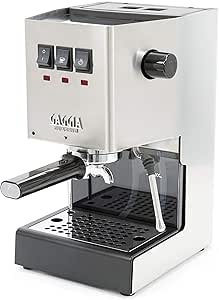 | Best for Traditional Manual Espresso | Portafilter: 58 mm | Extraction pressure: 9 bar | Steam wand: Commercial-style wand with three-way solenoid valve | VIEW LATEST PRICE | See Our Full Breakdown |
| Breville Barista Pro Espresso Machine, Brushed Stainless Steel |  | Best for Fast Bean-to-Cup Workflow | Grinder: Integrated conical burr | Bean hopper capacity: 0.5 lb | Water tank: 67 oz | VIEW LATEST PRICE | See Our Full Breakdown |
| AMZCHEF Espresso Machine with Built-in Grinder and Temp Control |  | Best for Grind and Temperature Range | Model: CM1626 | Grind settings: 44 | Temperature range: 190°F–201°F | VIEW LATEST PRICE | See Our Full Breakdown |
| Breville Barista Touch Espresso Machine (BES880BSS) – Brushed Stainless Steel |  | Best for Touchscreen Convenience | Power: 1680 W | Dimensions: 12.7 × 15.5 × 16 in (D × W × H) | Weight: 10.3 kg | VIEW LATEST PRICE | See Our Full Breakdown |
| prosumer espresso machine | Dimensions | Weight | Power |
|---|---|---|---|
| Breville Barista Express Espre | 13.8" D × 12.5" W × 15.9" H | 22.1 lb | 1600 W |
| De’Longhi La Specialista Opera | 17.72" D × 17.83" W × 21.38" H | 28.1 lb | — |
| Rancilio Silvia Espresso Machi | — | — | — |
| De’Longhi Classic Signature Es | 11.22" D × 13.98" W × 15.94" H | 9.3 lb | — |
| Fellow Espresso Series 1 Espre | 23.07" D × 14.57" W × 12.6" H | — | — |
| Gemilai G3028A Espresso Machin | 10.43 × 14.8 × 13.18 in (D × W × H) | — | 1450 watts |
| De’Longhi La Specialista Touch | — | — | — |
| Gaggia Classic E24 Espresso Ma | 8 × 9.5 × 14.2 in (D × W × H) | 20 lb | 1200 watts |
| Breville Barista Pro Espresso | 13 × 14 × 16 in (D × W × H) | 19.5 lb | 1680 watts |
| AMZCHEF Espresso Machine with | 12.5 × 10.82 × 13.38 in (D × W × H) | 13.9 lb | 1500 watts |
| Breville Barista Touch Espress | 12.7 × 15.5 × 16 in (D × W × H) | 10.3 kg | 1680 W |
More Details on Our Top Picks
Breville Barista Express Espresso Machine, Black Sesame
The Barista Express is my pick for buyers who want the hands-on prosumer routine without assembling a separate grinder-and-machine setup. Its integrated conical burr grinder doses fresh grounds into the portafilter, while PID temperature control and low-pressure pre-infusion support more repeatable shots. Compared with the Rancilio Silvia with PID, it takes up a broader role by including a grinder, but the Silvia offers a more traditional machine-and-separate-grinder path. The tradeoff is that grinding, dosing, extraction, and steaming still call for user technique; this is not a push-button shortcut. At 22.1 pounds and nearly 16 inches tall, it also needs a settled place on the counter. I’d choose it as a practical starting point for learning espresso, not as the smallest or least involved option.
Pros:- Integrated conical burr grinder sends fresh grounds directly into the portafilter.
- PID temperature control and low-pressure pre-infusion support more consistent extraction.
- Manual steam wand gives users control over milk texture for latte art.
- 67-ounce water tank reduces how often it needs refilling.
Cons:- Grinding, dosing, shot preparation, and steaming all require user input and practice.
- Its 12.5-inch width and 22.1-pound weight make it less convenient to move or fit on crowded counters.
Best for: Home baristas who want one machine with an integrated grinder and room to develop manual espresso and milk-steaming skills.
Not ideal for: Buyers with very limited counter space or anyone seeking a mostly automatic drink-making routine.
- Model:BES870BSXL
- Machine type:Semi-automatic espresso machine
- Grinder:Integrated conical burr grinder
- Water tank capacity:67 oz
- Portafilter size:54 mm
- Dimensions:13.8″ D × 12.5″ W × 15.9″ H
- Weight:22.1 lb
- Power:1600 W
Our verdict“Choose the Barista Express if you want an integrated grinder and a hands-on route into prosumer espresso without buying a separate grinder.”
De’Longhi La Specialista Opera Espresso Machine with Built-in Grinder
The La Specialista Opera suits buyers who want manual espresso with more built-in guidance than the Barista Express provides. Its Smart Tamping Technology helps produce an even tamp through a lever-based step, reducing one source of mess and inconsistency while leaving the broader brewing process in the user’s hands. Fifteen grinder settings and Active Temperature Control add useful adjustment, and its Cold Extraction feature gives it a menu range the more traditional Rancilio Silvia with PID does not claim. That extra versatility comes with a substantial footprint: at roughly 17.8 inches wide and 21.4 inches tall, it needs more counter clearance than the Breville. I’d favor it for households interested in espresso, milk drinks, and cold recipes; buyers focused on a compact, classic espresso setup should look elsewhere.
Pros:- Smart Tamping Technology makes an even tamp easier and less messy.
- Built-in burr grinder offers 15 settings for adjusting the grind.
- Cold Extraction Technology adds cold coffee recipes alongside espresso drinks.
- Commercial-style steam wand supports manual milk texturing.
Cons:- Its large dimensions and 28.1-pound weight make placement and moving difficult.
- Semi-automatic brewing and milk steaming still require hands-on skill and attention.
- The feature-rich workflow may be excessive for buyers who mainly want straightforward espresso.
Best for: Espresso drinkers who want an integrated grinder, assisted tamping, a commercial-style steam wand, and cold coffee options in one setup.
Not ideal for: Small-kitchen owners or buyers who want a compact machine with minimal counter demands.
- Machine type:Semi-automatic espresso machine
- Grinder settings:15
- Pump pressure:19 bar
- Water tank capacity:4.2 pounds, as listed
- Beverage presets:Espresso, Americano, Cold Brew, Espresso Cool, Hot Water
- Dimensions:17.72″ D × 17.83″ W × 21.38″ H
- Weight:28.1 lb
- Wattage:1450 W
Our verdict“Pick the La Specialista Opera if you want guided tamping and cold-drink flexibility and have ample space for a large machine.”
Rancilio Silvia Espresso Machine with PID, 67 oz, Black
The Rancilio Silvia with PID is for buyers who prefer a traditional espresso machine and want control without an integrated grinder dictating the setup. PID temperature control, programmable pre-infusion, and a shot timer give the brewing process more guidance, while the brass boiler and steel case point to a sturdier, classic construction approach. Compared with the Breville Barista Express, the Silvia leaves grinder selection to you; that adds cost and counter space, but lets you choose or upgrade the grinder separately. A 3-way solenoid supports easier backflushing and helps manage pressure after brewing. The supplied data lists a weight of just 4.2 pounds, which seems unusually low for this machine, so I would verify that figure before relying on it for placement plans. This is a focused espresso choice, not an all-in-one convenience pick.
Pros:- PID control, programmable pre-infusion, and a shot timer support repeatable brewing.
- Brass boiler and commercial-grade steel case offer a traditional, durable construction.
- Built-in 3-way solenoid makes backflushing easier and reduces post-shot pressure buildup.
- Includes single- and double-shot baskets and a double-spout portafilter.
Cons:- A separate grinder is required, unlike the integrated-grinder Barista Express.
- Manual preparation and steaming demand practice rather than an automated workflow.
- The listed 4.2-pound weight appears unusually low for this style of machine and merits verification.
Best for: Experienced home baristas who already own or plan to choose a separate grinder and value a traditional machine with temperature and shot controls.
Not ideal for: Buyers who want a grinder included, a compact all-in-one workflow, or a machine that removes much of the technique from espresso preparation.
- Model:Silvia
- Water capacity:67 oz
- Boiler material:Brass
- Case material:Alloy steel
- Controls and brewing features:PID, programmable pre-infusion, shot timer
- Included baskets:9 g single-shot and 17 g double-shot
- Included portafilter:Double spout
- Listed dimensions:11″ D × 9.5″ W × 13.5″ H
- Listed weight:4.2 lb
Our verdict“Choose the Silvia if you want a traditional, grinder-independent setup with PID guidance and are prepared to supply your own grinder.”
De’Longhi Classic Signature Espresso Machine with Adjustable Milk Frother
The De’Longhi Classic Signature is the compact, simpler choice in this group for buyers who want to learn manual espresso without taking on an integrated grinder. Its ground-coffee input keeps the machine relatively light at 9.3 pounds, and Thermoblock heating is designed to get it ready quickly. The visual pressure gauge gives beginners a way to observe extraction, while the adjustable frother handles dairy and plant-based milk. Compared with the Breville Barista Express, it takes less commitment in footprint and weight, but omits the grinder and the same all-in-one workflow. That means buyers need a separate way to grind coffee, and the machine still asks them to manage extraction and frothing. I’d see it as an accessible, space-conscious starting point, rather than a full prosumer station for users seeking extensive control.
Pros:- Compact dimensions and 9.3-pound weight suit counters where larger machines are impractical.
- Thermoblock heating supports quick preparation.
- Adjustable dual-mode frother accommodates dairy and plant-based milk.
- Visual pressure gauge gives users feedback while learning extraction.
Cons:- Accepts ground coffee only and does not include a grinder.
- Manual extraction and milk frothing still require technique and user attention.
- Its simpler setup offers less scope for grind and dose adjustment than the Barista Express or La Specialista Opera.
Best for: New home espresso makers with limited counter space who already have access to ground coffee or a separate grinder and want to learn manual extraction.
Not ideal for: Buyers seeking an integrated grinder, pod compatibility, or advanced control over grind and dosing in a single machine.
- Model:Classic Signature
- Machine type:Espresso machine
- Coffee input:Ground coffee
- Pump pressure:15 bar
- Water tank capacity:3.6 pounds, as listed
- Dimensions:11.22″ D × 13.98″ W × 15.94″ H
- Weight:9.3 lb
- Wattage:1350 W
Our verdict“Choose the Classic Signature if you want a lighter, compact manual machine and are comfortable sourcing ground coffee separately.”
Fellow Espresso Series 1 Espresso Machine
The Fellow Espresso Series 1 stands apart for pairing prosumer-style control with on-screen guidance and assisted milk steaming. Pressure profiling and precise temperature control give experienced users room to shape extraction, while shot feedback and a display can help newer owners learn what adjustments to make. Its under-two-minute heat-up is a practical advantage over more traditional workflows, including the Rancilio Silvia with PID, and the 58 mm portafilter suits buyers seeking a larger-format setup. It still requires manual grind adjustments, though, so the guidance does not remove the need to dial in coffee. Its listed 23.07-inch depth also makes it a demanding counter fit. I’d choose it for buyers who want active brewing control with more coaching, not for those prioritizing a small footprint or minimal involvement.
Pros:- Pressure profiling and precise temperature control allow adjustment of extraction.
- On-screen guidance and shot feedback can help users learn and refine their brewing.
- Assisted milk steaming with temperature sensing helps prevent scalding.
- Heats up in under two minutes and uses a 58 mm portafilter.
Cons:- Manual grind adjustments remain necessary, even with shot feedback.
- Semi-automatic brewing still requires hands-on preparation and attention.
- The listed 23.07-inch depth may be difficult to accommodate on shallow counters.
Best for: Home baristas who want pressure profiling and detailed shot feedback, along with guided assistance for milk steaming.
Not ideal for: Buyers with shallow counters or anyone wanting a fully automatic machine that handles grind adjustment and brewing without hands-on input.
- Model:Espresso Series 1
- Machine type:Semi-automatic espresso machine
- Capacity:2 L
- Portafilter size:58 mm
- Heating time:Under 2 minutes
- Dimensions:23.07″ D × 14.57″ W × 12.6″ H
- Materials:Stainless steel, brass, silicone, food-grade plastic, and wood
- Warranty:2 years
Our verdict“Pick the Espresso Series 1 if you want guided feedback and advanced control and have room for its deep body and manual workflow.”
Gemilai G3028A Espresso Machine
The Gemilai G3028A stands out for pairing dual PID temperature control with an adjustable OPV, giving hands-on users more ways to tune brewing than the simpler button-led Gaggia Classic E24. Its pressure range of 6–11 bar can help tailor extraction to different coffees, while the automatic frother handles milk without requiring manual wand technique. A double touchscreen also puts brew time, pre-infusion, and steam settings within reach. The tradeoff is that this is not an all-in-one bean-to-cup setup: unlike the Breville Barista Pro, it has no built-in grinder, so fresh-bean users need separate equipment. Its 57-ounce tank is generous, but the listed 3.6-pound weight and fairly broad body may not suit buyers who want a compact, substantial-feeling machine. I’d choose it for configurable brewing and easier milk drinks, not for a traditional manual workflow.
Pros:- Dual PID controls brew and steam temperatures independently.
- Adjustable 6–11 bar OPV offers more extraction control than fixed-pressure machines.
- One-touch automatic frother reduces the skill needed for consistent milk texture.
- Removable 57-ounce tank and descaling reminders simplify routine upkeep.
Cons:- No built-in grinder, so whole-bean users need a separate grinder.
- Touch controls and adjustable settings may feel less straightforward than the Gaggia Classic E24’s buttons.
Best for: Home espresso drinkers who want to adjust brew pressure and temperature while making milk drinks with minimal steaming practice.
Not ideal for: Buyers seeking an all-in-one grinder-and-espresso setup or a compact machine with a manual, barista-led milk workflow.
- Boiler capacity:550 ml
- Water tank:57 oz
- Adjustable OPV range:6–11 bar
- Temperature control:Dual PID
- Display:Touchscreen
- Power:1450 watts
- Dimensions:10.43 × 14.8 × 13.18 in (D × W × H)
Our verdict“Choose the Gemilai if configurable pressure and one-touch milk frothing matter more to you than an integrated grinder or a traditional manual setup.”
De’Longhi La Specialista Touch Espresso Machine with Coffee Grinder
The La Specialista Touch suits buyers who want fresh grinding and guided drink-making in one machine, without starting from a bare-bones prosumer setup. Its 3.5-inch touchscreen, ten preset recipes, and Bean Adapt guidance help connect grind and brewing choices to the coffee at hand. That makes it more approachable than the manual-leaning Breville Barista Pro, while its five froth levels and four temperature settings offer more milk customization than a basic automatic frother. The built-in conical burr grinder removes the need to shop for a separate grinder, and the fast cold-brew function adds variety beyond espresso drinks. There is a learning curve in the extensive interface, though, and the larger footprint can be awkward on a crowded counter. I’d favor it over the Gaggia Classic E24 for guided convenience, but not for buyers who want a simpler machine or more direct manual control.
Pros:- Built-in conical burr grinder offers 15 grind settings.
- Bean Adapt guidance and touchscreen help users dial in drinks.
- Five froth levels and four milk temperatures accommodate different recipes and milk types.
- Cold brew mode prepares a drink in under five minutes.
Cons:- The extensive touch interface and features may take time for beginners to learn.
- Large footprint may be difficult to accommodate on a small kitchen counter.
Best for: Home users who want an integrated grinder, guided setup, multiple milk options, and a menu of coffee drinks in one machine.
Not ideal for: Experienced manual-focused espresso makers who prefer simpler controls, or households with limited counter space.
- Grinder:Built-in Italian-made conical burr
- Grind settings:15
- Preset recipes:10
- Touch display:3.5 in
- Milk frothing:5 froth levels and 4 temperature settings
- Cold brew time:Under 5 minutes
- Included accessories:Precision tamper, portafilter, two single-wall baskets, dosing and tamping guide, tamping mat, stainless steel milk jug
Our verdict“Pick the La Specialista Touch if you want guided, grinder-included drink variety and have room for its larger countertop presence.”
Gaggia Classic E24 Espresso Machine – Brushed Stainless Steel
The Gaggia Classic E24 is the most traditional manual choice in this group: its 58 mm portafilter, 9-bar extraction, and commercial-style steam wand put the focus on technique rather than touchscreen prompts. Compared with the Breville Barista Pro, it lacks a built-in grinder and quick-start heating system, but gives buyers a familiar café-style portafilter format and control over the brew process. Pressurized and non-pressurized baskets broaden its usefulness, including for ground coffee and compatible pods. Its stainless-steel housing and upgraded boiler are aimed at steady home use, while the relatively narrow listed width can suit counters where broader all-in-one machines are harder to place. The tradeoff is a steeper path to consistent shots: you’ll need a separate grinder and must learn dosing, tamping, and milk steaming. I’d favor it over the Gemilai for a hands-on routine, not for push-button convenience.
Pros:- 58 mm portafilter follows a common commercial-style format.
- Three-way solenoid valve and 9-bar extraction support a traditional espresso workflow.
- Basket options accommodate ground coffee, pods, and ESE capsules.
- Stainless-steel housing and upgraded boiler are built for regular home use.
Cons:- No built-in grinder, adding a separate equipment purchase and countertop requirement.
- Manual dosing, extraction, and milk steaming demand more skill than the La Specialista Touch.
- At 20 pounds, it is not convenient to move frequently.
Best for: Espresso hobbyists who already own or plan to buy a grinder and want a conventional 58 mm portafilter and manual steam wand.
Not ideal for: Beginners who want guided recipes, automatic milk frothing, or a grinder included with the machine.
- Portafilter:58 mm
- Extraction pressure:9 bar
- Steam wand:Commercial-style wand with three-way solenoid valve
- Water reservoir:2.1 liters
- Housing:Brushed stainless steel
- Power:1200 watts
- Dimensions:8 × 9.5 × 14.2 in (D × W × H)
- Weight:20 lb
Our verdict“Choose the Gaggia Classic E24 if you want a hands-on, 58 mm portafilter experience and are prepared to pair it with a grinder.”
Breville Barista Pro Espresso Machine, Brushed Stainless Steel
The Breville Barista Pro earns its place for combining a built-in conical burr grinder with a three-second ThermoJet heat-up, making it the strongest fit here for users who want fresh-ground espresso without a long warm-up. The LCD guides grinding and brewing, but the manual steam wand keeps milk preparation in the user’s hands. Compared with the De’Longhi La Specialista Touch, the Barista Pro is less oriented around preset recipes and milk automation; in return, its workflow feels more direct for someone who wants to practice texturing milk and shaping shots. The 67-ounce tank and half-pound bean hopper support repeated use, though the machine still takes substantial counter space. It also offers fewer explicit personalization details in the supplied specs than the AMZCHEF’s 44 grind settings and adjustable temperature range. I’d pick it for speed and a hands-on grinder-to-shot routine, not for the smallest kitchen.
Pros:- Integrated conical burr grinder keeps grinding and brewing in one workflow.
- ThermoJet system reaches extraction temperature in three seconds.
- Manual steam wand supports hands-on microfoam and latte-art practice.
- 67-ounce water tank reduces refill frequency compared with smaller reservoirs.
Cons:- Large 13 × 14 × 16-inch footprint needs substantial counter space.
- Water tank may need frequent refilling during heavy use despite its listed 67-ounce capacity.
- Manual milk steaming requires more technique than the La Specialista Touch’s automatic frother.
Best for: Frequent home espresso drinkers who want an integrated grinder, fast heat-up, and manual control over milk steaming.
Not ideal for: Buyers with limited counter space, or those who want automatic milk texturing and a more guided recipe interface.
- Grinder:Integrated conical burr
- Bean hopper capacity:0.5 lb
- Water tank:67 oz
- Heat-up system:ThermoJet; extraction temperature in 3 seconds
- Display:LCD
- Power:1680 watts
- Dimensions:13 × 14 × 16 in (D × W × H)
- Weight:19.5 lb
Our verdict“Choose the Barista Pro if quick heat-up and a built-in grinder matter more than automatic milk preparation or a compact footprint.”
AMZCHEF Espresso Machine with Built-in Grinder and Temp Control
The AMZCHEF CM1626 is a fit for buyers who want a broad set of adjustable settings without adding a separate grinder. Its 44 grind settings and 190°F–201°F temperature range offer more stated adjustment than the Breville Barista Pro’s supplied specs, making it easier to experiment with grind size and brewing temperature across different coffees. A touchscreen and one-touch cold brew mode add convenience, while the steam wand leaves milk texturing in the user’s hands. Compared with the De’Longhi La Specialista Touch, this model foregrounds adjustment range rather than guided recipes and multiple automatic froth levels. That distinction matters: it may suit curious tinkerers better than people who want the machine to lead each drink. The supplied details do not specify grinder type or cold-brew timing, so buyers seeking those assurances may prefer the more fully described De’Longhi. Regular descaling is also part of ownership.
Pros:- 44 grind settings provide a wide range for dialing in coffee.
- Temperature adjustment spans 190°F to 201°F.
- Built-in grinder avoids the need for a separate grinder purchase.
- Touchscreen, steam wand, and one-touch cold brew mode support varied drink preparation.
Cons:- Regular descaling is needed to maintain performance.
- The supplied product details do not identify the grinder type or specify cold-brew preparation time.
- Compared with the La Specialista Touch, the listed feature set provides less guidance around recipes and milk settings.
Best for: Home users who want an integrated grinder and broad grind and temperature adjustment for experimenting with different coffees.
Not ideal for: Buyers who prioritize guided drink recipes, detailed grinder specifications, or low-maintenance ownership.
- Model:CM1626
- Grind settings:44
- Temperature range:190°F–201°F
- Water tank:60 oz
- Power:1500 watts
- Display:Smart touchscreen
- Dimensions:12.5 × 10.82 × 13.38 in (D × W × H)
- Weight:13.9 lb
Our verdict“Choose the AMZCHEF if adjustable grind and brew temperature are your priority and you’re comfortable with regular descaling and a less guided workflow.”
Breville Barista Touch Espresso Machine (BES880BSS) – Brushed Stainless Steel
The Barista Touch is the strongest fit here for buyers who want an integrated grinder and guided drink-making without giving up control over milk texture. Its touchscreen lets you program up to eight personalized drinks, while the automatic wand adjusts milk temperature and texture—less hands-on than the Rancilio Silvia with PID, but more customizable than a basic one-touch setup. The ThermoJet heats in three seconds, which can make an everyday coffee routine feel more immediate than machines that require a longer warm-up. The tradeoff is a broad feature set that takes time to learn and maintain, plus a substantial footprint. Compared with the Barista Pro, this model leans harder on touchscreen guidance and automatic milk frothing rather than a more hands-on workflow. I’d skip it if counter space or manual barista control is the priority.
Pros:- Integrated conical burr grinder prepares fresh grounds for each shot.
- Three-second ThermoJet heat-up reduces waiting before brewing.
- Automatic wand offers adjustable milk temperature and texture.
- Touchscreen supports programming up to eight personalized drinks.
Cons:- Its wide, deep body and 10.3 kg weight demand substantial counter space.
- Touchscreen functions and automatic milk system add learning and maintenance demands.
- A guided, automated workflow offers less direct control than a more manual machine such as the Rancilio Silvia with PID.
Best for: Home espresso drinkers who want fresh grinding, programmable drinks, and adjustable automatic milk frothing in one machine.
Not ideal for: Small-kitchen owners and enthusiasts who prefer manual steaming and a simpler, more hands-on workflow.
- Power:1680 W
- Dimensions:12.7 × 15.5 × 16 in (D × W × H)
- Weight:10.3 kg
- Water tank capacity:67 fl oz
- Bean hopper capacity:0.5 lb
- Portafilter size:54 mm
- Grinder:Precision conical burr
- Milk frothing and controls:Automatic microfoam steam wand; touchscreen
- Warranty:2-year limited
Our verdict“Choose the Barista Touch if you want programmable espresso drinks and automatic, adjustable milk frothing, and have room for a feature-rich machine.”
How We Picked
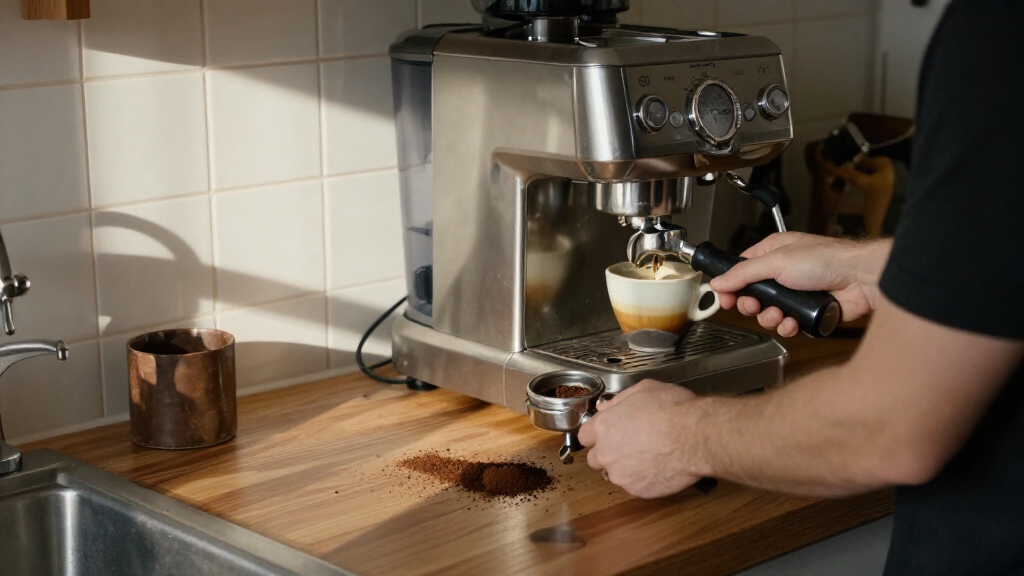
I compared these machines through the priorities that distinguish a prosumer setup from a basic espresso appliance: brewing control, grinder arrangement, milk workflow, day-to-day usability, and maintenance demands. I also considered how clearly each model suits a particular kind of home barista, from someone learning espresso to someone who wants hands-on control without buying every component separately.
The ranking favors machines that offer a strong balance of control and usability for their intended buyer, not the longest feature list. Guided, grinder-equipped models rank well for convenience, while the Rancilio Silvia with PID earns the overall position for buyers prioritizing temperature control and a focused espresso workflow. More specialized or less clearly differentiated options rank lower when a closely related model in the roundup makes the same case with a more distinct advantage. I also weighed practical tradeoffs: an integrated grinder can reduce setup complexity, but it ties more of the coffee workflow to one machine.
Factors to Consider When Choosing Best Prosumer Espresso Machines
Before choosing a machine, decide how much of the espresso process you want to manage yourself. The right fit depends as much on your grinder, counter space, and drink habits as on the machine’s controls.
Choose the grinder setup before the machine
An integrated grinder can make a first espresso setup simpler, since grinding and brewing sit in one appliance. That convenience also limits your ability to replace or upgrade the grinder without changing the whole setup. A separate grinder takes more counter space and adds another purchase, but lets you tune that part of the process independently. A common mistake is to spend the whole equipment budget on the espresso machine and leave too little for a grinder that can produce consistent espresso grounds. If you already own a capable grinder, an all-in-one model may duplicate equipment rather than improve your routine. Decide whether convenience or component flexibility matters more before comparing machine features.
Match control to your willingness to learn
More manual control can help you adjust espresso preparation, but it also asks you to make more decisions. New baristas may find guided menus and simplified workflows less frustrating while they learn dosing, tamping, and shot timing. Experienced home baristas may prefer controls that leave those choices in their hands. Do not assume that a machine with more settings will automatically produce better coffee; settings only help when you understand what to change and why. A useful test is to ask whether you want to repeat a saved routine or experiment with each shot. Choose the level of guidance you will actually use, not the one that sounds most advanced.
Plan for milk drinks and steaming time
If you mostly drink straight espresso, a milk system should not dominate your decision. Frequent cappuccinos and lattes make steam control, pitcher space, and the time between brewing and steaming much more relevant. Automatic or assisted frothing can reduce the learning curve, but it gives you less direct control over milk texture than a hands-on steam wand. Buyers often focus on whether a machine can froth milk and overlook whether its process fits the number of drinks they make in a row. Think through a typical morning: one drink has different demands from several milk drinks for a household. Select the workflow that matches your real routine rather than an occasional recipe.
Think beyond the machine’s footprint
Measure the available counter area, including room above the machine and space to work with a portafilter. A compact body can still feel cramped if you need to keep a grinder, tamper, knock box, and milk pitcher nearby. All-in-one machines consolidate equipment, yet their larger integrated design may be harder to fit beneath low cabinets. Also check where the water tank is accessed and whether you can fill it without moving the machine. These details shape daily use more than a feature list suggests. Before buying, map the complete coffee station rather than measuring the machine alone.
Budget for upkeep and accessories
Espresso machines need regular cleaning, and milk-making adds another routine: the wand or frother must be cleaned after use. Backflushing, descaling, and replacing water filters depend on the machine and water conditions, so read the care instructions before choosing. A built-in grinder does not remove the need for a scale, a suitable tamper, and a way to manage used grounds. First-time buyers can miss these surrounding costs and discover that a machine alone is not a complete setup. If upkeep sounds burdensome, favor a workflow with fewer separate parts and accessible cleaning steps. If you value repairability and customization, accept that a more hands-on setup may require more attention.
Pay for capabilities you will use
A higher level of automation makes sense when saved time and repeatable drink preparation are priorities. It is less compelling if you enjoy dialing in coffee manually or rarely make anything beyond espresso. Likewise, temperature control matters most to buyers who want to manage brewing conditions deliberately, not to everyone seeking a straightforward morning drink. Compare features by the problem they solve in your kitchen instead of treating a longer specification list as a better machine. A practical rule is to name the two tasks you most want the machine to improve before paying for extra controls. That keeps the choice focused on useful capability rather than unused complexity.
Frequently Asked Questions
Should I buy an espresso machine with a built-in grinder or choose a separate grinder?
A built-in grinder is a practical choice when you want a single appliance and a simpler setup, as with several Breville and De’Longhi models here. A separate grinder gives you more freedom to choose, replace, or upgrade the grinding component without replacing the machine. It can also make more sense if you already own a grinder suitable for espresso. Remember that grinder adjustment is part of dialing in coffee, so the machine’s brewing features cannot compensate for a poor grinder fit. Choose integrated grinding for convenience and a separate grinder for flexibility.
Is a PID worth choosing for home espresso?
A PID can help buyers who want more deliberate temperature management and a clearer sense of brewing conditions. In this roundup, the Rancilio Silvia with PID is the most direct fit for someone prioritizing that kind of control. It does not replace good grinding, consistent preparation, or practice, so it may not be the feature that improves a beginner’s coffee most. Buyers who value guided drinks and a simpler routine may get more practical use from an assisted interface or integrated grinder. Treat PID as a control feature, not a guarantee of better shots.
Which type of machine makes sense for someone new to espresso?
New baristas often benefit from a setup that reduces the number of separate decisions, particularly around grinding and drink preparation. Models with integrated grinders and guided workflows can make it easier to establish a repeatable routine. The Breville Barista Express is a straightforward all-in-one direction, while the Barista Touch adds touchscreen assistance for buyers who want more prompts. A more hands-on machine can still be a good learning tool, but expect to spend time developing technique and adjusting the grinder. Pick the workflow you will enjoy practicing rather than assuming the most manual option is automatically best for learning.
Do I need an automatic milk frother if I make lattes?
No; the right choice depends on whether you value convenience or direct control over milk texture. An automatic or assisted frother can simplify preparation and help make milk drinks with less technique. A manual steam wand gives you more involvement and room to develop your own approach, but it requires practice and cleaning after each use. If you make several milk drinks at once, consider the time and repeatability of the full steaming workflow, not just whether frothing is available. Buyers who mainly drink espresso can usually give milk features less weight.
Is a prosumer-style machine still a good fit if I only make coffee occasionally?
It can be, but the extra control and setup may go unused if espresso is an occasional drink. A machine with guided steps and an integrated grinder may suit occasional use better than a separate, highly hands-on setup because it keeps the routine contained. Think about storage, cleaning, and how often you will refresh beans and prepare the machine, not just the drinks it can make. If you want an easy occasional espresso, a complex workflow may feel like more work than the result warrants. Choose a prosumer machine when you value control or plan to make espresso a regular part of your routine.
Conclusion
For the best overall balance in this lineup, I recommend the Rancilio Silvia with PID to buyers who want a focused espresso machine and value temperature control. My best value direction is the Breville Barista Express, which combines grinding and brewing in one setup without requiring a separate grinder purchase. For a premium, guided workflow, choose the Breville Barista Touch; for beginners who want a more direct learning path, the Breville Barista Pro offers an integrated grinder with a streamlined interface. If you specifically want hands-on simplicity and an established manual style, compare the Gaggia Classic E24 with the Silvia; if you prefer assisted milk preparation, look at the De’Longhi La Specialista Touch or Gemilai G3028A. Choose by the workflow you want to repeat every day, not by the number of features on the panel.
Black Friday Picks

Vitamix Propel Series 510 Professional-Grade Blender, Black
As an affiliate, we earn on qualifying purchases.